The critical thinking topic for this memorandum is: Persuading Your Audience
SCENARIO: You are an assistant to Kelly Smith, a real estate agent who has just shown a home to Tom and Serena Phillips, a young professional couple who seemed very interested in the property. They are looking to start a family in the next few years and like the large backyard. They also like the neighborhood and reputation of the local schools. Most important, the house is in their price range. They are hesitant to make an offer on the house, however, because its a large investment and because the house needs new carpeting. Kelly knows this house will not stay on the market long. In fact, there are two other buyers who have shown an interest. However, she thinks this is a perfect house for Tom and Serena, and she would like to persuade them to make an offer. They have all the facts, so she decides to compose a message that emphasizes emotional and psychological appeals.
Kelly has asked you to review techniques for motivating an audience with emotional/psychological appeals and prepare a memorandum (500 words) that offers recommendations for how to persuade Tom and Serena to make an offer on the house.
Your recommendations should be based on an analysis and realistic application of at least four of the following appeals: Safety, Love/Belonging, Self-Esteem, Self-Actualization, Consistency, Social Proof, Liking, Reciprocity, and Scarcity.
Starts from
TO: Kelly Smith
From: Name
DATE: 6/12/2020
RE: Techniques for Persuading the Phillips
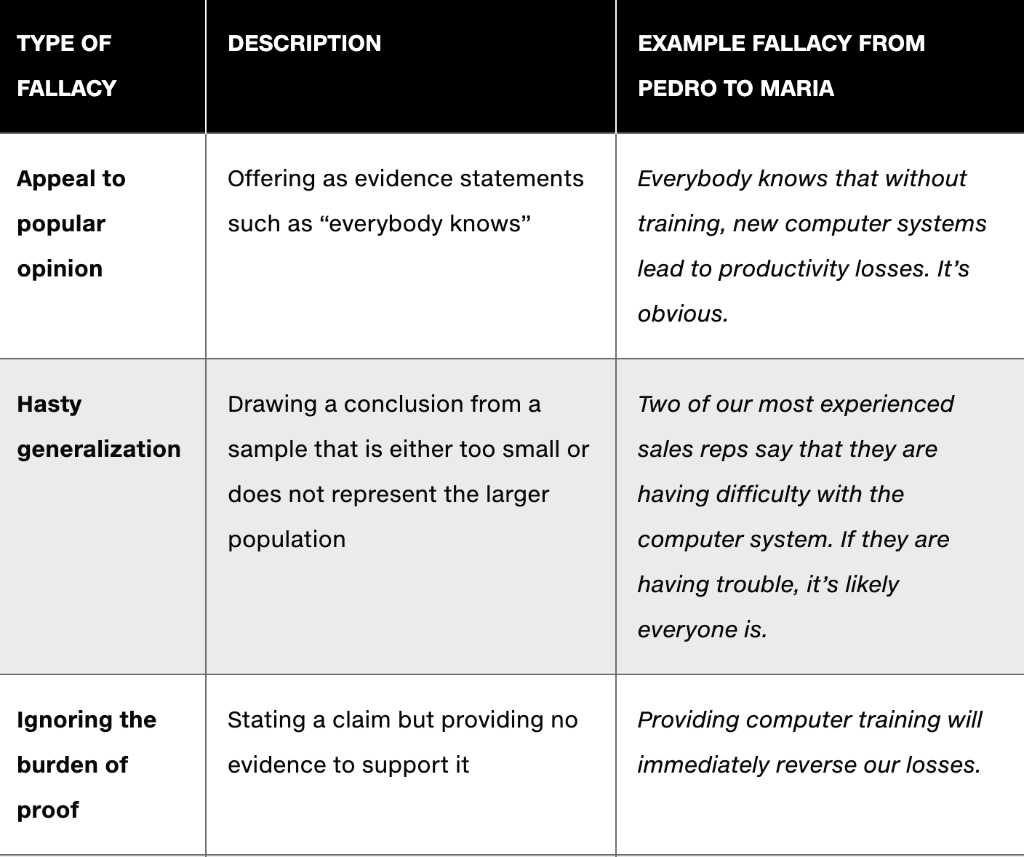
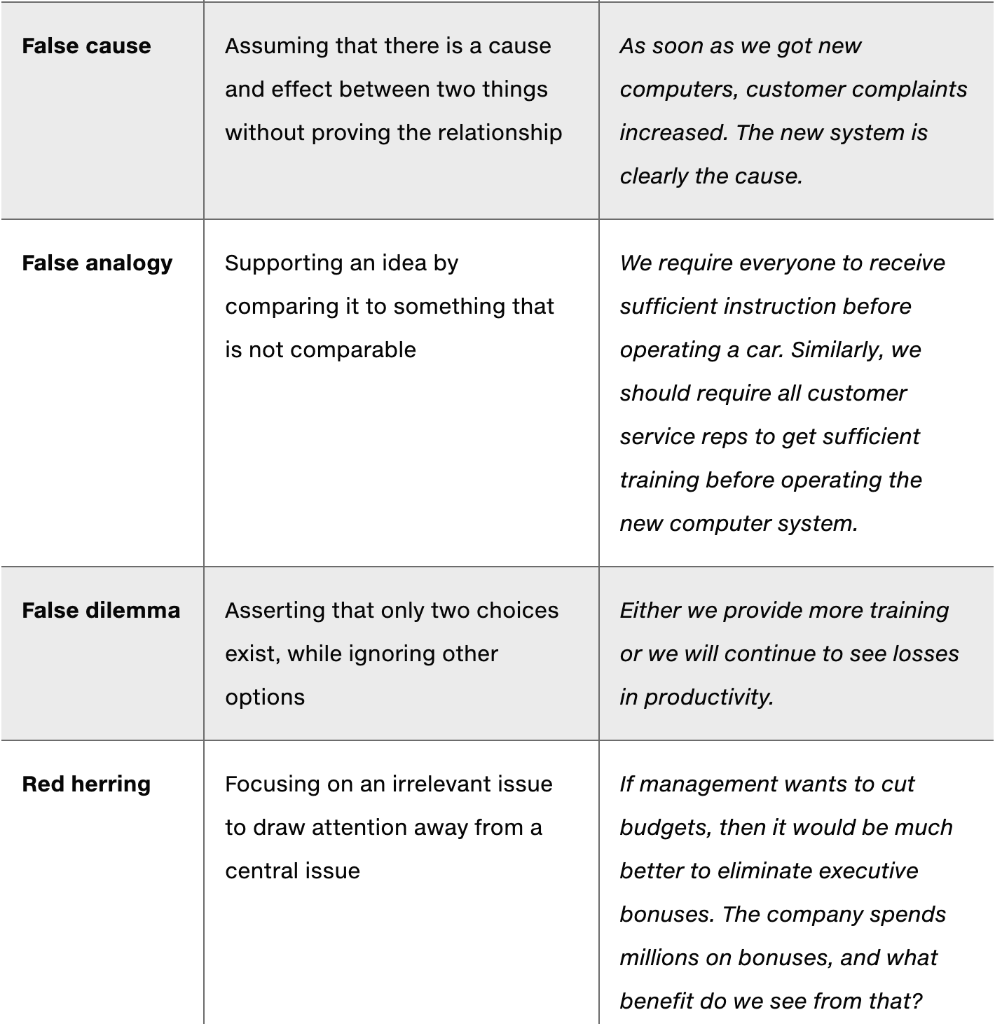
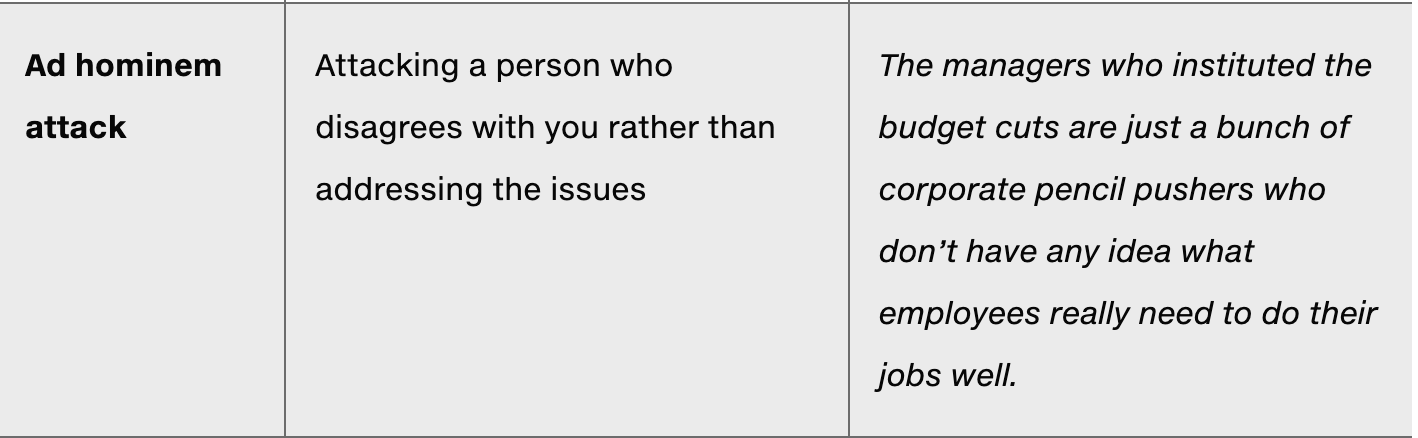
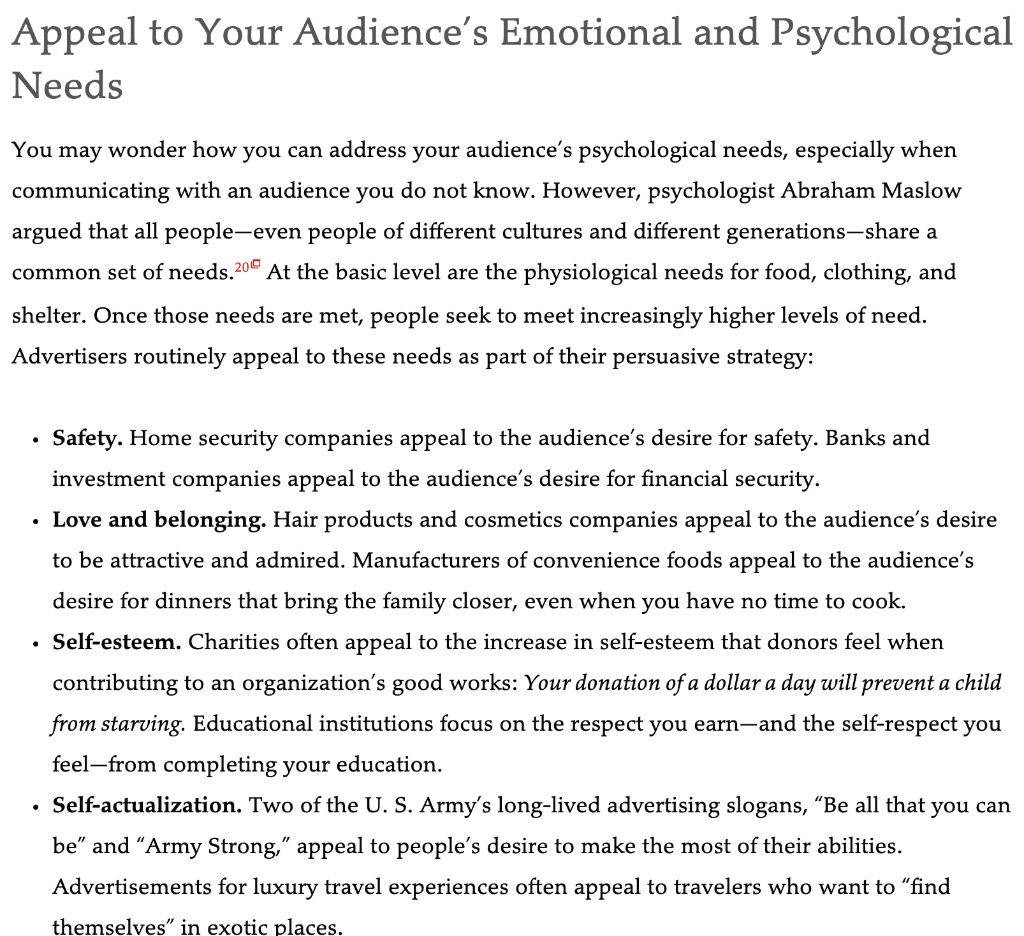
TYPE OF DESCRIPTION EXAMPLE FALLACY FROM FALLACY PEDRO TO MARIA Everybody knows that without Appeal to popular opinion Offering as evidence statements such as everybody knows training, new computer systems lead to productivity losses. It's obvious. Two of our most experienced Hasty generalization Drawing a conclusion from a sample that is either too small or does not represent the larger population sales reps say that they are having difficulty with the computer system. If they are having trouble, it's likely everyone is. Ignoring the Stating a claim but providing no Providing computer training will immediately reverse our losses. burden of evidence to support it proof False cause Assuming that there is a cause As soon as we got new and effect between two things computers, customer complaints without proving the relationship increased. The new system is clearly the cause. False analogy We require everyone to receive Supporting an idea by comparing it to something that is not comparable sufficient instruction before operating a car. Similarly, we should require all customer service reps to get sufficient training before operating the new computer system. False dilemma Asserting that only two choices exist, while ignoring other options Either we provide more training or we will continue to see losses in productivity. Red herring Focusing on an irrelevant issue If management wants to cut budgets, then it would be much to draw attention away from a central issue better to eliminate executive bonuses. The company spends millions on bonuses, and what benefit do we see from that? Ad hominem Attacking a person who The managers who instituted the attack budget cuts are just a bunch of disagrees with you rather than addressing the issues corporate pencil pushers who don't have any idea what employees really need to do their jobs well. Appeal to Your Audience's Emotional and Psychological Needs You may wonder how you can address your audience's psychological needs, especially when communicating with an audience you do not know. However, psychologist Abraham Maslow argued that all peopleeven people of different cultures and different generations-share a common set of needs.206 At the basic level are the physiological needs for food, clothing, and shelter. Once those needs are met, people seek to meet increasingly higher levels of need. Advertisers routinely appeal to these needs as part of their persuasive strategy: Safety. Home security companies appeal to the audience's desire for safety. Banks and investment companies appeal to the audience's desire for financial security. Love and belonging. Hair products and cosmetics companies appeal to the audience's desire to be attractive and admired. Manufacturers of convenience foods appeal to the audience's desire for dinners that bring the family closer, even when you have no time to cook. Self-esteem. Charities often appeal to the increase in self-esteem that donors feel when contributing to an organization's good works: Your donation of a dollar a day will prevent a child from starving. Educational institutions focus on the respect you earn-and the self-respect you feelfrom completing your education. Self-actualization. Two of the U. S. Army's long-lived advertising slogans, Be all that you can be and Army Strong," appeal to people's desire to make the most of their abilities. Advertisements for luxury travel experiences often appeal to travelers who want to "find themselves" in exotic places




