


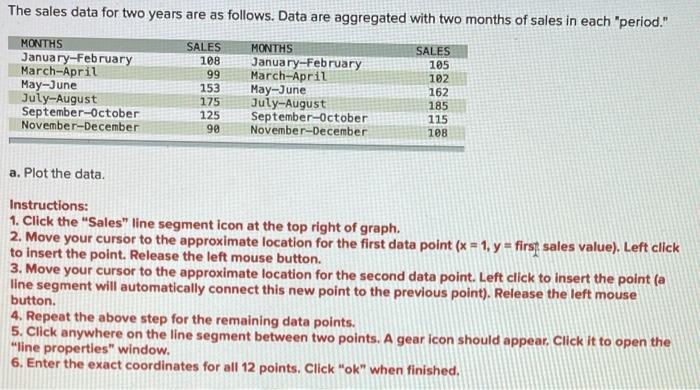
Question: The sales data for two years are as follows. Data are aggregated with two months of sales in each period. MONTHS MONTHS January-February March-April May-June
The sales data for two years are as follows. Data
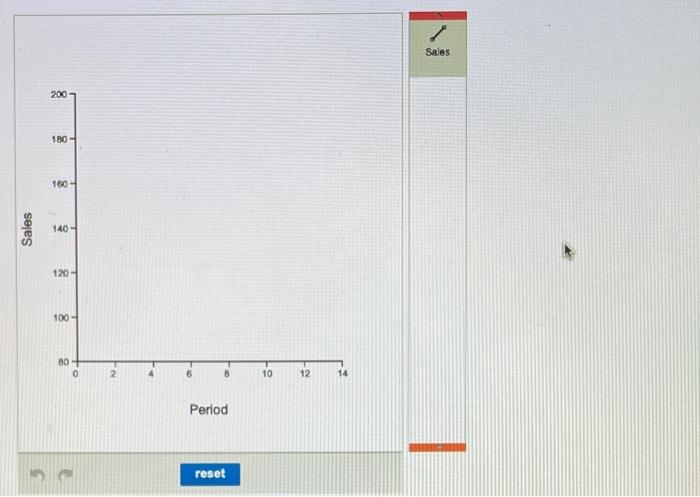
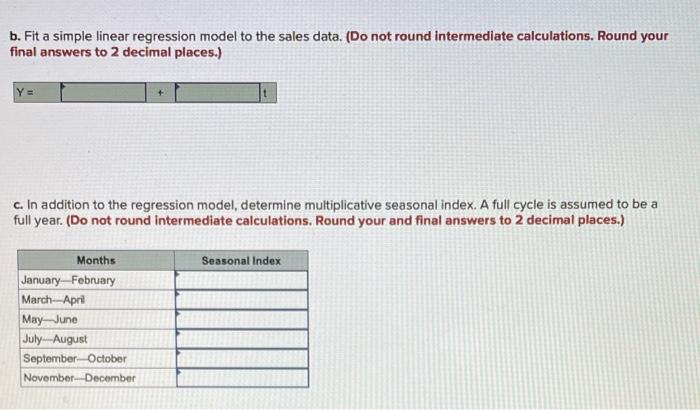
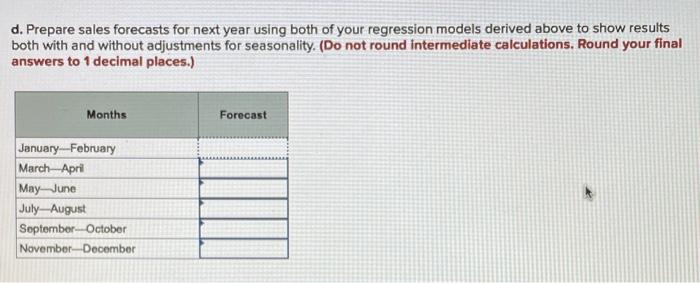
The sales data for two years are as follows. Data are aggregated with two months of sales in each "period." MONTHS MONTHS January-February March-April May-June July-August September October November-December SALES 108 99 153 175 125 90 January-February March-April May-June July-August September October November-December SALES 105 102 162 185 115 108 a. Plot the data. Instructions: 1. Click the "Sales" line segment icon at the top right of graph. 2. Move your cursor to the approximate location for the first data point (x = 1, y = first sales value). Left click to insert the point. Release the left mouse button. 3. Move your cursor to the approximate location for the second data point. Left click to Insert the point (a line segment will automatically connect this new point to the previous point). Release the left mouse button. 4. Repeat the above step for the remaining data points. 5. Click anywhere on the line segment between two points. A gear icon should appear. Click it to open the "line properties" window. 6. Enter the exact coordinates for all 12 points. Click "ok" when finished. Sales 200 180 160 Sales 140 120 100 - 80 0 2 8 10 12 14 Period reset b. Fit a simple linear regression model to the sales data. (Do not round intermediate calculations. Round your final answers to 2 decimal places.) c. In addition to the regression model, determine multiplicative seasonal index. A full cycle is assumed to be a full year. (Do not round Intermediate calculations. Round your and final answers to 2 decimal places.) Seasonal Index Months January February March-April May June July-August September October November December d. Prepare sales forecasts for next year using both of your regression models derived above to show results both with and without adjustments for seasonality. (Do not round Intermediate calculations. Round your final answers to 1 decimal places.) Months Forecast January February March-April May June July-August September October November December
Step by Step Solution

There are 3 Steps involved in it

1 Expert Approved Answer
Step: 1 Unlock blur-text-image

Question Has Been Solved by an Expert!

Get step-by-step solutions from verified subject matter experts

Step: 2 Unlock
Step: 3 Unlock

Students Have Also Explored These Related General Management Questions!