







Question: This is my solution, could someone look over this and see if this makes any sense? or is this even close to being correct? Setting
This is my solution, could someone look over this and see if this makes any sense? or is this even close to being correct?
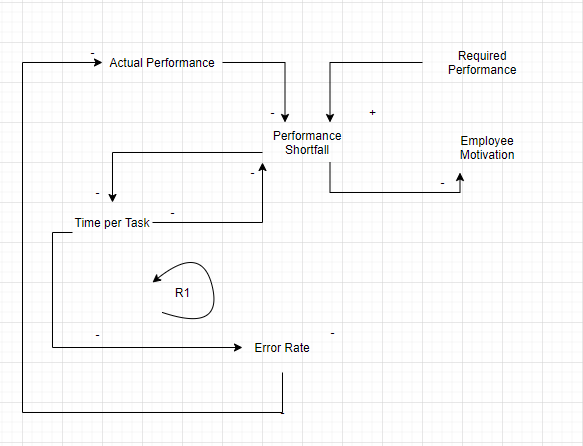
Setting an aggressive goal, has the potential in challenging the workers/operators into working harder and finding optimal ways of improving their work habits. However this model applies only to a very small population, who are naturally driven by challenge and are willing to work at their full potential every day. I would have to agree with the second group. In my professional opinion the negative aspect of setting an unattainable goal far outways the positives. due to the aggressive goals we will see an initial decrease in time to perform a task, however this will lead to increased fatigue which will lead to increase in error, which then reduces the actual performance. thus further increasing the shortfalls.
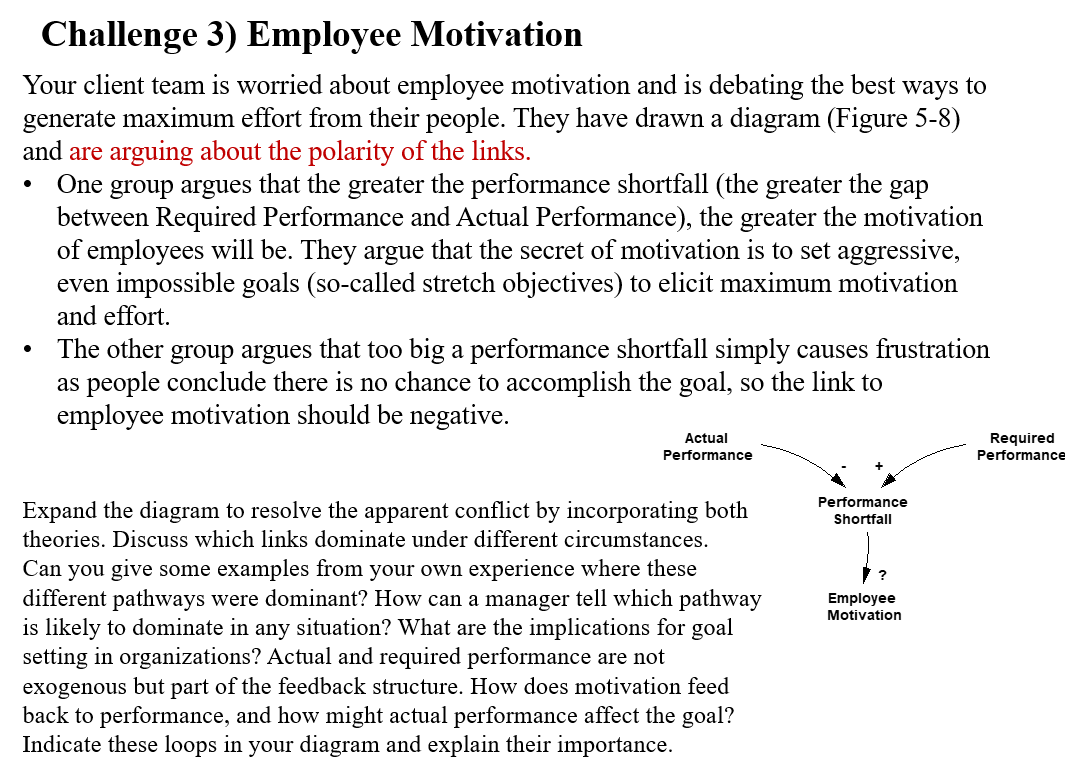
Challenge 3) Employee Motivation Your client team is worried about employee motivation and is debating the best ways to generate maximum effort from their people. They have drawn a diagram (Figure 5-8) and are arguing about the polarity of the links. One group argues that the greater the performance shortfall (the greater the gap between Required Performance and Actual Performance), the greater the motivation of employees will be. They argue that the secret of motivation is to set aggressive, even impossible goals (so-called stretch objectives) to elicit maximum motivation and effort. The other group argues that too big a performance shortfall simply causes frustration as people conclude there is no chance to accomplish the goal, so the link to employee motivation should be negative. Actual Performance Required Performance Performance Shortfall ? Employee Motivation Expand the diagram to resolve the apparent conflict by incorporating both theories. Discuss which links dominate under different circumstances. Can you give some examples from your own experience where these different pathways were dominant? How can a manager tell which pathway is likely to dominate in any situation? What are the implications for goal setting in organizations? Actual and required performance are not exogenous but part of the feedback structure. How does motivation feed back to performance, and how might actual performance affect the goal? Indicate these loops in your diagram and explain their importance
Step by Step Solution
There are 3 Steps involved in it

Get step-by-step solutions from verified subject matter experts
 Study Help