







Question: An electrophoretic mobility shift assay can be used to study the binding of proteins to a segment of DNA. In the results shown here, an
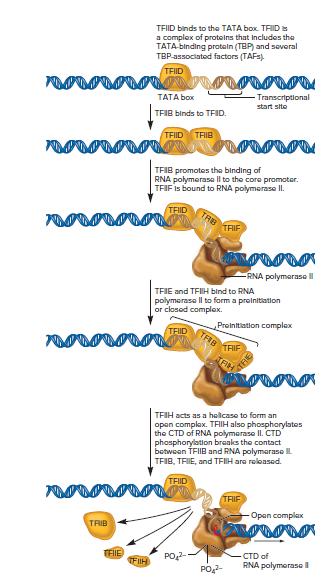
An electrophoretic mobility shift assay can be used to study the binding of proteins to a segment of DNA. In the results shown here, an EMSA was used to examine the requirements for the binding of RNA polymerase II (from eukaryotic cells) to the promoter of a protein-encoding gene. The assembly of general transcription factors and RNA polymerase II at the core promoter is described in Chapter 12 (Figure 12.14). In this experiment, the segment of DNA containing a promoter sequence was 1100 bp in length. The fragment was mixed with various combinations of proteins and then subjected to an EMSA.
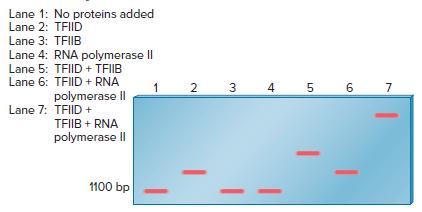
Which proteins (TFIID, TFIIB, or RNA polymerase II) are able to bind to this DNA fragment by themselves? Which transcription factor(s) (i.e., TFIID and/or TFIIB) is/are needed for the binding of RNA polymerase II?
Figure 12.14
Lane 1: No proteins added Lane 2: TFIID Lane 3: TFIIB Lane 4: RNA polymerase II Lane 5: TFIID+TFIIB Lane 6: TFIID + RNA polymerase II Lane 7: TFIID + TFIIB + RNA polymerase II 1100 bp 1 2 3 4 5 6 7
Step by Step Solution
3.41 Rating (151 Votes )
There are 3 Steps involved in it

Get step-by-step solutions from verified subject matter experts
 Study Help