New Semester
Started
Get
50% OFF
Study Help!
--h --m --s
Claim Now
Question Answers
Textbooks
Find textbooks, questions and answers
Oops, something went wrong!
Change your search query and then try again
S
Books
FREE
Study Help
Expert Questions
Accounting
General Management
Mathematics
Finance
Organizational Behaviour
Law
Physics
Operating System
Management Leadership
Sociology
Programming
Marketing
Database
Computer Network
Economics
Textbooks Solutions
Accounting
Managerial Accounting
Management Leadership
Cost Accounting
Statistics
Business Law
Corporate Finance
Finance
Economics
Auditing
Tutors
Online Tutors
Find a Tutor
Hire a Tutor
Become a Tutor
AI Tutor
AI Study Planner
NEW
Sell Books
Search
Search
Sign In
Register
study help
business
contemporary human resource
Strategic Human Resource Management Contemporary Issues 1st Edition Mark N. K. Saunders; Mike Millmore; Philip Lewis; Adrian Thornhill; Trevor Morrow - Solutions
Outline the strengths and limitations for diversity management of the equal opportunities approach.
Outline the strengths and limitations for diversity management of the managing diversity approach.
To what extent is it appropriate to support a positive climate for diversity management for purely business-focused reasons rather than as part of its cultural values?
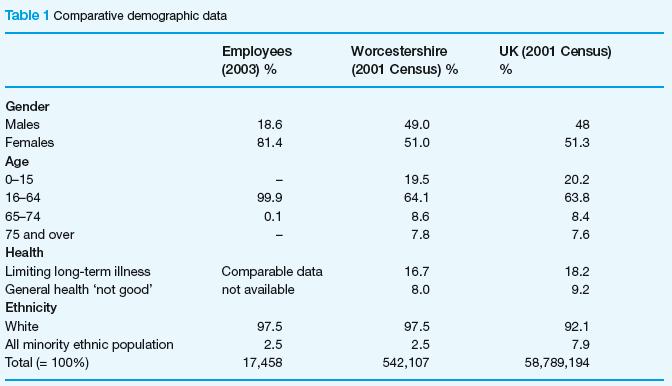
Worcestershire County Council is the local authority responsible for providing education; social services for children, older people and others in need; road maintenance and building; and libraries and strategic planning for the 542,000 people who live within Worcestershire. Worcestershire County
Explain the purpose of downsizing and analyse the problems associated with its use;
Identify a range of organisational strategies to downsize and evaluate their implications;
Discuss the significance of employee involvement and influence in relation to the implementation of downsizing;
Describe the nature of survivors’ reactions to downsizing and the existence of moderating variables affecting these, and evaluate their significance for organisations using this type of change strategy;
Discuss the role of organisational theories and HR interventions to provide strategies to manage the process of downsizing more effectively;
Explore the implications of outsourcing for SHRM;
Analyse the role downsizing plays in contributing to organisational HR strategies and the interrelationships with other HR interventions such as performance management, employee involvement and commitment, and training and development.
Using Shaw and Barrett-Power’s (1997) definition of downsizing (outlined earlier), which of the following events would you classify as downsizing methods: compulsory redundancy, early retirement, induced redeployment, job share, natural attrition, recruitment freeze, voluntary redundancy,
Why might the requirement to adopt a proactive downsizing strategy in order to minimise its negative consequences be difficult to achieve in practice?
Which factors related to the methods used to implement downsizing might affect managerial control and employee influence over the process?
How would you react to the redundancy of colleagues in the organisation for which you work, or in an organisation for which you have worked? (Perhaps you have actually experienced this event. If you have, how did you react and why?)
Outline how perceptions of distributive, procedural, informational and interpersonal treatment may impact positively on downsizing survivors’ reactions.
About 4,000 MG Rover workers who lost their jobs after the carmaker went into administration have received redundancy payments averaging £5,000 each.The £20m-plus payout, which will ultimately be paid by the taxpayer, was speeded up by officials, Patricia Hewitt announced while campaigning for
Define the term strategy.
Describe and evaluate a range of approaches to strategy making.
Analyse links between different approaches to strategy and human resource management (HRM).
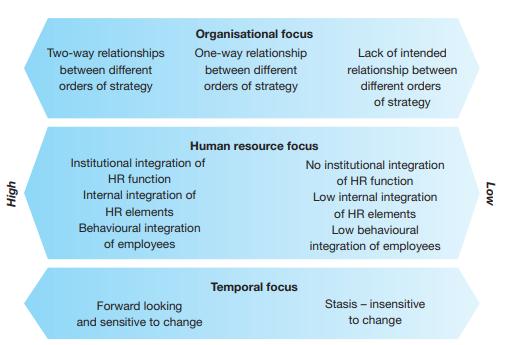
Understand the significance of strategic integration to explore links between strategy and HRM and its multi-dimensional nature.
Analyse the resource-based view of the organisation and describe key concepts related to this approach.
Describe and evaluate links between resource-based theory and HRM.
Is it possible to reconcile any of these four approaches to strategy making in practice and if so how might this occur?
What is the scope for the strategic integration of HRM in relation to each of the four approaches to strategy making discussed in this section?
Think of an organisational situation with which you are familiar. This may be one in which you are currently employed or one that you have worked for previously, or another organisation known to you.Use the model of the six strands of strategic integration to evaluate, as far as you are able, the
How would you relate the resource-based view to the dichotomy between the planning school and the learning school that we discussed earlier?
Identify the major principles which underpin the concept of strategic human resource management (SHRM);
Analyse the main theoretical approaches to SHRM;
Explain the history and origins of SHRM;
Evaluate the studies which aim to establish the link between SHRM and organisational performance.
What value would you place in a philosophy statement similar to the BP example above if you were searching for employment?
In what ways do you think the presence of employee voice may be helpful to the implementation of universalist HR initiatives?
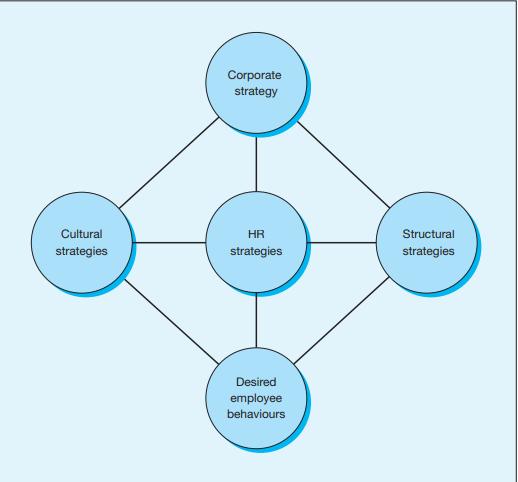
How influential would you say that the factors noted in Figure 2.4 were in creating the drive to introduce SHRM in major organisations?Figure 2.4: Cultural strategies Corporate strategy HR strategies Desired employee behaviours Structural strategies
What practical contribution do you think the studies linking HR and organisational performance listed in this section have made to the practice of SHRM?
Identify some of the key background issues relevant to the internationalisation of business;
Analyse the significance in the growth of multi-national companies;
Define strategic international human resource management;
Identify the key components of strategic international human resource management;
Explain the significance of the capability perspective on strategic international human resource management;
Evaluate the importance of the cultural perspective on strategic international human resource management.
The reasons that companies pursue a strategy of internationalisation are not new.Historically, empires have been built on thriving international trade. Yet the rate of growth of international trade has grown apace in recent years. Why should this be?
As a senior HR manager in a major MNC, what arguments would you anticipate using to defend your company against the anti-globalisation lobby’s position that globalisation was disadvantageous to your company’s employees?
In what other ways may the expatriate managers at DecoStore have established tacit knowledge?
Which of the line manager competences do you think are particularly important for HR professionals?
Of what value is this general grouping of national cultures to managers in their SIHRM activities?
Explain the importance and contribution of evaluation to strategic human resource management;
Identify the range of different purposes an evaluation can serve;
Assess the barriers to evaluation and their causes;
Identify the various stakeholders in any evaluation and their need both to contribute and to receive feedback;
Assess the choices to be made in respect of the evaluation process and make suitably informed decisions;
Outline a range of strategies and data collection techniques involving both primary and secondary data, which may be used to evaluate strategic human resource management;
Identify the complexity of issues associated with feeding back the findings of evaluations.
Think about the last time you were asked to evaluate a course in which you were participating. A possible course could be a module on your current programme or a training course at your workplace.a. What aspects of the course were you asked to comment about?b. How do you think your evaluation and
List the arguments you would use to justify the need for an organisation to justify evaluating SHRM interventions.
Before you read on, based on your own experience make a list of reasons why you might be reluctant to undertake an evaluation of an HR process.As you read this section compare the reasons you have listed with those we identify. To what extent are they the same or similar to those you have
Outline the relative advantages of action research and more typical approaches to evaluation from the perspective of the HR manager sponsoring an evaluation.
Outline the advantages that are likely to accrue to an organisation using a range of techniques, rather than just one, to obtain data to evaluate SHRM.
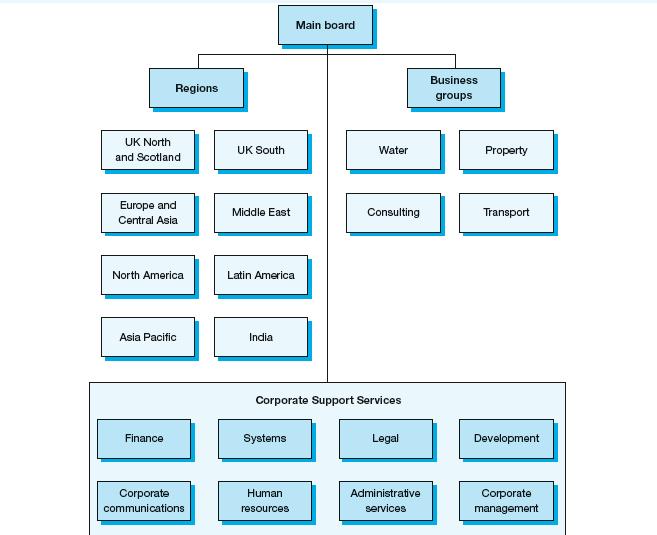
Halcrow Group Limited is a multidisciplinary consultancy group specialising in the provision of planning, design and management services for infrastructure development throughout the world. Within this, the Group’s main interests are transportation, water, property and consulting. Although
Define the term organisational structure and evaluate its links to strategy;
Describe and analyse conceptual approaches to the design of organisational structures and discuss their strategic implications;
Identify principal forms of organisational structure and explore their main effects on those who work within them at both a theoretical and practical level;
Analyse the relationship between organisational structure and SHRM.
Drawing on the dimensions of organisational structure outlined above, use the list of potential organisational consequences from structural deficiencies to evaluate the structure of an organisation known to you.
What other criticisms do you think may be made against the classical universal approach to the design of organisational structure?
How would you summarise the key differences between the classical universal, contingency and consistency approaches to the design of organisational structure?
Using the ideas discussed below, how would you summarise ‘organisational fluidity’?The concept of the virtual organisation appears suited to knowledge-based work that utilises technologies such as the internet. It epitomises the human resource implications described above for network and
The discussion in this section has considered the impact of decentralised organisational structures on the development of human resource strategies. How do you think a more centralised and bureaucratic form of organisational structure will affect the development of human resource strategies?
DaimlerChryslers’ product portfolio ranges from small cars to sports cars and luxury sedans; and from versatile vans to trucks and coaches. Daimler-Chryslers’ passenger car brands include Maybach, Mercedes-Benz, Chrysler, Jeep®, Dodge and Smart. Commercial vehicle brands include Mercedes-Benz,
Explain the meanings of national and organisational cultures and the debates relating to their existence;
Discuss the importance of organisational and national cultures in managing SHRM interventions;
Explore the three main perspectives through which culture has been explored within organisations: integration, differentiation and fragmentation;
Assess the complexity of issues associated with aligning culture to an organisation’s strategic direction;
Analyse the linkages between organisational and other cultural spheres and SHRM interventions.
Produce a table summarising the arguments for convergence and for divergence of national cultures using the following structure: Arguments for convergence Arguments for divergence
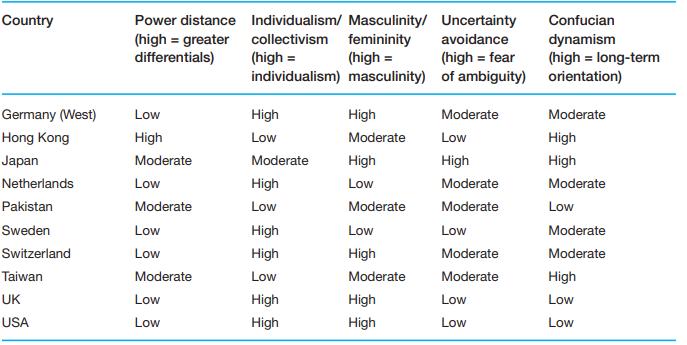
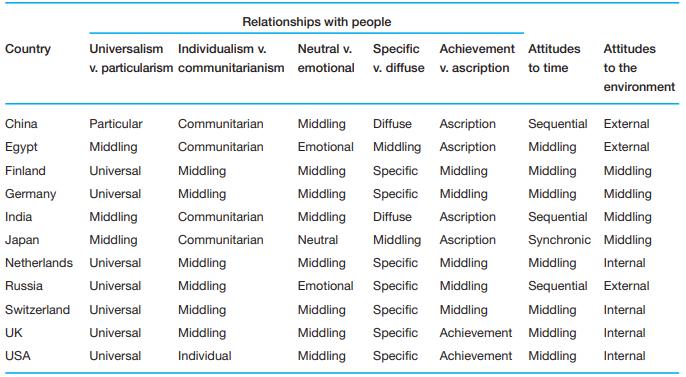
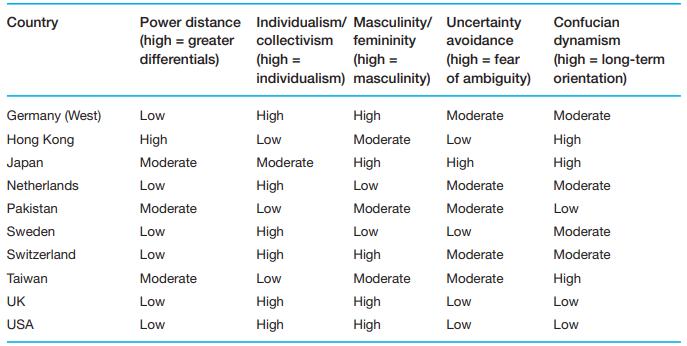
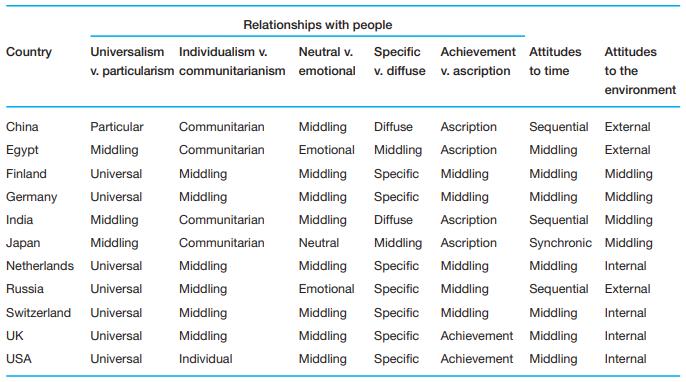
Examine Tables 6.1 and 6.2 and select two countries with contrasting profiles.Use Hofstede’s dimensions to suggest how SHRM interventions to motivate employees and appraise employees might differ between these countries. Now repeat this process using Trompenaars and Hampden-Turner’s dimensions.
Why do you think it is difficult for managers to describe their organisation’s culture in detail?
Visit HP’s corporate web site at http://www.hp.com. Use the menus to go to the pages headed ‘Company information: About us – History and Facts’.What clues do these give you about the culture of HP?Which culture do you consider was dominant in the merger between HP and Compaq?
How might an organisation use SHRM interventions to support a culture re-alignment process?
Why might organisations choose a top-down approach to cultural re-alignment?
Dicom Group plc is the global market leader in the information capture market, providing document imaging scanning hardware and software, and associated support services. Operating through two distinct divisions, the information capture and the Samsung General Agency Division, the Group has wholly
Identify and discuss the core principles that underpin the concept of strategic human resource planning;
Critically evaluate the extent to which strategic human resource planning represents the vital connecting link between organisational strategy and SHRM practice;
Analyse the conceptual and operational difficulties surrounding the practice of strategic human resource planning;
Assess the relevance of strategic human resource planning to organisations facing an increasingly changing business environment;
Review potential avenues for addressing the difficulties associated with human resource planning in order to enhance its operational viability.
To what extent can the hard and soft variants of HRP be regarded as mutually exclusive?
To what extent can the view that HRP is all about ensuring that the right person is in the right place at the right time be interpreted as a soft, as well as a hard, approach to HRP?
For each of the above In Practice Cases answer the following question and justify your answer with reference to case evidence:• Which of the six strands of strategic integration are evident in the case company?
The three cases outlined briefly below are drawn from the work of Salama et al. (2003) who are investigating changes and opportunities presented by mergers and acquisitions (M&A) involving companies within related industries but which cross national boundaries. Such M&A frequently bring together
Provide an underpinning rationale in support of the development and practice of strategically integrated recruitment and selection;
Identify and explain the major features of strategic recruitment and selection, and summarise these through an explanatory model;
Analyse how recruitment and selection can be developed to fit a variety of strategic scenarios using illustrative examples to support your analysis;
Explain how recruitment and selection practice can be shaped to accommodate the demands of strategic change and unplanned change arising from an uncertain future;
Evaluate evidence to determine the extent of strategic recruitment and selection practice;
Account for the apparent mismatch between the rationale for strategic recruitment and selection and the paucity of evidence of its practice.
Imagine that you work as an HR officer for a company that is unhappy with the effectiveness of its current recruitment and selection practice. You have been asked to write a paper presenting a rationale for the development and subsequent implementation of strategic recruitment and selection.Before
What potential features emerge from your reading of the section ‘What is the rationale for strategic recruitment and selection?’ that you would expect to be incorporated into the development of a conceptual framework of strategic recruitment and selection?
In Chapter 2 a number of studies exploring the contribution of SHRM to organisational performance were reported on. A critique of the research methodology used by each study was presented under the banner of ‘Study limitations’. On a similar basis, what limitations can you identify in the study
Define performance management and explain its relationship to strategic human resource management.
Showing 100 - 200
of 305
1
2
3
4
Step by Step Answers

 Get 50% OFF
Claim Now
Get 50% OFF
Claim Now