New Semester
Started
Get
50% OFF
Study Help!
--h --m --s
Claim Now
Question Answers
Textbooks
Find textbooks, questions and answers
Oops, something went wrong!
Change your search query and then try again
S
Books
FREE
Study Help
Expert Questions
Accounting
General Management
Mathematics
Finance
Organizational Behaviour
Law
Physics
Operating System
Management Leadership
Sociology
Programming
Marketing
Database
Computer Network
Economics
Textbooks Solutions
Accounting
Managerial Accounting
Management Leadership
Cost Accounting
Statistics
Business Law
Corporate Finance
Finance
Economics
Auditing
Tutors
Online Tutors
Find a Tutor
Hire a Tutor
Become a Tutor
AI Tutor
AI Study Planner
NEW
Sell Books
Search
Search
Sign In
Register
study help
business
fundamentals engineering economics
Fundamentals of Engineering Economics 3rd edition Chan S. Park - Solutions
4. Determine the optimum replacement interval in cases where an asset will be used for many years. (Section 7.3)
3. Perform a replacement analysis using an opportunity cost approach.(Section 7.2)
2. Perform a replacement analysis using a cash fl ow approach. (Section 7.2)
1. Explain the terms defender, challenger, obsolescence, and sunk costs as they pertain to replacement analysis. (Section 7.1)
3. Compute the External Rate of Return (ERR) for an individual investment and perform incremental comparisons of mutually exclusive investment alternatives to determine the one that maximizes economic worth. (Section 6.2)
2. Apply Descartes’ rule of signs and Norstrom’s criterion to test for multiple roots when using the IRR method. (Section 6.1.2)
1. Compute the Internal Rate of Return (IRR) for an individual investment and perform incremental comparisons of mutually exclusive investment alternatives to determine the one that maximizes economic worth. (Section 6.1)
4. What fi nancial gains might the parent company Motorola have sought as it spun off Motorola Mobility (sold to Google in 2012)?
3. Motorola Solutions is a global company with operations around the world. What complexity does this introduce into their capital investment decisions?
2. Motorola Solutions is a high-tech company with signifi cant new product development. What unique considerations would such a company have with respect to expected returns on their investments as opposed to a “lower-tech” company?
1. What factors would determine the rate of return values that Motorola Solutions would use for their investment decisions?
2. Calculate a future worth (FW) converting all cash fl ows to a single sum equivalent at the end of the planning horizon for a given interest rate.(Section 5.2)
1. Calculate an annual worth (AW) converting all cash fl ows to an equivalent uniform annual series of cash fl ows over the planning horizon for a given interest rate. (Section 5.1)
4. Think of a specifi c example of a business acquisition or a capital facilities project where a future analysis would be an important consideration.Who might be most interested in this terminal value of the investment? Why?
3. To reach his $2 million goal within 30 years, Josh could determine the necessary uniform annual savings. However, one might expect Josh’s investment capacity to grow as his career advances. How would this impact an investment plan for Josh?
2. Josh wants to know how long it will take him to become a millionaire.(Don’t we all!) What factors will affect this timeline?
1. Thus far, Josh’s annual investments have been in the stock market.What other investment options might you suggest to Josh? What factors should Josh consider in his stock investment portfolio?
6. Calculate the capitalized worth (CW) of an investment for a given interest rate when the planning horizon is infi nitely long. (Section 4.5)
5. Calculate the discounted payback period (DPBP) for a given interest rate to determine how long it takes for the cumulative present worth(PW) to be positive. (Section 4.4)
4. Perform an economic analysis of public investments utilizing the benefi tcost analysis for a given interest rate. (Section 4.3)
3. Calculate a present worth (PW) converting all cash fl ows to a single sum equivalent at time zero for a given interest rate. (Section 4.2)
2. Differentiate between ranking methods and incremental methods of determining economic worth. (Section 4.1.2)
1. List eight DCF methods for comparing economic alternatives(Section 4.1.1).
4. In what other parts of their business might ConocoPhillips rely on present worth analysis?
3. Are you surprised to see the detailed explanation of how the numbers were calculated?
2. The statement about the calculations being based on estimates of proved reserves suggests to stakeholders that this is a somewhat volatile business.What measures can an engineering economist take to ensure that a rigorous analysis is performed to instill investor confi dence?
1. Do you think that small organizations rely on present worth analysis as well, or is this type of analysis important only for extremely large fi rms such as ConocoPhillips?
5. Explain the Annual Percentage Rate (APR) commonly calculated for a home mortgage (Section 3.5).
4. Calculate the worth of a cash fl ow profi le with variable interest rates(Section 3.4).
3. Analyze investments in bonds and determine the purchase price, selling price, and return on such investments (Section 3.3).
2. Analyze immediate payment and deferred payment loans, including payment amount, remaining balance, and interest and principal per payment (Section 3.2).
1. Compare the equivalence between two or more cash fl ow profi les(Section 3.1).
4. How might Samuel set out to secure funding for this proposed business venture?
3. What types of assumptions is Samuel making when he determines his loan needs? What happens if these assumptions do not hold?
2. What qualitative (noneconomic) factors should Samuel consider when he decides how much money to use from his personal savings versus borrowing money from the bank?
1. Discuss the quantitative (economic) tradeoffs that Samuel should consider when he decides how much money to use from his personal savings versus borrowing money from the bank.
4. What impacts will a change in your family status (such as getting married or having a child) have on your investment decisions?
3. If interest rates end up being lower than Kellie assumes, what must she do to build her goal “nest egg?”
2. Although retirement may seem like a long time away, why is it important to start saving early for your “golden years?”
1. What do you suppose Kellie is attempting to do with her investment portfolio by selecting multiple forms of investments?
14. Reconsider the county commissioner’s evaluation of three projects in Problem 13. Take the facts as given, except now suppose the commissioner can commit the county to renewing these investments, even if a different commissioner is elected. So, after 4 years in project A, the road would be
13. A Payne County commissioner has $20,000 remaining in the budget to spend on one of three worthy projects. Each is a one-time investment, and there would be no follow-on investment, regardless of which project is chosen.Project A involves the placement of gravel on a rough and often muddy road
12. Suppose you have been out of school and gainfully employed for 5 years.You have three alternatives available for investment with your own money.Each has some element of risk, although some are safer than others. Following is a summary of the alternatives, the risks, and the returns:a. Which
11. AutoFoundry has contacted Centrifugal Casting Company about the purchase of machines for the production of (1) Babbitt bearings, and (2)diesel cylinder liners (engine sleeves). The cost of the machines prohibits AutoFoundry from purchasing both, so they decide to base their selection on which
10. Three proposals (P, Q, and R) are available for investment. Exactly one or two proposals must be chosen; Proposals P and Q are mutually exclusive.Proposal R is contingent on Proposal P being funded. List all feasible mutually exclusive investment alternatives.
9. Five proposals (V, W, X, Y, and Z) are available for investment. At least two and no more than four must be chosen. Proposals X and Y are mutually exclusive.Proposal Z is contingent on either Proposal X or Y being funded. Proposal V cannot be pursued if either W, X, Y, or any combination of the
8. Four proposals (A, B, C, and D) are available for investment. Proposals A and C cannot both be accepted; Proposal B is contingent upon the acceptance of either Proposal C or D; and Proposal A is contingent on D.a. List all possible combinations of proposals and clearly show which are feasible.b.
7. List some nonmonetary factors in the alternative decision process that you should be prepared to address when presenting a proposal to management.Let your mind run free and think this out on your own, rather than trying to fi nd words that fi t from the text.a. Come up with 10 or more items.b.
6. Barbara and Fred have decided to put in an automatic sprinkler system at their cabin. They have requested bids, and the lowest price received is $5,500 from Water Systems Inc (WSI). They decide to do the job themselves and obtain a set of materials (plastic pipe, nozzles, fi ttings, and
5. The following stages of a project are each contingent upon the preceding stage. If the preceding stage is not performed (accepted), then none of the subsequent stages may be performed.a. Remembering that no stages can be skipped, which set of the fi ve stages do you recommend be purchased?b. Of
4. If your TVOM is 15 percent and your friend’s is 20 percent, can the two of you work out mutually satisfactory terms for a 1-year, $3,000 loan? Assume the lender has the money available and neither of you wants to go outside their acceptable TVOM range. Be explicit about who is
3. RT is about to loan his granddaughter Cynthia $20,000 for 1 year. RT’s TVOM, based upon his current investment earnings, is 12 percent, and he has no desire to loan money for a lower rate. Cynthia is currently earning 8 percent on her investments, but they are not easily available to her, and
2. RT is about to loan his granddaughter Cynthia $20,000 for 1 year. RT’s TVOM, based upon his current investment earnings, is 8 percent. Cynthia’s TVOM, based upon earnings on investments, is 12 percent.a. Should they be able to successfully negotiate the terms of this loan?b. If so, what
1. Wylie has been offered the choice of receiving $5,000 today or an agreedupon amount in 1 year. While negotiating the future amount, Wylie notes that he would be willing to take no less than $5,700 if he has to wait a year. What is his TVOM in percent?
7. Which of the following best represents the relationship between the weighted average cost of capital (WACC) and the minimum attractive rate of return (MARR)?a. WACC and MARR are unrelated.b. WACC is a lower bound for MARR.c. WACC is an upper bound for MARR.d. MARR # WACC.
6. If a student’s time value of money rate is 30 percent, then the student would be indifferent between $100 today and how much in 1 year?a. $30c. $103b. $100d. $130
5. Answering “what if” questions with respect to an economic analysis is an example of which step in the systematic economic analysis technique?a. Identifying the investment alternativesb. Defi ning the planning horizonc. Comparing the alternativesd. Performing supplementary analysis
4. The “discounting” in a discounted cash fl ow approach requires the use of which of the following?a. An interest rateb. The economic value addedc. The gross margind. The incremental cost
3. Risks and returns are generally __________ correlated.a. inverselyc. notb. negativelyd. positively
2. If a set of investment alternatives contains all possible choices that can be made, then the set is said to be which of the following?a. Coherentc. Independentb. Collectively exhaustived. Mutually exclusive
1. The fact that one should not add or subtract money unless it occurs at the same point in time is an illustration of what concept?a. Time value of moneyc. Economy of scaleb. Marginal returnd. Pareto principle
3. Identify the seven steps of the systematic economic analysis technique(SEAT) used to perform engineering economic analyses (Section 1.3).
2. Identify the 10 principles of engineering economic analysis that can be used by all engineers in analyzing the economic performance of the products, processes, and systems they design (Section 1.2).
1. Apply the four discounted cash fl ow (DCF) rules to simple time value of money (TVOM) situations (Section 1.1).
4. Compare the length of the fi nancial planning horizon that each investor(Walmart and Robert) is considering. Are they the same or different?
3. Is an engineering economic analysis just as relevant for the complicated business transactions at Walmart as for Robert Thompson’s much simpler transactions?
2. What role does engineering economic analysis play in these scenarios?
1. What do the preceding two examples have in common?
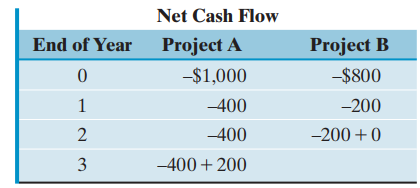
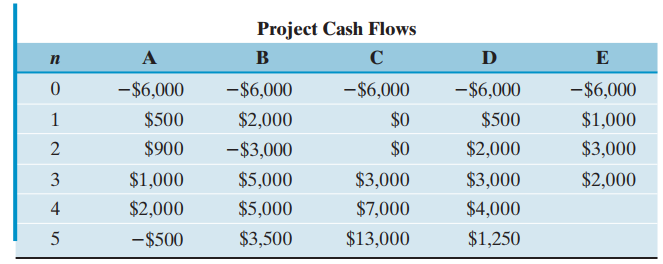
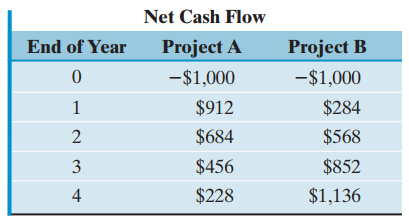
Consider the following sets of investment projects:Compute the equivalent annual worth of each project at i = 10%, and determine the acceptability of each project.
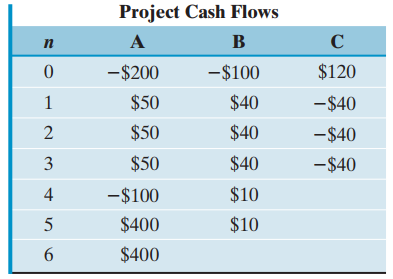
Consider the following cash flows and compute the equivalent annual worth at i = 12%:
Compare Google and Baidu, a Chinese search engine, using a thorough financial ratios analysis.Part A: For each company, compute all the ratios listed in Figure 13.7 for the current year (or the most recent financial statements available) (i.e., debt management, liquidity, asset management, market
Consider the Coca‐Cola Company and Pepsi‐Cola Company. Both companies compete with each other in the soft‐drink sector. Get the most recent annual report for each company, and answer the following questions. (You can visit the firms’ websites to download their annual reports. Look for
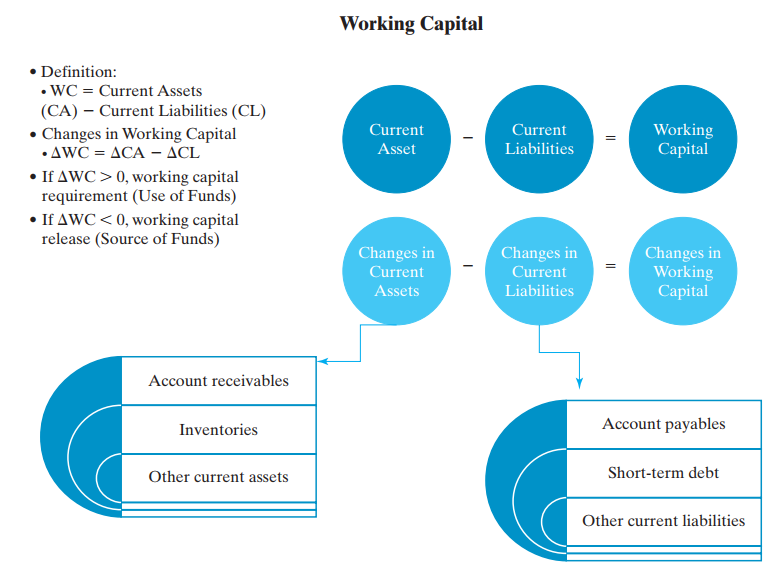
Reconsider Problem 10.23. Suppose that the purchase also requires an investment in working capital in the amount of $50,000, which will be recovered in full at the end of year 5. Determine the net present worth of the project.Data From Problem 10.23Peachtree Construction Company, a highway
Reconsider Problem 10.17. Suppose that the project requires a $30,000 investment in working capital at the beginning of the project and the entire amount will be recovered at the end of project life. How does this investment in working capital change the net cash flows series?Data From Problem
Reconsider the chapter opening story about the return on investment on college education. According to a recent study, attending a university full-time costs the average student more than $17,000 a year. But here’s the magic number that makes it all worthwhile: Over the years, university
Ms. Kennedy borrowed $4,909 from a bank to finance a car at an add‐on interest rate4 of 6.105%. The bank calculated the monthly payments as follows:• Contract amount = $4,909 and contract period = 42 months (or 3.5 years). Thus, add@on interest is = $4,909 (0.06105)(3.5) = $1,048.90.•
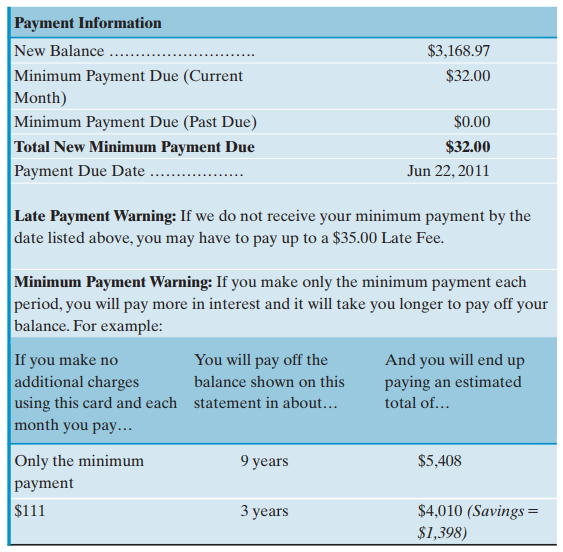
Kevin Moore received his monthly credit card statement from his bank. His current outstanding balance is $3,168.97. The minimum monthly payment due is 1% of the outstanding balance or $20, whichever is higher. The bank uses the Average Daily Balance method to calculate the periodic interest
Consider the following two mutually exclusive service projects with project lives of three years and two years, respectively. (The mutually exclusive service projects will have identical revenues for each year of service.) The interest rate is known to be 12%.If the required service period is six
To decrease the costs of operating a lock in a large river, a new system of operation is proposed. The system will cost $650,000 to design and build. It is estimated that it will have to be reworked every 10 years at a cost of $100,000. In addition, an expenditure of $50,000 will have to be made at
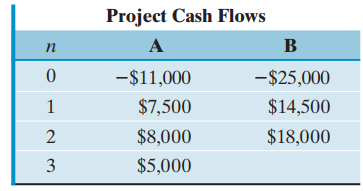
Consider the following two mutually exclusive investment projects:Which project would you select if you used the infinite planning horizon with project repeat ability likely (same costs and benefits) based on the PW criterion? Assume that i = 12%. Project Cash Flows A B п -$11,000 -$25,000
You are considering buying a new car worth $15,000. You can finance the car either by withdrawing cash from your savings account, which earns 8% interest compounded monthly, or by borrowing $15,000 from your dealer for four years at 11% interest compounded monthly. You could earn $5,635 in interest
In 2011, Kevin Jones, Texas Tigers quarterback, agreed to an eight‐year, $50 million contract that at the time made him the highest‐paid player in professional football history. The contract included a signing bonus of $11 million and called for annual salaries of $2.5 million in 2011, $1.75
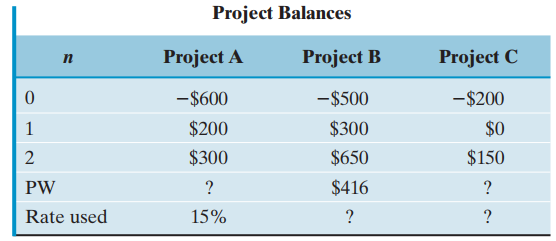
Consider the following project-balance profiles for proposed investment projects:Now consider the following statements:Statement 1: For Project A, the cash flow at the end of year 2 is $100.Statement 2: The future value of Project C is $0.Statement 3: The interest rate used in the Project B
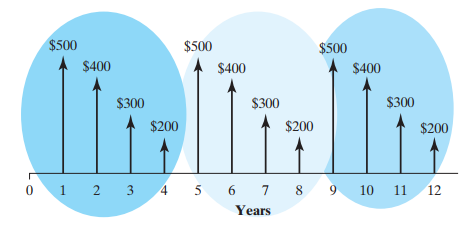
Consider an investment project for which the cash flow pattern repeats itself every four years indefinitely, as shown in the accompanying figure. At an interest rate of 12% compounded annually, compute the capitalized-equivalent amount for this project. $500 $500 $500 $400 $400 $400 $300 $300 $300
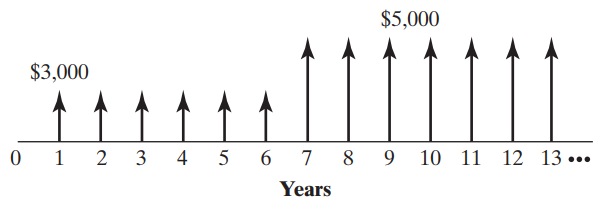
At i = 15%, what is the annual-equivalence amount for the infinite series shown next? $5,000 $3,000 3 4 5 8 9 10 11 12 13 Years
A company is currently paying its employees $0.51 per mile to drive their own cars when on company business. However, it is considering supplying employees with cars, which would involve the following cost components: car purchase at $22,000 with an estimated three-year life; a net salvage value of
A large food-processing corporation is considering using laser technology to speed up and eliminate waste in the potato-peeling process. To implement the system, the company anticipates needing $3 million to purchase the industrial-strength lasers. The system will save $1,200,000 per year in labor
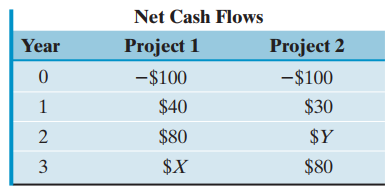
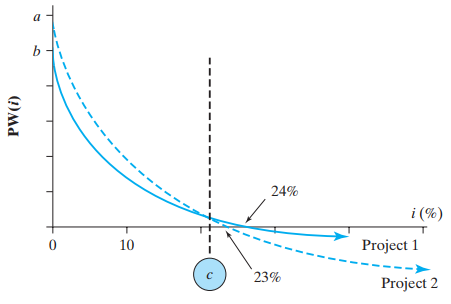
Consider the following cash flows and present-worth profiles on Page 218:(a) Determine the values for X and Y.(b) Calculate the terminal project balance of Project 1 at MARR = 24%.(c) Find the values for a, b, and c in the PW plot. Net Cash Flows Project 1 Year Project 2 -$100 -$100
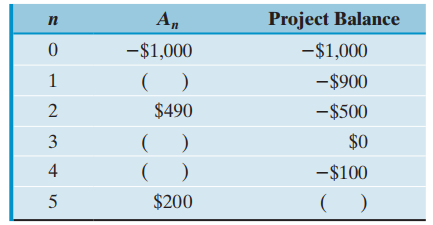
Consider the following project balances for a typical investment project with a service life of five years:(a) Fill in the blanks by constructing the original cash flows of the project and determining the terminal balance.(b) Determine the interest rate used in the project-balance calculation, and
Consider the following sets of investment projects:(a) Compute the future worth at the end of life for each project at i = 15%.(b) Determine the area of negative project balance for each project.(c) Determine the discounted payback period for each project.(d) Determine the area of
Consider the following set of independent investment projects:(a) For a MARR of 10%, compute the net present worth for each project, and determine the acceptability of each project.(b) For a MARR of 10%, compute the net future worth of each project at the end of each project period, and determine
Maintenance money for a new building at a college is being solicited from potential alumni donors. You would like to make a donation to cover all future expected maintenance costs for the building. These maintenance costs are expected to be $40,000 each year for the first five years, $50,000 for
A group of concerned citizens has established a trust fund that pays 6% interest compounded monthly to preserve a historical building by providing annual maintenance funds of $25,000 forever. Compute the capitalized-equivalent amount for these building maintenance expenses.
A newly constructed bridge costs $10,000,000. The same bridge is estimated to need renovation every 10 years at a cost of $1,000,000. Annual repairs and maintenance are estimated to be $100,000 per year.(a) If the interest rate is 5%, determine the capitalized-equivalent cost of the bridge.(b)
Consider a retired gentleman who starts to collect his Social Security benefits at the age of 66. The monthly check would be close to $2,460. Assuming that his interest rate is 6% compounded monthly, answer the following questions:(a) If he lives 20 years after retirement, what would be the
Consider the following two mutually exclusive projects:(a) At an interest rate of 25%, which project would you recommend choosing?(b) Compute the area of negative project balance, discounted payback period, and area of positive project balance for each project. Which project is exposed to a higher
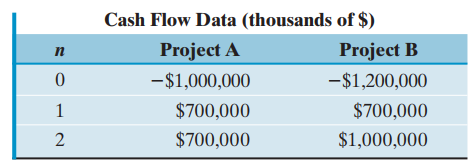
Consider the following cash flow data for two competing investment projects:(a) At i = 12%, which of the two projects would be a better choice?(b) At i = 22%, which project is chosen by the NPW rule? Cash Flow Data (thousands of $) Project A Project B -$1,200,000 -$1,000,000 $700,000
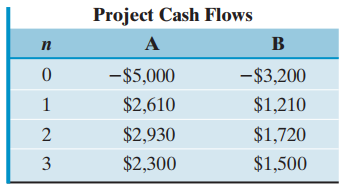
Consider the following two mutually exclusive investment projects: Assume that the MARR = 12%.(a) Which alternative would you select by using the NPW criterion?(b) Which alternative would you select by using the net-future-worth criterion? Project Cash Flows A B п -$5,000 -$3,200 $2,610
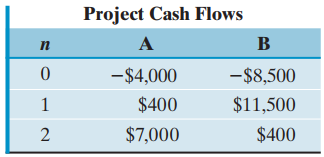
Consider the following two mutually exclusive investment projects:Assume that the MARR = 15%.(a) Using the NPW criterion, which project would you select?(b) On the same chart, sketch the PW(i) function for each alternative for i = 0% and 50%. For what range of i would you prefer Project
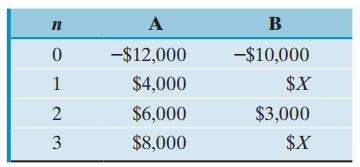
Consider the following two mutually exclusive projects:What value of X would make the decision maker indifferent between A and B at an interest rate of 12%? A B п -$12,000 -$10,000 $X $4,000 $6,000 $3,000 $X $8,000 2. 3.
Showing 3900 - 4000
of 4481
First
31
32
33
34
35
36
37
38
39
40
41
42
43
44
45
Step by Step Answers

 Get 50% OFF
Claim Now
Get 50% OFF
Claim Now