New Semester
Started
Get
50% OFF
Study Help!
--h --m --s
Claim Now
Question Answers
Textbooks
Find textbooks, questions and answers
Oops, something went wrong!
Change your search query and then try again
S
Books
FREE
Study Help
Expert Questions
Accounting
General Management
Mathematics
Finance
Organizational Behaviour
Law
Physics
Operating System
Management Leadership
Sociology
Programming
Marketing
Database
Computer Network
Economics
Textbooks Solutions
Accounting
Managerial Accounting
Management Leadership
Cost Accounting
Statistics
Business Law
Corporate Finance
Finance
Economics
Auditing
Tutors
Online Tutors
Find a Tutor
Hire a Tutor
Become a Tutor
AI Tutor
AI Study Planner
NEW
Sell Books
Search
Search
Sign In
Register
study help
business
microeconomics
Microeconomics Private And Public Choice 13th Edition James D. Gwartney - Solutions
1.● Did the New Deal policies end the Great Depression?
1.● Why was the Great Depression so long and severe?
1.● What caused the Great Depression? Was it the stock market crash of 1929?
1.6. Some charge that the Crisis of 2008 was caused by the “greed” of Wall Street firms and other bankers.Do you agree with this view? Do you think there was more greed on Wall Street in the first five years of this century than during the 1980s and 1990s?Why or why not?
1.5. When mortgage originators sell mortgages to Fannie Mae, Freddie Mac, and investment banks the originators have no additional liability for possible default by the borrower. How will this arrangement influence the incentive of the originators to scrutinize the creditworthiness of the
1.4. When did mortgage default and housing foreclosure rates begin to rise rapidly? When did the economy go into the current recession? Was there a causal relationship between the two? Discuss.
1.3. If owners have little or no equity in their houses, how will this influence the likelihood that they will default on their mortgage? Why?
1.2. What happened to the credit standards (e.g., minimum down payment, mortgage loan relative to the value of the house, and creditworthiness of the borrower) between 1995 and 2005? Why did the credit standards change? How did this influence the housing price bubble and later the default and
1.1. Why did housing prices rise rapidly during 2002–2005? Why did the mortgage default rate increase so sharply during 2006 and 2007 even before the current recession began?
1.● What lessons should we learn from the Crisis of 2008?
1.● What caused the economic Crisis of 2008?
1.● Why did housing prices rise rapidly during 2001–2005 and then fall in the years immediately following? Did regulation play a role? Did monetary policy contribute to the housing boom and bust?
1.9. Are stocks a risky investment? How can one reduce the risk accompanying stock market investments ?
1.8. Congress is currently considering legislation that would increase both the tax on dividends and the tax on capital gains derived from the appreciation of assets. How would an increase in the tax rate applied to dividends and capital gains income affect stock prices? Why?
1.7. What is the random walk theory of stock prices?What does it indicate about the ability of “experts”to forecast accurately the future direction of stock prices?
1.6. What is an indexed equity mutual fund? What is a managed equity mutual fund? How will the administrative costs of the two differ?
1.5. The stocks of some corporations that have never made a profit, especially those in high-technology industries, have risen in price. What causes investors to be willing to buy these stocks?
1.4. If an investment adviser gives you some hot new stock tip, is it likely to be a “sure thing”? Why or why not? If you have a stockbroker and purchase the stocks promoted by the broker, are you likely to earn a high return on your stock investments? Why or why not?
1.3. Microsoft stock rose from less than $10 in 1995 to more than $100 per share in 2000. Microsoft has made sizable profits but never paid a dividend.Why were people willing to pay such a high price knowing that they might not get dividends for many years?
1.2. Suppose that more expansionary monetary policy leads to inflation and higher nominal interest rates.How is this likely to affect the value of stocks?Explain.
1.1. A friend just inherited $50,000. She informs you of her investment plans and asks for your advice.“I want to put it into the stock market and use it for my retirement in thirty years. What do you think is the best plan that will provide high returns at a relatively low risk?” What answer
1.● How has the stock market been affected by the recent financial crisis? Is now a good time to invest in the stock market?
1.● Can an ordinary investor profit from stock market investments? If so, how and under what circumstances?
1.● What determines the price of a stock? Can experts forecast the future direction of stock prices?
1.● What is the economic function of the stock market?
1.6. The Social Security payroll tax is split equally between the employee and the employer. Would it make any difference if the entire tax was imposed on employees? Would employees be helped if all the tax was imposed on employers? (Hint: You may want to consult Chapter 4, section on tax
1.5. Does the current Social Security system promote income equality? Why or why not?
1.4. How does Social Security affect the economic well-being of blacks relative to whites and Hispanics? Explain.
1.3. Do you think workers should be permitted to invest all or part of their Social Security taxes into a personal retirement account? Why or why not?
1.2. Why does the Social Security system face a crisis?Are there real assets in the Social Security Trust Fund that can be used to pay future benefits? Will the trust fund help to avert higher future taxes and/or benefit reductions when the baby boomers retire?Why or why not?
1.1. Is the Social Security system based on the same principles as private insurance? Why or why not?
1.● How will Social Security work in the twenty-first century?
1.● Does Social Security transfer income from the rich to the poor? How does it impact the economic status of blacks, Hispanics, and those with fewer years of life expectancy?
1.● Will the Social Security Trust Fund lighten the tax burden of future generations?
1.● Why is Social Security headed for problems?
1.3. Indicate how the production, marketing, and distribution of each of the following are likely to be influenced by the development of the Internet: (a) popular music, (b) movies, (c) automobiles, (d) commercial employment agencies, (e) physician services, and(f) health care. Briefly explain your
1.2. The share of airline tickets bought over the Internet has grown rapidly, whereas the percentage of groceries purchased online remains minuscule. What factors likely explain this difference?
1.1. What effect does the Internet have on the efficiency of markets? Explain. How is the Internet likely to influence productivity and the growth of output in the years immediately ahead?
1.● What is the effect of the Internet on the labor market?
1.● How is the Internet changing product markets?
1.● Why is the development of the Internet an important economic phenomenon?
1.6. How have the size and functions of government changed during the last two centuries? Did the framers of the U.S. Constitution seek to limit the size of the federal government? If so, how?
1.5. As the result of changes during the last two decades, the bottom half of income recipients now pay little or no personal income tax. Rather than paying taxes, many of them now receive payments back from the IRS as the result of the Earned Income Tax Credit and Child Tax Credit programs.Do you
1.4. Compared with the situation prior to 1981, the marginal tax rates imposed on individuals and families with high incomes are now lower. What was the top marginal personal income tax rate in 1980? What is the top rate now? Are you in favor of or opposed to the lower marginal rates? Why?
1.3. Because the structure of the personal income tax is progressive, a larger share of income is taxed at higher rates as income grows. Therefore, economic growth automatically results in higher taxes unless offsetting legislative action is taken. Do you think this is an attractive feature of the
1.2. During the last four decades, a smaller share of the federal budget has been allocated to national defense and a larger share to income transfers and health care. Does economics indicate that this change will help Americans achieve higher living standards?
1.1. How do taxes influence the efficiency of resource use? How much does it cost for the government to raise an additional dollar (or $1 billion) of tax revenue?
1.● How does the size of government affect prosperity and economic growth?
1.● How does the size of government in the United States compare with other countries?
1.● Do the rich pay their fair share of taxes? Do they pay less now than they did a couple of decades ago?
1.● Do taxes measure the cost of government?
1.● How is the federal response to the financial crisis affecting spending and taxes?
1.● How has the composition of government spending changed in recent decades?
1.● How has government spending per person changed historically in the United States?
1.16. “Tariffs not only reduce the volume of imports, they also reduce the volume of exports.” Is this statement true or false? Explain your answer.
1.12. Does international trade cost Americans jobs? Does interstate trade cost your state jobs? What is the major effect of international and interstate trade?
1.11. In recent years, the European Union has virtually eliminated trade restrictions among its members, and most members now use a common currency.What impact have these changes had on European economies?
1.5. “The average American is hurt by imports and helped by exports.” Do you agree or disagree with this statement?
1.2. “Trade restrictions limiting the sale of cheap foreign goods in the United States are necessary to protect the prosperity of Americans.” Evaluate this statement made by an American politician.
1.● What effects do trade restrictions have on an economy?
1.14. Suppose one family has $100,000 whereas another has only $20,000. Is this outcome fair? What is your initial reaction? Compare and contrast your views depending on the following:a. The family with the higher income has both a husband and wife working, whereas the other family has chosen for
1.13. Was the poverty rate increasing or decreasing prior to the War on Poverty initiated by the Johnson administration? As income-transfer programs accompanying the War on Poverty increased beginning in the latter half of the 1960s, what happened to the poverty rate?
1.7. Sue is a single parent with two children. She is considering a part-time job that pays $800 per month.She is currently drawing monthly cash benefits of$300, food stamp benefits of $100, and Medicaid benefits valued at $80. If she accepts the job, she will be liable for employment taxes of $56
1.● How do resource prices and income differences influence the incentive of people to develop resources and use them productively?
1.16. Will political officials be more likely to channel funds into wealth-creating projects than private investors and entrepreneurs? Why or why not?Discuss.
1.12. According to a news item, the owner of a lottery ticket paying $3 million over twenty years is offering to sell the ticket for $1.2 million cash now.“Who knows?” the ticket owner explained. “We might not even be here in twenty years, and I do not want to leave it to the dinosaurs.”a.
1.1. How would the following changes influence the rate of interest in the United States?a. an increase in the positive time preference of lendersb. an increase in the positive time preference of borrowersc. an increase in domestic inflationd. increased uncertainty about a nuclear ware. improved
1.● When is an investment profitable? How do profitable and unprofitable investments influence the wealth of nations?
1.11. Consider two occupations (A and B) that employ people with the same skills and abilities. When employed, workers in the two occupations work the same number of hours per day. In occupation A, employment is stable throughout the year, whereas employment in B is characterized by seasonal
1.9. “If individuals had identical abilities and opportunities, earnings would be equal.” Is this statement true or false?
1.3. What explains the earnings differences between(a) a lawyer and a minister; (b) an accountant and an elementary school teacher; (c) a business executive and a social worker; (d) a country lawyer and a Wall Street lawyer; (e) an experienced, skilled craftsperson and a twenty-year-old high school
1.● Does automation destroy jobs?
1.● What is the source of higher wages? Why has the growth rate of both wages and income per capita increased during the past decade?
1.● Why do some people earn more than others?
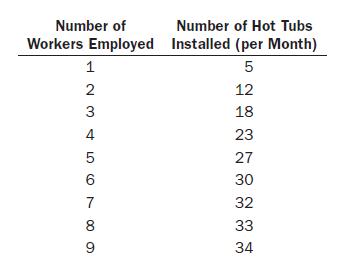
1.13. Leisure Times, Inc., employs skilled workers and capital to install hot tubs. The capital includes the tools and equipment workers use to construct and install the tubs. The installation services are sold in a competitive market for $1,200 per hot tub.Leisure Times is able to hire workers for
1.11. Other things constant, what impact will a highly elastic demand for a product have on the elasticity of demand for the resources used to produce the product? Explain.
1.10. “The earnings of engineers, doctors, and lawyers are high because lots of education is necessary to practice in these fields.” Evaluate this statement.
1.9. A firm is considering moving from the United States to Mexico. The firm pays its U.S. workers$12 per hour. Current U.S. workers have a marginal product of forty, whereas the Mexican workers have a marginal product of ten. How low would the Mexican wage have to be for the firm to reduce its
1.8. A dressmaker uses labor and capital (sewing machines) to produce dresses in a competitive market. Suppose the last unit of labor hired cost$1,000 per month and increased output by 100 dresses. The last unit of capital hired (rented) cost$500 per month and increased output by 80 dresses.Is the
1.7. Suppose that you were the manager of a large retail store that was currently experiencing a shoplifting problem. Every hour, approximately$15 worth of merchandise was being stolen from your store. Suppose that a security guard would completely eliminate the shoplifting in your store. If you
1.6. Many school districts pay teachers on the basis of their highest degree earned and number of years of service (seniority). They often find it quite easy to fill the slots for English and history teachers, but very difficult to find the required number of math and science teachers. Can you
1.5. Are the following statements both correct? Are they inconsistent with each other? Explain.a. “Firms will hire a resource only if they can make money by doing so.”b. “In a market economy, each resource will tend to be paid according to its marginal product.Highly productive resources will
1.4. Are productivity gains the major source of higher wages? If so, how does one account for the rising real wages of barbers, who, by and large, have used the same techniques for a halfcentury?(Hint: Do not forget opportunity cost and supply.)
1.3. Use the information in Exhibit 4 of this chapter to answer the following:a. How many employees (operators) would Compute-Accounting hire at a weekly wage of $250 if it were attempting to maximize profits?b. What would the firm’s maximum profit be if its fixed costs were $1,500 per week?c.
1.2. How does a firm decide whether or not to employ an additional unit of a resource? What determines the combination of skilled and unskilled workers employed by a firm?
1.1. “The demand for resources is a derived demand.”What is meant by that statement? Why is the employment of a resource inversely related to its price?
1.● What determines the market price of a resource? How do resource prices help a society allocate its resources efficiently among competing uses?
1.● How is the quantity supplied of a resource related to its price in the short run? In the long run?
1.● How do business firms decide which resources to employ and the quantity of each that will be used?
1.● Why do business firms demand labor, machines, and other resources? Why is the demand for a productive resource inversely related to its price?
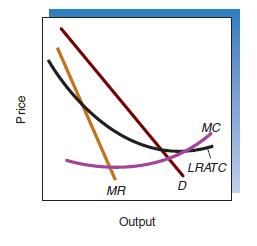
1.15. The diagram shows demand and long-run cost conditions in an industry.a. Explain why the industry is likely to be monopolized.b. Indicate the price that a profit-maximizing monopolist would charge and label it P.c. Indicate the monopolist’s output level and label it Q.d. Indicate the maximum
1.14. Suppose that you produce and sell children’s tables in a local market. Past experience enables you to estimate your demand and marginal cost schedules.This information is presented in the table at the top of the next page.a. Fill in the missing revenue and cost schedules.b. Assuming you are
1.13. Gouge-em Cable Company is the only cable television service company licensed to operate in Backwater County. Most of its costs are access fees and maintenance expenses. These fixed costs total $640,000 monthly. The marginal cost of adding another subscriber to its system is constant at $2 per
1.12. “My uncle just bought 1,000 shares of Microsoft, one of the largest and most profitable companies in the United States. Given Microsoft’s high profit rate, he will make a bundle from this purchase.”Evaluate this statement. Is it necessarily true?Explain.
1.11. Historically, the real cost of transporting both goods and people has declined substantially. What impact do lower transportation costs have on the market power of individual producers? Do you think the U.S. economy is more or less competitive today than it was 100 years ago? Explain.
1.10. We have a theory to explain the equilibrium price and output for monopoly, but not for oligopoly.Why? How can game theory help us understand the decisions made by oligopolists?
1.9. In large cities, taxi fares are often set above the market equilibrium rate. Sometimes, the number of licenses is limited in order to maintain the above-market price. Other times, licenses are automatically granted to anyone wanting to operate a taxi. When taxi fares are set above market
1.8. Why is oligopolistic collusion more difficult when there is product variation than when the products of all firms are identical?
1.7. How will high entry barriers into a market influence (a) the long-run profitability of the firms,(b) the cost efficiency of the firms in the industry,(c) the likelihood that some inefficient (highcost)firms will survive, and (d) the incentive of entrepreneurs to develop substitutes for the
1.6. Is a monopolist subject to any competitive pressures? Explain. Would an unregulated monopolist have an incentive to operate and produce efficiently? Why or why not?
Showing 2400 - 2500
of 7548
First
18
19
20
21
22
23
24
25
26
27
28
29
30
31
32
Last
Step by Step Answers

 Get 50% OFF
Claim Now
Get 50% OFF
Claim Now