



Question: In Example Problem 10.1, we considered an addition reaction involving two ethylene molecules and found that the entropy change was negative. We suggested at the
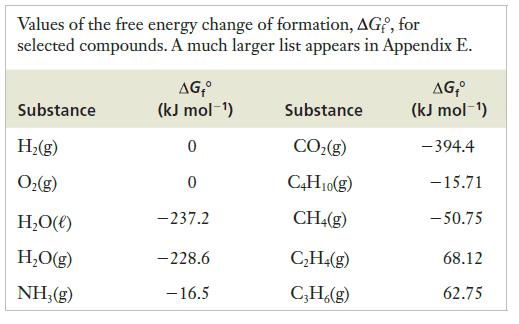
In Example Problem 10.1, we considered an addition reaction involving two ethylene molecules and found that the entropy change was negative. We suggested at the time that this reaction would still be spontaneous because it is strongly exothermic. Confirm this by calculating the standard free energy change for the same reaction using values from Table 10.3.
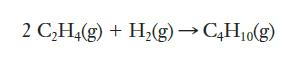
Table 10.3
Data from example problem 10.1
Polymerization reactions are complicated somewhat because they involve very large numbers of molecules. But we can demonstrate the general features of the thermodynamics of polymerization by considering a much smaller model system. Instead of considering the formation of polyethylene, for example, we can begin with the following reaction in which two ethylene molecules combine with hydrogen to form butane:

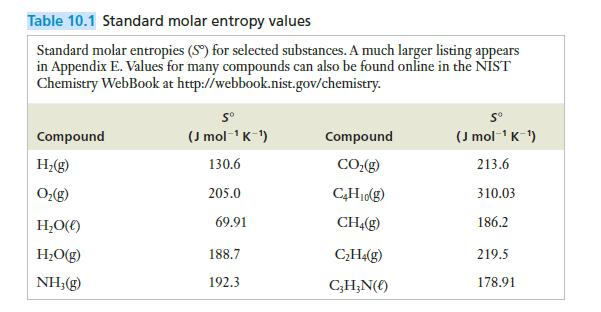
Use data from Table 10.1 to calculate ΔS° for this reaction.
Strategy Any time we are asked to calculate the standard entropy change for a reaction, our first thought should be to look up values for standard molar entropy and use them in Equation 10.3. The two main things we need to be careful about are (1) to watch the state of the substances (in this case all are gases) and (2) to make sure we don’t forget to include the stoichiometric coefficients in our calculations. Unlike heats of formation, the standard molar entropy of an element in its standard state is not zero, so we need to be sure to include everything appearing in the equation.
2 CH4(g) + H(g) C4H0(g)
Step by Step Solution
3.43 Rating (156 Votes )
There are 3 Steps involved in it
Analyze Your Answer This value is negative indicating that this reaction would be spontan... View full answer

Get step-by-step solutions from verified subject matter experts