New Semester
Started
Get
50% OFF
Study Help!
--h --m --s
Claim Now
Question Answers
Textbooks
Find textbooks, questions and answers
Oops, something went wrong!
Change your search query and then try again
S
Books
FREE
Study Help
Expert Questions
Accounting
General Management
Mathematics
Finance
Organizational Behaviour
Law
Physics
Operating System
Management Leadership
Sociology
Programming
Marketing
Database
Computer Network
Economics
Textbooks Solutions
Accounting
Managerial Accounting
Management Leadership
Cost Accounting
Statistics
Business Law
Corporate Finance
Finance
Economics
Auditing
Tutors
Online Tutors
Find a Tutor
Hire a Tutor
Become a Tutor
AI Tutor
AI Study Planner
NEW
Sell Books
Search
Search
Sign In
Register
study help
engineering
elasticity theory applications
Elasticity Theory Applications And Numerics 4th Edition Martin H. Sadd Ph.D. - Solutions
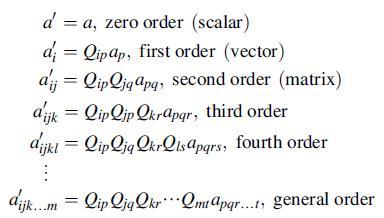
For the fourth-order isotropic tensor given in Exercise 1.9, show that if β = γ , then the tensor will have the following symmetry Cijkl = Cklij.Data from exercise 1.9The most general form of a fourth-order isotropic tensor can be expressed by:where α, β, and γ are arbitrary constants.
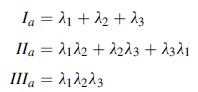
Show that the fundamental invariants can be expressed in terms of the principal values as given by relations (1.6.5).Equation 1.6.5 I@ = + 12 + 13 = + 3 + 13 IIIa =
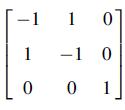
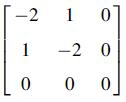
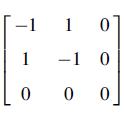
Determine the invariants, and principal values and directions of the following matrices. Use the determined principal directions to establish a principal coordinate system, and following the procedures in Example 1.3, formally transform (rotate) the given matrix into the principal system to arrive
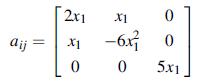
A second-order symmetric tensor field is given by:Using MATLAB (or similar software), investigate the nature of the variation of the principal values and directions over the interval 1 ≤ x1 ≤ 2. Formally plot the variation of the absolute value of each principal value over the range 1 ≤ x1
Calculate the quantities ∇.u, ∇×u, V2u, ∇u, tr (∇u) for the following Cartesian vector fields:a. b. c. = 2x1e+x1x2e2 + 2x1x3e3
The dual vector ai of an antisymmetric second-order tensor aij is defined by ai = –1/2εijkajk. Show that this expression can be inverted to get ajk = –εijkai.
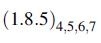
Using index notation, explicitly verify the vector identities:a. b.c. (1.8.5) 1,2,3
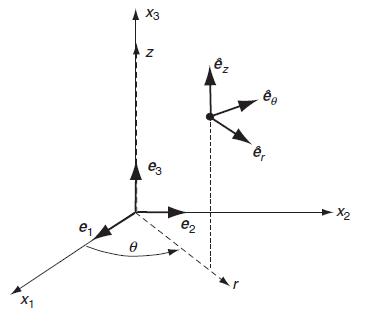
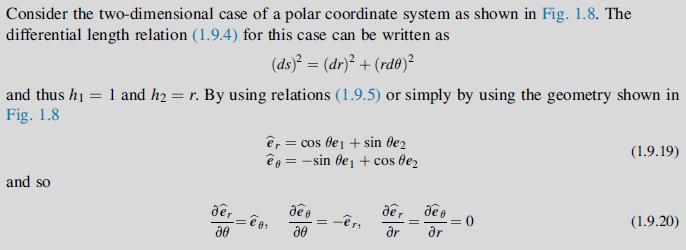
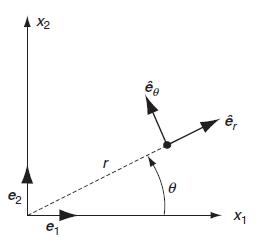
Extend the results found in Example 1.5, and determine the forms of ∇f, ∇. u, V2f, and ∇ ×u for a three-dimensional cylindrical coordinate system (see Fig. 1.5).Fig 1.5Example 1.5Fig 1.8Equation 1.94Equation 1.95 0 X3 N e3 2 z eo X
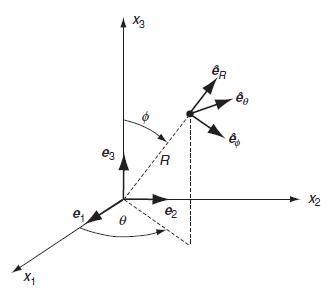
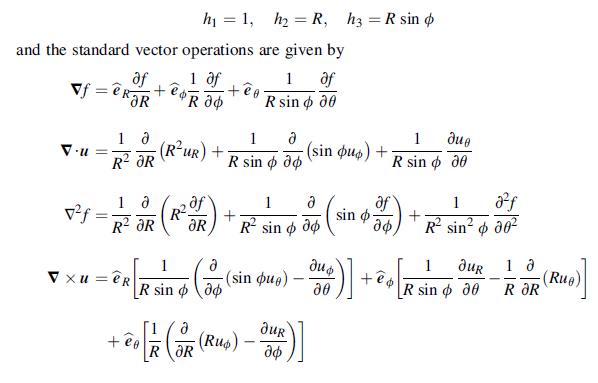
For the spherical coordinate system (R, Ø, θ) in Fig. 1.6, show that:Fig 1.6 X @3 0 Ex R e2 en ee X2
Showing 700 - 800
of 709
1
2
3
4
5
6
7
8
Step by Step Answers

 Get 50% OFF
Claim Now
Get 50% OFF
Claim Now