New Semester
Started
Get
50% OFF
Study Help!
--h --m --s
Claim Now
Question Answers
Textbooks
Find textbooks, questions and answers
Oops, something went wrong!
Change your search query and then try again
S
Books
FREE
Study Help
Expert Questions
Accounting
General Management
Mathematics
Finance
Organizational Behaviour
Law
Physics
Operating System
Management Leadership
Sociology
Programming
Marketing
Database
Computer Network
Economics
Textbooks Solutions
Accounting
Managerial Accounting
Management Leadership
Cost Accounting
Statistics
Business Law
Corporate Finance
Finance
Economics
Auditing
Tutors
Online Tutors
Find a Tutor
Hire a Tutor
Become a Tutor
AI Tutor
AI Study Planner
NEW
Sell Books
Search
Search
Sign In
Register
study help
life sciences
biology concepts investigations
Biology Concepts And Investigations 4th Edition Mariëlle Hoefnagels - Solutions
What are the functions of LH and FSH in males and females?
Briefly explain the contradictory roles of estrogen in the human female reproductive cycle.
How are the human male and female reproductive tracts similar, and how are they different? How are the structures of the testis and ovary similar and different?
Some newborn mammals can walk and carry out other life functions independently. Human babies, on the other hand, are born helpless. Speculate about the trade-offs in these two reproductive strategies. What selective forces might limit the stage of development at which humans are born?
What is differentiation? How do protein gradients cause cells to differentiate?
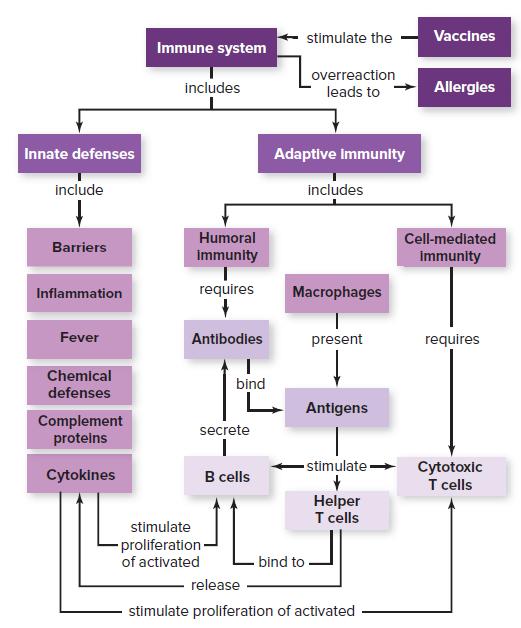
Refer to figure 34.19 and the chapter content to answer the following questions.1. Review the Survey the Landscape figure in the chapter introduction and the Pull It Together concept map. How do the actions of the immune system help an animal maintain homeostasis?2. Add memory B cells, plasma
Humans (and all other organisms) are in an evolutionary battle with a wide variety of pathogens. How does natural selection favor(a) An immune system that adjusts to a changing variety of pathogens(b) Pathogens that evade the immune system?
Explain the difference between clonal deletion and clonal selection; a natural killer cell and a cytotoxic T cell; antibodies and antigens; cell mediated and humoral immunity; an autoimmune disorder and an immunodeficiency.
How do AIDS, SCID, and allergies each relate to the function of the immune system?
Influenza viruses mutate rapidly, whereas the chickenpox virus does not. Why are people encouraged to receive vaccinations against influenza every year, whereas immunity to chickenpox lasts for decades?
Compare and contrast how a bacterial population becomes resistant to antibiotics and how a person becomes immune to infections by a particular species of bacteria.
Which do you think would be more dangerous, a deficiency of T cells or a deficiency of B cells? Explain your reasoning.
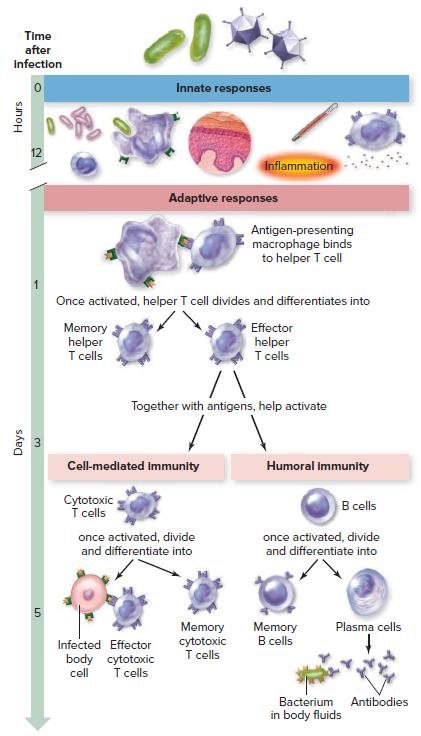
Briefly explain the function of each innate and adaptive defense listed in figure 34.17.Figure 34.17 Time after Infection Innate responses 12 Inflammation Adaptive responses Antigen-presenting macrophage binds to helper T cell Once activated, helper T cell divides and differentiates into Memory
What do a plasma cell and a memory cell descended from the same B cell have in common, and how do they differ?
The environment contains an enormous variety of potential antigens, but the immune system launches an attack only on those that actually enter the body. How does this specificity save energy?
As a treatment for bladder cancer, physicians may place a solution containing bovine tuberculosis bacteria into the patient’s bladder. The bacteria bind to the bladder wall. Scientists do not fully understand why this treatment causes the patient’s immune system to launch an attack against the
Dead phagocytes are one component of pus. Why is pus a sure sign of infection?
Since fever has protective effects, should we avoid taking feverreducing medications when ill? Use the Internet to research the consequences of overmedicating a fever and the risk of allowing fever to rise too high.
Explain why a scraped knee increases the chance that pathogens will trigger an adaptive immune response.
Explain the observation that lymphoid tissues are scattered in the skin, lungs, stomach, and intestines.
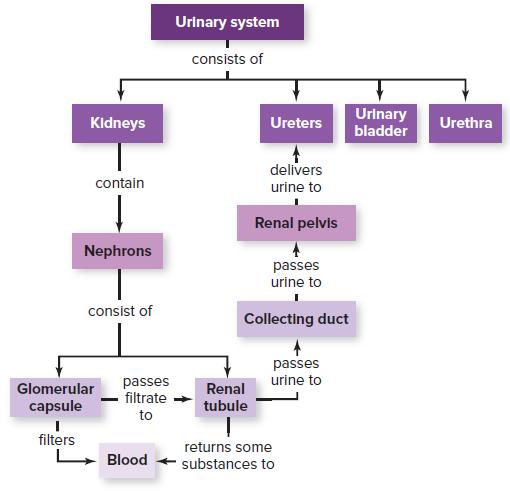
Refer to figure 33.18 and the chapter content to answer the following questions.1. Review the Survey the Landscape figure in the chapter introduction and the Pull It Together concept map. How do the urinary system and the circulatory system work together to maintain homeostasis?2. Add the terms
Diuretic drugs prevent ions from being reabsorbed from the nephron. Explain why a diuretic drug might lower blood pressure. Why do some patients have low levels of salts in their blood while taking a diuretic?
The fluids deep in the medulla of the kidney have a much higher solute concentration than those in the cortex. Where do the solutes in the medulla come from? What is the role of that high solute concentration in the functioning of the nephron loop?
How could chronic high blood pressure damage the kidneys? How could very low blood pressure impair kidney function?
How does the kidney reduce the volume of urine to a small fraction of the volume of filtrate that enters the glomerular capsule?
Shortly after you drink a large glass of water, you will feel the urge to urinate. Explain this observation. Begin by tracing the path of the water, starting at the glomerulus and ending with the arrival of urine in the bladder.
Explain why exercise increases the urea concentration in urine.
What are the three types of nitrogenous wastes? Which animals are most likely to excrete each one, and why?
Imagine you are adrift at sea. If you drink seawater, you will dehydrate much faster than if you have access to fresh water. Explain.
Explorers of Antarctica must eat thousands more Calories per day than people exploring the tropics. Explain this observation.
Birds and insects frequently collect nectar from plants. Birds are endothermic, and insects are ectothermic. Do you think that a given amount of nectar can support a greater mass of insects or of birds? Explain.
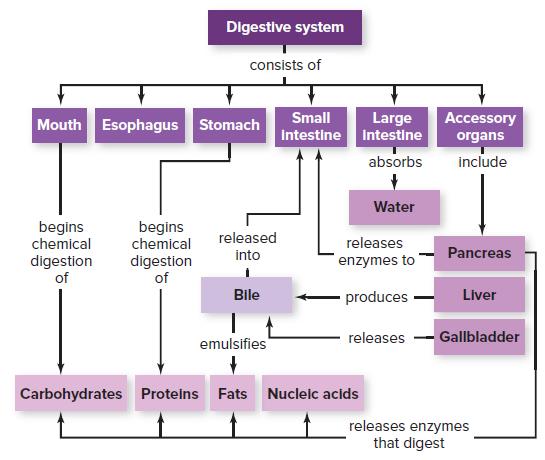
Refer to figure 32.22 and the chapter content to answer the following questions.1. Review the Survey the Landscape figure in the chapter introduction and the Pull It Together concept map. How do the digestive system and the circulatory system work together to maintain homeostasis?2. Add the terms
Since chewing gum cannot be digested, many children believe that a swallowed piece will remain in the body for 7 years. Propose an alternative prediction for how long gum might remain in the body, and explain your reasoning.
Design an experiment to test the hypothesis that intestinal bacteria are essential to nutrient absorption in mice.
How do the circulatory and muscular systems interact with the digestive system?
Fructose and glucose are both monosaccharides, but the body metabolizes these sugars differently. For example, glucose stimulates insulin release from the pancreas (see section 28.4); fructose does not. Moreover, insulin stimulates leptin release. Finally, fructose is more likely than glucose to be
Calculate your body mass index using the formula in the text. How could you change your BMI?
Write down the foods you ate today, and use nutrition labels to determine how many Calories you consumed. Then, use calculators on the Internet to estimate how many Calories you require each day based on your age, weight, gender, and activity level. Did you consume more or fewer Calories than you
Orlistat (Alli) is a weight-loss drug that inhibits the activity of lipases in the small intestine. Why would this be more effective than a drug that blocks the absorption of proteins or carbohydrates? Given that four essential vitamins are fat-soluble, what might be a side effect of blocking fat
What are the digestive products of carbohydrates, proteins, and fats? Where in the digestive system is each macromolecule digested?
Trace the movement of food in the digestive tract from mouth to anus.
Biologists estimate that carnivores assimilate 90% of the mass in their diet; in contrast, most herbivores assimilate only 30% to 60% of their food. How do these differences in assimilation efficiency relate to the structure of their digestive systems?
On a per-kilogram basis, why does a small mammal such as a shrew require so much more energy than does an elephant or other large mammal?
What are the two main functions of food in an animal’s body?
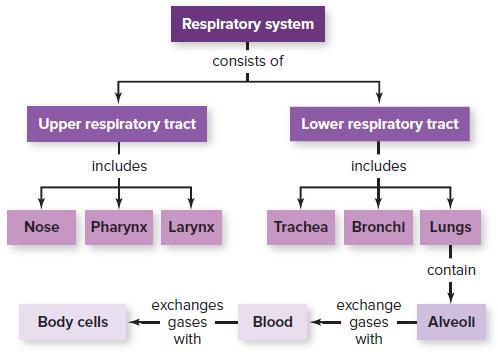
Refer to figure 31.18 and the chapter content to answer the following questions.1. Using the Survey the Landscape figure in the chapter introduction and figure 31.18, describe how the respiratory system helps an animal to maintain homeostasis.2. Add O2 and CO2 to the concept map; connect these
How are the lungs similar to the stomata of plants, and how are they different?
The concentration of O2 in the atmosphere declines with increasing elevation. Why do you think the times of endurance events at the 1968 Olympics, held in Mexico City (elevation: 2200 m), were relatively slow?
Search the Internet for hypotheses about why humans and other animals yawn; then design an experiment to test one of the hypotheses.
How does the brain establish the breathing rhythm?
A broken rib can sometimes puncture a lung, causing it to collapse. A collapsed lung leaks air into the chest cavity. Why might it be difficult for a person to fully expand a collapsed lung?
A track athlete runs 100 meters while holding his breath. Predict the gas composition of the breath he exhales as he crosses the finish line. How might it compare to the gas composition of a normally exhaled breath?
Why is carbon monoxide (CO) so dangerous?
People who suffer from claustrophobia are afraid of being enclosed in small areas. Some claustrophobes fear that they will “use all of the air” in the space and suffocate. Why is it impossible to use all of the air in a space? What does happen to the air in an enclosed space as you respire? Are
How does blood transport most CO2? In what other way is CO2 transported?
How does blood transport O2 to cells?
Jumping into cold water may initiate the “diving reflex,” during which blood is shunted toward the head and away from the limbs. Under these conditions, why might you be able to hold your breath for an extended period?
How does the pressure in the lungs compare to the pressure in the atmosphere during inhalation? During exhalation?
How is the branching pattern of the airways similar to the branching pattern in the blood vessels? What characteristic of airways and blood vessels increases as the structures branch?
A person can choke if a hard candy or other small object obstructs the airway. In drowning, a person’s lungs fill with water. Explain how each of these events can cause death. In most circumstances, how does the body react to prevent either of these disasters from occurring?
Trace the path of an O2 molecule from a person’s nose to a red blood cell at an alveolar capillary.
How is air cleaned, warmed, and humidified before it reaches the lungs?
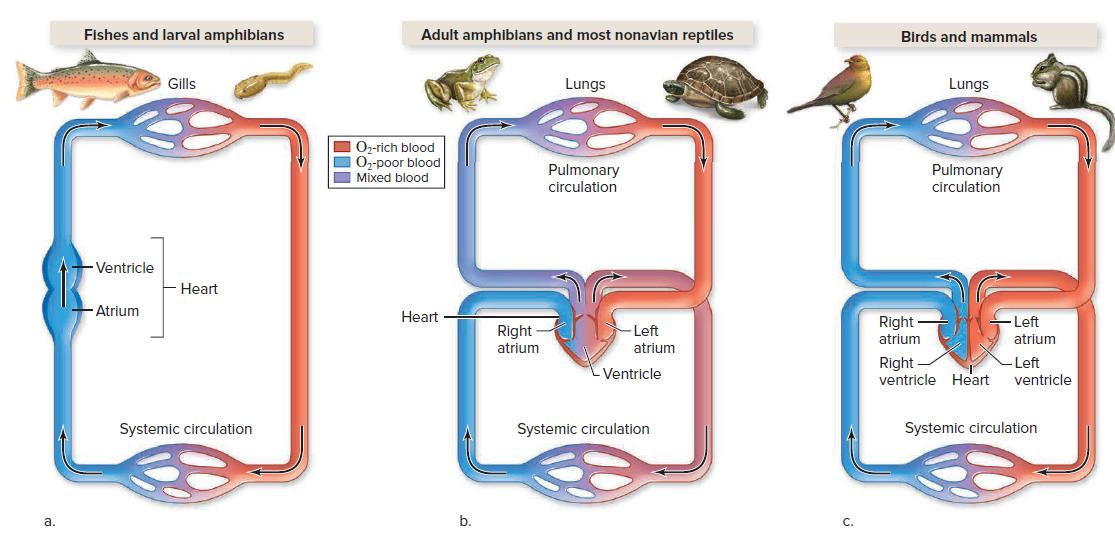
Compare figure 31.4 with figure 30.2. How might the evolution of lungs have selected for new adaptations in the circulatory system? How might changes in the heart have selected for more efficient lungs?Figure 30.2 Fishes and larval amphibians Adult amphiblans and most nonavian reptiles Birds and
Describe how lungs differ among the main groups of terrestrial vertebrates.
Explain why efficient respiratory and circulatory systems evolved as animals’ energy demands increased.
Write a paragraph comparing four types of respiratory surfaces (body surface, tracheae, gills, lungs). Your paragraph should describe each surface, list which animals have each, and say whether the surface can function in air, water, or both.
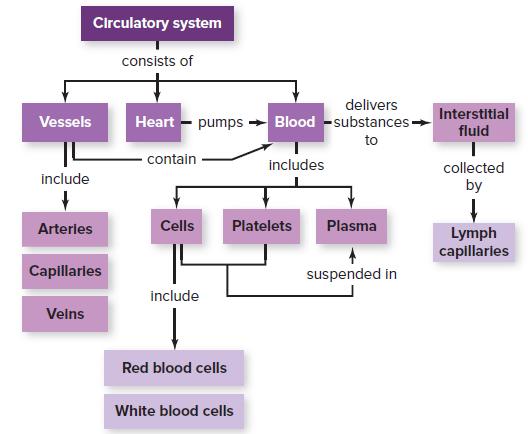
Refer to figure 30.21 and the chapter content to answer the following questions.1. Review the Survey the Landscape figure in the chapter introduction, and then add homeostasis, respiratory system, and digestive system to the Pull It Together concept map.2. How do pulmonary and systemic circulation
Use the Internet to learn more about disorders of the cardiovascular or lymphatic system. Choose one to investigate in more detail. What causes the disease you chose? Who is affected, and what are the consequences? Are there ways to prevent, treat, or cure the disease?
How is the human cardiovascular system similar to and different from the vascular tissue in a plant?
Name three ways that the circulatory system helps maintain homeostasis.
Describe the interactions between the circulatory system and the respiratory, immune, digestive, and endocrine systems.
Where does lymph originate? What propels lymph through the lymph vessels? How is the lymphatic system connected with the circulatory system? The immune system?
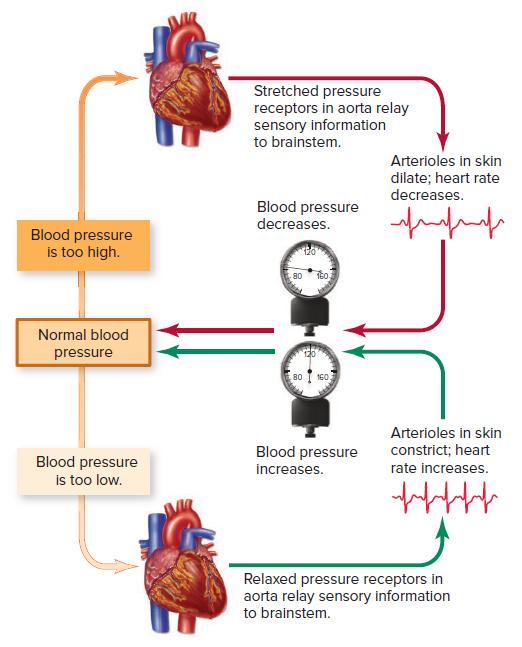
The carotid artery extends from the heart to the head. Some of the body’s blood pressure receptors are located in the carotid sinus, where the carotid artery passes through the neck. If you press lightly on the carotid sinus, what do you predict should happen to your heart rate? What if you press
What change in blood vessel diameter would raise blood pressure?
Explain why a doctor listens at your inner elbow with a stethoscope when measuring your blood pressure.
Endothelial cells lining the heart and blood vessels are the only cells to receive nutrients and O2 directly from blood. How do the rest of the body’s cells receive these resources and dispose of wastes?
Make a chart that compares systemic arteries, capillaries, and systemic veins. Consider the following properties: structure; amount of smooth muscle; presence of valves; cross-sectional area; blood pressure; blood velocity; direction of blood flow relative to the heart; O2 content of blood.
What is the function of heart valves? Why might a person with a leaky heart valve feel short of breath?
Describe the events that occur during one cardiac cycle.
Describe the path of blood through the heart’s chambers and valves, and through the pulmonary and systemic circulations.
One effect of aspirin is to prevent platelets from sticking together. Why do some people take low doses of aspirin to help prevent a heart attack?
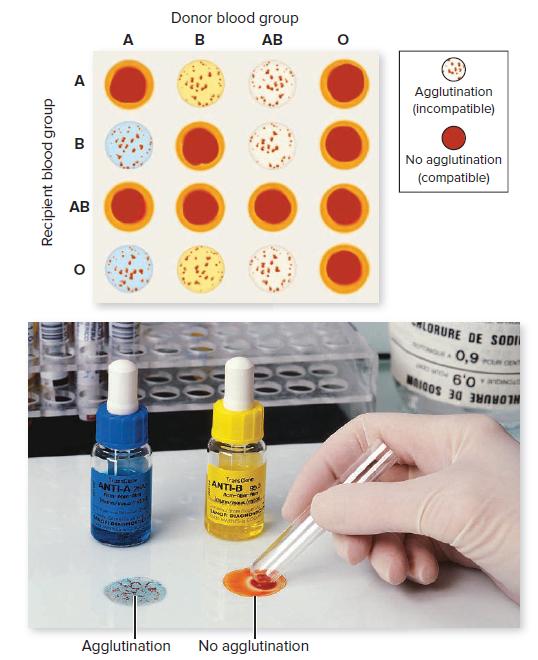
Referring to figure 30.4, speculate about which blood type is considered the “universal donor” and which is called the “universal recipient.” Explain your answer.Figure 30.4 Donor blood group AB A в A Agglutination (incompatible) No agglutination (compatible) AB LORURE DE SODI 0,9 POUM
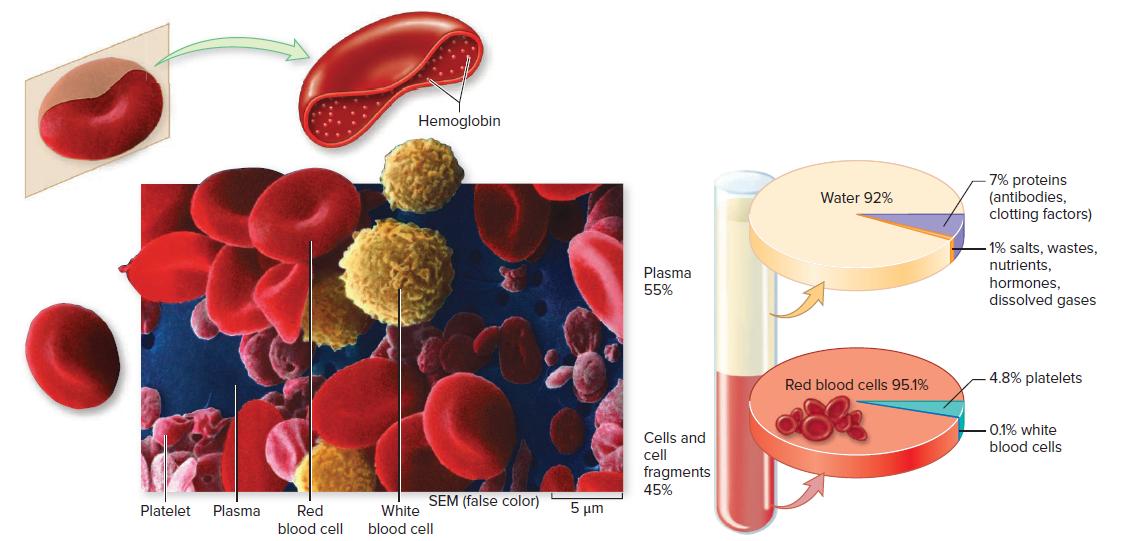
People infected with HIV eventually develop a diminished white blood cell count. When examining a blood sample under the microscope, would the blood cell composition of an AIDS patient look different from that of an unaffected individual? Why or why not? Consult figure 30.3.Figure 30.3 Hemoglobin
Some athletes turn to blood doping to gain an unfair competitive advantage. For example, they may take supplements of erythropoietin (EPO), a hormone that stimulates red blood cell production. Why would increasing the number of circulating red blood cells help an athlete? What might be the dangers
How are open and closed circulatory systems similar? How are they different?
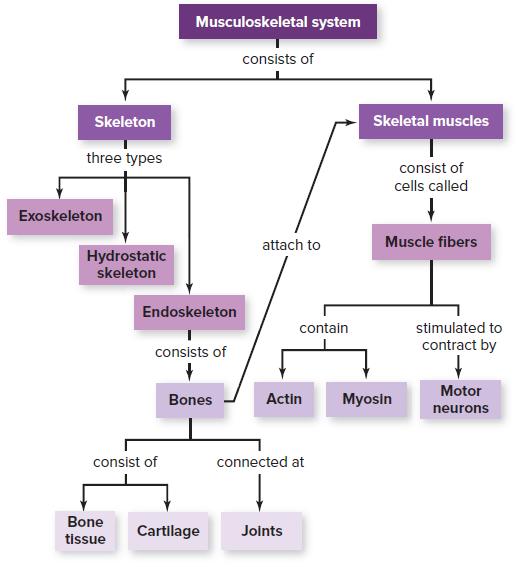
Refer to figure 29.24 and the chapter content to answer the following questions.1. Using the Survey the Landscape figure in the chapter introduction and the Pull It Together concept map, explain some ways that the musculoskeletal system maintains homeostasis.2. How do bones help maintain blood
Why do endurance sports require a high proportion of slow-twitch muscle fibers, whereas power sports require more fast-twitch muscle fibers?
Write the sequence of events that leads to a muscle contraction, starting with “Action potentials occur in the axon of a motor neuron.”
How might your muscles lengthen when you stretch? Use sarcomere, myosin, actin, and tendon in your answer.
Explain how multiple muscle twitches combine to allow you to lift heavy objects.
Describe four muscle proteins and their functions.
How do antagonistic muscle pairs move bones? Give an example of such a pair.
Design an experiment to test whether changes in the atmosphere (such as an incoming thunderstorm) cause joint pain. Then, use the Internet to learn whether researchers have found evidence to support a connection between weather and joint pain.
Bones typically become stronger with exercise. However, some athletes develop stress fractures from overexercising. Why might light exercise strengthen bones but intense exercise cause fractures?
Suppose a young boy severely fractures his femur. Describe how the injury could affect his growth.
Use the Internet to research bone marrow transplants. What do patients who receive these transplants typically have in common?
Distinguish among a hydrostatic skeleton, an exoskeleton, and an endoskeleton. What are the advantages and disadvantages of each type of skeleton? Give an example of an animal with each type.
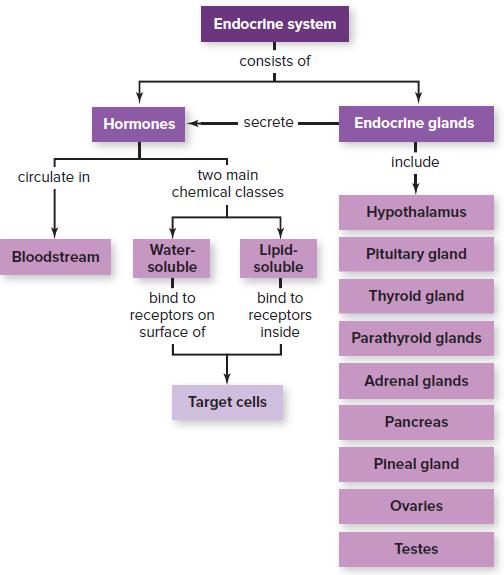
Refer to figure 28.16 and the chapter content to answer the following questions.1. Review the Survey the Landscape figure in the chapter introduction, and then add at least two other organ systems to the Pull It Together concept map. Connect an endocrine gland to each new term, and explain how
In a rare condition called synesthesia, stimulation of one sense causes stimulation of another sense. For example, people with synesthesia have reported seeing bursts of color when stimulated with loud noises. Would you expect synesthesia to be a problem with sensory receptors, peripheral nerves,
In what ways do the cochlea and vestibular apparatus function similarly?
What are the roles of rods and cones in the sense of sight?
Showing 100 - 200
of 599
1
2
3
4
5
6
Step by Step Answers

 Get 50% OFF
Claim Now
Get 50% OFF
Claim Now