New Semester
Started
Get
50% OFF
Study Help!
--h --m --s
Claim Now
Question Answers
Textbooks
Find textbooks, questions and answers
Oops, something went wrong!
Change your search query and then try again
S
Books
FREE
Study Help
Expert Questions
Accounting
General Management
Mathematics
Finance
Organizational Behaviour
Law
Physics
Operating System
Management Leadership
Sociology
Programming
Marketing
Database
Computer Network
Economics
Textbooks Solutions
Accounting
Managerial Accounting
Management Leadership
Cost Accounting
Statistics
Business Law
Corporate Finance
Finance
Economics
Auditing
Tutors
Online Tutors
Find a Tutor
Hire a Tutor
Become a Tutor
AI Tutor
AI Study Planner
NEW
Sell Books
Search
Search
Sign In
Register
study help
mathematics
college algebra
Intermediate Algebra 13th Edition Margaret Lial, John Hornsby, Terry McGinnis - Solutions
Write in logarithmic form: 4-2 = 0.0625.
Use the indicated rule of logarithms to complete each equation. log3 92 || (special property)
Use a calculator to approximate each exponential expression to three decimal places.8.3-1.2
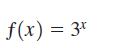
Graph each exponential function. f(x) = 3x
Solve each equation. Approximate solutions to three decimal places.2x+3 = 3x-4
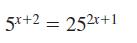
Solve. 5x+2 = 252x+1
Use a calculator to approximate each exponential expression to three decimal places. 3 1.5
Evaluate each logarithm to four decimal places.log 457.2
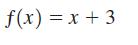
Determine whether each function is one-to-one. If it is, find the inverse. f(x) = x + 3
Use a calculator to approximate each exponential expression to three decimal places.61/5
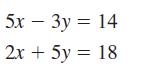
Solve each system. 5x - 3y = 14 2x + 5y = 18
Write in exponential form: log7 49 = 2.
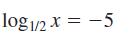
Solve each equation. log1/2 x = -5
Solve. log3 (x + 1) - log3 x = 2
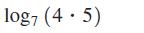
Use the properties of logarithms to express each logarithm as a sum or difference of logarithms, or as a single logarithm if possible. Assume that all variables represent positive real numbers. log7 (4.5)
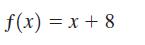
Determine whether each function is one-to-one. If it is, find the inverse. f(x) = x + 8
Find an equation of the line passing through (5, -1) and parallel to the line with equation 3x - 4y = 12. Write the equation in slope-intercept form.
Solve each equation. Approximate solutions to three decimal places.4x-2 = 53x+2
Use a calculator to approximate each exponential expression to three decimal places. 3 2.4
Evaluate each logarithm to four decimal places.log 0.0326
Write in logarithmic form.50 = 1
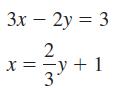
Solve each system. 3x - 2y = 3 2 X -y + 1 +1 3
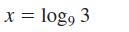
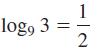
Solve each equation. x = logg 3
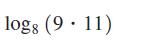
Use the properties of logarithms to express each logarithm as a sum or difference of logarithms, or as a single logarithm if possible. Assume that all variables represent positive real numbers. logg (911)
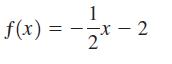
Determine whether each function is one-to-one. If it is, find the inverse. f(x) = - 1 2 - 2
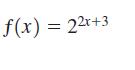
Graph each exponential function. f(x) = 22x+3
Solve each equation. Approximate solutions to three decimal places.42x+3 = 6x-1
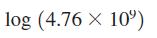
Evaluate each logarithm to four decimal places. log (4.76 × 10⁹)
Evaluate each logarithm to four decimal places.log 0.1741
Write in logarithmic form.70 = 1
Solve each equation. Approximate solutions to three decimal places.32x+1 = 5x-1
Use a calculator to approximate each exponential expression to three decimal places. 4 -3.1
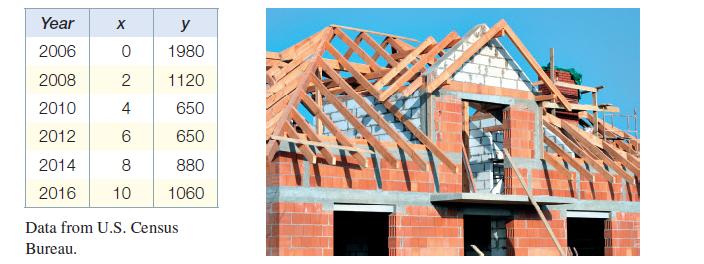
The number (in thousands) of new, privately owned housing units completed in the United States is shown in the table. Here x represents the number of years since 2006, and y represents total housing units completed.(a) Use the ordered pairs (x, y) to make a scatter diagram of the data.(b) Would a
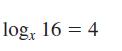
Solve each equation. logx 16 = 4
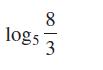
Use the properties of logarithms to express each logarithm as a sum or difference of logarithms, or as a single logarithm if possible. Assume that all variables represent positive real numbers. logs مه | با
Write in exponential form.log4 64 = 3
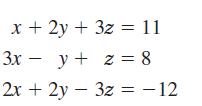
Solve each system. x + 2y + 3z = 11 3x - y + z = 8 2x + 2y-3z = -12 +2 Y
Solve. log4 (x + 2) log4 x = 3
Solve each equation.52x+1 = 25
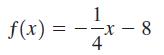
Determine whether each function is one-to-one. If it is, find the inverse. 1 f(x) = -x-8 4
Solve each equation. Use natural logarithms. Approximate solutions to three decimal places when appropriate.e0.012x = 23
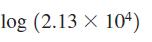
Evaluate each logarithm to four decimal places. log (2.13 X 10⁴)
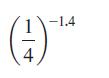
Use a calculator to approximate each exponential expression to three decimal places. 4 -1.4
Write in exponential form.log2 512 = 9
Use the properties of logarithms to express each logarithm as a sum or difference of logarithms, or as a single logarithm if possible. Assume that all variables represent positive real numbers. log3 7|5
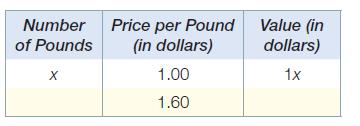
Candy worth $1.00 per lb is to be mixed with 10 lb of candy worth $1.96 per lb to obtain a mixture that will be sold for $1.60 per lb. How many pounds of the $1.00 candy should be used? Number of Pounds X Price per Pound (in dollars) 1.00 1.60 Value (in dollars) 1x
Fill in each blank with the correct response: The value of log2 32 is_____ . This means that if we raise_____ to the_____ power, the result is________ .
Solve each equation.43x = 8x+4
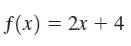
Determine whether each function is one-to-one. If it is, find the inverse. f(x) = 2x + 4
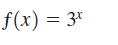
Graph each exponential function. f(x) = 3x
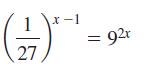
Solve each equation. x-1 (-)* 27 = 92r
Solve each equation. Use natural logarithms. Approximate solutions to three decimal places when appropriate.e0.006x = 30
Perform the indicated operations. (2p+3)(3p - 1)
Use the properties of logarithms to express each logarithm as a sum or difference of logarithms, or as a single logarithm if possible. Assume that all variables represent positive real numbers. log4 6²
Evaluate each logarithm to four decimal places.ln 7.84
Write in exponential form.log12 12 = 1
Use the properties of logarithms to write each expression as a sum or difference of logarithms. Assume that variables represent positive real numbers.log3 x2y
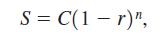
A machine purchased for business use depreciates, or loses value, over a period of years. The value of the machine at the end of its useful life is its scrap value. By one method of depreciation, the scrap value, S, is given bywhere C is original cost, n is useful life in years, and r is the
Solve each equation. Use natural logarithms. Approximate solutions to three decimal places when appropriate.e-0.205x = 9
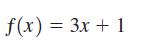
Determine whether each function is one-to-one. If it is, find the inverse. f(x) = 3x + 1
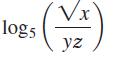
Use the properties of logarithms to write each expression as a sum or difference of logarithms. Assume that variables represent positive real numbers. logs X yz
Evaluate each logarithm to four decimal places.ln 8.32
Write in exponential form.log100 100 = 1
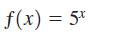
Graph each exponential function. f(x) = 5x
The U.S. Hispanic population (in millions) can be approximated bywhere x represents the number of years since 2008. Use this function to approximate, to the nearest tenth, the Hispanic population in each year.(a) 2015 (b) 2030 f(x) = 46.9. 20.035811x
One measure of the diversity of the species in an ecological community is the index of diversity, given by the logarithmic expressionwhere p1, p2,......, pn are the proportions of a sample belonging to each of n species in the sample.Approximate the index of diversity to the nearest thousandth if a
Use the properties of logarithms to express each logarithm as a sum or difference of logarithms, or as a single logarithm if possible. Assume that all variables represent positive real numbers. log5 74
Determine whether each function is one-to-one. If it is, find the inverse. g(x) = -4x + 3
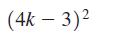
Perform the indicated operations. (4k - 3)²
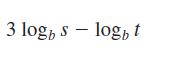
Use the properties of logarithms to rewrite each expression as a single logarithm. Assume that all variables represent positive real numbers, and that bases are positive numbers not equal to 1. 3 logb slog t
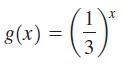
Graph each exponential function. g(x) 3 X
Perform the indicated operations. (3m³ +2m² - 5m) - (8m³ + 2m - 4)
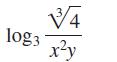
Use the properties of logarithms to express each logarithm as a sum or difference of logarithms, or as a single logarithm if possible. Assume that all variables represent positive real numbers. log3 √4 x²y
Solve each equation. Use natural logarithms. Approximate solutions to three decimal places when appropriate.e-0.103x = 7
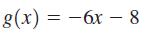
Determine whether each function is one-to-one. If it is, find the inverse. g(x) = -6x - 8
Write in exponential form.log6 1 = 0
Perform the indicated operations. Divide 15x³x² + 22x+8 by 3x + 1.
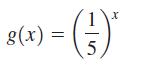
Graph each exponential function. g(x) = = X
Convert each equation to the indicated form.(a) Write in exponential form: log5 625 = 4.(b) Write in logarithmic form: 5-2 = 0.04.
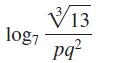
Use the properties of logarithms to express each logarithm as a sum or difference of logarithms, or as a single logarithm if possible. Assume that all variables represent positive real numbers. log7 13 pq²
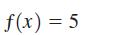
Determine whether each function is one-to-one. If it is, find the inverse. f(x) = 5
Solve each equation. Use natural logarithms. Approximate solutions to three decimal places when appropriate.ln e3x = 9
To solve the equation 5x = 7, we must find the exponent to which 5 must be raised in order to obtain 7. This is log5 7.(a) Use the change-of-base rule and a calculator to find log5 7.(b) Raise 5 to the number found in part (a). What is the result?(c) Using as many decimal places as the calculator
Evaluate each logarithm to four decimal places.ln 0.0217
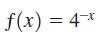
Graph each exponential function. f(x) = 4x
Write in exponential form.logπ 1 = 0
Write in exponential form. log, 3 712
Fill in each blank with the correct response: The value of log3 81 is _______. This means that if we raise _____to the______ power, the result is________.
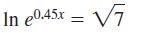
Solve each equation. Use natural logarithms. Approximate solutions to three decimal places when appropriate. In e0.45x = √ V7
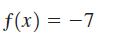
Determine whether each function is one-to-one. If it is, find the inverse. f(x) = -7
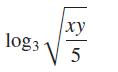
Use the properties of logarithms to express each logarithm as a sum or difference of logarithms, or as a single logarithm if possible. Assume that all variables represent positive real numbers. log3 xy 5
Solve each equation. Use natural logarithms. Approximate solutions to three decimal places when appropriate.ln e2x = 4
Let m be the number of letters in your first name, and let n be the number of letters in your last name.(a) Explain what logm n means. (b) Use a calculator to find logm n.(c) Raise m to the power indicated by the number found in part (b). What is the result?
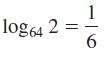
Write in exponential form. log64 2 = 1 6
Evaluate each logarithm to four decimal places.ln 388.1
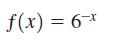
Graph each exponential function. f(x) = 6 x
Evaluate each logarithm to four decimal places.log 23.1
Use a calculator to approximate each logarithm to four decimal places.log2 6
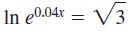
Solve each equation. Use natural logarithms. Approximate solutions to three decimal places when appropriate. In e0.04x = √3
Factor. 8x + x3
Showing 3600 - 3700
of 16373
First
30
31
32
33
34
35
36
37
38
39
40
41
42
43
44
Last
Step by Step Answers

 Get 50% OFF
Claim Now
Get 50% OFF
Claim Now