New Semester
Started
Get
50% OFF
Study Help!
--h --m --s
Claim Now
Question Answers
Textbooks
Find textbooks, questions and answers
Oops, something went wrong!
Change your search query and then try again
S
Books
FREE
Study Help
Expert Questions
Accounting
General Management
Mathematics
Finance
Organizational Behaviour
Law
Physics
Operating System
Management Leadership
Sociology
Programming
Marketing
Database
Computer Network
Economics
Textbooks Solutions
Accounting
Managerial Accounting
Management Leadership
Cost Accounting
Statistics
Business Law
Corporate Finance
Finance
Economics
Auditing
Tutors
Online Tutors
Find a Tutor
Hire a Tutor
Become a Tutor
AI Tutor
AI Study Planner
NEW
Sell Books
Search
Search
Sign In
Register
study help
mathematics
college algebra
Intermediate Algebra 13th Edition Margaret Lial, John Hornsby, Terry McGinnis - Solutions
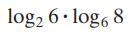
In Problems 13–28, use properties of logarithms to find the exact value of each expression. Do not use a calculator. log2 6.log6 8
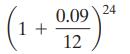
In Problems 17–28, approximate each number using a calculator. Express your answer rounded to three decimal places. 1+ 0.0924 12
In Problems 17–28, approximate each number using a calculator. Express your answer rounded to three decimal places. 8.40 1 3 2.9
In Problems 17–28, approximate each number using a calculator. Express your answer rounded to three decimal places.(1 + 0.04)6
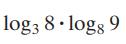
In Problems 13–28, use properties of logarithms to find the exact value of each expression. Do not use a calculator. log3 8.log8 9
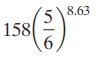
In Problems 17–28, approximate each number using a calculator. Express your answer rounded to three decimal places. 158 15 6 8.63
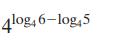
In Problems 13–28, use properties of logarithms to find the exact value of each expression. Do not use a calculator. 4log,6-log 5
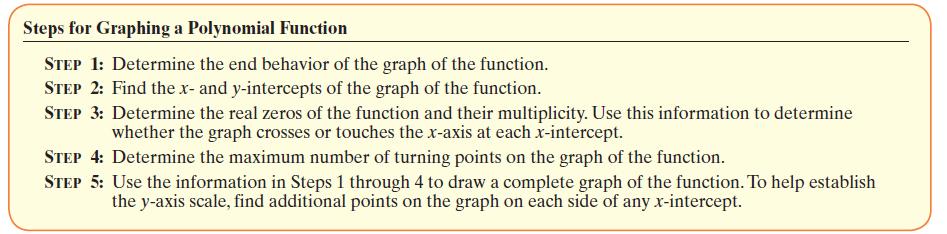
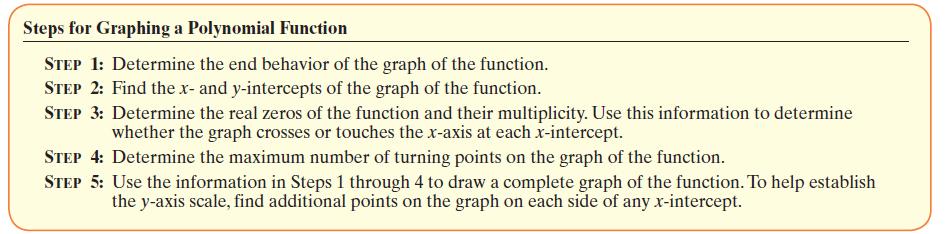
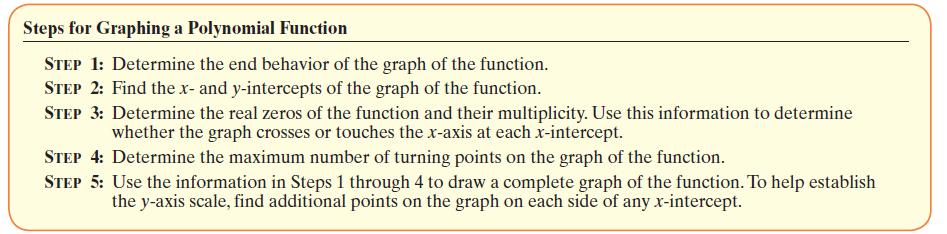
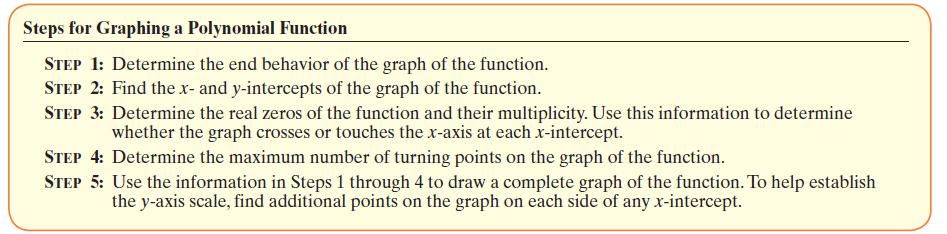
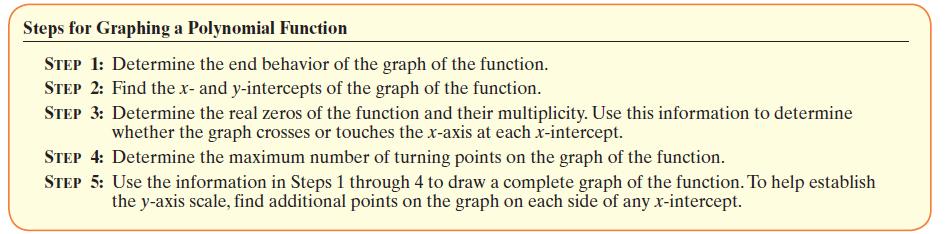
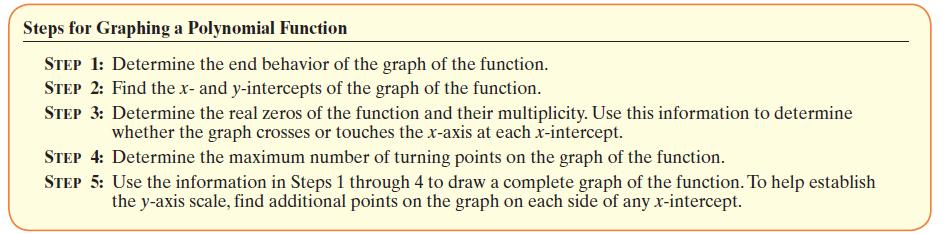
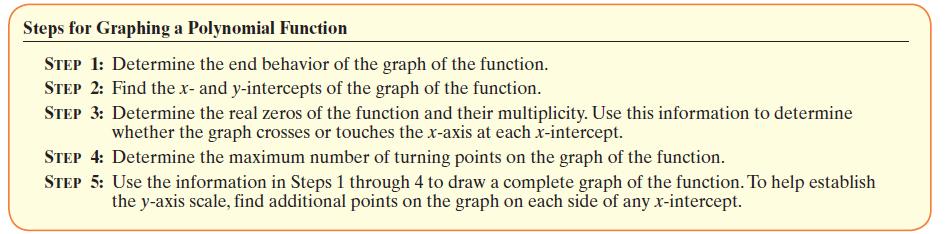
In Problems 5–22, graph each polynomial function by following Steps 1 through 5.f(x) = (x - 4)2 (x + 2)2 Steps for Graphing a Polynomial Function STEP 1: Determine the end behavior of the graph of the function. STEP 2: Find the x- and y-intercepts of the graph of the function. STEP 3: Determine
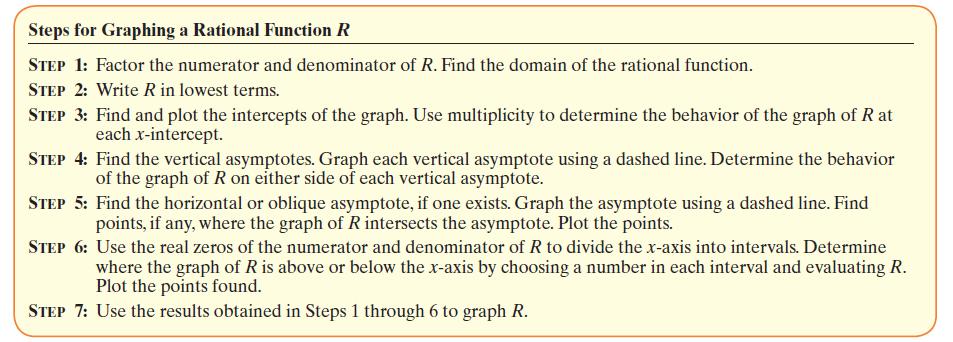
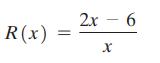
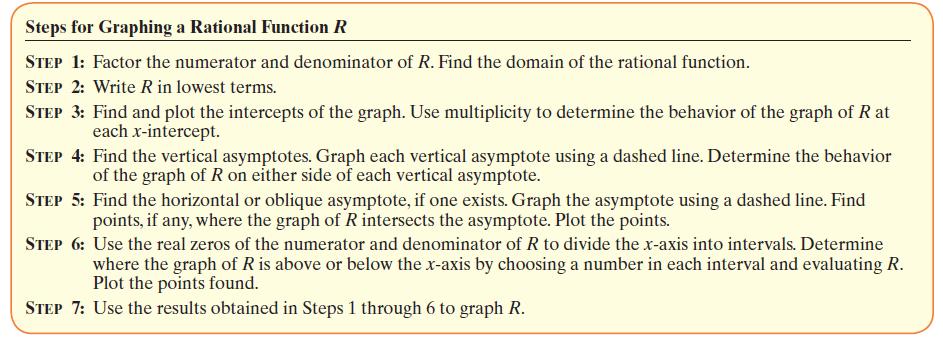
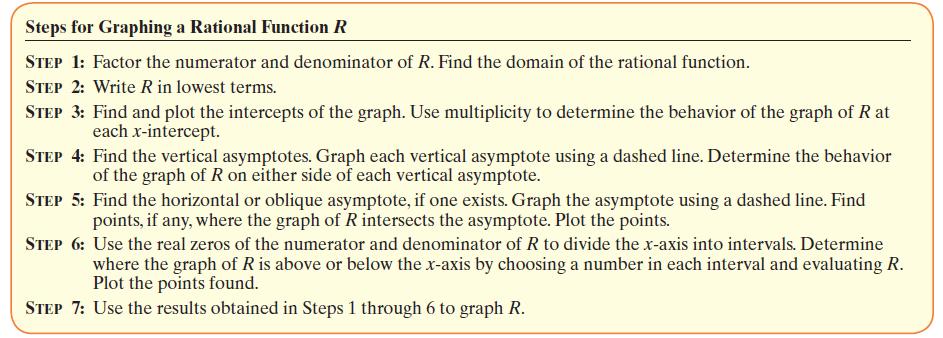
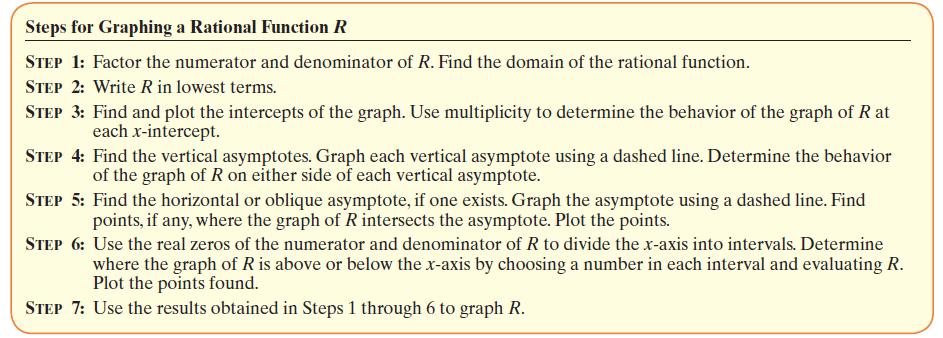
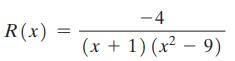
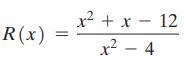
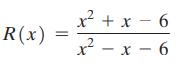
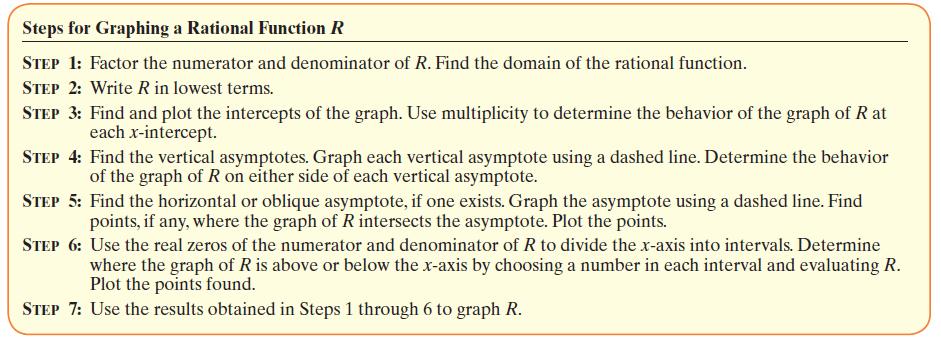
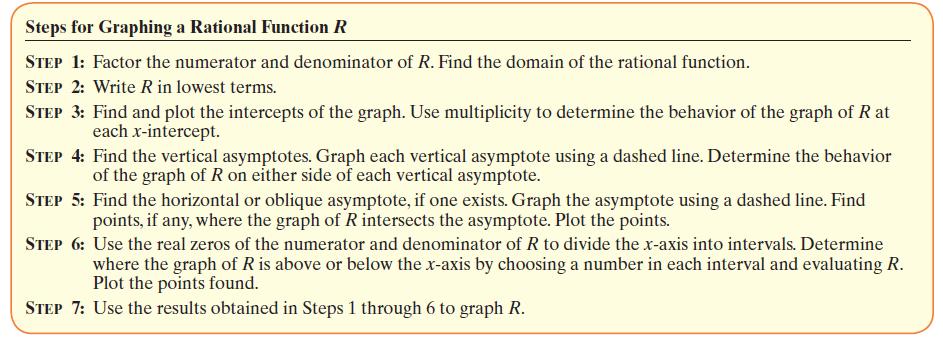
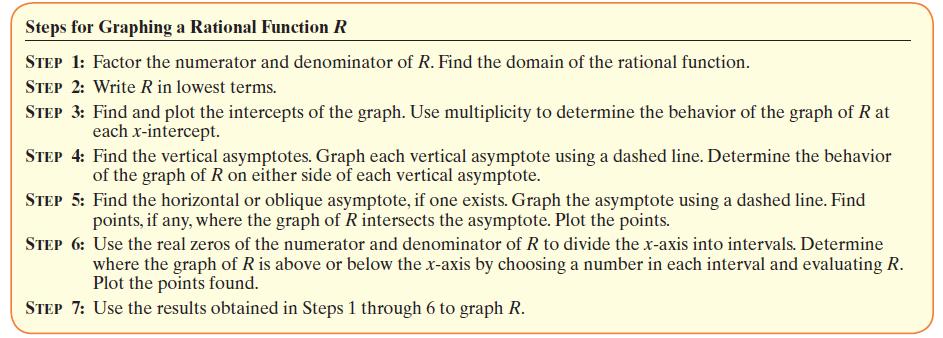
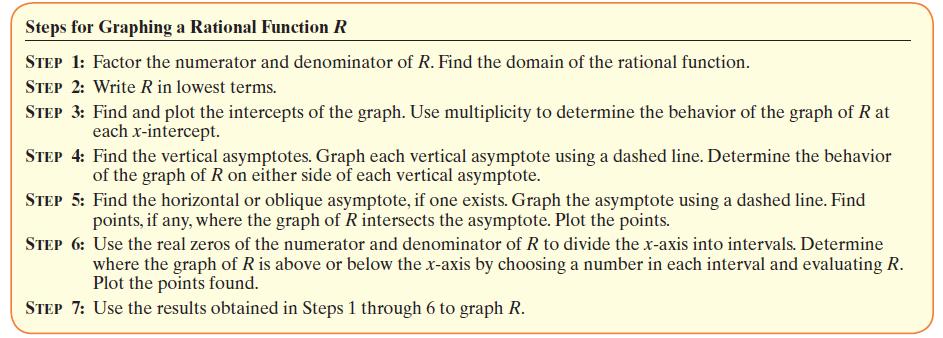
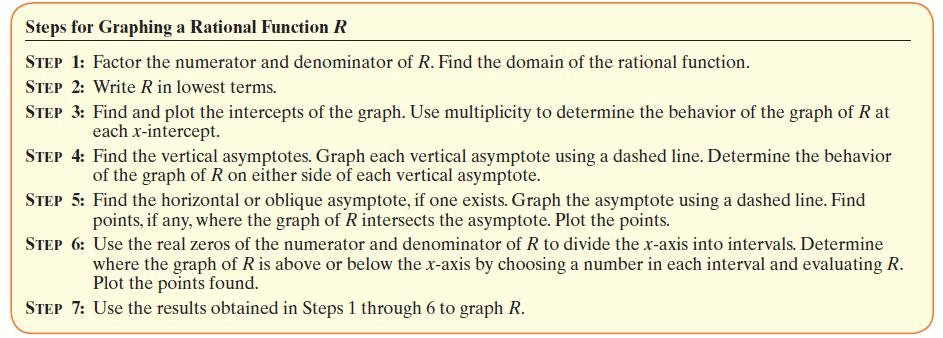
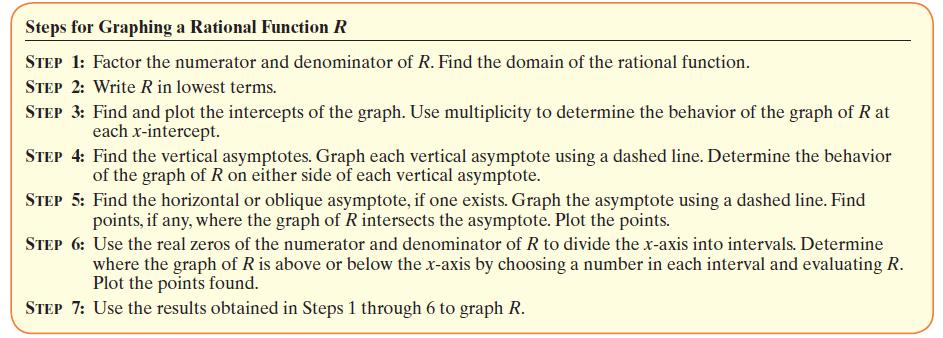
In Problems 15–20, graph each rational function following the seven steps given on page 367. Steps for Graphing a Rational Function R STEP 1: Factor the numerator and denominator of R. Find the domain of the rational function. STEP 2: Write R in lowest terms. STEP 3: Find and plot the
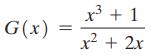
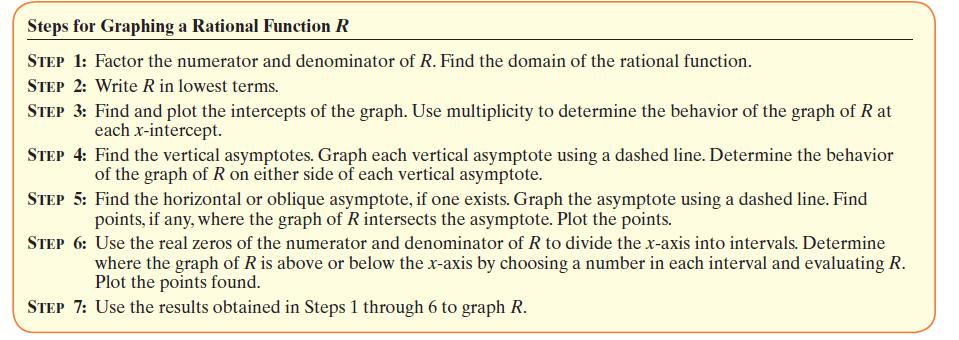
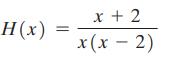
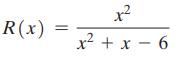
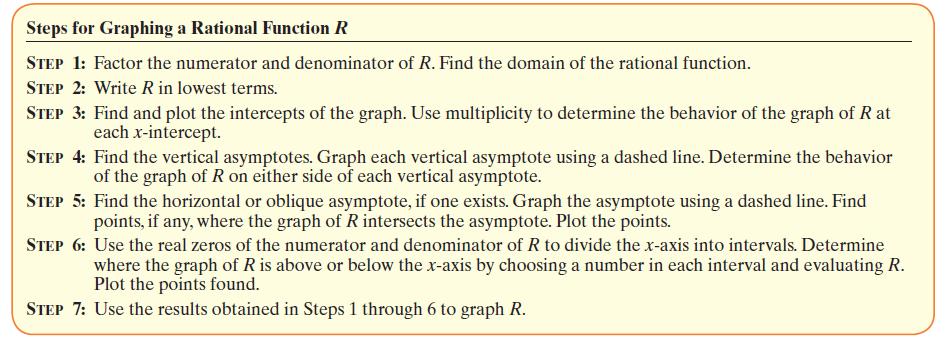
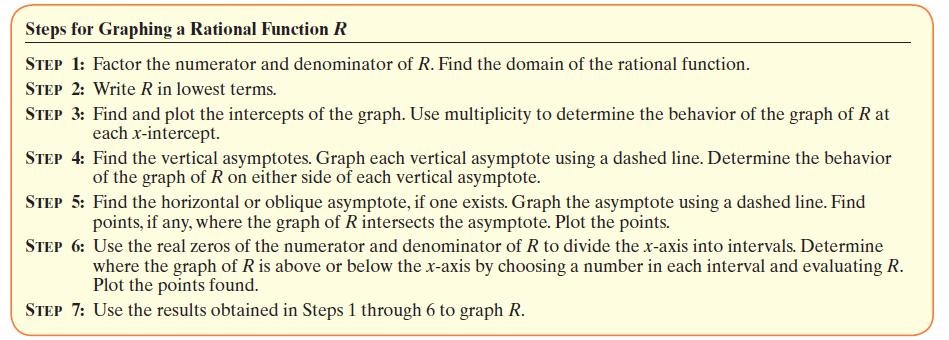
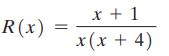
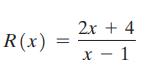
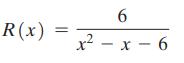
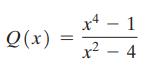
In Problems 7–50, follow Steps 1 through 7. Steps for Graphing a Rational Function R STEP 1: Factor the numerator and denominator of R. Find the domain of the rational function. STEP 2: Write R in lowest terms. STEP 3: Find and plot the intercepts of the graph. Use multiplicity to determine the
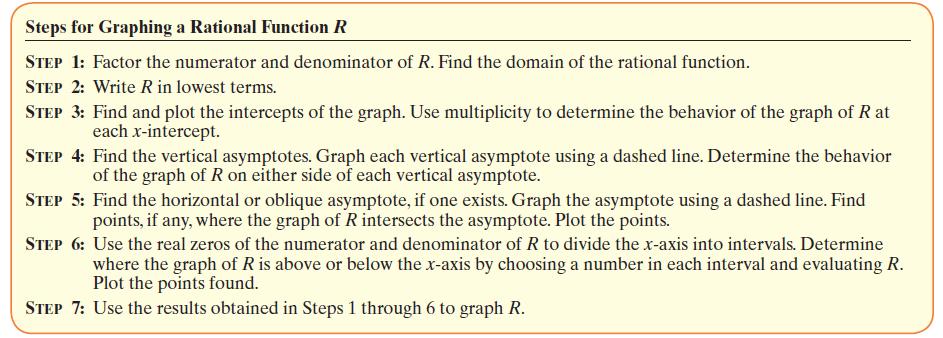
In Problems 15–20, graph each rational function following the seven steps given on page 367. Steps for Graphing a Rational Function R STEP 1: Factor the numerator and denominator of R. Find the domain of the rational function. STEP 2: Write R in lowest terms. STEP 3: Find and plot the intercepts
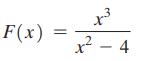
In Problems 7–50, follow Steps 1 through 7. Steps for Graphing a Rational Function R STEP 1: Factor the numerator and denominator of R. Find the domain of the rational function. STEP 2: Write R in lowest terms. STEP 3: Find and plot the intercepts of the graph. Use multiplicity to determine the
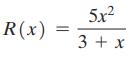
In Problems 15–26, find the domain of each rational function. R (x) 5x² 3+x
In Problems 11–20, use the Remainder Theorem to find the remainder when f(x) is divided by x - c. Then use the Factor Theorem to determine whether x - c is a factor of f(x). f(x) = 4x6 - 64x4 + x² − 15; x + 4
In Problems 9–18, information is given about a polynomial function f whose coefficients are real numbers. Find the remaining zeros of f.Degree 4; zeros: i, 7, -7
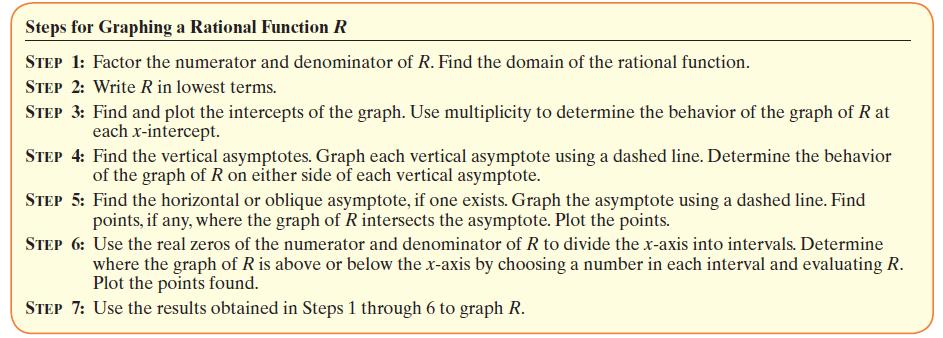
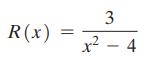
In Problems 7–50, follow Steps 1 through 7. Steps for Graphing a Rational Function R STEP 1: Factor the numerator and denominator of R. Find the domain of the rational function. STEP 2: Write R in lowest terms. STEP 3: Find and plot the intercepts of the graph. Use multiplicity to determine the
In Problems 15–20, graph each rational function following the seven steps given on page 367. Steps for Graphing a Rational Function R STEP 1: Factor the numerator and denominator of R. Find the domain of the rational function. STEP 2: Write R in lowest terms. STEP 3: Find and plot the intercepts
In Problems 7–50, follow Steps 1 through 7. Steps for Graphing a Rational Function R STEP 1: Factor the numerator and denominator of R. Find the domain of the rational function. STEP 2: Write R in lowest terms. STEP 3: Find and plot the intercepts of the graph. Use multiplicity to determine the
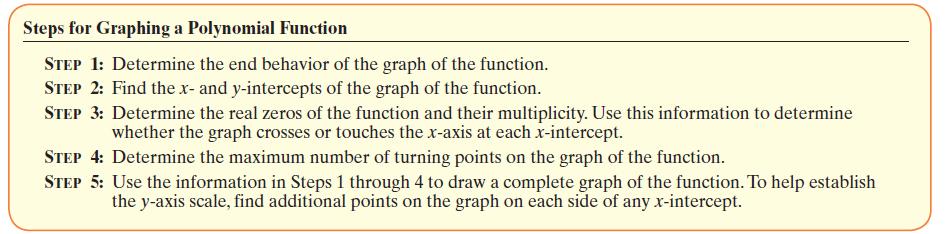
In Problems 5–22, graph each polynomial function by following Steps 1 through 5. Steps for Graphing a Polynomial Function STEP 1: Determine the end behavior of the graph of the function. STEP 2: Find the x- and y-intercepts of the graph of the function. STEP 3: Determine the real zeros of the
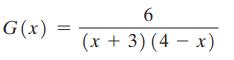
In Problems 15–26, find the domain of each rational function. G(x) 6 (x + 3) (4 - x)
In Problems 15–20, graph each rational function following the seven steps given on page 367. Steps for Graphing a Rational Function R STEP 1: Factor the numerator and denominator of R. Find the domain of the rational function. STEP 2: Write R in lowest terms. STEP 3: Find and plot the intercepts
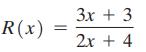
In Problems 15–18, solve the inequality by using the graph of the function. Solve R(x) ≤ 0, where R(x) 3x + 3 2x + 4
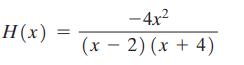
In Problems 15–26, find the domain of each rational function. H(x) -4x² (x - 2) (x + 4)
In Problems 9–18, information is given about a polynomial function f whose coefficients are real numbers. Find the remaining zeros of f.Degree 6; zeros: 2, 4 + 9i, -7 - 2i, 0
The domain of f(x) = log3 (x + 2) is (a) (-∞, ∞) (b) (2, ∞) (c) (-2, 0) (d) (0, ∞ )
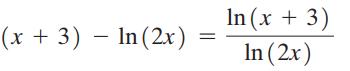
True or False ln (x + 3) - In (2x) In (x + 3) In (2x)
True or False log2 (3x4) = 4 log2 (3x)
Problems 50–59 are based on material learned earlier in the course. The purpose of these problems is to keep the material fresh in your mind so that you are better prepared for the final exam. Find the domain of f(x) = -9Vx - 4 + 1.
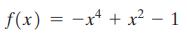
In Problems 21–32, determine the maximum number of real zeros that each polynomial function may have. Then use Descartes’ Rule of Signs to determine how many positive and how many negative real zeros each polynomial function may have. Do not attempt to find the zeros. f(x) = x² + x² - 1
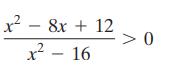
In Problems 21–25, solve each inequality. Graph the solution set. x² - 8x + 12 2 X x² - 16 > 0
True or False If y = loga x, then y = ax .
Solve: x2 + 3x = 4
Select the answer that completes the statement: y = ln x if and only if __________.(a) x = ey (b) y = ex (c) x = 10y (d) y = 10x
In Problems 13–22, for the given functions f and g, find: f(x) = 8x² - 3; g(x) = 3 - 2
In Problems 13–22, for the given functions f and g, find:f(x) = 3x + 2; g(x) = 2x2 - 1 (a) (fog) (4) (b) (gof) (2) (c) (fof) (1) (d) (g°g) (0)
In Problems 13–22, for the given functions f and g, find: f(x) = 2x; g(x) = 3x2 + 1 (a) (fog) (4) (b) (gof) (2) (c) (fof) (1) (d) (gog) (0)
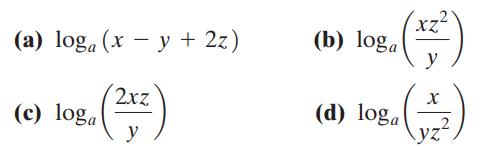
Writing loga x - loga y + 2 loga z as a single logarithm results in which of the following? (a) loga (xy + 2z) 2xz y (c) loga (b) loga XZ (d) loga (2)
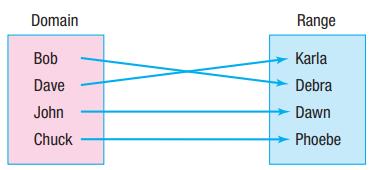
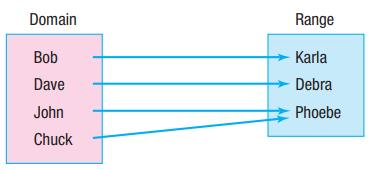
In Problems 13–20, determine whether the function is one-to-one. Domain Bob Dave John Chuck Range Karla Debra Dawn Phoebe
In Problems 13–28, use properties of logarithms to find the exact value of each expression. Do not use a calculator.ln e-4
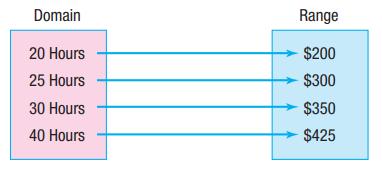
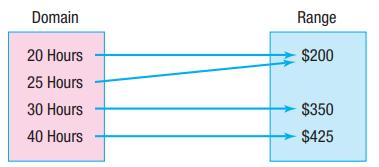
In Problems 13–20, determine whether the function is one-to-one. Domain 20 Hours 25 Hours 30 Hours 40 Hours Range $200 $300 $350 $425
In Problems 13–28, use properties of logarithms to find the exact value of each expression. Do not use a calculator.log2 2-13
In Problems 13–28, use properties of logarithms to find the exact value of each expression. Do not use a calculator.log7 729
Choose the expression equivalent to 2x.(a) e2x (b) ex ln 2 (c) e log2 x (d) e2 ln x
Multiple Choice log3 81 equals(a) 9 (b) 4 (c) 2 (d) 3
Find the intercepts of the graph of the equation y X² - 1 ²-4 2
Solve x2 + 2x + 2 = 0 in the complex number system.
What are the quotient and remainder when 3x4 - x2 is divided by x3 - x2 + 1.
Solve the inequality x2 ≥ x and graph the solution set.
True or False The graph of every rational function has at least one asymptote.
Determine the leading term of 3 + 2x - 7x3.
What are the intercepts of y = 5x + 10?
Which type of asymptote will never intersect the graph of a rational function? (a) Horizontal (b) Oblique (c) Vertical (d) All of these
Solve the inequality x2 - 3x < 4 and graph the solution set.
Which of the following could be a test number for the interval -2 < x < 5?(a) -3 (b) -2 (c) 4 (d) 7
What is the conjugate of -3 + 4i?
Graph the equation y = x3.
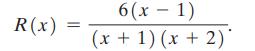
Multiple Choice Identify the y-intercept of the graph of (a) -3 (b) -2 (c) -1 (d) 1 R (x) 6(x - 1) (x + 1)(x + 2)
In Problems 5–22, graph each polynomial function by following Steps 1 through 5.f(x) = x(x + 2)2
In Problems 7–50, follow Steps 1 through 7. Steps for Graphing a Rational Function R STEP 1: Factor the numerator and denominator of R. Find the domain of the rational function. STEP 2: Write R in lowest terms. STEP 3: Find and plot the intercepts of the graph. Use multiplicity to determine the
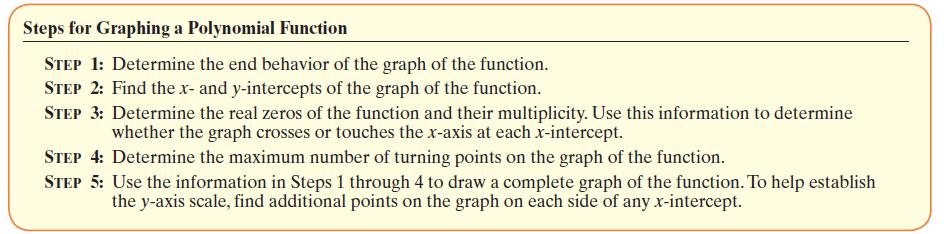
In Problems 5–22, graph each polynomial function by following Steps 1 through 5. Steps for Graphing a Polynomial Function STEP 1: Determine the end behavior of the graph of the function. STEP 2: Find the x- and y-intercepts of the graph of the function. STEP 3: Determine the real zeros of the
Solve the equation x3 - 6x2 + 8x = 0.
In Problems 5–22, graph each polynomial function by following Steps 1 through 5. Steps for Graphing a Polynomial Function STEP 1: Determine the end behavior of the graph of the function. STEP 2: Find the x- and y-intercepts of the graph of the function. STEP 3: Determine the real zeros of the
In Problems 7–50, follow Steps 1 through 7. Steps for Graphing a Rational Function R STEP 1: Factor the numerator and denominator of R. Find the domain of the rational function. STEP 2: Write R in lowest terms. STEP 3: Find and plot the intercepts of the graph. Use multiplicity to determine the
In Problems 5–22, graph each polynomial function by following Steps 1 through 5. Steps for Graphing a Polynomial Function STEP 1: Determine the end behavior of the graph of the function. STEP 2: Find the x- and y-intercepts of the graph of the function. STEP 3: Determine the real zeros of the
In Problems 7–50, follow Steps 1 through 7. Steps for Graphing a Rational Function R STEP 1: Factor the numerator and denominator of R. Find the domain of the rational function. STEP 2: Write R in lowest terms. STEP 3: Find and plot the intercepts of the graph. Use multiplicity to determine the
In Problems 7–50, follow Steps 1 through 7. Steps for Graphing a Rational Function R STEP 1: Factor the numerator and denominator of R. Find the domain of the rational function. STEP 2: Write R in lowest terms. STEP 3: Find and plot the intercepts of the graph. Use multiplicity to determine the
In Problems 9–14, solve the inequality by using the graph of the function. Solve f(x) 0,where f(x) (x + 4)²(1-x).
In Problems 9–18, information is given about a polynomial function f whose coefficients are real numbers. Find the remaining zeros of f.Degree 4; zeros: i, 3 + i
In Problems 5–22, graph each polynomial function by following Steps 1 through 5. Steps for Graphing a Polynomial Function STEP 1: Determine the end behavior of the graph of the function. STEP 2: Find the x- and y-intercepts of the graph of the function. STEP 3: Determine the real zeros of the
In Problems 7–50, follow Steps 1 through 7. Steps for Graphing a Rational Function R STEP 1: Factor the numerator and denominator of R. Find the domain of the rational function. STEP 2: Write R in lowest terms. STEP 3: Find and plot the intercepts of the graph. Use multiplicity to determine the
In Problems 11–20, use the Remainder Theorem to find the remainder when f(x) is divided by x - c. Then use the Factor Theorem to determine whether x - c is a factor of f(x). f(x) = 5x¹20x³ + x − 4; x − 2
In Problems 5–22, graph each polynomial function by following Steps 1 through 5.f(x) = (x - 1)(x + 4) (x - 3) Steps for Graphing a Polynomial Function STEP 1: Determine the end behavior of the graph of the function. STEP 2: Find the x- and y-intercepts of the graph of the function. STEP 3:
In Problems 9–18, information is given about a polynomial function f whose coefficients are real numbers. Find the remaining zeros of f.Degree 5; zeros: 1, i, 5i
In Problems 5–22, graph each polynomial function by following Steps 1 through 5.f(x) = x(1 - x) (2 - x) Steps for Graphing a Polynomial Function STEP 1: Determine the end behavior of the graph of the function. STEP 2: Find the x- and y-intercepts of the graph of the function. STEP 3: Determine
In Problems 7–50, follow Steps 1 through 7. Steps for Graphing a Rational Function R STEP 1: Factor the numerator and denominator of R. Find the domain of the rational function. STEP 2: Write R in lowest terms. STEP 3: Find and plot the intercepts of the graph. Use multiplicity to determine the
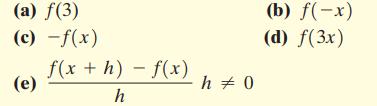
For the function f(x) = x2 + 5x - 2, find (a) f(3) (c) -f(x) (e) f(x +h)-f(x) h h = 0 (b) f(-x) (d) f(3x)
In Problems 9–14, solve the inequality by using the graph of the function. Solve f(x) < 0, where f(x) = 1 (x + 4) (x - 1)³. -
In Problems 5–22, graph each polynomial function by following Steps 1 through 5.f(x) = (3 - x) (2 + x) (x + 1) Steps for Graphing a Polynomial Function STEP 1: Determine the end behavior of the graph of the function. STEP 2: Find the x- and y-intercepts of the graph of the function. STEP 3:
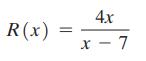
In Problems 15–26, find the domain of each rational function. R(x) 4x x - 7
In Problems 7–50, follow Steps 1 through 7. Steps for Graphing a Rational Function R STEP 1: Factor the numerator and denominator of R. Find the domain of the rational function. STEP 2: Write R in lowest terms. STEP 3: Find and plot the intercepts of the graph. Use multiplicity to determine the
In Problems 11–20, use the Remainder Theorem to find the remainder when f(x) is divided by x - c. Then use the Factor Theorem to determine whether x - c is a factor of f(x). f(x) = 2x6 + 129x³ + 64; x + 4
In Problems 13–22, for the given functions f and g, find: f(x) = |x|; g(x) = 1 2 x² + 9
In Problems 13–22, for the given functions f and g, find: f(x)=√x; g(x) = 5x
In Problems 13–22, for the given functions f and g, find:f(x) = 2x2; g(x) = 1 - 3x2 (a) (fog) (4) (b) (gof) (2) (c) (fof) (1) (d) (gog) (0)
In Problems 13–22, for the given functions f and g, find: f(x) = √x + 1; g(x) Vx+ = 3x
In Problems 13–22, for the given functions f and g, find: f(x) = x - 2; g(x) 3 1²+2 لیا
Multiple Choice The range of the function f(x) = ax, where a > 0 and a ≠ 1, is the interval (a) (-∞, ∞) (b) (-∞, 0) (c) (0, ∞) (d) [0, ∞)
In Problems 13–28, use properties of logarithms to find the exact value of each expression. Do not use a calculator. In eV2
In Problems 13–20, determine whether the function is one-to-one. Domain 20 Hours 25 Hours 30 Hours 40 Hours Range $200 $350 $425
In Problems 13–28, use properties of logarithms to find the exact value of each expression. Do not use a calculator. glogg 13
In Problems 13–20, determine whether the function is one-to-one. Domain Bob Dave John Chuck Range Karla Debra Phoebe
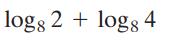
In Problems 13–28, use properties of logarithms to find the exact value of each expression. Do not use a calculator. logg 2 + logg 4
In Problems 13–20, determine whether the function is one-to-one. {(2,6), (-3,6), (4,9), (1, 10) }
In Problems 13–20, determine whether the function is one-to-one. {(0,0), (1, 1), (2, 16), (3,81)}
In Problems 13–28, use properties of logarithms to find the exact value of each expression. Do not use a calculator.eln 8
In Problems 13–20, determine whether the function is one-to-one. {(1, 2), (2,8), (3, 18), (4,32)}
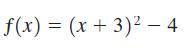
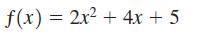
Identify the vertex of each parabola. f(x) = (x + 3)² - 4
Find the vertex of each parabola. For each equation, decide whether the graph opens up, down, to the left, or to the right, and whether it is wider, narrower, or the same shape as the graph of y = x2. If it is a parabola with a vertical axis of symmetry, find the discriminant and use it to
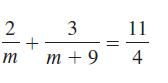
Solve each equation. Check the solutions. 2 m 3 m+9 11 4
Solve each equation by any method. Solve S 4r² for r. (Leave in your answer.) =
Showing 3300 - 3400
of 16373
First
27
28
29
30
31
32
33
34
35
36
37
38
39
40
41
Last
Step by Step Answers

 Get 50% OFF
Claim Now
Get 50% OFF
Claim Now