New Semester
Started
Get
50% OFF
Study Help!
--h --m --s
Claim Now
Question Answers
Textbooks
Find textbooks, questions and answers
Oops, something went wrong!
Change your search query and then try again
S
Books
FREE
Study Help
Expert Questions
Accounting
General Management
Mathematics
Finance
Organizational Behaviour
Law
Physics
Operating System
Management Leadership
Sociology
Programming
Marketing
Database
Computer Network
Economics
Textbooks Solutions
Accounting
Managerial Accounting
Management Leadership
Cost Accounting
Statistics
Business Law
Corporate Finance
Finance
Economics
Auditing
Tutors
Online Tutors
Find a Tutor
Hire a Tutor
Become a Tutor
AI Tutor
AI Study Planner
NEW
Sell Books
Search
Search
Sign In
Register
study help
mathematics
college algebra
College Algebra 11th Edition Michael Sullivan, Michael Sullivan III - Solutions
To four decimal places, the values of log10 2 and log10 9 areUse these values and the properties of logarithms to evaluate each expression.log10 95 log10 2 = 0.3010 and log10 9 = 0.9542.
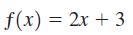
Each of the following functions is one-to-one. Graph the function as a solid line (or curve), and then graph its inverse on the same set of axes as a dashed line (or curve). Complete any tables to help graph the functions. f(x) = 2x + 3
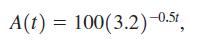
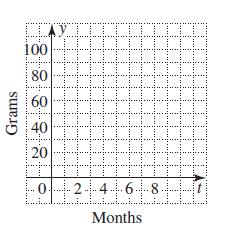
The amount of radioactive material in an ore sample is given by the exponential functionwhere A(t) is the amount present, in grams, of the sample t months after the initial measurement.Graph the function on the axes as shown. A(t) = 100(3.2)-0.5t,
The number of years, N(x), since two independently evolving languages split off from a common ancestral language is approximated bywhere x is the percent of words (in decimal form) from the ancestral language common to both languages now. Find the number of years (to the nearest hundred years)
Use the change-of-base rule (with either common or natural logarithms) to approximate each logarithm to four decimal places. log V2
To four decimal places, the values of log10 2 and log10 9 areUse these values and the properties of logarithms to evaluate each expression.log10 219 log10 2 = 0.3010 and log10 9 = 0.9542.
Solve each equation. Give exact solutions. log2x + log₂ (x + 4) = 5
Solve each equation.log12 x = 0
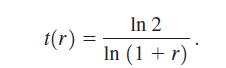
The time t in years for an amount of money invested at an interest rate r (in decimal form) to double is given byThis is the doubling time. Find the doubling time to the nearest tenth for an investment at each interest rate.(a) 2% (or 0.02) (b) 5% (or 0.05) (c) 8% (or 0.08) t(r) = In 2 In (1 + r)
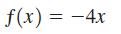
Each of the following functions is one-to-one. Graph the function as a solid line (or curve), and then graph its inverse on the same set of axes as a dashed line (or curve). Complete any tables to help graph the functions. f(x) = -4x
Find the pH (to the nearest tenth) of the substance with the given hydronium ion concentration. Milk, 4.0 x 10-
Solve each equation.log4 x = 0
Solve each equation.logx x = 1
Suppose that $2000 is deposited at 4% compounded quarterly.(a) How much money will be in the account at the end of 6 yr? (Assume no withdrawals are made.)(b) To one decimal place, how long will it take for the account to grow to $3000?
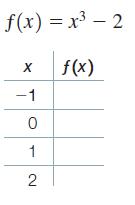
Each of the following functions is one-to-one. Graph the function as a solid line (or curve), and then graph its inverse on the same set of axes as a dashed line (or curve). Complete any tables to help graph the functions. f(x) = x³ - 2 f(x) X -1 0 1 2
Determine whether each statement is true or false. log3 49+ log3 49-¹ = 0
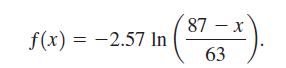
The age in years of a female blue whale of length x in feet is approximated by(a) How old is a female blue whale that measures 80 ft?(b) The equation that defines this function has domain 24 f(x) = -2.57 In 87 - x 63
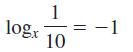
Solve each equation. logx 1 10 -1
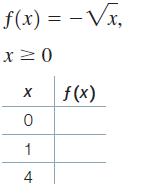
Each of the following functions is one-to-one. Graph the function as a solid line (or curve), and then graph its inverse on the same set of axes as a dashed line (or curve). Complete any tables to help graph the functions. f(x) = -√x, X, x ≥ 0 X 0 1 4 f(x)
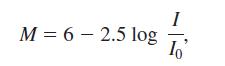
The magnitude of a star is given by the equationwhere I0 is the measure of the faintest star and I is the actual intensity of the star being measured. The dimmest stars are of magnitude 6, and the brightest are of magnitude 1. Determine the ratio of intensities between stars of magnitude 1 and 3. M
Determine whether each statement is true or false. log3 7 + log3 7-¹¹ = 0
The approximate tax T(x), in dollars per ton, that would result in an x% (in decimal form) reduction in carbon dioxide emissions is approximated by the cost-benefit equation(a) What tax will reduce emissions 25%?(b) Explain why the equation is not valid for x = 0 or x = 1. T(x) = -0.642 - 189 ln
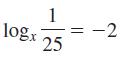
Solve each equation. logx 1 25 || -2
What will be the amount A in an account with initial principal $10,000 if interest is compounded continuously at an annual rate of 2.5% for 5 yr?
In the central Sierra Nevada of California, the percent of moisture that falls as snow rather than rain is approximated bywhere x is the altitude in feet.(a) What percent of the moisture at 5000 ft falls as snow?(b) What percent at 7500 ft falls as snow? f(x) = 86.3 In x - 680,
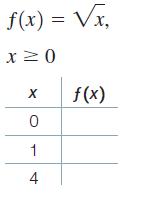
Each of the following functions is one-to-one. Graph the function as a solid line (or curve), and then graph its inverse on the same set of axes as a dashed line (or curve). Complete any tables to help graph the functions. f(x) = √x, x ≥ 0 X 0 1 4 f(x)
Determine whether each statement is true or false. log2 (64 16) = log₂ 64 log2 16 -
What will be the amount A in an account with initial principal $4000 if interest is compounded continuously at an annual rate of 3.5% for 6 yr?
Suppose that $3000 is deposited at 3.5% compounded quarterly.(a) How much money will be in the account at the end of 7 yr? (Assume no withdrawals are made.)(b) To one decimal place, how long will it take for the account to grow to $5000?
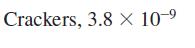
Find the pH (to the nearest tenth) of the substance with the given hydronium ion concentration. Crackers, 3.8 X 10-⁹
If orange juice has pH 4.6, what is its hydronium ion concentration?
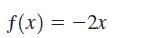
Each of the following functions is one-to-one. Graph the function as a solid line (or curve), and then graph its inverse on the same set of axes as a dashed line (or curve). Complete any tables to help graph the functions. f(x) = -2x
Determine whether each statement is true or false. log2 (8+32) = log2 8 + log₂ 32
Solve each equation.logx 1 = 0
The number of monthly active Twitter users (in millions) worldwide during the third quarter of each year from 2010 to 2017 is approximated bywhere x = 1 represents 2010, x = 2 represents 2011, and so on.(a) What does this model give for the number of monthly active Twitter users in 2012?(b)
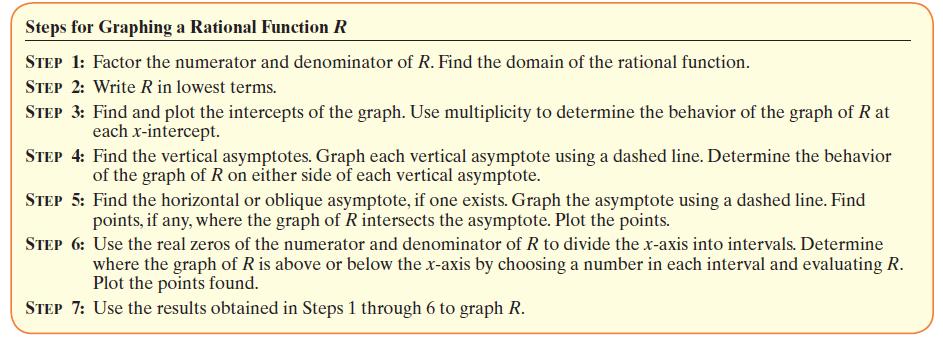
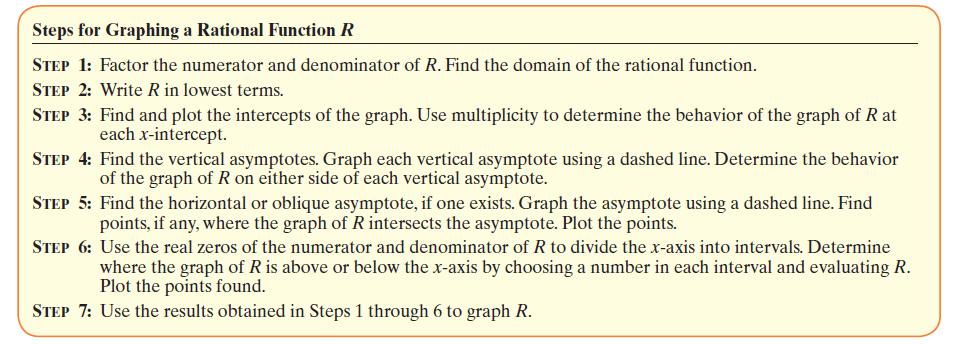
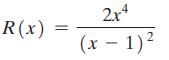
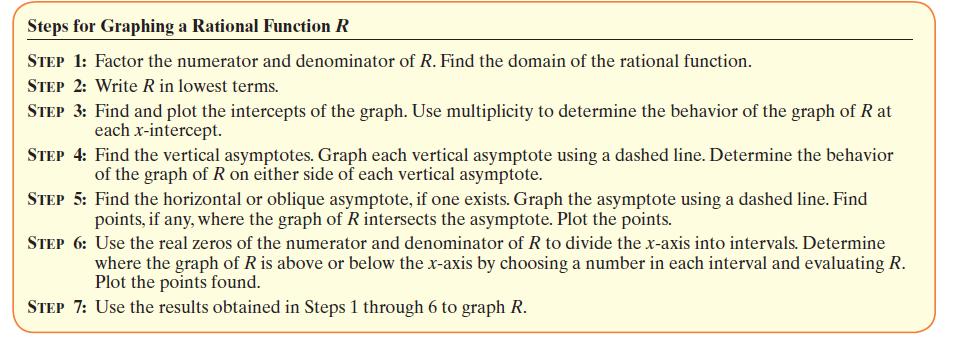
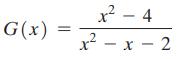
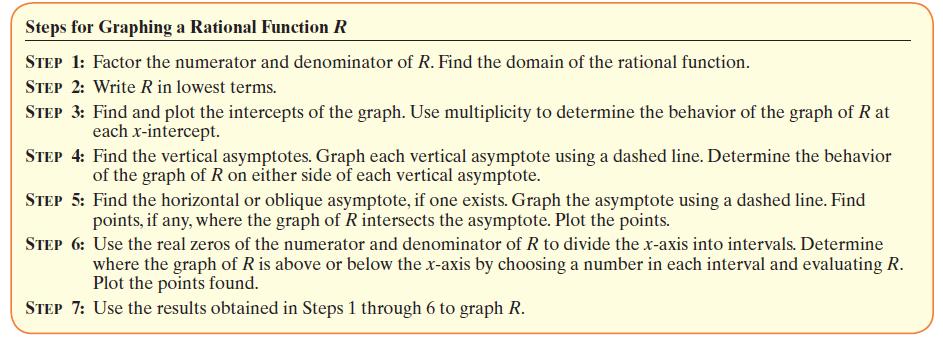
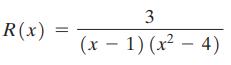
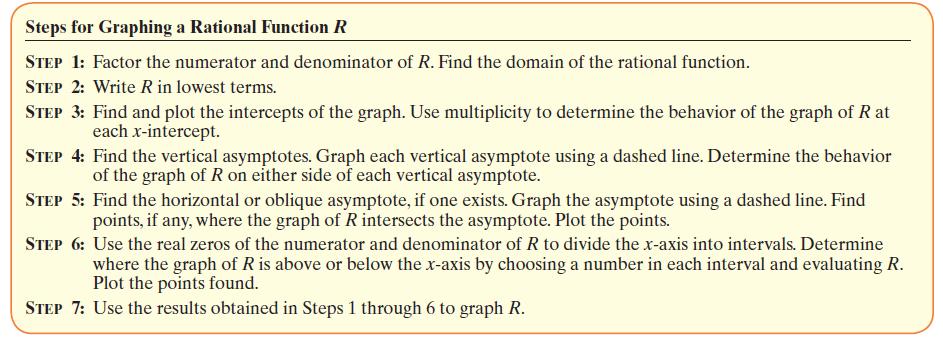
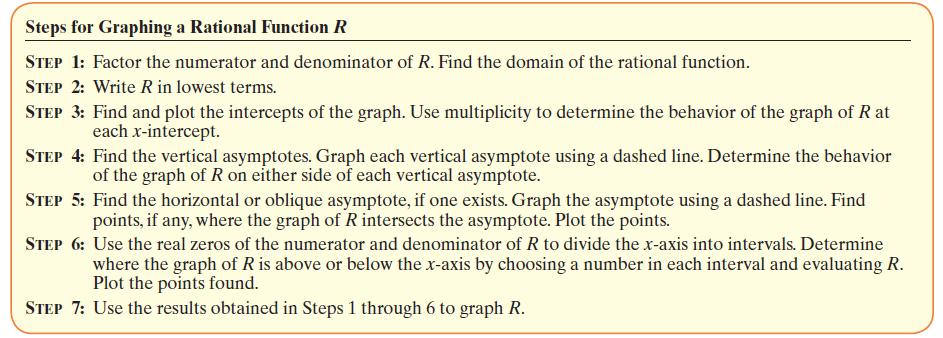
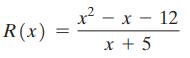
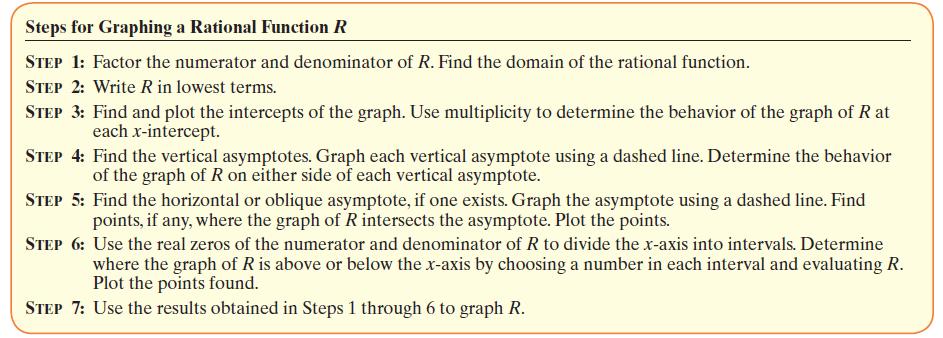
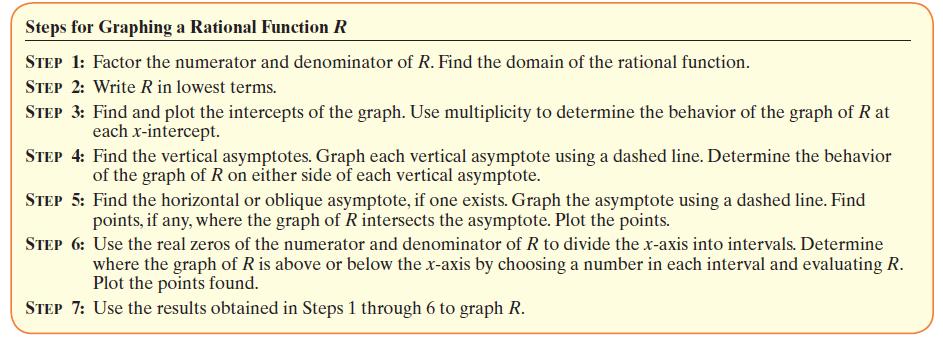
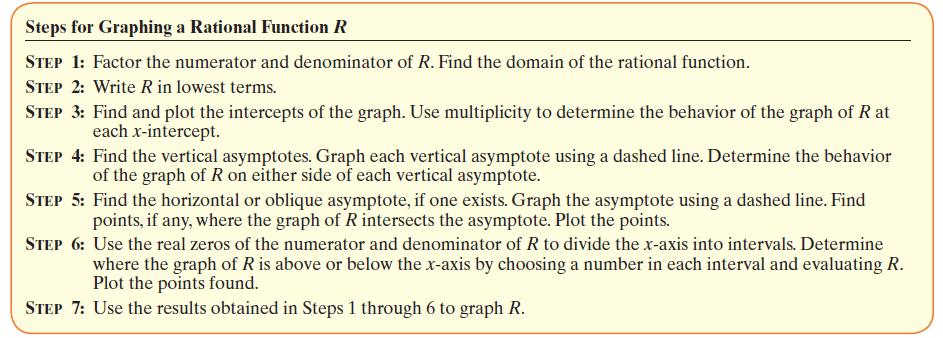
In Problems 7–50, follow Steps 1 through 7. Steps for Graphing a Rational Function R STEP 1: Factor the numerator and denominator of R. Find the domain of the rational function. STEP 2: Write R in lowest terms. STEP 3: Find and plot the intercepts of the graph. Use multiplicity to determine the
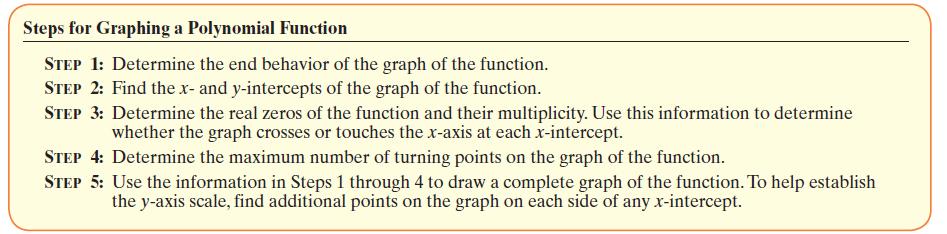
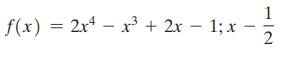
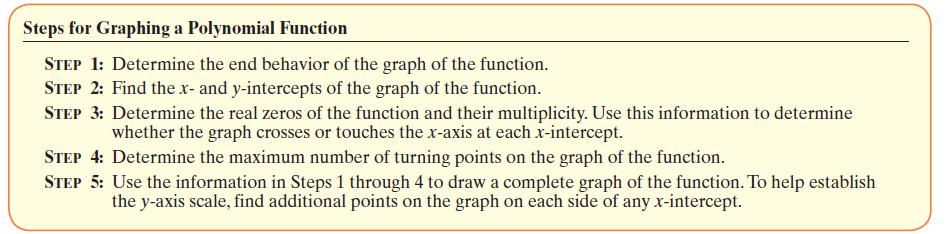
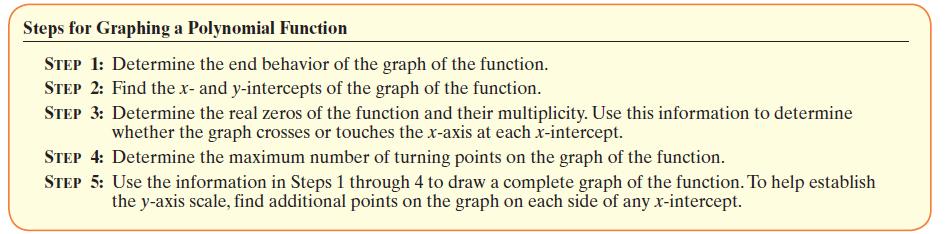
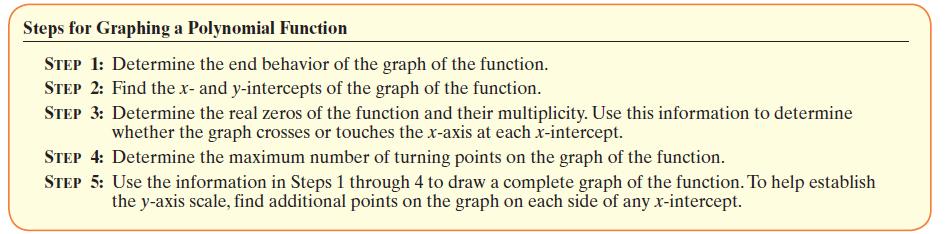
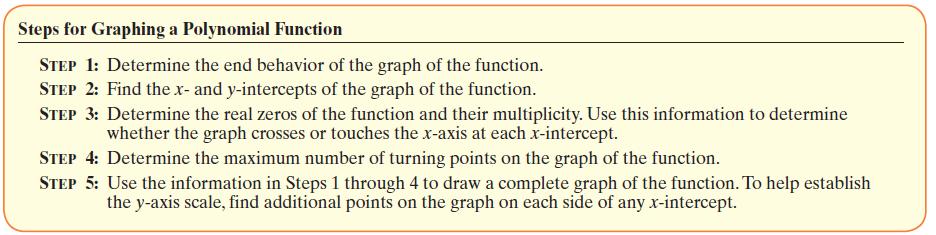
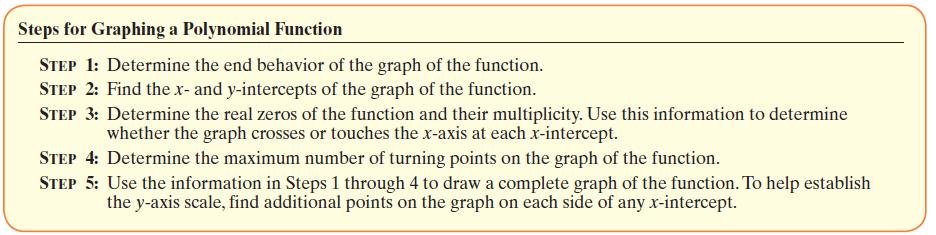
In Problems 5–22, graph each polynomial function by following Steps 1 through 5.f(x) = (x + 1)3 (x - 3) Steps for Graphing a Polynomial Function STEP 1: Determine the end behavior of the graph of the function. STEP 2: Find the x- and y-intercepts of the graph of the function. STEP 3: Determine
In Problems 15–18, solve the inequality by using the graph of the function. Solve R(x) ≥ 0, where R(x) 2x + 4 x - 1'
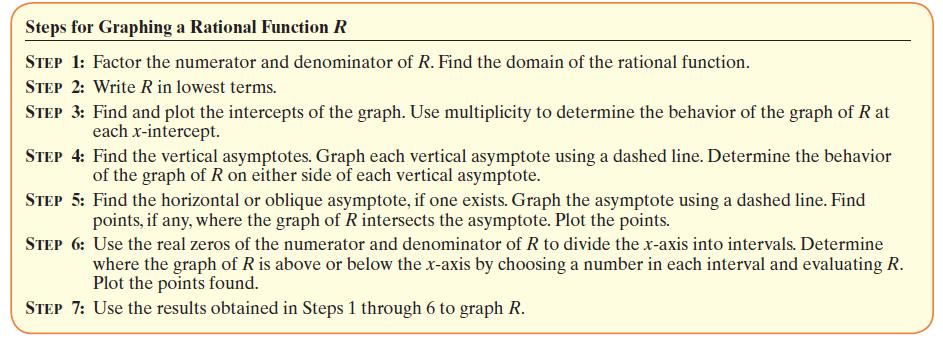
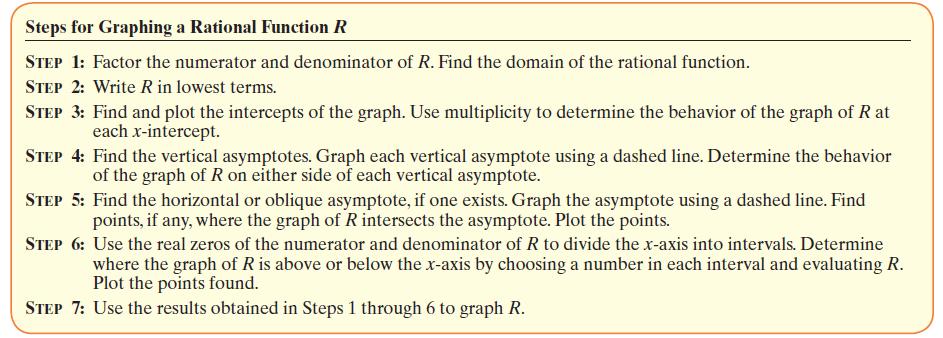
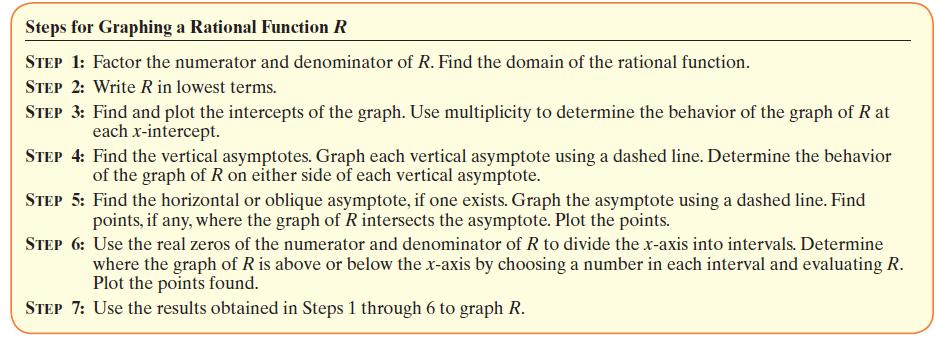
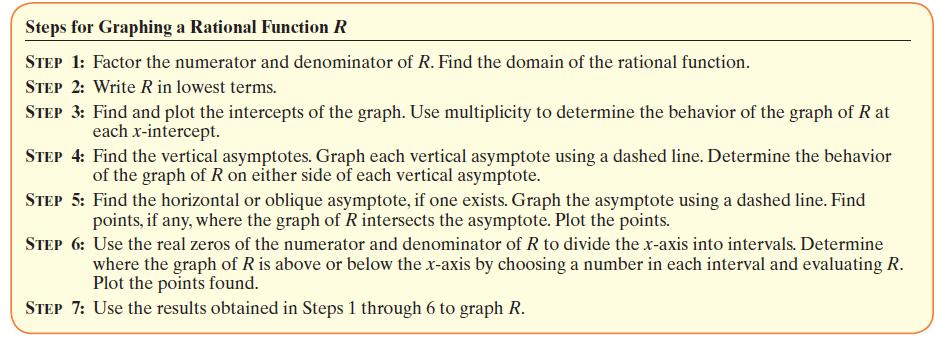
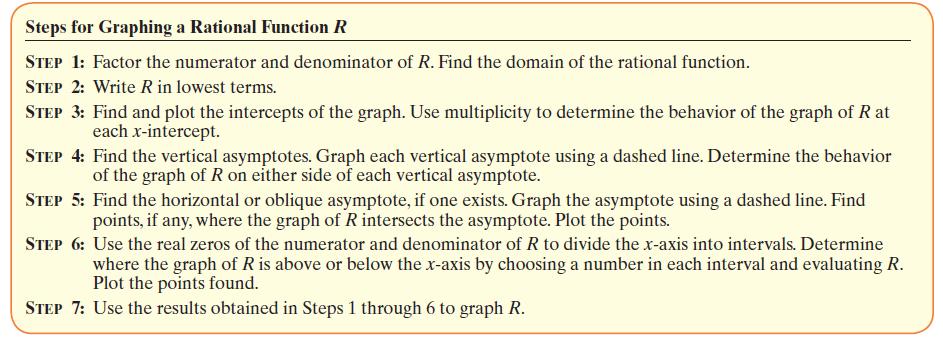
In Problems 15–20, graph each rational function following the seven steps given on page 367. Steps for Graphing a Rational Function R STEP 1: Factor the numerator and denominator of R. Find the domain of the rational function. STEP 2: Write R in lowest terms. STEP 3: Find and plot the intercepts
In Problems 11–20, use the Remainder Theorem to find the remainder when f(x) is divided by x - c. Then use the Factor Theorem to determine whether x - c is a factor of f(x). f(x) = 2x²x³ + 2x − 1; x - 2
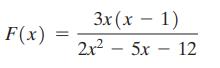
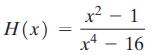
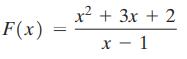
In Problems 15–26, find the domain of each rational function. F(x) 3x (x1) 2x² - 5x - 12
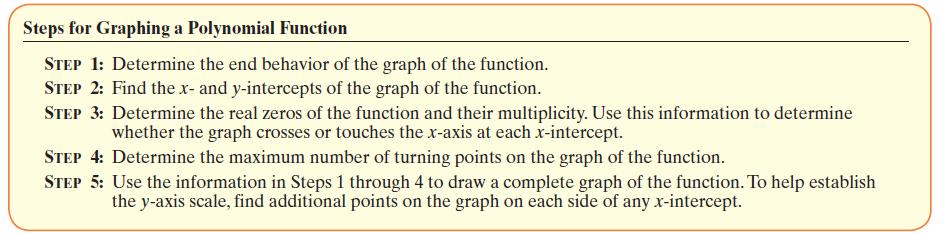
In Problems 5–22, graph each polynomial function by following Steps 1 through 5. Steps for Graphing a Polynomial Function STEP 1: Determine the end behavior of the graph of the function. STEP 2: Find the x- and y-intercepts of the graph of the function. STEP 3: Determine the real zeros of the
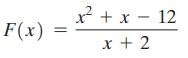
In Problems 7–50, follow Steps 1 through 7. Steps for Graphing a Rational Function R STEP 1: Factor the numerator and denominator of R. Find the domain of the rational function. STEP 2: Write R in lowest terms. STEP 3: Find and plot the intercepts of the graph. Use multiplicity to determine the
In Problems 19–54, solve each inequality algebraically. (x-4)²(x + 6) < 0
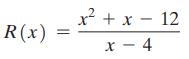
In Problems 15–20, graph each rational function following the seven steps given on page 367. Steps for Graphing a Rational Function R STEP 1: Factor the numerator and denominator of R. Find the domain of the rational function. STEP 2: Write R in lowest terms. STEP 3: Find and plot the intercepts
In Problems 7–50, follow Steps 1 through 7. Steps for Graphing a Rational Function R STEP 1: Factor the numerator and denominator of R. Find the domain of the rational function. STEP 2: Write R in lowest terms. STEP 3: Find and plot the intercepts of the graph. Use multiplicity to determine the
In Problems 5–22, graph each polynomial function by following Steps 1 through 5. Steps for Graphing a Polynomial Function STEP 1: Determine the end behavior of the graph of the function. STEP 2: Find the x- and y-intercepts of the graph of the function. STEP 3: Determine the real zeros of the
In Problems 5–22, graph each polynomial function by following Steps 1 through 5. Steps for Graphing a Polynomial Function STEP 1: Determine the end behavior of the graph of the function. STEP 2: Find the x- and y-intercepts of the graph of the function. STEP 3: Determine the real zeros of the
In Problems 11–20, use the Remainder Theorem to find the remainder when f(x) is divided by x - c. Then use the Factor Theorem to determine whether x - c is a factor of f(x). 1 f(x) = 3x² + x³ − 3x + 1; x + 3
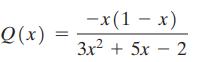
In Problems 15–26, find the domain of each rational function. Q(x) -x(1x) 3x² + 5x2
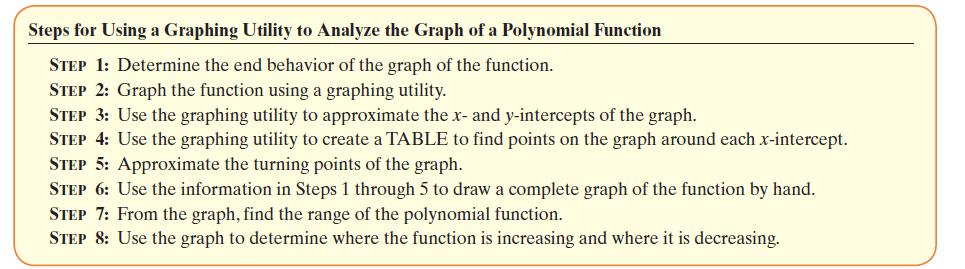
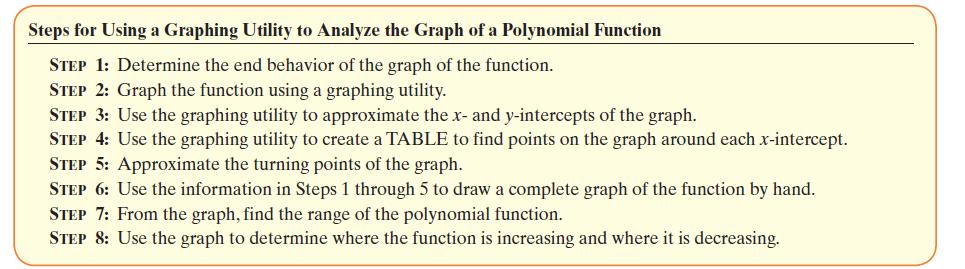
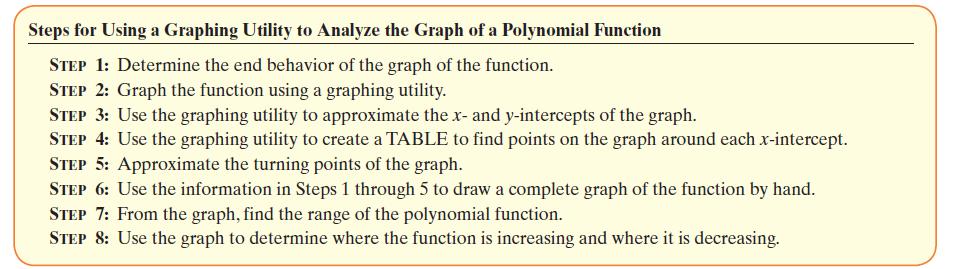
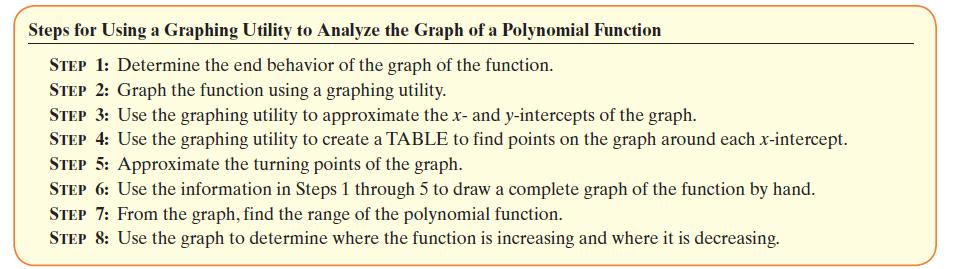
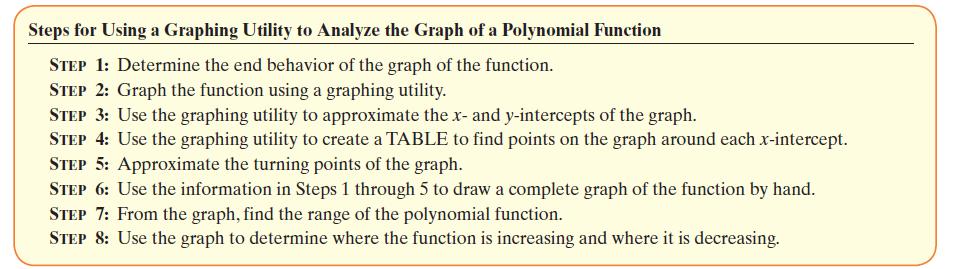
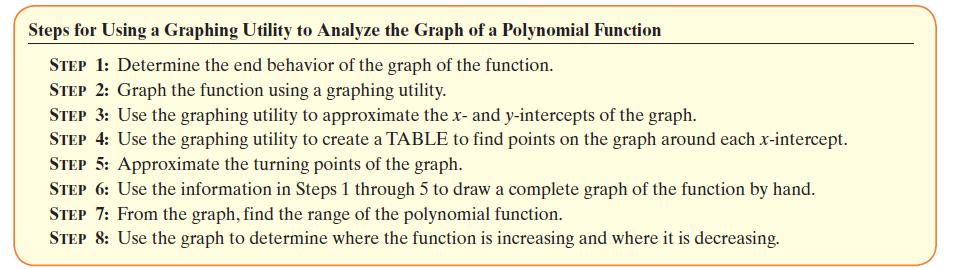
In Problems 23–30, use a graphing utility to graph each polynomial function f. Follow Steps 1 through 8. Steps for Using a Graphing Utility to Analyze the Graph of a Polynomial Function STEP 1: Determine the end behavior of the graph of the function. STEP 2: Graph the function using a graphing
In Problems 7–50, follow Steps 1 through 7. Steps for Graphing a Rational Function R STEP 1: Factor the numerator and denominator of R. Find the domain of the rational function. STEP 2: Write R in lowest terms. STEP 3: Find and plot the intercepts of the graph. Use multiplicity to determine the
In Problems 5–22, graph each polynomial function by following Steps 1 through 5. Steps for Graphing a Polynomial Function STEP 1: Determine the end behavior of the graph of the function. STEP 2: Find the x- and y-intercepts of the graph of the function. STEP 3: Determine the real zeros of the
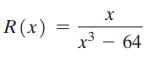
In Problems 15–26, find the domain of each rational function. R (x) || X x³ - 64
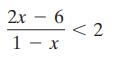
In Problems 21–25, solve each inequality. Graph the solution set. 2x6 1-x < 2
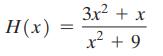
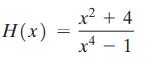
In Problems 15–26, find the domain of each rational function. H(x) = 3x² + x x² +9 2
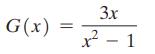
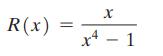
In Problems 15–26, find the domain of each rational function. R(x) x x² - 1
In Problems 21–32, determine the maximum number of real zeros that each polynomial function may have. Then use Descartes’ Rule of Signs to determine how many positive and how many negative real zeros each polynomial function may have. Do not attempt to find the zeros. f(x) = 8x67x² - x + 5
In Problems 7–50, follow Steps 1 through 7. Steps for Graphing a Rational Function R STEP 1: Factor the numerator and denominator of R. Find the domain of the rational function. STEP 2: Write R in lowest terms. STEP 3: Find and plot the intercepts of the graph. Use multiplicity to determine the
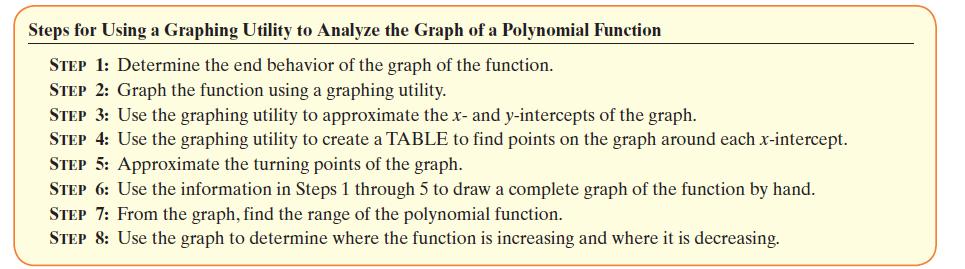
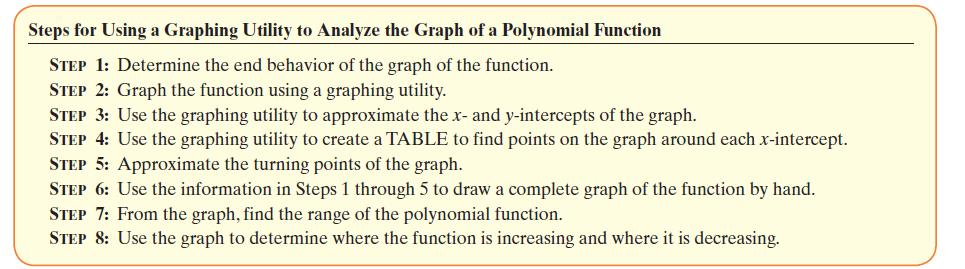
In Problems 23–30, use a graphing utility to graph each polynomial function f. Follow Steps 1 through 8. Steps for Using a Graphing Utility to Analyze the Graph of a Polynomial Function STEP 1: Determine the end behavior of the graph of the function. STEP 2: Graph the function using a graphing
In Problems 21–25, solve each inequality. Graph the solution set.x3 + x2 < 4x + 4
In Problems 23–30, use a graphing utility to graph each polynomial function f. Follow Steps 1 through 8.f(x) = x3 - 0.8x2 - 4.6656x + 3.73248 Steps for Using a Graphing Utility to Analyze the Graph of a Polynomial Function STEP 1: Determine the end behavior of the graph of the function. STEP 2:
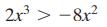
In Problems 19–54, solve each inequality algebraically. 2x³ > -8x² 2
In Problems 7–50, follow Steps 1 through 7. Steps for Graphing a Rational Function R STEP 1: Factor the numerator and denominator of R. Find the domain of the rational function. STEP 2: Write R in lowest terms. STEP 3: Find and plot the intercepts of the graph. Use multiplicity to determine the
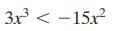
In Problems 19–54, solve each inequality algebraically. 3x³ < -15x²
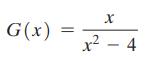
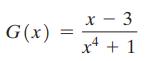
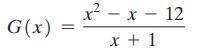
In Problems 15–26, find the domain of each rational function. G(x) = x-3 x² + 1 x4
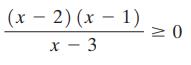
In Problems 21–25, solve each inequality. Graph the solution set. (x-2)(x - x - 3 1) ≥ 0
In Problems 21–32, determine the maximum number of real zeros that each polynomial function may have. Then use Descartes’ Rule of Signs to determine how many positive and how many negative real zeros each polynomial function may have. Do not attempt to find the zeros. f(x) = -2x³ + 5x² - x -
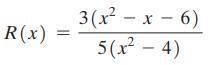
In Problems 15–26, find the domain of each rational function. R(x) 3(x²-x-6) 5(x² - 4)
In Problems 19–54, solve each inequality algebraically. (x + 2) (x4) (x - 6) ≤ 0
In Problems 25–32, use the given zero to find the remaining zeros of each polynomial function. f(x) = x³5x² + 9x - 45; zero: 3i
In Problems 23–30, use a graphing utility to graph each polynomial function f. Follow Steps 1 through 8. Steps for Using a Graphing Utility to Analyze the Graph of a Polynomial Function STEP 1: Determine the end behavior of the graph of the function. STEP 2: Graph the function using a graphing
In Problems 7–50, follow Steps 1 through 7. Steps for Graphing a Rational Function R STEP 1: Factor the numerator and denominator of R. Find the domain of the rational function. STEP 2: Write R in lowest terms. STEP 3: Find and plot the intercepts of the graph. Use multiplicity to determine the
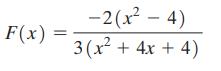
In Problems 15–26, find the domain of each rational function. F(x)= -2(x² - 4) 3(x² + 4x + 4)
In Problems 19–54, solve each inequality algebraically. (x + 1) (x + 2) (x + 3) ≤ 0
In Problems 23–30, use a graphing utility to graph each polynomial function f. Follow Steps 1 through 8. Steps for Using a Graphing Utility to Analyze the Graph of a Polynomial Function STEP 1: Determine the end behavior of the graph of the function. STEP 2: Graph the function using a graphing
In Problems 25–32, use the given zero to find the remaining zeros of each polynomial function. f(x) = 4x4 + 7x³ +62x² + 112x - 32; zero: -4i
In Problems 23–30, use a graphing utility to graph each polynomial function f. Follow Steps 1 through 8. Steps for Using a Graphing Utility to Analyze the Graph of a Polynomial Function STEP 1: Determine the end behavior of the graph of the function. STEP 2: Graph the function using a graphing
In Problems 7–50, follow Steps 1 through 7. Steps for Graphing a Rational Function R STEP 1: Factor the numerator and denominator of R. Find the domain of the rational function. STEP 2: Write R in lowest terms. STEP 3: Find and plot the intercepts of the graph. Use multiplicity to determine the
In Problems 7–50, follow Steps 1 through 7. Steps for Graphing a Rational Function R STEP 1: Factor the numerator and denominator of R. Find the domain of the rational function. STEP 2: Write R in lowest terms. STEP 3: Find and plot the intercepts of the graph. Use multiplicity to determine the
In Problems 23–30, use a graphing utility to graph each polynomial function f. Follow Steps 1 through 8. Steps for Using a Graphing Utility to Analyze the Graph of a Polynomial Function STEP 1: Determine the end behavior of the graph of the function. STEP 2: Graph the function using a graphing
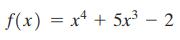
In Problems 21–32, determine the maximum number of real zeros that each polynomial function may have. Then use Descartes’ Rule of Signs to determine how many positive and how many negative real zeros each polynomial function may have. Do not attempt to find the zeros. f(x) = x² + 5x³ - 2
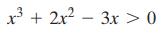
In Problems 19–54, solve each inequality algebraically. x² + 2x²-3x > 0
In Problems 21–32, determine the maximum number of real zeros that each polynomial function may have. Then use Descartes’ Rule of Signs to determine how many positive and how many negative real zeros each polynomial function may have. Do not attempt to find the zeros. f(x) = x³ + x² + x² + x
In Problems 19–54, solve each inequality algebraically. x² > x² 2
In Problems 7–50, follow Steps 1 through 7. Steps for Graphing a Rational Function R STEP 1: Factor the numerator and denominator of R. Find the domain of the rational function. STEP 2: Write R in lowest terms. STEP 3: Find and plot the intercepts of the graph. Use multiplicity to determine the
In Problems 23–30, use a graphing utility to graph each polynomial function f. Follow Steps 1 through 8. Steps for Using a Graphing Utility to Analyze the Graph of a Polynomial Function STEP 1: Determine the end behavior of the graph of the function. STEP 2: Graph the function using a graphing
In Problems 25–32, use the given zero to find the remaining zeros of each polynomial function. h(x)=x²7x³ + 23x². 522; zero: 2 - 5i
In Problems 29 and 30, use Descartes’ Rule of Signs to determine how many positive and negative real zeros each polynomial function may have. Do not attempt to find the zeros. f(x) = 12x8 - x7 + 8x4 - 2x3 + x + 3
In Problems 7–50, follow Steps 1 through 7. Steps for Graphing a Rational Function R STEP 1: Factor the numerator and denominator of R. Find the domain of the rational function. STEP 2: Write R in lowest terms. STEP 3: Find and plot the intercepts of the graph. Use multiplicity to determine the
In Problems 19–54, solve each inequality algebraically. x³ 4x² 12x > 0
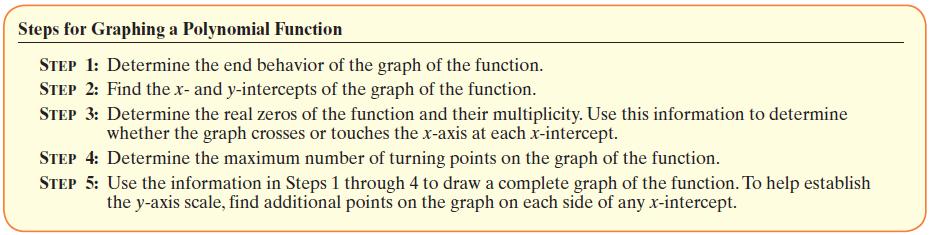
In Problems 31–42, graph each polynomial function f by following Steps 1 through 5. Steps for Graphing a Polynomial Function STEP 1: Determine the end behavior of the graph of the function. STEP 2: Find the x- and y-intercepts of the graph of the function. STEP 3: Determine the real zeros of the
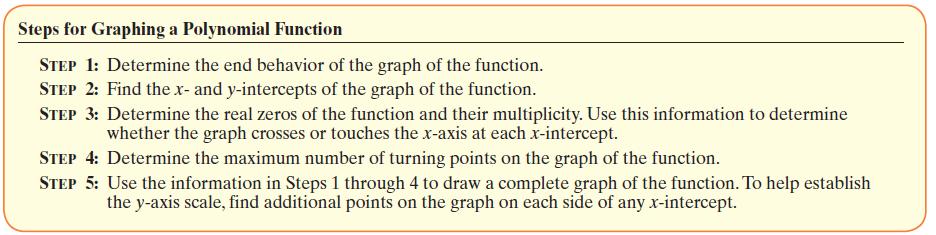
In Problems 31–42, graph each polynomial function f by following Steps 1 through 5. Steps for Graphing a Polynomial Function STEP 1: Determine the end behavior of the graph of the function. STEP 2: Find the x- and y-intercepts of the graph of the function. STEP 3: Determine the real zeros of the
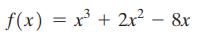
In Problems 31–42, graph each polynomial function f by following Steps 1 through 5. Steps for Graphing a Polynomial Function STEP 1: Determine the end behavior of the graph of the function. STEP 2: Find the x- and y-intercepts of the graph of the function. STEP 3: Determine the real zeros of the
In Problems 31–42, graph each polynomial function f by following Steps 1 through 5.f(x) = x - x3 Steps for Graphing a Polynomial Function STEP 1: Determine the end behavior of the graph of the function. STEP 2: Find the x- and y-intercepts of the graph of the function. STEP 3: Determine the real
In Problems 7–50, follow Steps 1 through 7. Steps for Graphing a Rational Function R STEP 1: Factor the numerator and denominator of R. Find the domain of the rational function. STEP 2: Write R in lowest terms. STEP 3: Find and plot the intercepts of the graph. Use multiplicity to determine the
In Problems 35 and 36, solve each equation in the real number system. 2x4 + 7x3 + x2 - 7x - 3 = 0
In Problems 25–32, use the given zero to find the remaining zeros of each polynomial function. g(x) = 2x³ 3x²5x³15x²207x + 108; zero: 3i
In Problems 21–32, determine the maximum number of real zeros that each polynomial function may have. Then use Descartes’ Rule of Signs to determine how many positive and how many negative real zeros each polynomial function may have. Do not attempt to find the zeros. f(x) = x + 1
In Problems 25–32, use the given zero to find the remaining zeros of each polynomial function. h(x) = 3x³ + 2x¹ - 9x³. 6x² 84x56; zero: - 2i
Showing 3900 - 4000
of 16373
First
33
34
35
36
37
38
39
40
41
42
43
44
45
46
47
Last
Step by Step Answers

 Get 50% OFF
Claim Now
Get 50% OFF
Claim Now