New Semester
Started
Get
50% OFF
Study Help!
--h --m --s
Claim Now
Question Answers
Textbooks
Find textbooks, questions and answers
Oops, something went wrong!
Change your search query and then try again
S
Books
FREE
Study Help
Expert Questions
Accounting
General Management
Mathematics
Finance
Organizational Behaviour
Law
Physics
Operating System
Management Leadership
Sociology
Programming
Marketing
Database
Computer Network
Economics
Textbooks Solutions
Accounting
Managerial Accounting
Management Leadership
Cost Accounting
Statistics
Business Law
Corporate Finance
Finance
Economics
Auditing
Tutors
Online Tutors
Find a Tutor
Hire a Tutor
Become a Tutor
AI Tutor
AI Study Planner
NEW
Sell Books
Search
Search
Sign In
Register
study help
mathematics
college algebra
College Algebra 11th Edition Michael Sullivan, Michael Sullivan III - Solutions
In Problems 19–54, solve each inequality algebraically. x - 3 x + 1 > 0
In Problems 33–44, list the potential rational zeros of each polynomial function. Do not attempt to find the zeros. f(x) = -9x³x² + x + 3
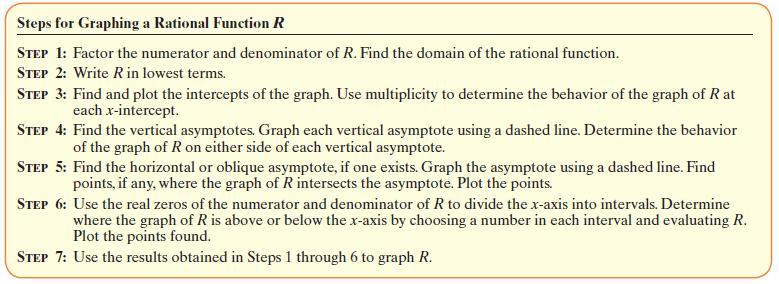
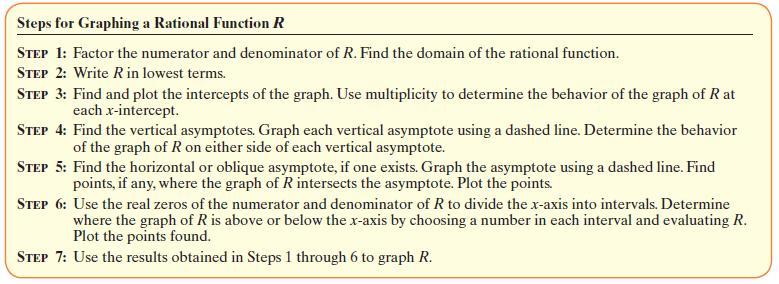
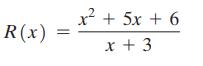
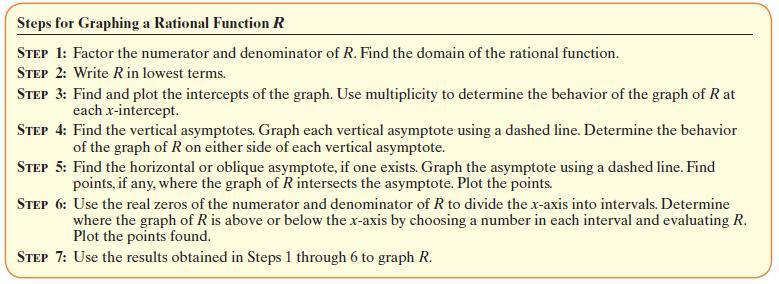
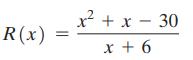
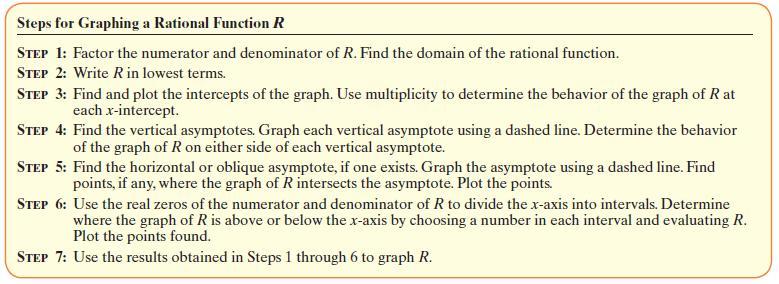
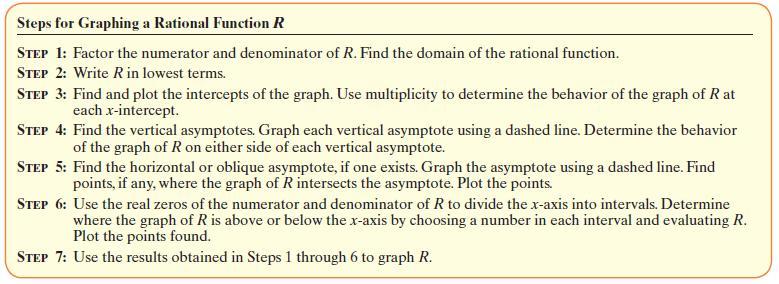
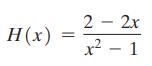
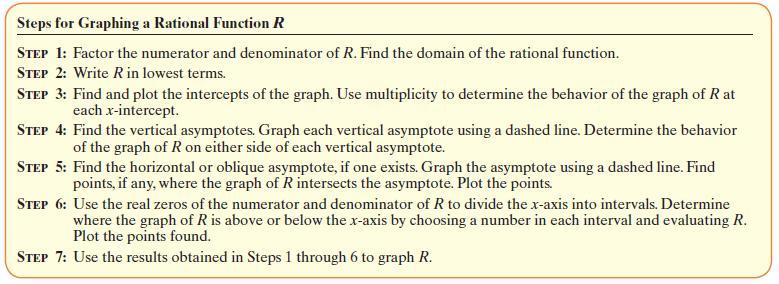
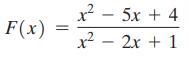
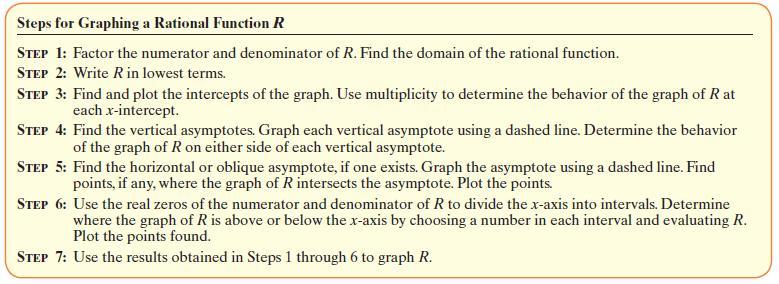
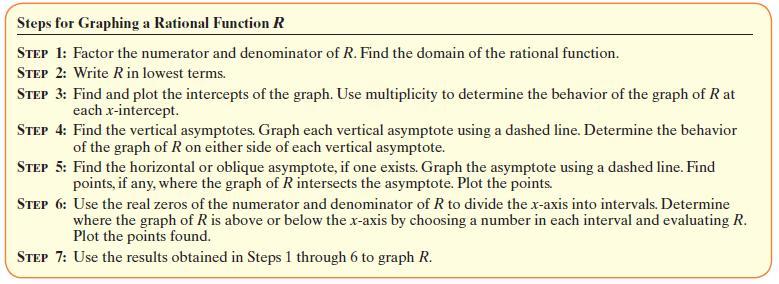
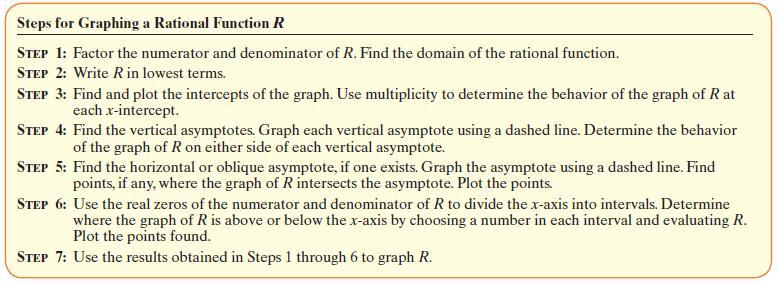
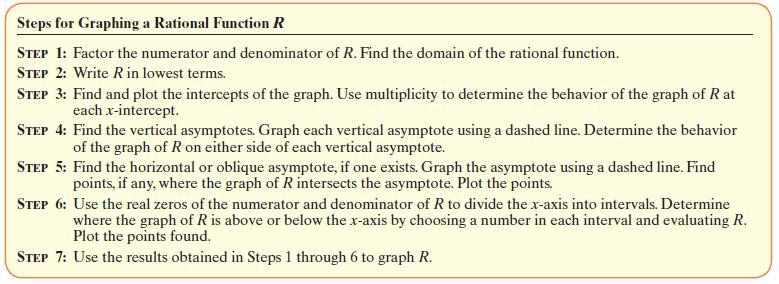
In Problems 7–50, follow Steps 1 through 7 on page 367 to graph each function. Steps for Graphing a Rational Function R STEP 1: Factor the numerator and denominator of R. Find the domain of the rational function. STEP 2: Write R in lowest terms. STEP 3: Find and plot the intercepts of the graph.
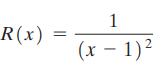
In Problems 33–44, (a) Graph the rational function using transformations, (b) Use the final graph to find the domain and range, and (c) Use the final graph to list any vertical, horizontal, or oblique asymptotes. R(x) 1 (x - 1)²
In Problems 19–54, solve each inequality algebraically. x + 1 x-1 0 <
In Problems 33–44, list the potential rational zeros of each polynomial function. Do not attempt to find the zeros. f(x) = 2x5x² - x² + 1
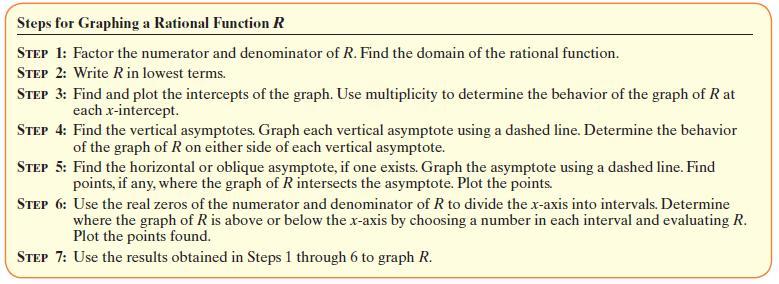
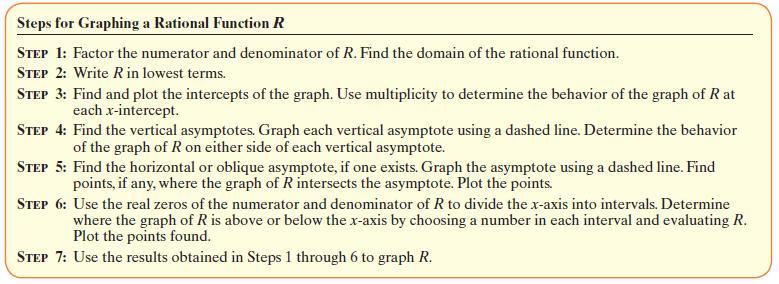
In Problems 7–50, follow Steps 1 through 7 on page 367 to graph each function. Steps for Graphing a Rational Function R STEP 1: Factor the numerator and denominator of R. Find the domain of the rational function. STEP 2: Write R in lowest terms. STEP 3: Find and plot the intercepts of the graph.
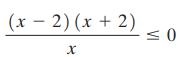
In Problems 19–54, solve each inequality algebraically. (x-2)(x + 2) X ≤ 0
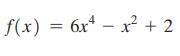
In Problems 33–44, list the potential rational zeros of each polynomial function. Do not attempt to find the zeros. f(x) = 6x4x² + 2
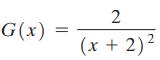
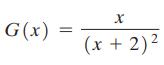
In Problems 33–44, (a) Graph the rational function using transformations, (b) Use the final graph to find the domain and range, and (c) Use the final graph to list any vertical, horizontal, or oblique asymptotes. G(x) 2 (x + 2)²
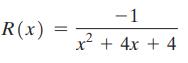
In Problems 33–44, (a) Graph the rational function using transformations, (b) Use the final graph to find the domain and range, and (c) Use the final graph to list any vertical, horizontal, or oblique asymptotes. R(x) = -1 x² + 4x + 4
In Problems 7–50, follow Steps 1 through 7 on page 367 to graph each function. Steps for Graphing a Rational Function R STEP 1: Factor the numerator and denominator of R. Find the domain of the rational function. STEP 2: Write R in lowest terms. STEP 3: Find and plot the intercepts of the graph.
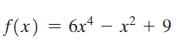
In Problems 33–44, list the potential rational zeros of each polynomial function. Do not attempt to find the zeros. 6x4x² +9 f(x) = 6x4
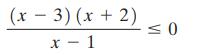
In Problems 19–54, solve each inequality algebraically. (x − 3)(x + 2) x 1 ≤0
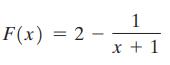
In Problems 33–44, (a) Graph the rational function using transformations, (b) Use the final graph to find the domain and range, and (c) Use the final graph to list any vertical, horizontal, or oblique asymptotes. F(x) = 2 - 1 x + 1
In Problems 7–50, follow Steps 1 through 7 on page 367 to graph each function. Steps for Graphing a Rational Function R STEP 1: Factor the numerator and denominator of R. Find the domain of the rational function. STEP 2: Write R in lowest terms. STEP 3: Find and plot the intercepts of the graph.
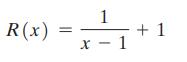
In Problems 33–44, (a) Graph the rational function using transformations, (b) Use the final graph to find the domain and range, and (c) Use the final graph to list any vertical, horizontal, or oblique asymptotes. R(x) 1 x - 1 + 1
In Problems 7–50, follow Steps 1 through 7 on page 367 to graph each function. Steps for Graphing a Rational Function R STEP 1: Factor the numerator and denominator of R. Find the domain of the rational function. STEP 2: Write R in lowest terms. STEP 3: Find and plot the intercepts of the graph.
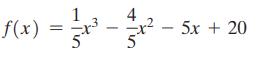
In Problems 31–42, graph each polynomial function f by following Steps 1 through 5. STEP 1: Determine the end behavior of the graph of the function. STEP 2: Find the x- and y-intercepts of the graph of the function. STEP 3: Determine the real zeros of the function and their multiplicity. Use this
In Problems 7–50, follow Steps 1 through 7 on page 367 to graph each function. Steps for Graphing a Rational Function R STEP 1: Factor the numerator and denominator of R. Find the domain of the rational function. STEP 2: Write R in lowest terms. STEP 3: Find and plot the intercepts of the graph.
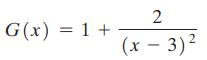
In Problems 33–44, (a) Graph the rational function using transformations, (b) Use the final graph to find the domain and range, and (c) Use the final graph to list any vertical, horizontal, or oblique asymptotes. G(x) = 1 + 2 (x - 3)²
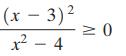
In Problems 19–54, solve each inequality algebraically. ( x – 3 ) 2 x - 4 > 0 0 ₹
In Problems 31–42, graph each polynomial function f by following Steps 1 through 5. f(x) = 3x6 + 3x + 6x5 6x512x4 - 24x³
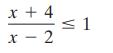
In Problems 19–54, solve each inequality algebraically. x + 4 x-2 ≤ 1
In Problems 7–50, follow Steps 1 through 7 on page 367 to graph each function. Steps for Graphing a Rational Function R STEP 1: Factor the numerator and denominator of R. Find the domain of the rational function. STEP 2: Write R in lowest terms. STEP 3: Find and plot the intercepts of the graph.
In Problems 7–50, follow Steps 1 through 7 on page 367 to graph each function. Steps for Graphing a Rational Function R STEP 1: Factor the numerator and denominator of R. Find the domain of the rational function. STEP 2: Write R in lowest terms. STEP 3: Find and plot the intercepts of the graph.
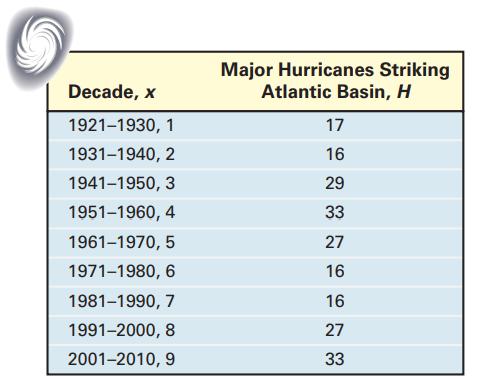
In 2012, Hurricane Sandy struck the East Coast of the United States, killing 147 people and causing an estimated $75 billion in damage. With a gale diameter of about 1000 miles, it was the largest ever to form over the Atlantic Basin. The accompanying data represent the number of major hurricane
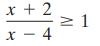
In Problems 19–54, solve each inequality algebraically. x + 2 x - 4 ≥ 1
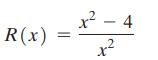
In Problems 33–44, (a) Graph the rational function using transformations, (b) Use the final graph to find the domain and range, and (c) Use the final graph to list any vertical, horizontal, or oblique asymptotes. R(x) = x² - 4 +²
In Problems 7–50, follow Steps 1 through 7 on page 367 to graph each function. Steps for Graphing a Rational Function R STEP 1: Factor the numerator and denominator of R. Find the domain of the rational function. STEP 2: Write R in lowest terms. STEP 3: Find and plot the intercepts of the graph.
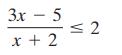
In Problems 19–54, solve each inequality algebraically. 3x - 5 x + 2 VI 2
In Problems 7–50, follow Steps 1 through 7 on page 367 to graph each function. Steps for Graphing a Rational Function R STEP 1: Factor the numerator and denominator of R. Find the domain of the rational function. STEP 2: Write R in lowest terms. STEP 3: Find and plot the intercepts of the graph.
In Problems 7–50, follow Steps 1 through 7 on page 367 to graph each function. Steps for Graphing a Rational Function R STEP 1: Factor the numerator and denominator of R. Find the domain of the rational function. STEP 2: Write R in lowest terms. STEP 3: Find and plot the intercepts of the graph.
In Problems 7–50, follow Steps 1 through 7 on page 367 to graph each function. Steps for Graphing a Rational Function R STEP 1: Factor the numerator and denominator of R. Find the domain of the rational function. STEP 2: Write R in lowest terms. STEP 3: Find and plot the intercepts of the graph.
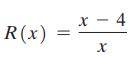
In Problems 33–44, (a) Graph the rational function using transformations, (b) Use the final graph to find the domain and range, and (c) Use the final graph to list any vertical, horizontal, or oblique asymptotes. R(x) x - 4 X
In Problems 7–50, follow Steps 1 through 7 on page 367 to graph each function. Steps for Graphing a Rational Function R STEP 1: Factor the numerator and denominator of R. Find the domain of the rational function. STEP 2: Write R in lowest terms. STEP 3: Find and plot the intercepts of the graph.
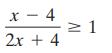
In Problems 19–54, solve each inequality algebraically. x - 4 2x + 4 ≥ 1
In Problems 45–56, use the Rational Zeros Theorem to find all the real zeros of each polynomial function. Use the zeros to factor f over the real numbers. f(x) = 2x³x² + 2x - 1
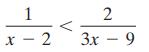
In Problems 19–54, solve each inequality algebraically. 1 x - 2 X 2 3x - 9
In Problems 45–56, use the Rational Zeros Theorem to find all the real zeros of each polynomial function. Use the zeros to factor f over the real numbers. f(x) = 2x³ + x² 2x³ + x² + 2x + 1
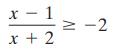
In Problems 19–54, solve each inequality algebraically. x - 1 x + 2 IV -2
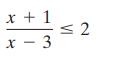
In Problems 19–54, solve each inequality algebraically. x + 1 x - 3 ≤2
In Problems 45–56, use the Rational Zeros Theorem to find all the real zeros of each polynomial function. Use the zeros to factor f over the real numbers. f(x) = 2x³ 4x². 2x³4x²10x + 20
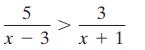
In Problems 19–54, solve each inequality algebraically. 5 x-3 V 3 x + 1
In Problems 45–56, use the Rational Zeros Theorem to find all the real zeros of each polynomial function. Use the zeros to factor f over the real numbers. f(x) = 2x² + x³7x²-3x + 3
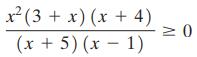
In Problems 19–54, solve each inequality algebraically. x² (3 + x) (x + 4) (x + 5) (x - 1) ≥ 0
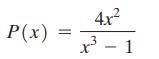
In Problems 45–56, find the vertical, horizontal, and oblique asymptotes, if any, of each rational function. P(x) 4x² x³ - 1
In Problems 45–56, use the Rational Zeros Theorem to find all the real zeros of each polynomial function. Use the zeros to factor f over the real numbers. f(x) = 3x³ + 6x²15x - 30
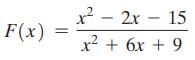
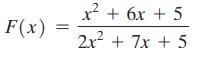
In Problems 45–56, find the vertical, horizontal, and oblique asymptotes, if any, of each rational function. F(x) = x² + 6x + 5 2x² + 7x + 5
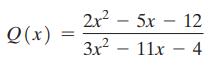
In Problems 45–56, find the vertical, horizontal, and oblique asymptotes, if any, of each rational function. Q(x) = 2x² 3x² 5x – 12 - 11x - 4
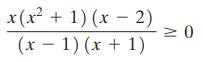
In Problems 19–54, solve each inequality algebraically. x(x² + 1)(x - 2) (x - 1) (x + 1) ≥ 0
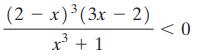
In Problems 19–54, solve each inequality algebraically. (2-x) ³ (3x - 2) x³ + 1
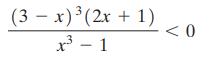
In Problems 19–54, solve each inequality algebraically. (3 - x) ³(2x + 1) ³-1
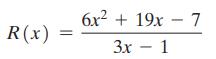
In Problems 45–56, find the vertical, horizontal, and oblique asymptotes, if any, of each rational function. R(x) 6x² + 19x - 7 3x - 1
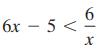
In Problems 19–54, solve each inequality algebraically. 6x - 5< 6 X
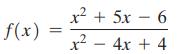
In Problems 55–58, (a) Graph each function by hand, (b) Solve f(x) ≥ 0. f(x) rẻ +² +5x - 6 x² - 4x + 4
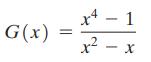
In Problems 45–56, find the vertical, horizontal, and oblique asymptotes, if any, of each rational function. G (x) x² - 1 X x² R
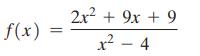
In Problems 55–58, (a) Graph each function by hand, (b) Solve f(x) ≥ 0. f(x) 2x² + 9x + 9 x²2²-4
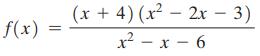
In Problems 55–58, (a) Graph each function by hand, (b) Solve f(x) ≥ 0. f(x) (x + 4) (x² - 2x - 3) x²-x-6
In Problems 45–56, use the Rational Zeros Theorem to find all the real zeros of each polynomial function. Use the zeros to factor f over the real numbers. f(x) = 4x4 + 5x³ + 9x² + 10x + 2
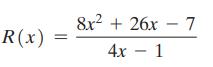
In Problems 45–56, find the vertical, horizontal, and oblique asymptotes, if any, of each rational function. R(x) 8x² +26x - 7 4x - 1
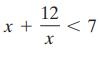
In Problems 19–54, solve each inequality algebraically. x + 12 x
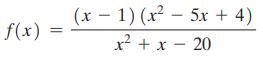
In Problems 55–58, (a) Graph each function by hand, (b) Solve f(x) ≥ 0. f(x) (x − 1) (r2 − 5x +4) x² + x - 20
In Problems 57–68, solve each equation in the real number system. x4 x²x³ + 2x² - 4x 8 = 0 43 -
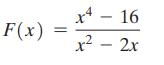
In Problems 45–56, find the vertical, horizontal, and oblique asymptotes, if any, of each rational function. F(x) x4 - 16 x² - 2x
In Problems 45–56, use the Rational Zeros Theorem to find all the real zeros of each polynomial function. Use the zeros to factor f over the real numbers. f(x) = 3x² + 4x³ + 7x² + 8x + 2
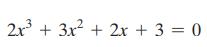
In Problems 57–68, solve each equation in the real number system. 2x³ + 3x² + 2x + 3 = 0
In Problems 57–68, solve each equation in the real number system. 3x³+4x²7x + 2 = 0
Problems 50–59 are based on material learned earlier in the course. The purpose of these problems is to keep the material fresh in your mind so that you are better prepared for the final exam. The strain on a solid object varies directly with the external tension force acting on the solid
In Problems 57–68, solve each equation in the real number system. 2x³ 3x²-3x - 5 = 0 -
Problems 50–59 are based on material learned earlier in the course. The purpose of these problems is to keep the material fresh in your mind so that you are better prepared for the final exam. Find the center and radius of the circle x² + 4x + y² - 2y = 11
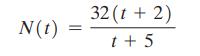
A study of a new keyboard layout for smartphones found that the average number of words users could text per minute could be approximated by Where t is the number of days of practie with the keyboard.(a) What was the average number of words users could text with the new layout at the beginning of
In Problems 57–68, solve each equation in the real number system. 2x³ 11x² + 10x + 8 = 0
In Problems 57–68, solve each equation in the real number system. x42x³ + 10x² 18x + 9 = 0 -
In Problems 57–68, solve each equation in the real number system. 3x³x²15x + 5 = 0
In Problems 57–68, solve each equation in the real number system. x² + 4x³ + 2x² - x + 6 = 0
In Problems 57–68, solve each equation in the real number system. 2x19x³+57x264x + 20 = 0
Problems 50–59 are based on material learned earlier in the course. The purpose of these problems is to keep the material fresh in your mind so that you are better prepared for the final exam. Find the average rate of change of f(x) = x2 + 4x - 3 from - 2 to 1.
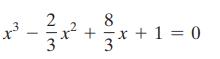
In Problems 57–68, solve each equation in the real number system. +3³ 2/3 + 8 ∞013 x + 1 = 0
In Problems 57–68, solve each equation in the real number system. 2x4+x³24x² + 20x + 16 = 0
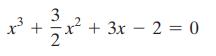
In Problems 57–68, solve each equation in the real number system. 3 +² x + 3x - 2 = 0 2 x +
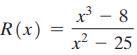
Where is the graph of above the x-axis? R(x) ³-8 x²25
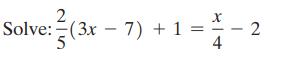
Problems 67–76 are based on material learned earlier in the course. The purpose of these problems is to keep the material fresh in your mind so that you are better prepared for the final exam. 2 X Solve: (3x - 7) + 1 = -2 4
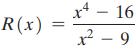
Where is the graph of above the x-axis? R(x) - 16 1²-9
Problems 67–76 are based on material learned earlier in the course. The purpose of these problems is to keep the material fresh in your mind so that you are better prepared for the final exam.Use a graphing utility to find the local maximum of f(x) = x³ + 4x² - 3x + 1
Problems 67–76 are based on material learned earlier in the course. The purpose of these problems is to keep the material fresh in your mind so that you are better prepared for the final exam. Find the intercepts of the graph of f(x) = x-6 x + 2
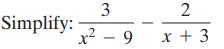
Problems 67–76 are based on material learned earlier in the course. The purpose of these problems is to keep the material fresh in your mind so that you are better prepared for the final exam. Simplify: 3 x² - 9 2 x + 3
Problems 67–76 are based on material learned earlier in the course. The purpose of these problems is to keep the material fresh in your mind so that you are better prepared for the final exam. Where is f(x) = 5x² 13x6
Problems 67–76 are based on material learned earlier in the course. The purpose of these problems is to keep the material fresh in your mind so that you are better prepared for the final exam. Determine whether the function f(x) odd, or neither. = Vx x² +6 is even,
Problems 67–76 are based on material learned earlier in the course. The purpose of these problems is to keep the material fresh in your mind so that you are better prepared for the final exam. Find the equation of a vertical line passing through the point (5, -3).
Problems 67–76 are based on material learned earlier in the course. The purpose of these problems is to keep the material fresh in your mind so that you are better prepared for the final exam.Is the graph of the equation 2x3 - xy2 = 4 symmetric with respect to the x-axis, the y-axis, the origin,
In Problems 79–84, use the Intermediate Value Theorem to show that each polynomial function has a real zero in the given interval. f(x) = x² + 8x³x²+2; [-1,0]
Problems 67–76 are based on material learned earlier in the course. The purpose of these problems is to keep the material fresh in your mind so that you are better prepared for the final exam. Solve: 3 (2x + 4) > 5x + 13
In Problems 79–84, use the Intermediate Value Theorem to show that each polynomial function has a real zero in the given interval. f(x) = 8x42x² + 5x 1; [0, 1]
Problems 79–88 are based on material learned earlier in the course. The purpose of these problems is to keep the material fresh in your mind so that you are better prepared for the final exam. Suppose y varies directly with Vx. Write a general formula to describe the variation if y = 2 when x =
Problems 79–88 are based on material learned earlier in the course. The purpose of these problems is to keep the material fresh in your mind so that you are better prepared for the final exam. Factor completely: 6x4y4 + 3x³y5 - 3x³y5 - 18x²y6
Problems 79–88 are based on material learned earlier in the course. The purpose of these problems is to keep the material fresh in your mind so that you are better prepared for the final exam. If f(x) √3x - 1 and g(x) find (f g) (x) and state its domain. = √3x + 1,
In Problems 79–84, use the Intermediate Value Theorem to show that each polynomial function has a real zero in the given interval. f(x) = 2x³ + 6x² − 8x + 2; [−5, −4]
Problems 79–88 are based on material learned earlier in the course. The purpose of these problems is to keep the material fresh in your mind so that you are better prepared for the final exam.Solve: 9 - 2x ≤ 4x + 1
In Problems 79–84, use the Intermediate Value Theorem to show that each polynomial function has a real zero in the given interval. f(x) = x³ 3x4 - 2x³ + 6x² + x + 2; [1.7, 1.8] =
Showing 5200 - 5300
of 16373
First
46
47
48
49
50
51
52
53
54
55
56
57
58
59
60
Last
Step by Step Answers

 Get 50% OFF
Claim Now
Get 50% OFF
Claim Now