







Question: 3. Composing Effective Bad-News Messages Use the indirect pattern when you need to soften or delay bad news until after an explanation is given. Understanding
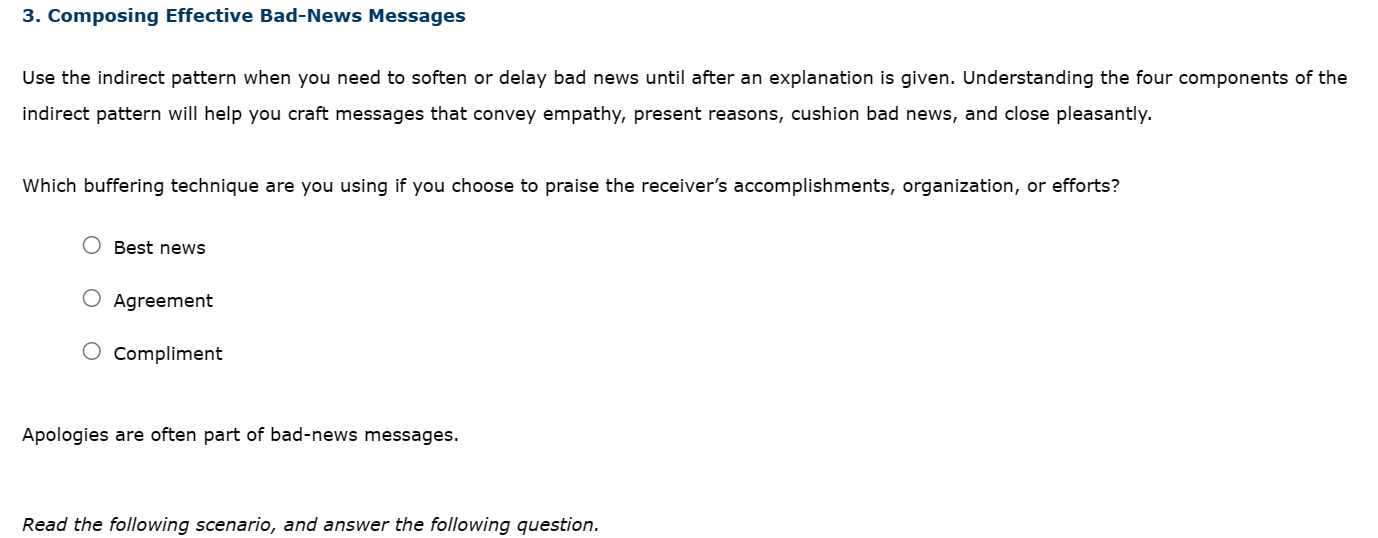
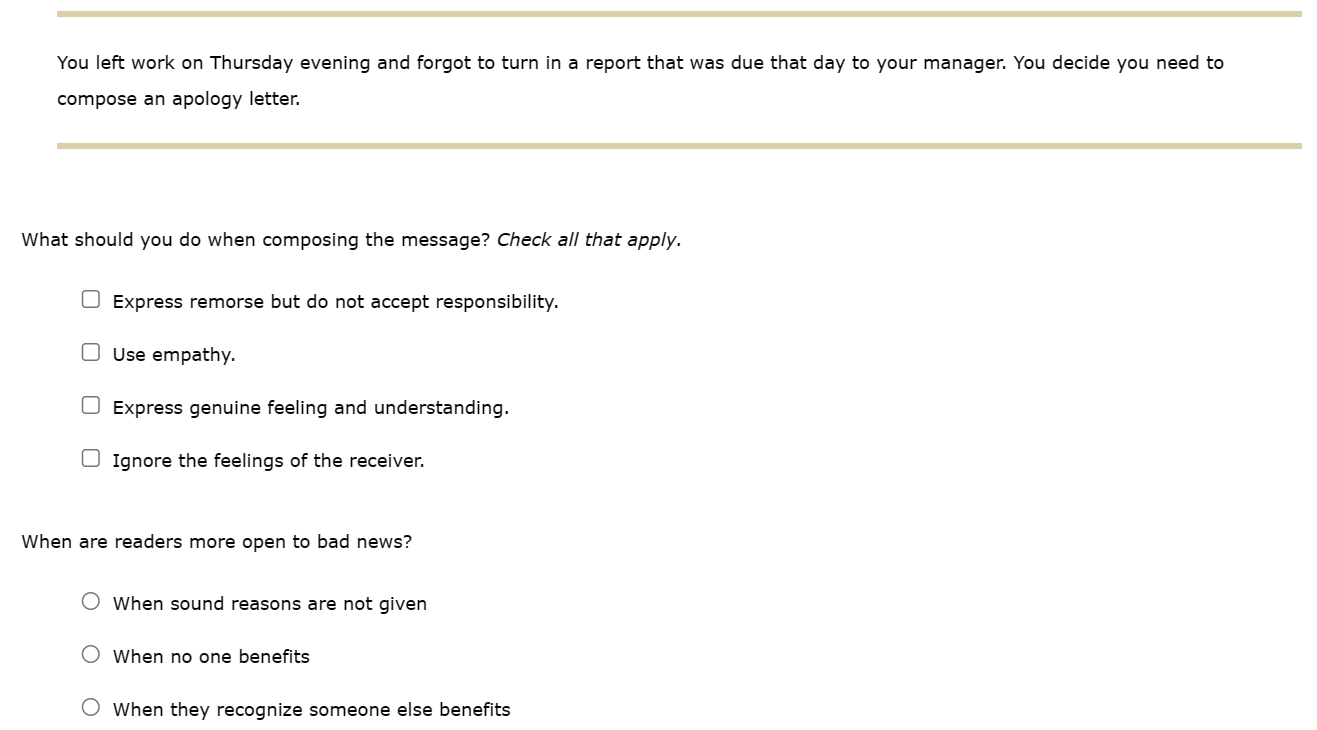
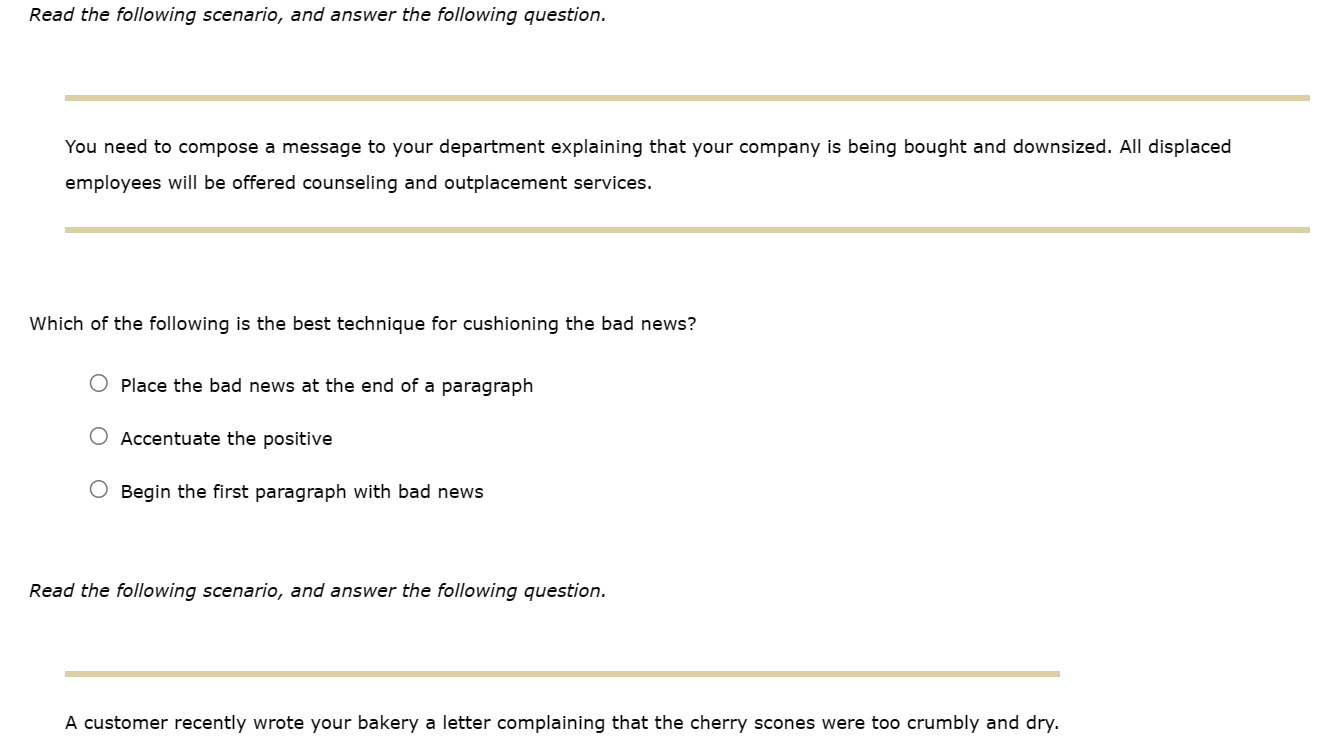
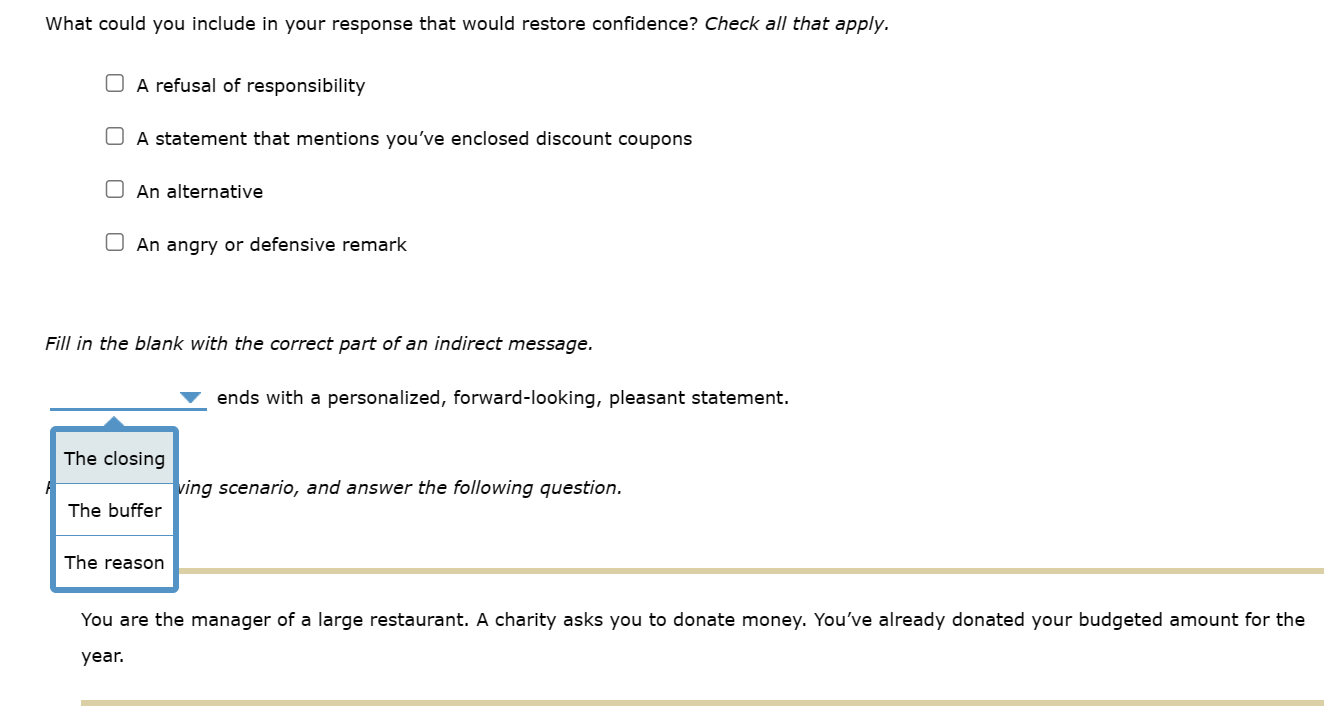
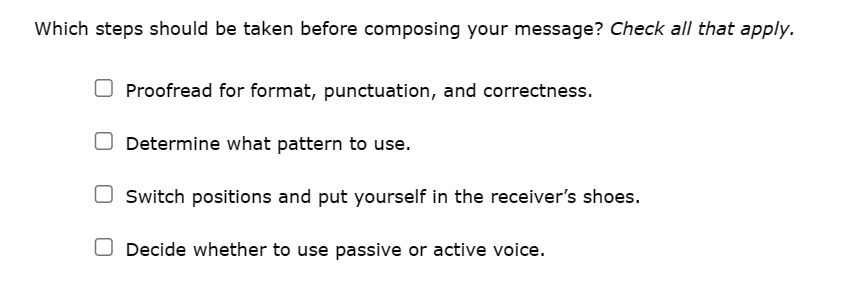
3. Composing Effective Bad-News Messages Use the indirect pattern when you need to soften or delay bad news until after an explanation is given. Understanding the four components of the indirect pattern will help you craft messages that convey empathy, present reasons, cushion bad news, and close pleasantly. Which buffering technique are you using if you choose to praise the receiver's accomplishments, organization, or efforts? Best news Agreement Compliment Apologies are often part of bad-news messages. You left work on Thursday evening and forgot to turn in a report that was due that day to your manager. You decide you need to compose an apology letter. What should you do when composing the message? Check all that apply. Express remorse but do not accept responsibility. Use empathy. Express genuine feeling and understanding. Ignore the feelings of the receiver. When are readers more open to bad news? When sound reasons are not given When no one benefits When they recognize someone else benefits Read the following scenario, and answer the following question. You need to compose a message to your department explaining that your company is being bought and downsized. All displaced employees will be offered counseling and outplacement services. Which of the following is the best technique for cushioning the bad news? Place the bad news at the end of a paragraph Accentuate the positive Begin the first paragraph with bad news Read the following scenario, and answer the following question. What could you include in your response that would restore confidence? Check all that apply. A refusal of responsibility A statement that mentions you've enclosed discount coupons An alternative An angry or defensive remark Fill in the blank with the correct part of an indirect message. ends with a personalized, forward-looking, pleasant statement. ing scenario, and answer the following question. You are the manager of a large restaurant. A charity asks you to donate money. You've already donated your budgeted amount for the year. Which steps should be taken before composing your message? Check all that apply. Proofread for format, punctuation, and correctness. Determine what pattern to use. Switch positions and put yourself in the receiver's shoes. Decide whether to use passive or active voice
Step by Step Solution
There are 3 Steps involved in it

Get step-by-step solutions from verified subject matter experts
 Study Help