







Question: Consider the following program with a buffer overflow vulnerability. The program is executed with input passed in via the command line, from an attacker 1:
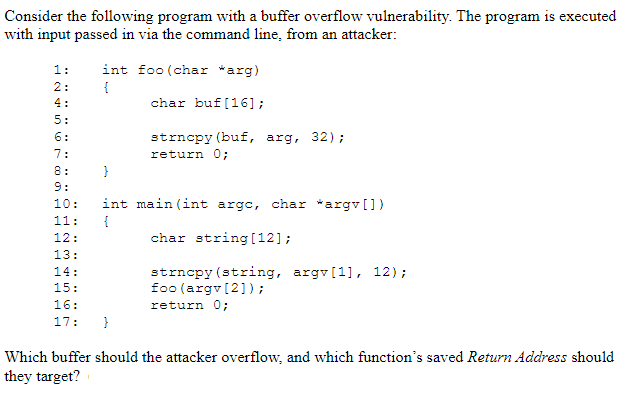
Consider the following program with a buffer overflow vulnerability. The program is executed with input passed in via the command line, from an attacker 1: int foo (char arg) char buf [16]; strncpy (buf, arg, 32); return 0; 10: int main (int argc, char argv[]) 12: 13: 14: 15: 16: 17: char string[12]; strncpy (string, arav 11, 12) foo (argv[2]) return 0 Which buffer should the attacker overflow, and which function's saved Return Address should they target
Step by Step Solution
There are 3 Steps involved in it
1 Expert Approved Answer
Step: 1 Unlock

Question Has Been Solved by an Expert!
Get step-by-step solutions from verified subject matter experts
Step: 2 Unlock
Step: 3 Unlock
 Study Help