







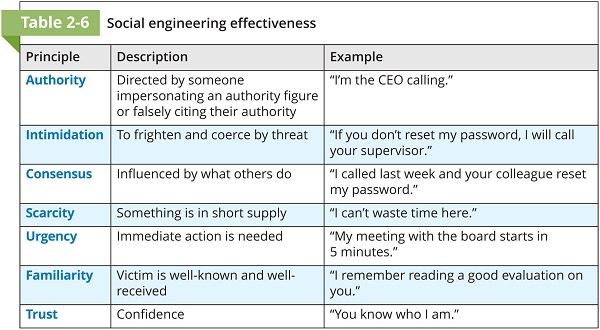
Question: Critical Thinking 2-2: Social Engineering Psychological Approaches Several basic principles or reasons make psychological social engineering effective. These include authority, intimidation, consensus, scarcity, urgency, familiarity,
Critical Thinking 2-2: Social Engineering Psychological Approaches
Several basic principles or reasons make psychological social engineering effective. These include authority, intimidation, consensus, scarcity, urgency, familiarity, and trust. Table 2-6 uses these principles in a scenario of an attacker pretending to be the chief executive officer (CEO) calling the organization's help desk to have a password reset. Create two additional scenarios, such as an attacker impersonating a help desk employee who wants access to an employee's protected information, and create a dialog example for each of the seven principles.
Step by Step Solution
There are 3 Steps involved in it
1 Expert Approved Answer
Step: 1 Unlock

Question Has Been Solved by an Expert!
Get step-by-step solutions from verified subject matter experts
Step: 2 Unlock
Step: 3 Unlock
 Study Help