







Question: please answer all these questions CASE APPLICATION 2 Not Sold Out Competitors in the movie theater industry had hoped that they were through the challenges
please answer all these questions 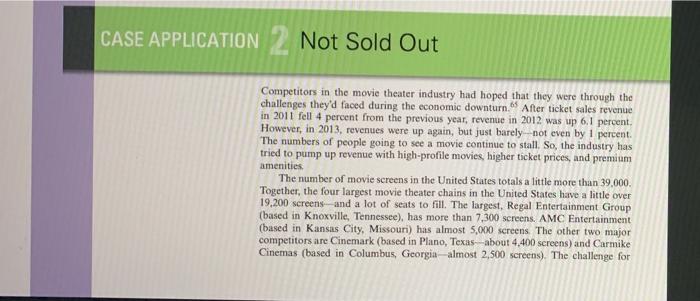
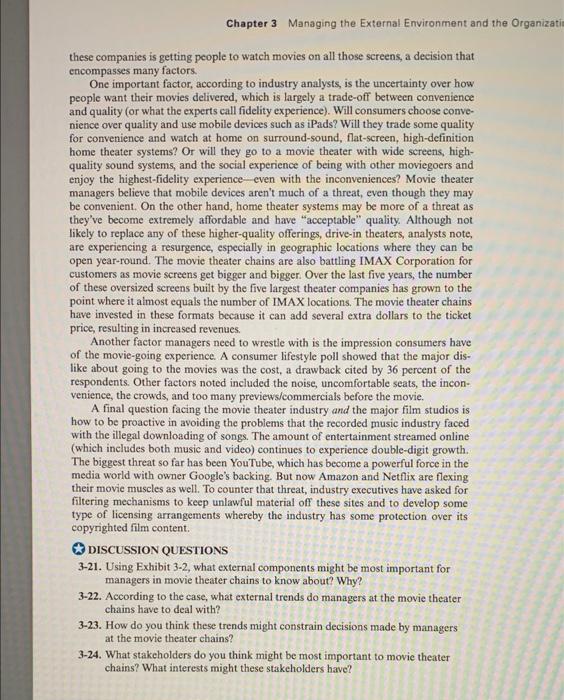
CASE APPLICATION 2 Not Sold Out Competitors in the movie theater industry had hoped that they were through the challenges they'd faced during the economic downturn." After ticket sales revenue 65 in 2011 fell 4 percent from the previous year, revenue in 2012 was up 6.1 percent. However, in 2013, revenues were up again, but just barely not even by 1 percent. The numbers of people going to see a movie continue to stall. So, the industry has tried to pump up revenue with high-profile movies, higher ticket prices, and premium amenities The number of movie screens in the United States totals a little more than 39,000 Together, the four largest movie theater chains in the United States have a little over 19,200 screens and a lot of seats to fill. The largest, Regal Entertainment Group (based in Knoxville, Tennessee), has more than 7,300 screens. AMC Entertainment (based in Kansas City, Missouri) has almost 5,000 screens. The other two major competitors are Cinemark (based in Plano, Texas--about 4.400 screens) and Carmike Cinemas (based in Columbus, Georgia almost 2,500 screens). The challenge for Chapter 3 Managing the External Environment and the Organizati these companies is getting people to watch movies on all those screens, a decision that encompasses many factors. One important factor, according to industry analysts, is the uncertainty over how people want their movies delivered, which is largely a trade-off between convenience and quality (or what the experts call fidelity experience). Will consumers choose conve- nience over quality and use mobile devices such as iPads? Will they trade some quality for convenience and watch at home on surround-sound, flat-screen, high-definition home theater systems? Or will they go to a movie theater with wide screens, high- quality sound systems, and the social experience of being with other moviegoers and enjoy the highest-fidelity experience-even with the inconveniences? Movie theater managers believe that mobile devices aren't much of a threat, even though they may be convenient. On the other hand, home theater systems may be more of a threat as they've become extremely affordable and have "acceptable" quality. Although not likely to replace any of these higher-quality offerings, drive-in theaters, analysts note, are experiencing a resurgence, especially in geographic locations where they can be open year-round. The movie theater chains are also battling IMAX Corporation for customers as movie screens get bigger and bigger. Over the last five years, the number of these oversized screens built by the five largest theater companies has grown to the point where it almost equals the number of IMAX locations. The movie theater chains have invested in these formats because it can add several extra dollars to the ticket price, resulting in increased revenues. Another factor managers need to wrestle with is the impression consumers have of the movie-going experience. A consumer lifestyle poll showed that the major dis- like about going to the movies was the cost, a drawback cited by 36 percent of the respondents. Other factors noted included the noise, uncomfortable seats, the incon- venience, the crowds, and too many previews/commercials before the movie. A final question facing the movie theater industry and the major film studios is how to be proactive in avoiding the problems that the recorded music industry faced with the illegal downloading of songs. The amount of entertainment streamed online (which includes both music and video) continues to experience double-digit growth. The biggest threat so far has been YouTube, which has become a powerful force in the media world with owner Google's backing. But now Amazon and Netflix are flexing their movie muscles as well. To counter that threat, industry executives have asked for filtering mechanisms to keep unlawful material off these sites and to develop some type of licensing arrangements whereby the industry has some protection over its copyrighted film content DISCUSSION QUESTIONS 3-21. Using Exhibit 3-2, what external components might be most important for managers in movie theater chains to know about? Why? 3-22. According to the case, what external trends do managers at the movie theater chains have to deal with? 3-23. How do you think these trends might constrain decisions made by managers at the movie theater chains? 3-24. What stakeholders do you think might be most important to movie theater chains? What interests might these stakeholders have Step by Step Solution
There are 3 Steps involved in it
1 Expert Approved Answer
Step: 1 Unlock

Question Has Been Solved by an Expert!
Get step-by-step solutions from verified subject matter experts
Step: 2 Unlock
Step: 3 Unlock
 Study Help