







Question: Select the correct answer. Question 1 (0.5 points) Which of the following statements are true? 5' There are nine chapters in the Bankruptcy Code and
Select the correct answer.
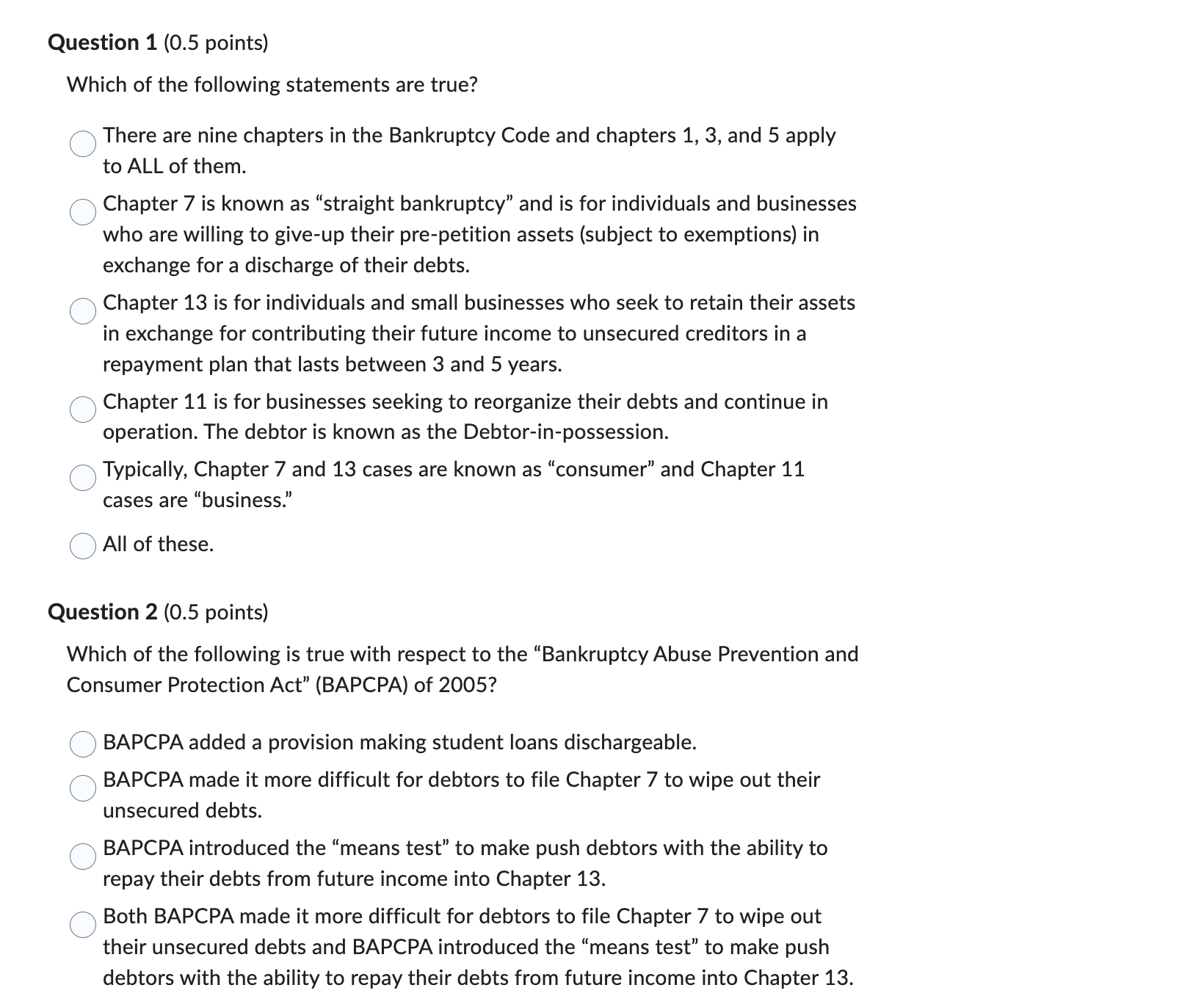
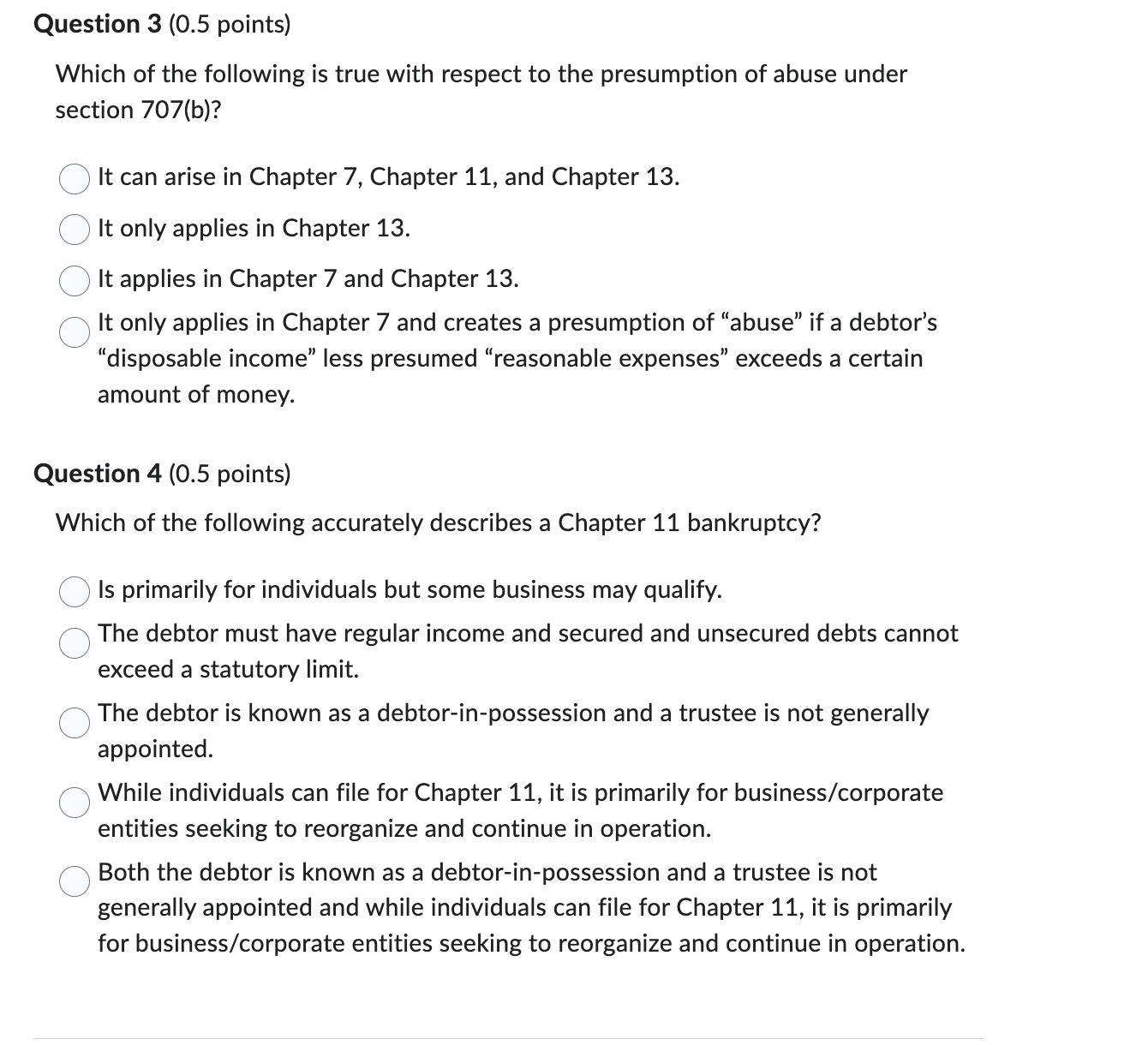
Question 1 (0.5 points) Which of the following statements are true? 5' There are nine chapters in the Bankruptcy Code and chapters 1, 3, and 5 apply to ALL of them. '1 Chapter 7 is known as "straight bankruptcy" and is for individuals and businesses who are willing to give-up their pre-petition assets (subject to exemptions) in exchange for a discharge of their debts. ( Chapter 13 is for individuals and small businesses who seek to retain their assets in exchange for contributing their future income to unsecured creditors in a repayment plan that lasts between 3 and 5 years. C 3, Chapter 11 is for businesses seeking to reorganize their debts and continue in operation. The debtor is known as the Debtor-in-possession. f Typically, Chapter 7 and 13 cases are known as "consumer\" and Chapter 11 cases are "business." if All of these. Question 2 (0.5 points) Which of the following is true with respect to the "Bankruptcy Abuse Prevention and Consumer Protection Act\" (BAPCPA) of 2005? : BAPCPA added a provision making student loans dischargeable. BAPCPA made it more difficult for debtors to file Chapter 7 to wipe out their , unsecured debts. I" BAPCPA introduced the "means test\" to make push debtors with the ability to ' repay their debts from future income into Chapter 13. f\" Both BAPCPA made it more difficult for debtors to file Chapter 7 to wipe out A their unsecured debts and BAPCPA introduced the \"means test" to make push debtors with the ability to repay their debts from future income into Chapter 13. Question 3 (0.5 points) Which of the following is true with respect to the presumption of abuse under section 707(b)? It can arise in Chapter 7, Chapter 11, and Chapter 13. It only applies in Chapter 13. It applies in Chapter 7 and Chapter 13. It only applies in Chapter 7 and creates a presumption of \"abuse\" if a debtor's "disposable income" less presumed \"reasonable expenses" exceeds a certain amount of money. Question 4 (0.5 points) Which of the following accurately describes a Chapter 11 bankruptcy? ls primarily for individuals but some business may qualify. The debtor must have regular income and secured and unsecured debts cannot exceed a statutory limit. The debtor is known as a debtor-in-possession and a trustee is not generally appointed. While individuals can file for Chapter 11, it is primarily for business/corporate entities seeking to reorganize and continue in operation. Both the debtor is known as a debtor-in-possession and a trustee is not generally appointed and while individuals can file for Chapter 11, it is primarily for business/corporate entities seeking to reorganize and continue in operation
Step by Step Solution
There are 3 Steps involved in it

Get step-by-step solutions from verified subject matter experts
 Study Help