







Question: Select the correct answer: Question 1 (0.5 points) Which of the following is true with respect to Chapter 7? Chapter 7 debtors lose their non-exempt
Select the correct answer:
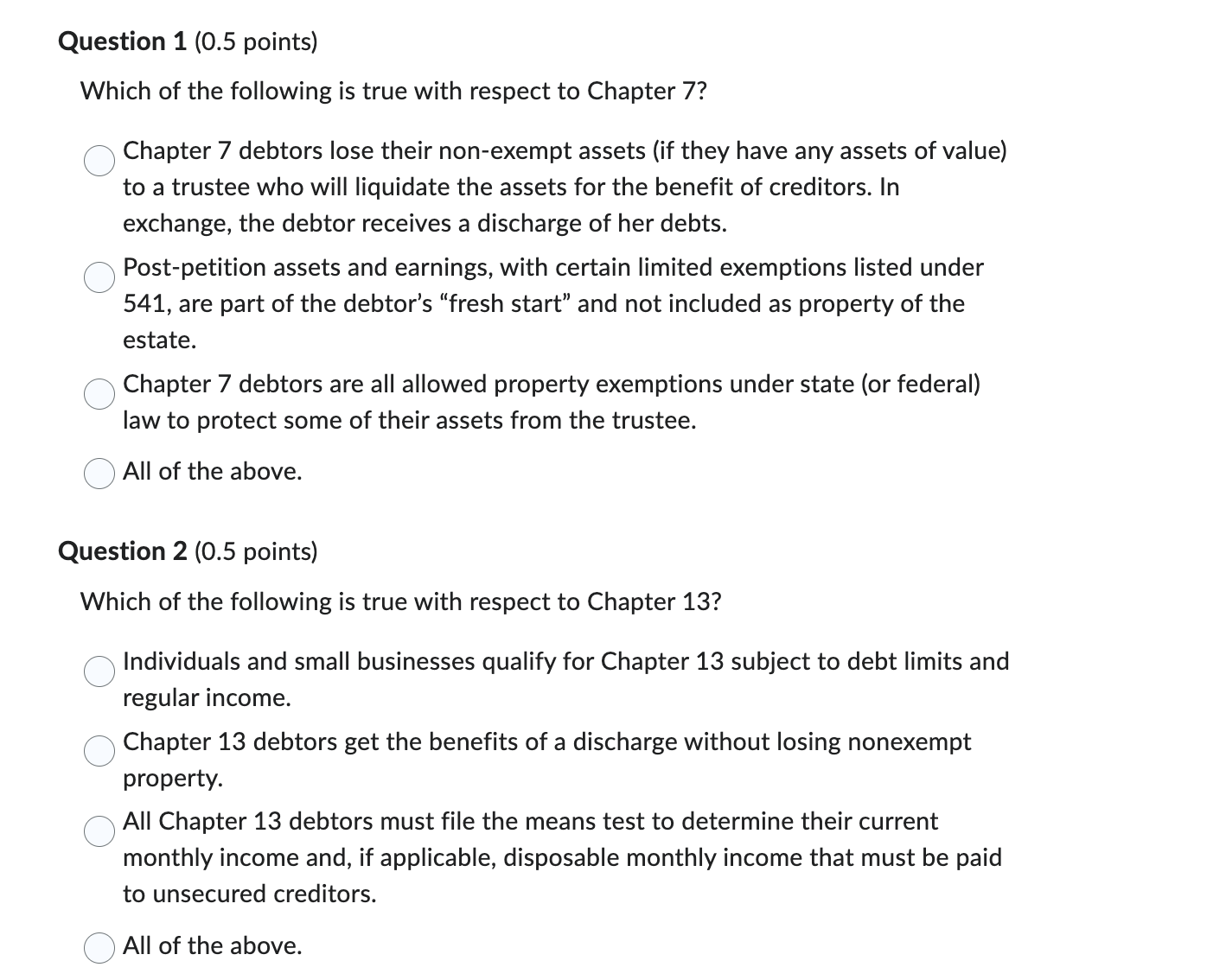
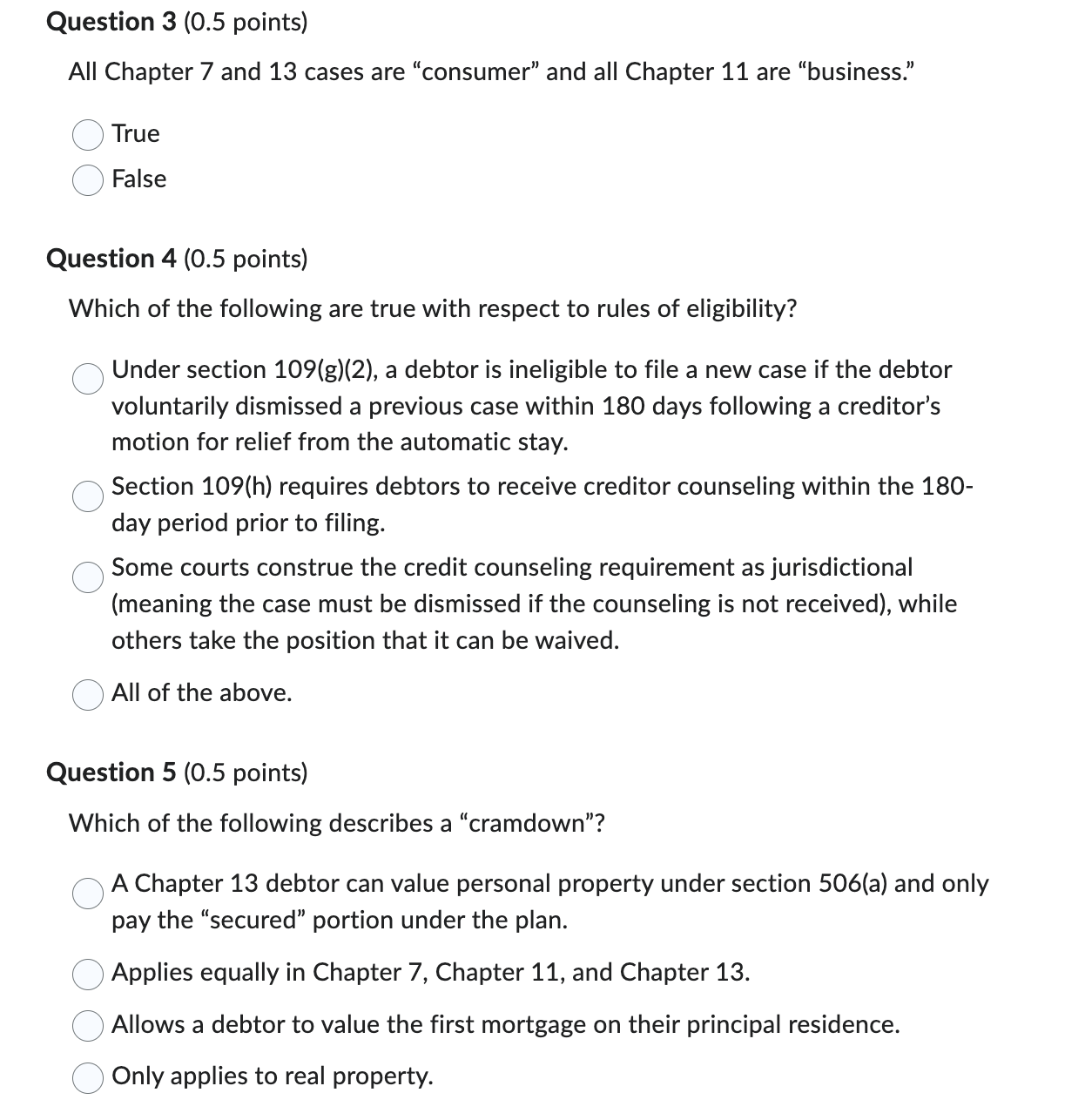
Question 1 (0.5 points) Which of the following is true with respect to Chapter 7? Chapter 7 debtors lose their non-exempt assets (if they have any assets of value) '1 to a trustee who will liquidate the assets for the benefit of creditors. In exchange, the debtor receives a discharge of her debts. Post-petition assets and earnings, with certain limited exemptions listed under 1 541, are part of the debtor's \"fresh start" and not included as property of the estate. Chapter 7 debtors are all allowed property exemptions under state (or federal) I law to protect some of their assets from the trustee. All of the above. Question 2 (0.5 points) Which of the following is true with respect to Chapter 13? Individuals and small businesses qualify for Chapter 13 subject to debt limits and regular income. Chapter 13 debtors get the benefits of a discharge without losing nonexempt property. All Chapter 13 debtors must file the means test to determine their current monthly income and, if applicable, disposable monthly income that must be paid to unsecured creditors. All of the above. Question 3 (0.5 points) All Chapter 7 and 13 cases are \"consumer" and all Chapter 11 are \"business.\" True False Question 4 (0.5 points) Which of the following are true with respect to rules of eligibility? Under section 109(g)(2), a debtor is ineligible to file a new case if the debtor voluntarily dismissed a previous case within 180 days following a creditor's motion for relief from the automatic stay. Section 109(h] requires debtors to receive creditor counseling within the 180- ', day period prior to filing. .; Some courts construe the credit counseling requirement as jurisdictional _, (meaning the case must be dismissed if the counseling is not received), while others take the position that it can be waived. C) All of the above. Question 5 (0.5 points) Which of the following describes a \"cramdown\"? A Chapter 13 debtor can value personal property under section 506(a) and only pay the \"secured\" portion under the plan. Applies equally in Chapter 7, Chapter 11, and Chapter 13. Allows a debtor to value the first mortgage on their principal residence. Only applies to real property
Step by Step Solution
There are 3 Steps involved in it

Get step-by-step solutions from verified subject matter experts
 Study Help