Question: This is a question for a chapter I am struggling with and working on. I have attached the referenced chapter below if needed. Thanks for
This is a question for a chapter I am struggling with and working on. I have attached the "referenced" chapter below if needed.
Thanks for any help on it.
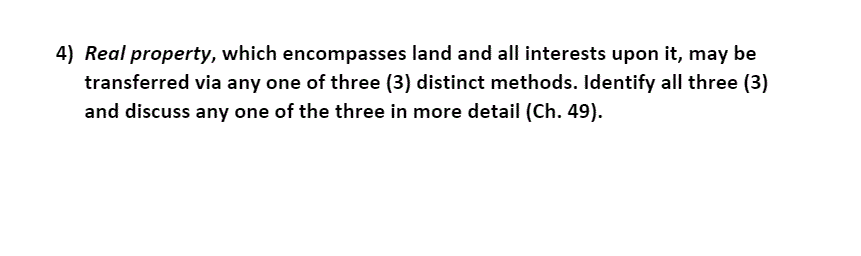
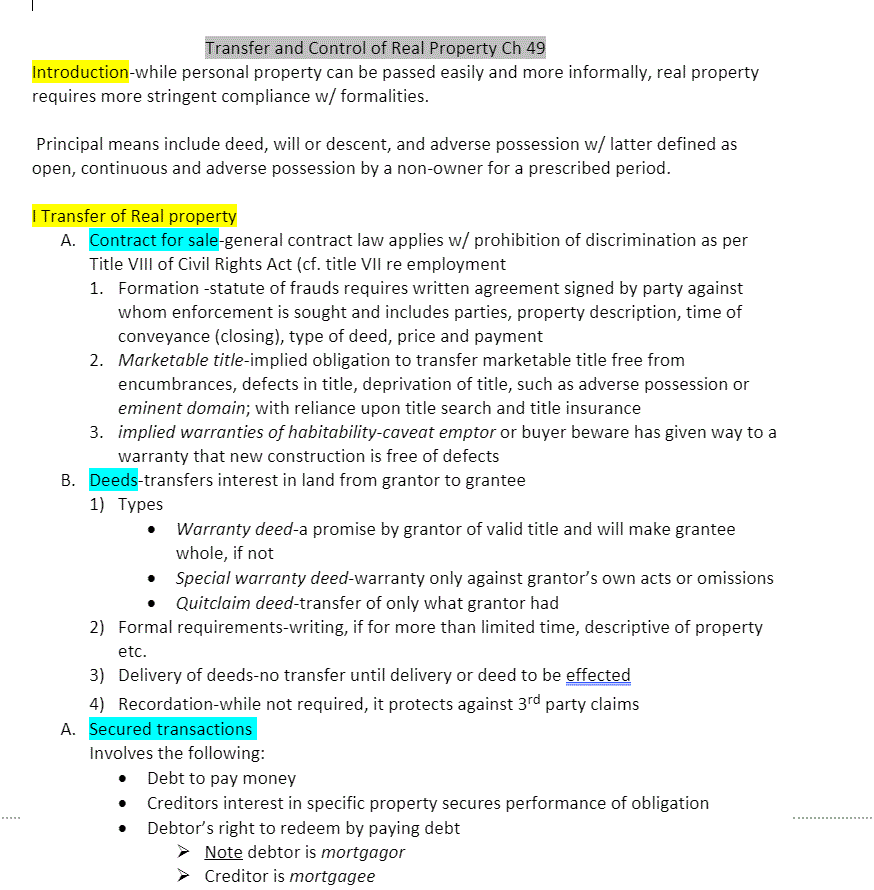
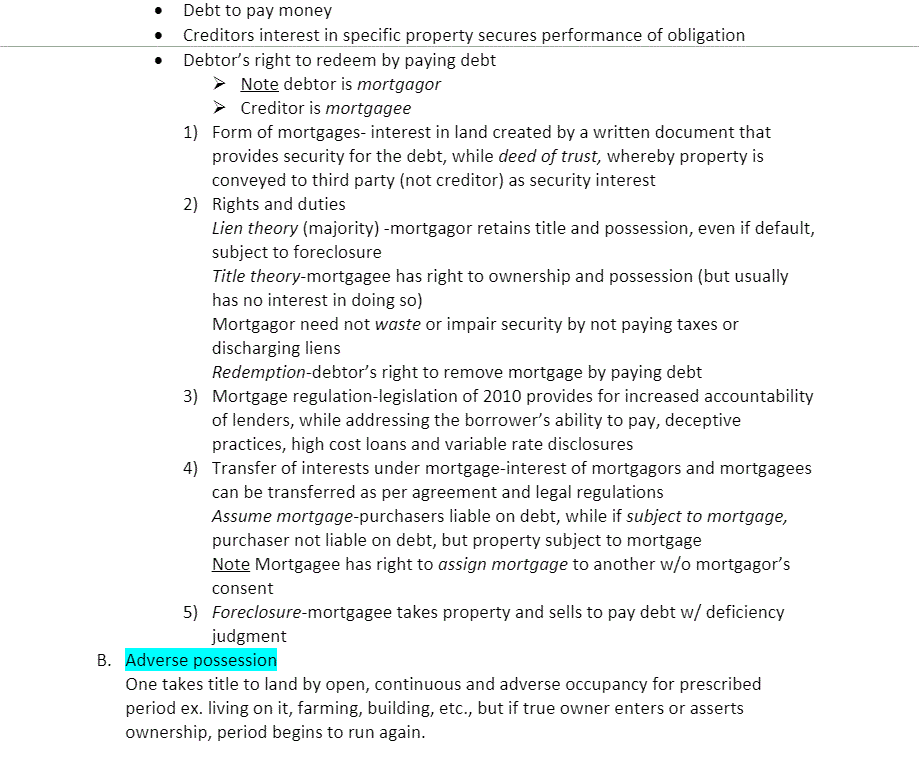
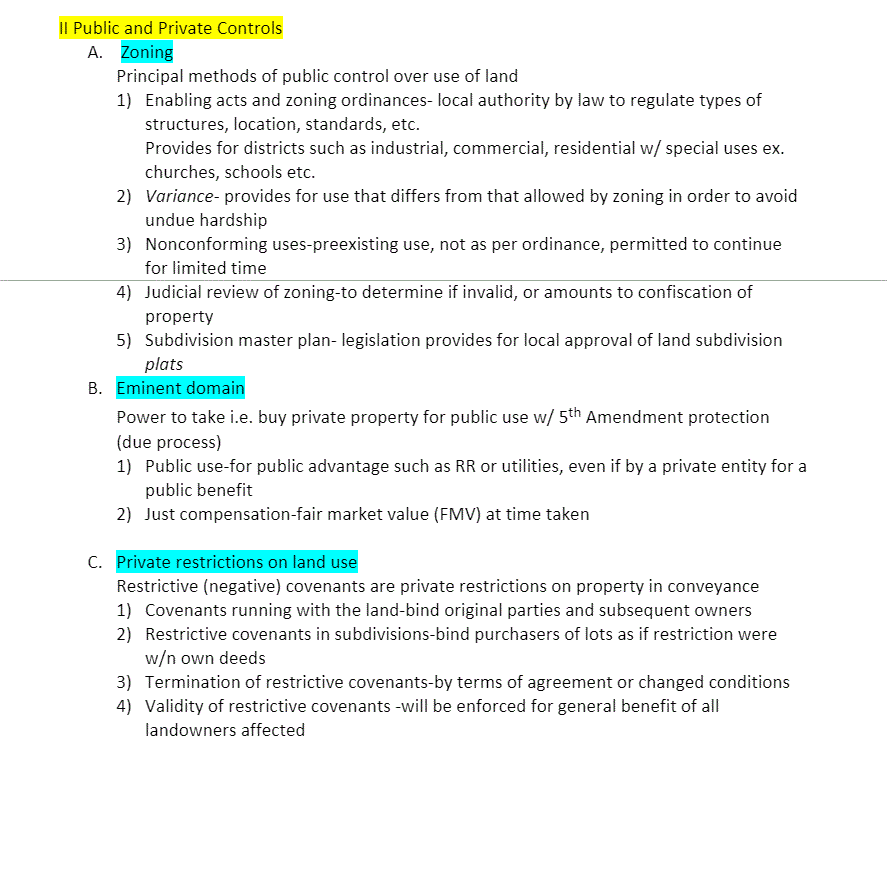
4) Real property, which encompasses land and all interests upon it, may be transferred via any one of three (3) distinct methods. Identify all three (3) and discuss any one of the three in more detail (Ch. 49). Transfer and Control of Real Property Ch 49 Introduction-while personal property can be passed easily and more informally, real property requires more stringent compliance w/ formalities. Principal means include deed, will or descent, and adverse possession w/ latter defined as open, continuous and adverse possession by a non-owner for a prescribed period. | Transfer of Real property A. Contract for sale-general contract law applies w/ prohibition of discrimination as per Title VIII of Civil Rights Act (cf. title VII re employment 1. Formation -statute of frauds requires written agreement signed by party against whom enforcement is sought and includes parties, property description, time of conveyance (closing), type of deed, price and payment 2. Marketable title-implied obligation to transfer marketable title free from encumbrances, defects in title, deprivation of title, such as adverse possession or eminent domain; with reliance upon title search and title insurance 3. implied warranties of habitability-caveat emptor or buyer beware has given way to a warranty that new construction is free of defects B. Deeds-transfers interest in land from grantor to grantee 1) Types Warranty deed-a promise by grantor of valid title and will make grantee whole, if not Special warranty deed-warranty only against grantor's own acts or omissions Quitclaim deed-transfer of only what grantor had 2) Formal requirements-writing, if for more than limited time, descriptive of property etc. 3) Delivery of deeds-no transfer until delivery or deed to be effected 4) Recordation-while not required, it protects against 3rd party claims A. Secured transactions Involves the following: Debt to pay money Creditors interest in specific property secures performance of obligation Debtor's right to redeem by paying debt Note debtor is mortgagor Creditor is mortgagee . Debt to pay money Creditors interest in specific property secures performance of obligation Debtor's right to redeem by paying debt Note debtor is mortgagor > Creditor is mortgagee 1) Form of mortgages interest in land created by a written document that provides security for the debt, while deed of trust, whereby property is conveyed to third party (not creditor) as security interest 2) Rights and duties Lien theory (majority) -mortgagor retains title and possession, even if default, subject to foreclosure Title theory-mortgagee has right to ownership and possession (but usually has no interest in doing so) Mortgagor need not waste or impair security by not paying taxes or discharging liens Redemption-debtor's right to remove mortgage by paying debt 3) Mortgage regulation-legislation of 2010 provides for increased accountability of lenders, while addressing the borrower's ability to pay, deceptive practices, high cost loans and variable rate disclosures 4) Transfer of interests under mortgage-interest of mortgagors and mortgagees can be transferred as per agreement and legal regulations Assume mortgage-purchasers liable on debt, while if subject to mortgage, purchaser not liable on debt, but property subject to mortgage Note Mortgagee has right to assign mortgage to another w/o mortgagor's consent 5) Foreclosure- mortgagee takes property and sells to pay debt w/ deficiency judgment B. Adverse possession One takes title to land by open, continuous and adverse occupancy for prescribed period ex. living on it, farming, building, etc., but if true owner enters or asserts ownership, period begins to run again. Il Public and Private Controls A. Zoning Principal methods of public control over use of land 1) Enabling acts and zoning ordinances- local authority by law to regulate types of structures, location, standards, etc. Provides for districts such as industrial, commercial, residential w/ special uses ex. churches, schools etc. 2) Variance- provides for use that differs from that allowed by zoning in order to avoid undue hardship 3) Nonconforming uses-preexisting use, not as per ordinance, permitted to continue for limited time 4) Judicial review of zoning-to determine if invalid, or amounts to confiscation of property 5) Subdivision master plan- legislation provides for local approval of land subdivision plats B. Eminent domain Power to take i.e. buy private property for public use w/ 5th Amendment protection (due process) 1) Public use for public advantage such as RR or utilities, even if by a private entity for a public benefit 2) Just compensation-fair market value (FMV) at time taken C. Private restrictions on land use Restrictive (negative) covenants are private restrictions on property in conveyance 1) Covenants running with the land-bind original parties and subsequent owners 2) Restrictive covenants in subdivisions-bind purchasers of lots as if restriction were w own deeds 3) Termination of restrictive covenants-by terms of agreement or changed conditions 4) Validity of restrictive covenants-will be enforced for general benefit of all landowners affected









 Study Help