Question: This is a question for a chapter I am working on and confused about. I have attached the referenced chapter if needed. Thanks for any
This is a question for a chapter I am working on and confused about. I have attached the "referenced" chapter if needed.
Thanks for any help in solving it.
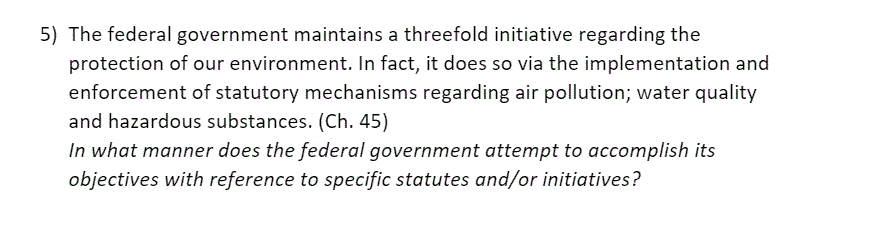
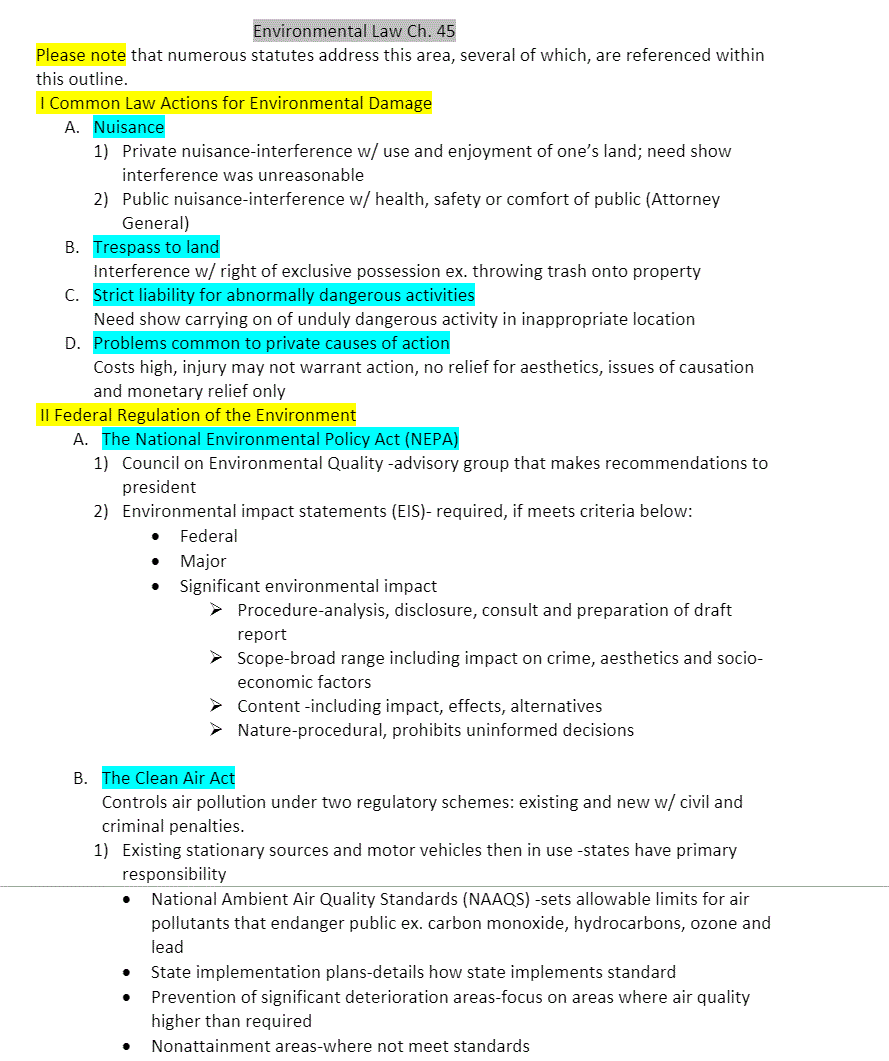
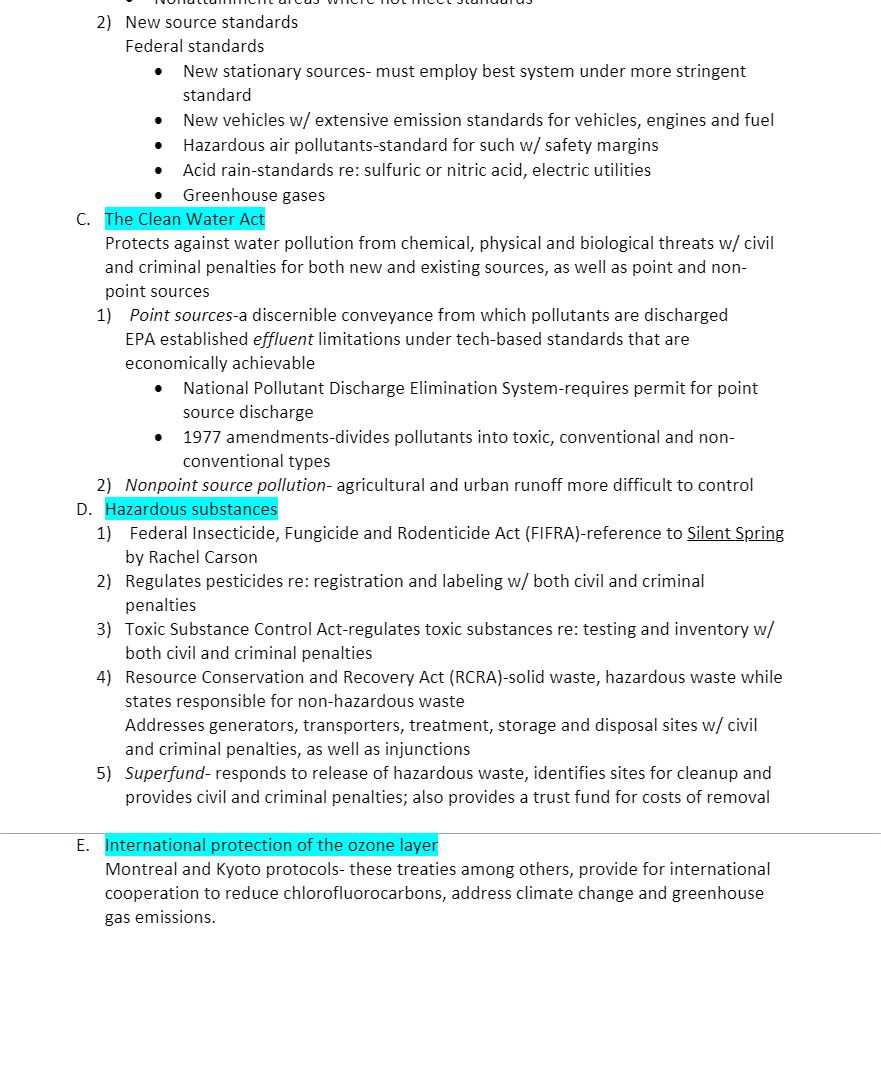
5) The federal government maintains a threefold initiative regarding the protection of our environment. In fact, it does so via the implementation and enforcement of statutory mechanisms regarding air pollution; water quality and hazardous substances. (Ch. 45) In what manner does the federal government attempt to accomplish its objectives with reference to specific statutes and/or initiatives? Environmental Law Ch. 45 Please note that numerous statutes address this area, several of which, are referenced within this outline. I Common Law Actions for Environmental Damage A. Nuisance 1) Private nuisance-interference w/ use and enjoyment of one's land; need show interference was unreasonable 2) Public nuisance-interference w/ health, safety or comfort of public (Attorney General) B. Trespass to land Interference w/ right of exclusive possession ex. throwing trash onto property C. Strict liability for abnormally dangerous activities Need show carrying on of unduly dangerous activity in inappropriate location D. Problems common to private causes of action Costs high, injury may not warrant action, no relief for aesthetics, issues of causation and monetary relief only Il Federal Regulation of the Environment A. The National Environmental Policy Act (NEPA) 1) Council on Environmental Quality -advisory group that makes recommendations to president 2) Environmental impact statements (EIS)- required, if meets criteria below: Federal . . . Major Significant environmental impact > Procedure-analysis, disclosure, consult and preparation of draft report > Scope-broad range including impact on crime, aesthetics and socio- economic factors Content -including impact, effects, alternatives > Nature-procedural, prohibits uninformed decisions . B. The Clean Air Act Controls air pollution under two regulatory schemes: existing and new w/ civil and criminal penalties. 1) Existing stationary sources and motor vehicles then in use -states have primary responsibility National Ambient Air Quality Standards (NAAQS) -sets allowable limits for air pollutants that endanger public ex. carbon monoxide, hydrocarbons, ozone and lead State implementation plans-details how state implements standard Prevention of significant deterioration areas-focus on areas where air quality higher than required Nonattainment areas where not meet standards . . 2) New source standards Federal standards . New stationary sources- must employ best system under more stringent standard New vehicles w/ extensive emission standards for vehicles, engines and fuel Hazardous air pollutants-standard for such w/ safety margins Acid rain-standards re: sulfuric or nitric acid, electric utilities . Greenhouse gases C. The Clean Water Act . Protects against water pollution from chemical, physical and biological threats w/ civil and criminal penalties for both new and existing sources, as well as point and non- point sources 1) Point sources-a discernible conveyance from which pollutants are discharged EPA established effluent limitations under tech-based standards that are economically achievable National Pollutant Discharge Elimination System-requires permit for point source discharge 1977 amendments-divides pollutants into toxic, conventional and non- conventional types 2) Nonpoint source pollution-agricultural and urban runoff more difficult to control D. Hazardous substances 1) Federal Insecticide, Fungicide and Rodenticide Act (FIFRA)-reference to Silent Spring by Rachel Carson 2) Regulates pesticides re: registration and labeling w/ both civil and criminal penalties 3) Toxic Substance Control Act-regulates toxic substances re: testing and inventory w/ both civil and criminal penalties 4) Resource Conservation and Recovery Act (RCRA)-solid waste, hazardous waste while states responsible for non-hazardous waste Addresses generators, transporters, treatment, storage and disposal sites w/ civil and criminal penalties, as well as injunctions 5) Superfund-responds to release of hazardous waste, identifies sites for cleanup and provides civil and criminal penalties; also provides a trust fund for costs of removal E. International protection of the ozone layer Montreal and Kyoto protocols- these treaties among others, provide for international cooperation to reduce chlorofluorocarbons, address climate change and greenhouse gas emissions









 Study Help