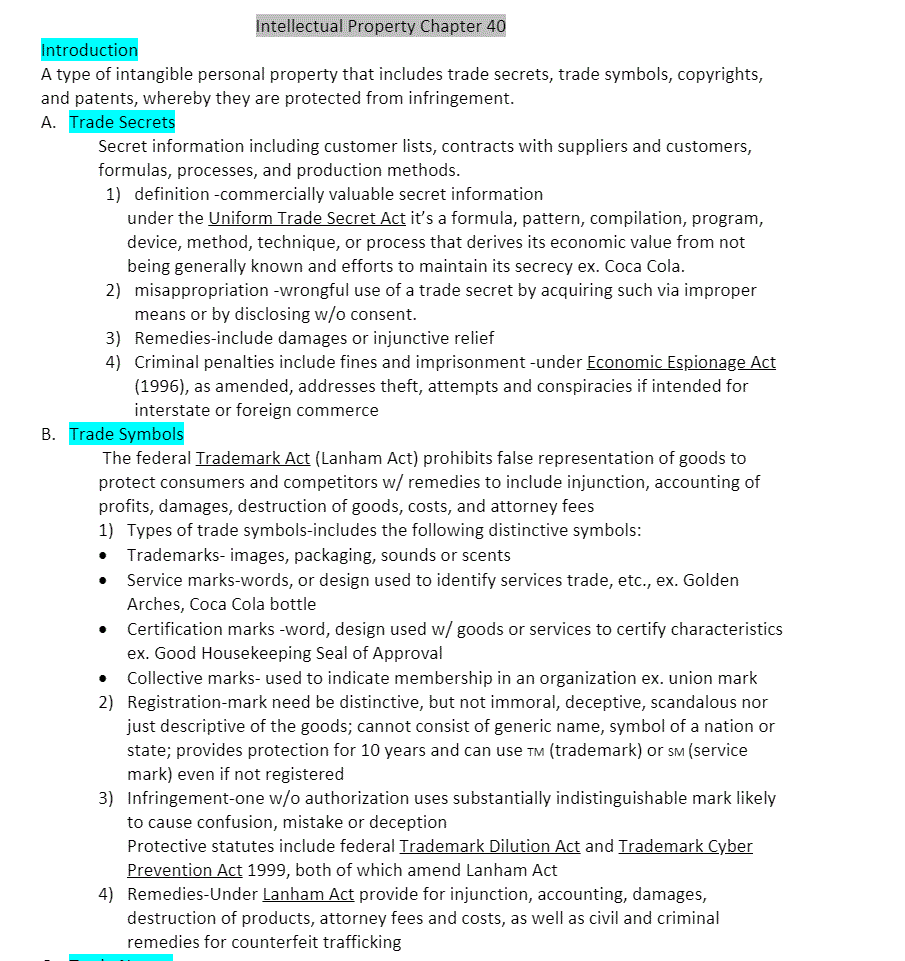
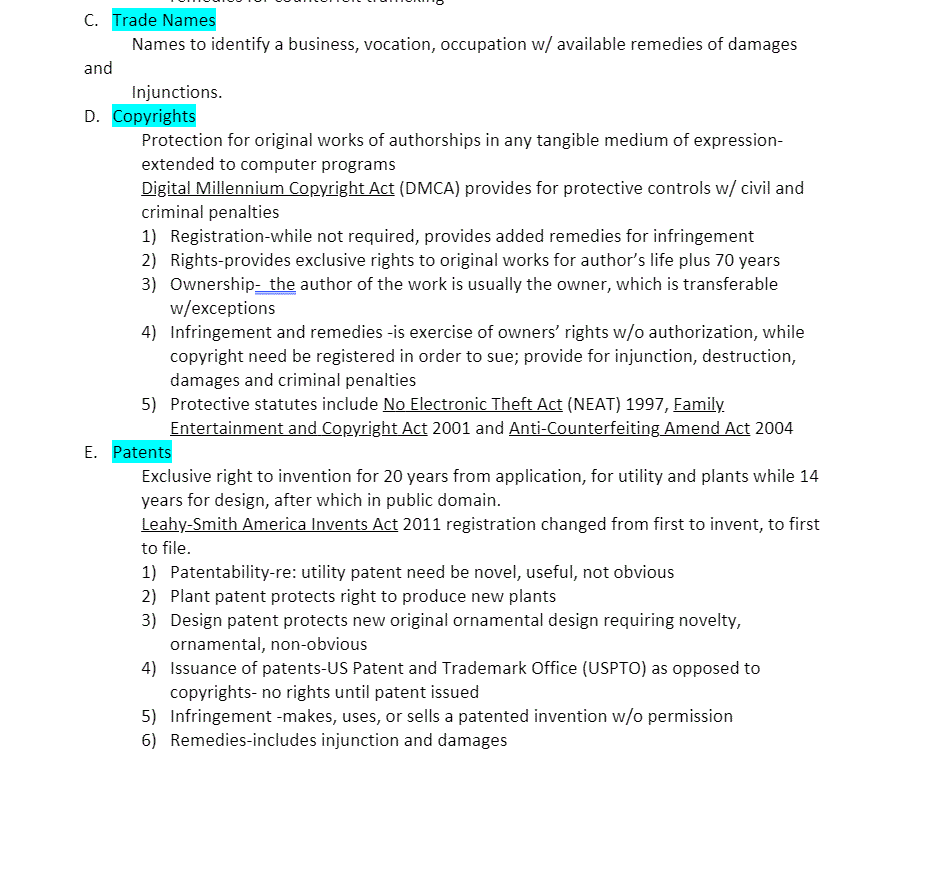
Question: This is a question I am struggling with and working on. I have provided the referenced chapter if needed. Thanks for any help on it.

This is a question I am struggling with and working on. I have provided the "referenced" chapter if needed.

Thanks for any help on it.
This is a question I am struggling with andThis is a question I am struggling with andThis is a question I am struggling with and

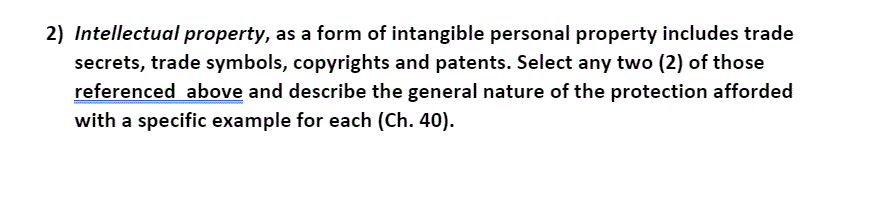
2) Intellectual property, as a form of intangible personal property includes trade secrets, trade symbols, copyrights and patents. Select any two (2) of those referenced above and describe the general nature of the protection afforded with a specific example for each (Ch. 40). C. Trade Names Names to identify a business, vocation, occupation w/ available remedies of damages and Injunctions. D. Copyrights Protection for original works of authorships in any tangible medium of expression- extended to computer programs Digital Millennium Copyright Act (DMCA) provides for protective controls w/ civil and criminal penalties 1) Registration-while not required, provides added remedies for infringement 2) Rights-provides exclusive rights to original works for author's life plus 70 years 3) Ownership- the author of the work is usually the owner, which is transferable w/exceptions 4) Infringement and remedies -is exercise of owners' rights w/o authorization, while copyright need be registered in order to sue; provide for injunction, destruction, damages and criminal penalties 5) Protective statutes include No Electronic Theft Act (NEAT) 1997, Family. Entertainment and Copyright Act 2001 and Anti-Counterfeiting Amend Act 2004 E. Patents Exclusive right to invention for 20 years from application, for utility and plants while 14 years for design, after which in public domain. Leahy-Smith America Invents Act 2011 registration changed from first to invent, to first to file. 1) Patentability-re: utility patent need be novel, useful, not obvious 2) Plant patent protects right to produce new plants 3) Design patent protects new original ornamental design requiring novelty, ornamental, non-obvious 4) Issuance of patents-US Patent and Trademark Office (USPTO) as opposed to copyrights- no rights until patent issued 5) Infringement -makes, uses, or sells a patented invention w/o permission 6) Remedies-includes injunction and damages

Step by Step Solution

There are 3 Steps involved in it

1 Expert Approved Answer
Step: 1 Unlock blur-text-image

Question Has Been Solved by an Expert!

Get step-by-step solutions from verified subject matter experts

Step: 2 Unlock
Step: 3 Unlock

Students Have Also Explored These Related General Management Questions!