Question: This is a question from a chapter I am working on and confused about. I have provided the referenced chapter if needed. Thanks for any
This is a question from a chapter I am working on and confused about. I have provided the "referenced" chapter if needed.
Thanks for any help.
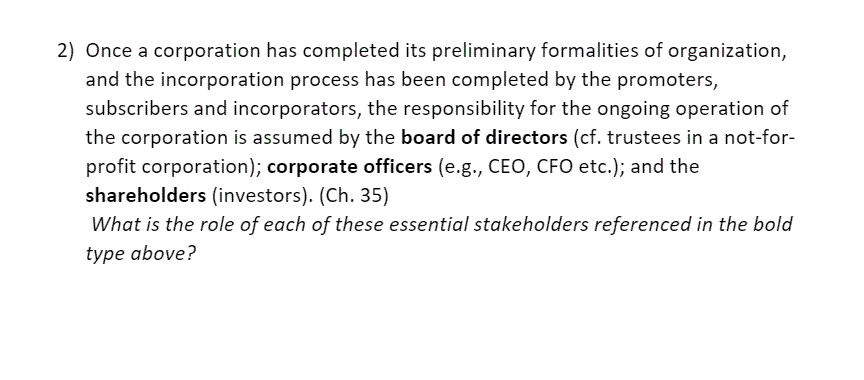
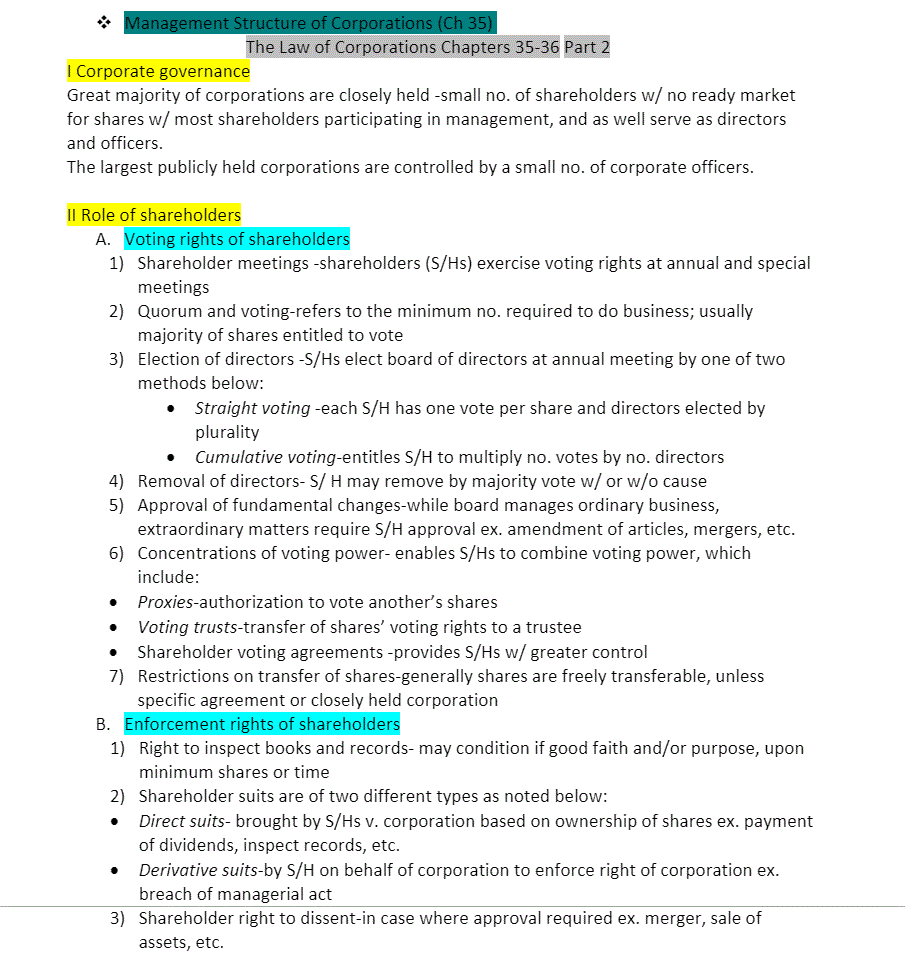
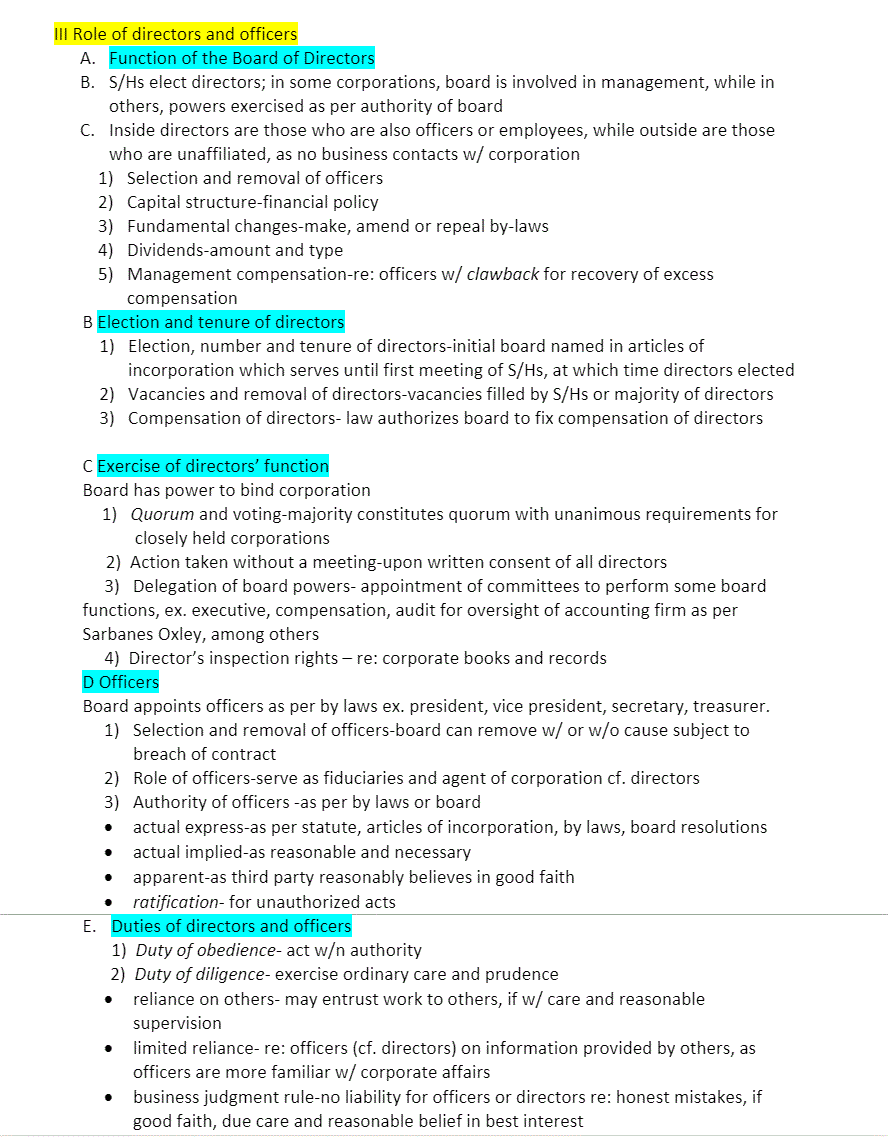
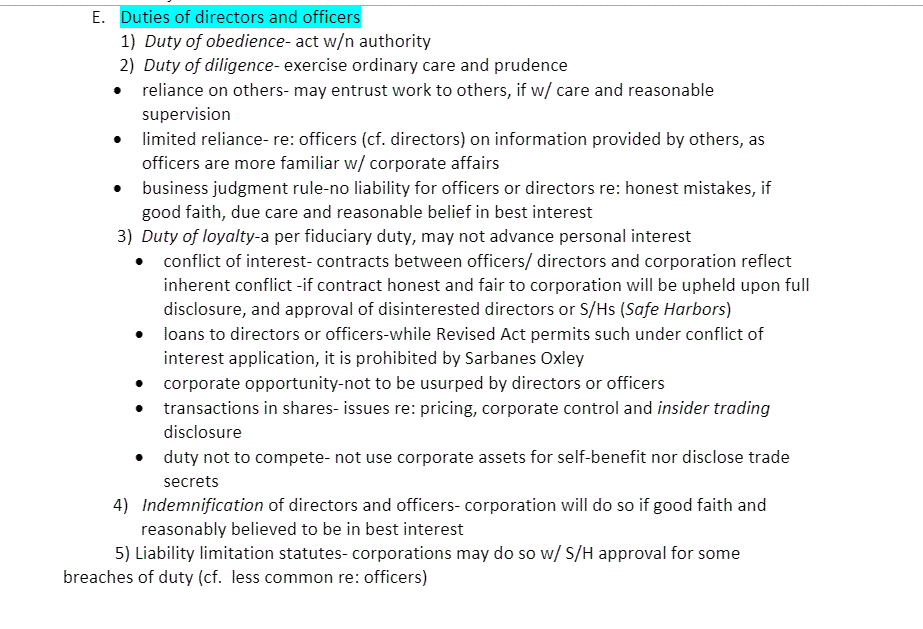
2) Once a corporation has completed its preliminary formalities of organization, and the incorporation process has been completed by the promoters, subscribers and incorporators, the responsibility for the ongoing operation of the corporation is assumed by the board of directors (cf. trustees in a not-for- profit corporation); corporate officers (e.g., CEO, CFO etc.); and the shareholders (investors). (Ch. 35) What is the role of each of these essential stakeholders referenced in the bold type above? Management Structure of Corporations (Ch 35) The Law of Corporations Chapters 35-36 Part 2 I Corporate governance Great majority of corporations are closely held -small no. of shareholders w/ no ready market for shares w/ most shareholders participating in management, and as well serve as directors and officers. The largest publicly held corporations are controlled by a small no. of corporate officers. Il Role of shareholders A. Voting rights of shareholders 1) Shareholder meetings -shareholders (S/Hs) exercise voting rights at annual and special meetings 2) Quorum and voting-refers to the minimum no. required to do business; usually majority of shares entitled to vote 3) Election of directors -S/Hs elect board of directors at annual meeting by one of two methods below: Straight voting -each S/H has one vote per share and directors elected by plurality Cumulative voting-entitles S/H to multiply no.votes by no. directors 4) Removal of directors- / H may remove by majority vote w/ or w/o cause 5) Approval of fundamental changes-while board manages ordinary business, extraordinary matters require S/H approval ex. amendment of articles, mergers, etc. 6) Concentrations of voting power-enables S/Hs to combine voting power, which include: Proxies-authorization to vote another's shares Voting trusts-transfer of shares' voting rights to a trustee Shareholder voting agreements -provides S/Hs w/ greater control 7) Restrictions on transfer of shares-generally shares are freely transferable, unless specific agreement or closely held corporation B. Enforcement rights of shareholders 1) Right to inspect books and records- may condition if good faith and/or purpose, upon minimum shares or time 2) Shareholder suits are of two different types as noted below: Direct suits- brought by S/Hs v. corporation based on ownership of shares ex. payment of dividends, inspect records, etc. Derivative suits-by S/H on behalf of corporation to enforce right of corporation ex. breach of managerial act 3) Shareholder right to dissent-in case where approval required ex. merger, sale of . . assets, etc. III Role of directors and officers A. Function of the Board of Directors B. S/Hs elect directors; in some corporations, board is involved in management, while in others, powers exercised as per authority of board C. Inside directors are those who are also officers or employees, while outside are those who are unaffiliated, as no business contacts w/ corporation 1) Selection and removal of officers 2) Capital structure-financial policy 3) Fundamental changes-make, amend or repeal by-laws 4) Dividends-amount and type 5) Management compensation-re: officers w/ clawback for recovery of excess compensation B Election and tenure of directors 1) Election, number and tenure of directors-initial board named in articles of incorporation which serves until first meeting of S/Hs, at which time directors elected 2) Vacancies and removal of directors-vacancies filled by S/Hs or majority of directors 3) Compensation of directors-law authorizes board to fix compensation of directors C Exercise of directors' function Board has power to bind corporation 1) Quorum and voting-majority constitutes quorum with unanimous requirements for closely held corporations 2) Action taken without a meeting-upon written consent of all directors 3) Delegation of board powers-appointment of committees to perform some board functions, ex. executive, compensation, audit for oversight of accounting firm as per Sarbanes Oxley, among others 4) Director's inspection rights - re: corporate books and records D Officers Board appoints officers as per by laws ex. president, vice president, secretary, treasurer. 1) Selection and removal of officers-board can remove w/ or w/o cause subject to breach of contract 2) Role of officers-serve as fiduciaries and agent of corporation cf. directors 3) Authority of officers -as per by laws or board actual express-as per statute, articles of incorporation, by laws, board resolutions actual implied-as reasonable and necessary apparent-as third party reasonably believes in good faith ratification- for unauthorized acts E. Duties of directors and officers 1) Duty of obedience- act w authority 2) Duty of diligence-exercise ordinary care and prudence reliance on others- may entrust work to others, if w/ care and reasonable supervision limited reliance-re: officers (cf. directors) on information provided by others, as officers are more familiar w/ corporate affairs business judgment rule-no liability for officers or directors re: honest mistakes, if good faith, due care and reasonable belief in best interest . . E. Duties of directors and officers 1) Duty of obedience-act w authority 2) Duty of diligence-exercise ordinary care and prudence reliance on others-may entrust work to others, if w/ care and reasonable supervision limited reliance-re: officers (cf. directors) on information provided by others, as officers are more familiar w/ corporate affairs business judgment rule-no liability for officers or directors re: honest mistakes, if good faith, due care and reasonable belief in best interest 3) Duty of loyalty-a per fiduciary duty, may not advance personal interest conflict of interest-contracts between officers/ directors and corporation reflect inherent conflict -if contract honest and fair to corporation will be upheld upon full disclosure, and approval of disinterested directors or S/Hs (Safe Harbors) loans to directors or officers-while Revised Act permits such under conflict of interest application, it is prohibited by Sarbanes Oxley corporate opportunity-not to be usurped by directors or officers transactions in shares- issues re: pricing, corporate control and insider trading disclosure duty not to compete- not use corporate assets for self-benefit nor disclose trade secrets 4) Indemnification of directors and officers-corporation will do so if good faith and reasonably believed to be in best interest 5) Liability limitation statutes-corporations may do so w/ S/H approval for some breaches of duty (cf. less common re: officers)









 Study Help