Question: TO DO: Develop a table comparing each of the four theories of motivation presented in the chapter. Identify pros and cons for each theory. What

TO DO:
- Develop a table comparing each of the four theories of motivation presented in the chapter.
- Identify pros and cons for each theory.
- What makes them different from one another?
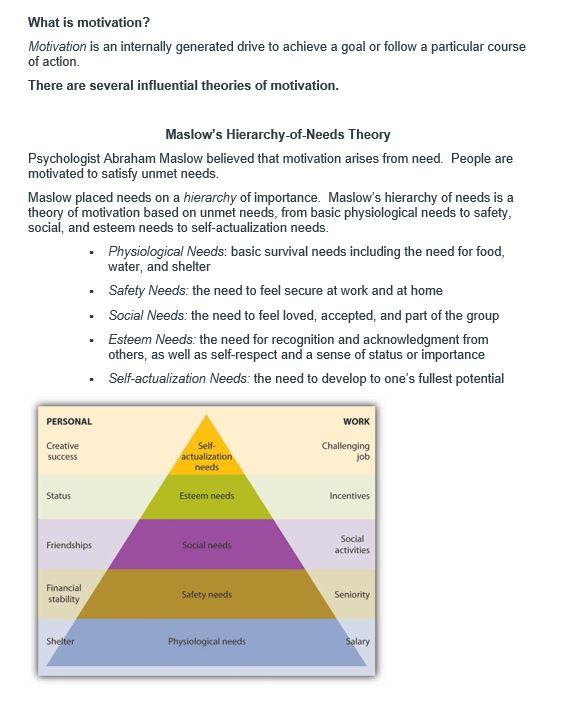
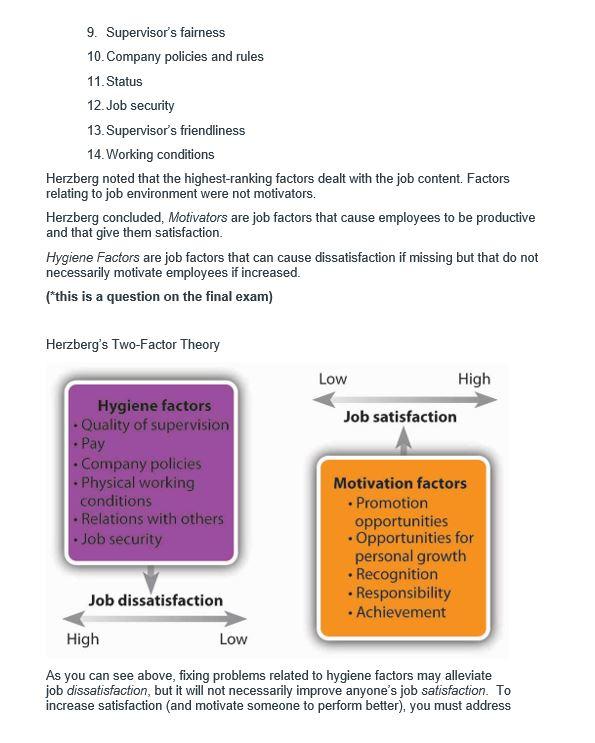
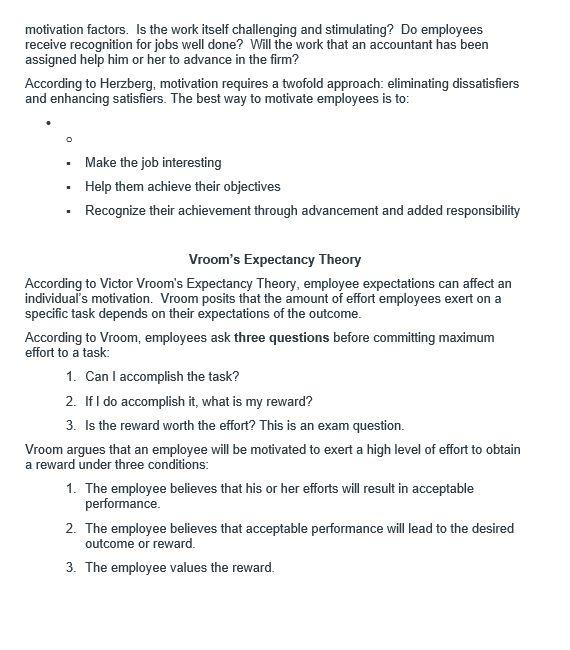
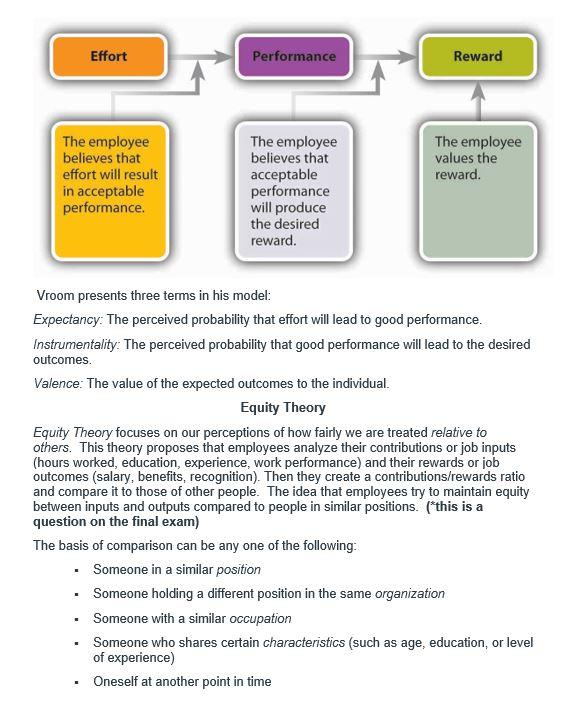
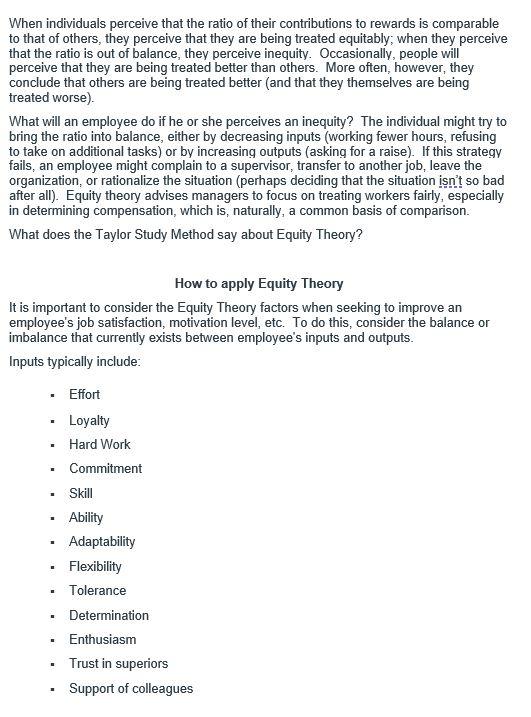
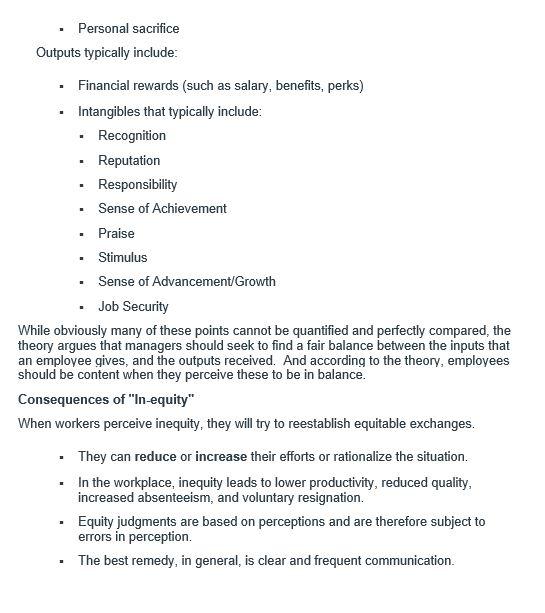
What is motivation? Motivation is an internally generated drive to achieve a goal or follow a particular course of action There are several influential theories of motivation. Maslow's Hierarchy-of-Needs Theory Psychologist Abraham Maslow believed that motivation arises from need. People are motivated to satisfy unmet needs. Maslow placed needs on a hierarchy of importance. Maslow's hierarchy of needs is a theory of motivation based on unmet needs, from basic physiological needs to safety, social, and esteem needs to self-actualization needs. Physiological Needs: basic survival needs including the need for food, water, and shelter Safety Needs: the need to feel secure at work and at home Social Needs: the need to feel loved, accepted, and part of the group Esteem Needs: the need for recognition and acknowledgment from others, as well as self-respect and a sense of status or importance Self-actualization Needs: the need to develop to one's fullest potential PERSONAL WORK Creative success Sell actualization needs Challenging job Status Esteem needs Incentives Friendships Social needs Social activities Financial stability Safety needs Seniority Shelter Physiological needs Salary There are two things to remember about Maslow's model: 1. We must satisfy lower-level needs before we seek to satisfy higher-level needs. 2. Once we have satisfied a need, it no longer motivates us, the next higher need takes its place. When one need is satisfied, the person is motivated to do something to satisfy a higher- level need. A satisfied need is no longer a motivator. If lower-level needs are not met, they may reemerge and take attention away from higher-level needs. Lower-level needs are met, and higher-level needs dominate in developed countries. Herzberg's Two-Factor Theory Another psychologist, Frederick Herzberg, set out to determine which work factors (such as wages, job security, or advancement) made people feel good about their jobs and which factors made them feel bad about their jobs. He surveyed workers, analyzed the results, and concluded that to understand employee satisfaction (or dissatisfaction), he had to divide work factors into two categories: Motivation factorsthose that contribute strongly to job satisfaction. Hygiene factorsthose which, though not strong contributors to job satisfaction, must be present to prevent job dissatisfaction. Herzberg's results showed workers ranked job-related factors as follows: 1. Sense of achievement 2. Earned recognition 3. Interest in the work itself 4. Opportunity for growth 5. Opportunity for advancement 6. Importance of responsibility 7. Peer and group relationships 8. Pay 9. Supervisor's fairness 10. Company policies and rules 11. Status 12. Job security 13. Supervisor's friendliness 14. Working conditions Herzberg noted that the highest-ranking factors dealt with the job content. Factors relating to job environment were not motivators. Herzberg concluded, Motivators are job factors that cause employees to be productive and that give them satisfaction. Hygiene Factors are job factors that can cause dissatisfaction if missing but that do not necessarily motivate employees if increased. (*this is a question on the final exam) Herzberg's Two-Factor Theory Low High Job satisfaction Hygiene factors Quality of supervision Pay - Company policies Physical working conditions Relations with others Job security Motivation factors Promotion opportunities Opportunities for personal growth Recognition Responsibility Achievement . Job dissatisfaction High Low As you can see above, fixing problems related to hygiene factors may alleviate job dissatisfaction, but it will not necessarily improve anyone's job satisfaction. To increase satisfaction and motivate someone to perform better), you must address motivation factors. Is the work itself challenging and stimulating? Do employees receive recognition for jobs well done? Will the work that an accountant has been assigned help him or her to advance in the firm? According to Herzberg, motivation requires a twofold approach: eliminating dissatisfiers and enhancing satisfiers. The best way to motivate employees is to: . Make the job interesting Help them achieve their objectives Recognize their achievement through advancement and added responsibility . Vroom's Expectancy Theory According to Victor Vroom's Expectancy Theory, employee expectations can affect an individual's motivation. Vroom posits that the amount of effort employees exert on a specific task depends on their expectations of the outcome. According to Vroom, employees ask three questions before committing maximum effort to a task: 1. Can I accomplish the task? 2. If I do accomplish it, what is my reward? 3. Is the reward worth the effort? This is an exam question. Vroom argues that an employee will be motivated to exert a high level of effort to obtain a reward under three conditions: 1. The employee believes that his or her efforts will result in acceptable performance. 2. The employee believes that acceptable performance will lead to the desired outcome or reward 3. The employee values the reward. Effort Performance Reward The employee believes that effort will result in acceptable performance. The employee values the reward. The employee believes that acceptable performance will produce the desired reward. Vroom presents three terms in his model: Expectancy: The perceived probability that effort will lead to good performance. Instrumentality: The perceived probability that good performance will lead to the desired outcomes. Valence: The value of the expected outcomes to the individual. Equity Theory Equity Theory focuses on our perceptions of how fairly we are treated relative to others. This theory proposes that employees analyze their contributions or job inputs (hours worked, education, experience, work performance) and their rewards or job outcomes (salary, benefits, recognition). Then they create a contributions/rewards ratio and compare it to those of other people. The idea that employees try to maintain equity between inputs and outputs compared to people in similar positions. ("this is a question on the final exam) The basis of comparison can be any one of the following: Someone in a similar position Someone holding a different position in the same organization Someone with a similar occupation Someone who shares certain characteristics (such as age, education, or level of experience) Oneself at another point in time When individuals perceive that the ratio of their contributions to rewards is comparable to that of others, they perceive that they are being treated equitably; when they perceive that the ratio is out of balance, they perceive inequity. Occasionally, people will perceive that they are being treated better than others. More often, however, they conclude that others are being treated better and that they themselves are being treated worse). What will an employee do if he or she perceives an inequity? The individual might try to bring the ratio into balance, either by decreasing inputs (working fewer hours, refusing to take on additional tasks) or by increasing outputs (asking for a raise). If this strategy fails, an employee might complain to a supervisor, transfer to another job, leave the organization, or rationalize the situation (perhaps deciding that the situation isn't so bad after all). Equity theory advises managers to focus on treating workers fairly, especially in determining compensation, which is, naturally, a common basis of comparison. What does the Taylor Study Method say about Equity Theory? How to apply Equity Theory It is important to consider the Equity Theory factors when seeking to improve an employee's job satisfaction, motivation level, etc. To do this, consider the balance or imbalance that currently exists between employee's inputs and outputs. Inputs typically include: Effort Loyalty Hard Work Commitment Skill . . . Ability Adaptability Flexibility Tolerance Determination Enthusiasm Trust in superiors Support of colleagues . . . . . Personal sacrifice Outputs typically include: Financial rewards (such as salary, benefits, perks) Intangibles that typically include: Recognition Reputation Responsibility Sense of Achievement Praise Stimulus Sense of Advancement/Growth Job Security While obviously many of these points cannot be quantified and perfectly compared, the theory argues that managers should seek to find a fair balance between the inputs that an employee gives, and the outputs received. And according to the theory, employees should be content when they perceive these to be in balance. Consequences of "In-equity" When workers perceive inequity, they will try to reestablish equitable exchanges. They can reduce or increase their efforts or rationalize the situation. In the workplace, inequity leads to lower productivity, reduced quality, increased absenteeism, and voluntary resignation. Equity judgments are based on perceptions and are therefore subject to errors in perception The best remedy, in general, is clear and frequent communication









 Study Help