New Semester
Started
Get
50% OFF
Study Help!
--h --m --s
Claim Now
Question Answers
Textbooks
Find textbooks, questions and answers
Oops, something went wrong!
Change your search query and then try again
S
Books
FREE
Study Help
Expert Questions
Accounting
General Management
Mathematics
Finance
Organizational Behaviour
Law
Physics
Operating System
Management Leadership
Sociology
Programming
Marketing
Database
Computer Network
Economics
Textbooks Solutions
Accounting
Managerial Accounting
Management Leadership
Cost Accounting
Statistics
Business Law
Corporate Finance
Finance
Economics
Auditing
Tutors
Online Tutors
Find a Tutor
Hire a Tutor
Become a Tutor
AI Tutor
AI Study Planner
NEW
Sell Books
Search
Search
Sign In
Register
study help
physics
electrodynamics
Elements of Electromagnetics 3rd Edition Matthew - Solutions
Assuming a source-free region, derive the diffusion equation
In a charge-free region for which σ = 0, ε = εoεr, and μ = μo,H = 5cos (1011t – 4y)az A/mfind: (a) Jd and D, (b) εr.
In a certain region with σ = 0, μ = μo, and ε = 6.25εo, the magnetic field of an EM wave isH = 0.6 cos βx cos 108t az A/mFind β and the corresponding E using Maxwell's equations.
In a nonmagnetic medium,E = 50 cos(109t – 8x)ay + 40 sin(109t – 8x)az V/mfind the dielectric constant er and the corresponding H.
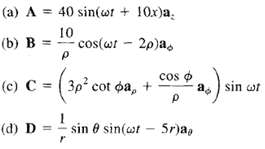
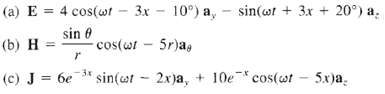
Check whether the following fields are genuine EM fields, i.e., they satisfy Maxwell's equations. Assume that the fields exist in charge-freeregions.
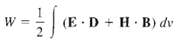
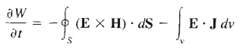
Given the total electromagnetic energy show from Maxwell's equations that
An antenna radiates in free space andfind the corresponding E in terms of ?.
The electric field in air is given by E = ρte– p–1 aΦ V/m; find B and J.
In free space (?v = 0, J = 0). Show thatsatisfies the wave equation in eq. (9.52). Find the corresponding V. Take c as the speed of light in free space.
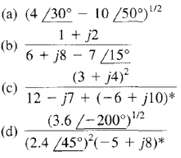
Evaluate the following complex numbers and express your answers in polarform:
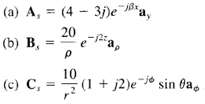
Write the following time-harmonic fields asphasors:
Express the following phasors in their instantaneous forms:
Given A = 4 sin wtax + 3 cos wtay and Bs = j10ze–jz ax, express A in phase form and B, in instantaneous form.
Show that in a linear homogeneous, isotropic source-free region, both Es and Hs must satisfy the wave equation∆2As + γ2As = 0where γ2 = w2με – jwμσ and As = Es or Hs.
An EM wave propagating in a certain medium is described byE = 25 sin (2π × 106t – 6x) az, V/m(a) Determine the direction of wave propagation.(b) Compute the period T, the wavelength λ, and the velocity u.(c) Sketch the wave at t = 0, T/8, T/4, T/2.
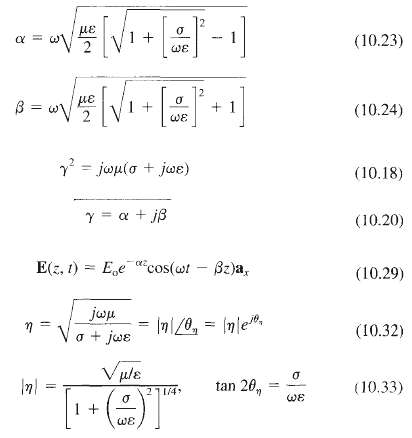
(a) Derive eqs. (10.23) and (10.24) from eqs. (10.18) and (10.20). (b) Using eq. (10.29) in conjunction with Maxwell's equations, show that (c) From part (b), derive eqs. (10.32) and(10.33).
At 50 MHz, a lossy dielectric material is characterized by ε = 3.6εo, μ = 2.1μo, and σ = 0.08 S/m. If Es = 6e–γx az V/m, compute: (a) γ, (b) λ, (c) u, (d) η, (e) Hs.
A lossy material has μ = 5μo, ε = 2εo. If at 5 MHz, the phase constant is 10rad/m, calculate (a) The loss tangent (b) The conductivity of the material (c) The complex permittivity (d) The attenuation constant (e) The intrinsic impedance
A nonmagnetic medium has an intrinsic impedance 240 <30° Ω. Find its(a) Loss tangent(b) Dielectric constant(c) Complex permittivity(d) Attenuation constant at 1 MHz
The amplitude of a wave traveling through a lossy nonmagnetic medium reduces by 18% every meter. If the wave operates at 10 MHz and the electric field leads the magnetic field by 24°, calculate: (a) The propagation constant, (b) The wavelength, (c) The skin depth, (d) The conductivity of the
Sea water plays a vital role in the study of submarine communications. Assuming that for sea water, σ = 4 S/m, εr = 80, μr = 1, and f = 100 MHz, calculate:(a) The phase velocity,(b) The wavelength,(c) The skin depth,(d) The intrinsic impedance.
In a certain medium with μ = /μo, ε = 4εo,H = 12e–01y sin (π X 108t – βy) ax A/mfind: (a) The wave period T, (b) The wavelength X, (c) The electric field E, (d) The phase difference between E and H.
A uniform wave in air hasE = 10 cos (2π × 106t – βz)ay(a) Calculate β and λ.(b) Sketch the wave at z = 0, λ/4.(c) Find H.
The magnetic field component of an EM wave propagating through a nonmagnetic medium (μ, = μo) isH = 25 sin (2 × 10⁸t + 6x) ay mA/mDetermine:(a) The direction of wave propagation.(b) The permittivity of the medium.(c) The electric field intensity.
If H = 10 sin (wt – 4z)ax mA/m in a material for which σ = 0, μ = μo, ε = 4εo, calculate w, λ, and Jd.
A manufacturer produces a ferrite material with μ = 750μo, ε = 5εo, and σ = 10–6 S/m at 10 MHz. (a) Would you classify the material as lossless, lossy, or conducting? (b) Calculate β and λ. (c) Determine the phase difference between two points separated by
By assuming the time-dependent fields E = Eoej(k ∙ r - wt) and H = Hoej/(k ∙ r - wt) where k = kxax + kyay + kzaz is the wave number vector and r = xax + yay + zaz is the radius vector, show that ∆ × E = – ∂B/∂t can be expressed as k × E = μwH and deduce ak × aE = aH.
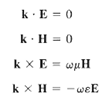
Assume the same fields as in Problem 10.14 and show that Maxwell's equations in a source-free region can be written asFrom these equations deduceak × aE = aH and ak × aH = – aE
The magnetic field component of a plane wave in a lossless dielectric [isH = 30 sin (2π X 108t – 5x) az mA/m(a) If μr = l. find εr..(b) Calculate the wavelength and wave velocity.(c) Determine the wave impedance.(d) Determine the polarization of the wave.(e) Find the corresponding
In a nonmagnetic medium,E = 50 cos (109t – 8x) ay + 40 sin (109t – 8x) az V/mfind the dielectric constant εr and the corresponding H.
In a certain mediumE = 10 cos (2π X 107t – βx) (ay + az) V/mIf μ = 50μo, ε = 2εo, and σ = 0, find β and H.
Which of the following media may be treated as conducting at 8 MHz?(a) Wet marshy soil (ε = 15εo, μ = μo, a = 10–2 S/m)(b) Intrinsic germanium (ε = 16eo, μ= μo, σ = 0.025 S/m)(c) Sea water (ε = 81εo, μ = μo, a = 25 S/m)
Calculate the skin depth and the velocity of propagation for a uniform plane wave at frequency 6 MHz traveling in polyvinylchloride (μr = 1, εr = 4, tan θη = 1 X 10⁻²).
A uniform plane wave in a lossy medium has a phase constant of 1.6rad/m at 107 Hz and its magnitude is reduced by 60% for every 2 m traveled. Find the skin depth and speed of the wave.
(a) Determine the dc resistance of a round copper wire (σ = 5.8 X 10⁷ S/m, μr = 1, εr = 1) of radius 1.2 mm and length 600 m.(b) Find the ac resistance at 100 MHz.(c) Calculate the approximate frequency where dc and ac resistances are equal.
A 40-m-long aluminum (σ = 3.5 X 10⁷ S/m, μr = 1, εr = 1) pipe with inner and outer radii 9 mm and 12 mm carries a total current of 6 sin 106 πt A. Find the skin depth and the effective resistance of the pipe.
Show that in a good conductor, the skin depth δ is always much shorter than the wavelength.
A uniform plane wave in a lossy nonmagnetic media hasEs = (5ax + 12ay)e–γZ, γ = 0.2 + j3.4/m(a) Compute the magnitude of the wave at z = 4 m.(b) Find the loss in dB suffered by the wave in the interval 0 < z < 3 m.(c) Calculate the Poynting vector at z = 4, t =
In a nonmagnetic material,H = 30 cos (2π X 108t – 6x) ay, mA/mfind: (a) The intrinsic impedance, (b) The Poynting vector, (c) The time-average power crossing the surface x = 1,0 < y < 2, 0 < z < 3 m.
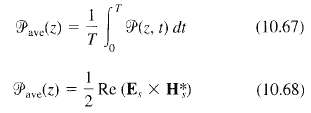
Show that eqs. (10.67) and (10.68) are equivalent.
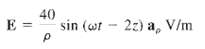
In a transmission line filled with a lossless dielectric (? = 4.5?o, ??=??0), find: (a) w and H,? (b) The Poynting vector,? (c) The total time-average power crossing the surface z = 1 m, 2 mm
(a) For a normal incidence upon the dielectric-dielectric interface for which ?1 = ?2 = ?o we define R and T as the reflection and transmission coefficients for average powers, i.e., Pr,ave = RPi,ave and Pt,ave = TPi,ave. Prove thatwhere n1, and n2 are the reflective indices of the media.(b)
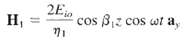
The plane wave E = 30 cos(wt – z)ax V/m in air normally hits a lossless medium (μ = μo, ε = 4εo) at z = 0. (a) Find T, τ, and s. (b) Calculate the reflected electric and magnetic fields.
A uniform plane wave in air with H = 4 sin (wt – 5x) ay A/m is normally incident on a plastic region with the parameters μ = μo, ε = 4εo, and σ = 0. (a) Obtain the total electric field in air. (b) Calculate the time-average power density in the plastic region, (c)
A plane wave in free space with E = 3.6 cos (wt – 3x) ay V/m is incident normally on an interface at x = 0. If a lossless medium with σ = 0, εr = 12.5 exits for x ≥ 0 and the reflected wave has Hr = - 1.2 cos (wt + 3x) az mA/m, find μ2.
Region 1 is a lossless medium for which y ≥ 0, μ = μo, ε = 4εo, whereas region 2 is free space, y ≤ 0. If a plane wave E = 5 cos (108t + βy) az, V/m exists in region 1, find: (a) The total electric field component of the wave in region 2, (b) The time-average Poynting
A plane wave in free space (z ≤ 0) is incident normally on a large block of material with εr = 12, μr= 3, σ = 0 which occupies z > 0. If the incident electric field is E = 30 cos (wt + βx) az mA/m find: (a) w, (b) The standing wave ratio, (c) The reflected magnetic
A 30-MHz uniform plane wave withH = 10 sin (wt + βx) az mA/mexists in region x > 0 having σ = 0, ε = 9εo, μ = 4μo. At x = 0, the wave encounters free space. Determine (a) The polarization of the wave, (b) The phase constant (3, (c) The
A uniform plane wave in air is normally incident on an infinite lossless dielectric material having ε = 3εo and μ = μo. If the incident wave is Ei = 10 cos (wt – z) ay V/m. find: (a) λ and w of the wave in air and the transmitted wave in the dielectric medium (b) The
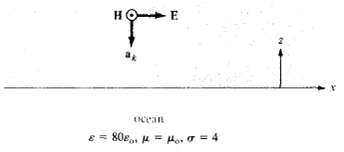
A signal in air (z ? 0) with the electric field component E = 10 sin (wt +?3z) ax V/m hits normally the ocean surface at z =?0 as in figure. Assuming that the ocean surface is smooth and that ? = 80?o, ??= ?o, a?= 4 mhos/m in ocean, determine (a) w (b) The wavelength of the signal in air (c) The
Sketch the standing wave in eq. (10.87) at t = 0, T/8, T/4, 3T/8, T/2, and so on, where T = 2?/w.
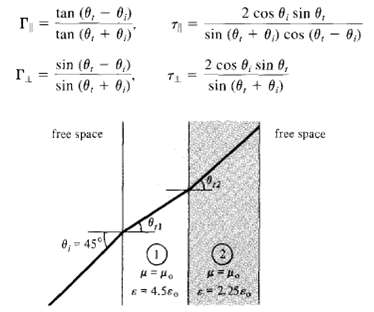
A uniform plane wave is incident at an angle θi, = 45° on a pair of dielectric slabs joined together as shown in figure Determine the angles of transmission θi1 and θi2 in the slabs.
Show that the fieldEs = 20 sin (kxx) cos (kyy) azwhere k2x + k2y = w2μoεo, can be represented as the superposition of four propagating plane waves. Find the corresponding Hs.
Show that for nonmagnetic dielectric media, the reflection and transmission coefficients for oblique incidencebecome
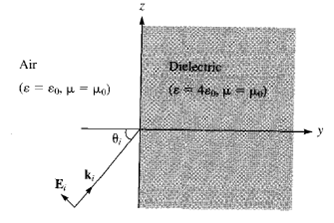
A parallel-polarized wave in air with E = (8ay – 6az) sin (wt – 4y - 3z) V/m, impinges a dielectric half-space as shown in figure. Find: (a) The incidence angle θi, (b) The time average in air (μ = μo, ε = εo), (c) The reflected and transmitted E fields.
In a dielectric medium (ε = 9εo, μ = μo), a plane wave withH = 0.2 cos (109t – kx – k√8z ay A/mis incident on an air boundary at z = 0, find(a) θr and θt(b) k(c) The wavelength in the dielectric and air(d) The incident E(e) The transmitted and reflected
A plane wave in air withE = (8ax + 6ay + 5az) sin (wt + 3x – Ay) V/mis incident on a copper slab in y > 0. Find u and the reflected wave. Assume copper is a perfect conductor.
A polarized wave is incident from air to polystyrene with μ = μo, ε = 2.6ε at Brewster angle. Determine the transmission angle.
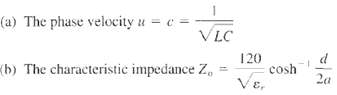
An air-filled planar line with w = 30 cm, d = 1.2 cm, t = 3 mm has conducting plates with σc = 7 x 10⁷ S/m calculate R, L, C, and G at 500 MHz.
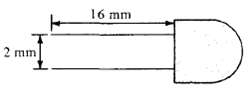
The copper leads of a diode are 16 mm in length and have a radius of 0.3 mm. They are separated by a distance of 2 mm as shown in figure. Find the capacitance between the leads and the ac resistance at 10 MHz.
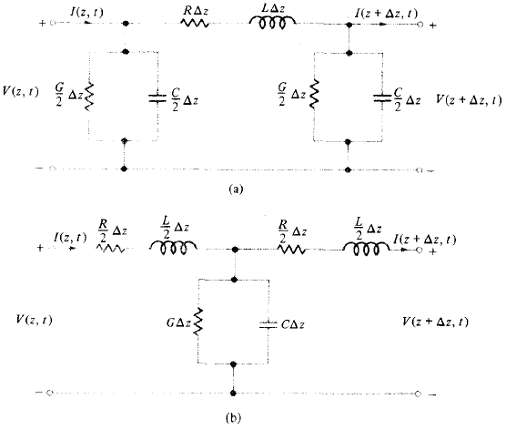
In Section 11.3, it was mentioned that the equivalent circuit of figure is not the only possible one. Show that eqs. (11.4) and (11.6) would remain the same if the II-type and T-type equivalent circuits shown in figure were used.
A 78-Ω lossless planar line was designed but did not meet a requirement. What fraction of the widths of the strip should be added or removed to get the characteristic impedance of 75 Ω?
A telephone line has the following parameters: R = 40 Ω/m, G = 400μS/m, L = 0.2μH/m, C = 0.5nF/m (a) If the line operates at 10 MHz, calculate the characteristic impedance Zo and velocity u. (b) After how many meters will the voltage drop by 30 dB in the line?
A distortionless line operating at 120 MHz has R = 20 Ω/m, L = 0.3μH/m, and C = 63pF/m. (a) Determine γ, u, and Zo. (b) How far will a voltage wave travel before it is reduced to 20% of its initial magnitude? (c) How far will it travel to suffer a 45° phase shift?
For a lossless two-wire transmission line, show thatIs part (a) true of other lossless lines?
A twisted line which may be approximated by a two-wire line is very useful in the telephone industry. Consider a line comprised of two copper wires of diameter 0.12 cm that have a 0.32-cm center-to-center spacing. If the wires are separated by a dielectric material with ε = 3.5εo, find L,
A lossless line has a voltage wave V(z, t) = Vo sin(wt - βz) Find the corresponding current wave.
On a distortionless line, the voltage wave is given by V(ℓ') = 120e0.0025ℓ’ cos (108t + 2ℓ') + 60e–0.0025ℓ’ cos (108t – 2ℓ') where ℓ' is the distance from the load. If ZL = 300Ω, find: (a) α, β, and u, (b) Zo and I(ℓ’).
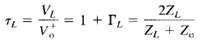
(a) Show that a transmission coefficient may be defined as (b) Find ?L?when the line is terminated by: (i) a load whose value is nZo,?(ii) an open circuit, (iii) a short circuit, (iv) ZL = Zo?(matched line).
A coaxial line 5.6 m long has distributed parameters R = 6.5 Ω/m, L = 3.4μH/m, G = 8.4mS/m, and C = 21.5pF/m. If the line operates at 2 MHz, calculate the characteristic impedance and the end-to-end propagation time delay.
A lossless transmission line operating at 4.5 GHz has L = 2.4μH/m and Zo = 85 Ω. Calculate the phase constant β and the phase velocity u.
A 50-Ω coaxial cable feeds a 75 + j20-Ω dipole antenna. Find T and s.
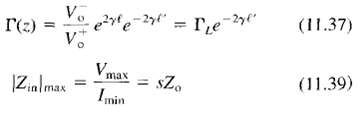
Show that a lossy transmission line of length ? has an input impedance Zsc = Zo tanh ?? when shorted and Zoc = Zo coth ?? when open. Confirm eqs. (11.37) and (11.39).
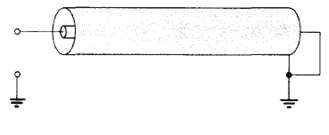
Find the input impedance of a short-circuited coaxial transmission line of figure if Zo = 65 + j38?, ? = 0.7 + j2.5 /m, ? = 0.8 m.
Refer to the lossless transmission line shown in Figure.(a) Find T and s.(b) Determine Zin at the generator.
A quarter-wave lossless 100-Ω line is terminated by a load ZL = 210Ω. If the voltage at the receiving end is 80 V, what is the voltage at the sending end?
A 500-Ω lossless line has VL = 10ej25° V, ZL = 50ej30°. Find the current at λ/8 from the load.
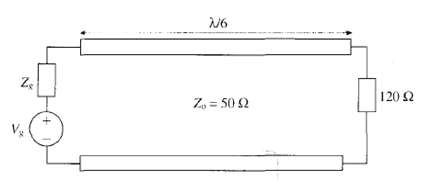
A 60-Ω lossless line is connected to a source with Vg = 10
A lossless transmission line with a characteristic impedance of 75Ω is terminated by a load of 120Ω. The length of the line is 1.25λ. If the line is energized by a source of 100 V (rms) with an internal impedance of 50Ω, determine: (a) The input impedance, and (b) The
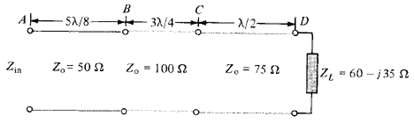
Three lossless lines are connected as shown in Figure. Determine Zin.
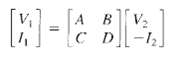
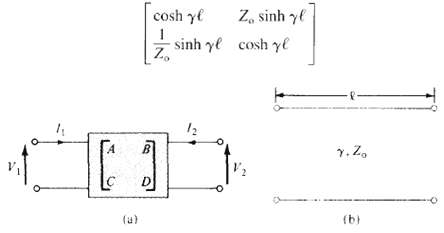
Consider the two-port network shown in Figure (a). The relation between the input and output variables can' be written in matrix form asFor the lossy line in Figure (b), show that the ABCD matrix is
A 50-fi lossless line is 4.2 m long. At the operating frequency of 300 MHz, the input impedance at the middle of the line is 80 – j60Ω. Find the input impedance at the generator and the voltage reflection coefficient at the load. Take u = 0.8c.
A 60- Ω air line operating at 20 MHz is 10 m long. If the input impedance is 90 + j150Ω calculate ZL, T, and s.
A 75-Ω transmission line is terminated by a load of 120 + j80Ω. (a) Find T and s. (b) Determine how far from the load is the input impedance purely resistive.
A 75-Ω transmission line is terminated by a load impedance ZL. If the line is 5λ/8 long, calculate Zin when: (a) ZL = j45Ω, (b) ZL = 25 - j65.
Determine the normalized input impedance at A/8 from the load if: (a) Its normalized impedance is 2 + j, (b) Its normalized admittance is 0.2 – j0.5, (c) The reflection coefficient at the load is 0.3 + j0.A.
A transmission line is terminated by a load with admittance YL = (0.6 4 + j0.8)/Zo. Find the normalized input impedance at λ/6 from the load.
An 80-Ω transmission line operating at 12 MHz is terminated by a load ZL. At 22 m from the load, the input impedance is 100 – j120Ω. If u = 0.8c, (a) Calculate TL, Zin,max, and Zin, min. (b) Find ZL, s, and the input impedance at 28 m from the load. (c) How many Zin,max and
An antenna, connected to a 150-ft lossless line, produces a standing wave ratio of 2.6. If measurements indicate that voltage maxima are 120 cm apart and that the last maximum is 40 cm from the antenna, calculate(a) The operating frequency(b) The antenna impedance(c) The reflection coefficient.
The observed standing-wave ratio on a 100-Ω lossless line is 8. If the first maximum voltage occurs at 0.3A from the load, calculate the load impedance and the voltage reflection coefficient at the load.
A 50-Ω line is terminated to a load with an unknown impedance. The standing wave ratio s = 2.4 on the line and a voltage maximum occurs A/8 from the load, (a) Determine the load impedance, (b) How far is the first minimum voltage from the load?
A 75-Ω lossless line is terminated by an unknown load impedance ZL. If at a distance 0.2A from the load the voltage is Vs = 2 + j V while the current is 10mA. Find ZL and s.
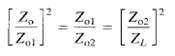
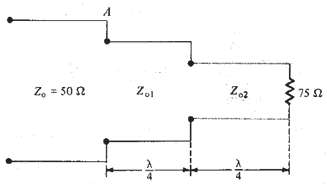
Two ?/4 transformers in tandem are to connect a 50-? line to a 75-? load as in Figure. (a) Determine the characteristic impedance Zo1 if Z?o2 = 30 ft and there is no reflected wave to the left of A. (b) If the best results are obtained when determine Zo1 and Zo2 for this case.
Two identical antennas, each with input impedance 74 Ω are fed with three identical 50-fi quarter-wave lossless transmission lines as shown in figure. Calculate the input impedance at the source end.
If the line in the previous problem is connected to a voltage source 120 V with internal impedance 80 Ω, calculate the average power delivered to either antenna.
Consider the three lossless lines in figure. If Zo = 50Ω, calculate: (a) Zin looking into line 1 (b) Zin looking into line 2 (c) Zin looking into line 3
A section of lossless transmission line is shunted across the main line as in figure. If ℓ1 = /4, ℓ2 = λ/8, and ℓ3 = 7λ/8, find yin1, yin2, and yin3 given that Zo = 100Ω. ZL = 200 + jl50Ω. Repeat the calculations if the shorted section were open.
It is desired to match a 50-Ω line to a load impedance of 60 – j50 Ω. Design a 50-Ω stub that will achieve the match. Find the length of the line and how far it is from the load.
A stub of length 0.12λ is used to match a 60-Ω lossless line to a load. If the stub is located at 0.3λ from the load, calculate (a) The load impedance ZL (b) The length of an alternative stub and its location with respect to the load (c) The standing wave ratio between the stub
On a lossless line, measurements indicate s = 4.2 with the first maximum voltage at λ/-from the load. Determine how far from the load a short-circuited stub should be located and calculate its length.
Showing 1000 - 1100
of 1324
1
2
3
4
5
6
7
8
9
10
11
12
13
14
Step by Step Answers

 Get 50% OFF
Claim Now
Get 50% OFF
Claim Now