New Semester
Started
Get
50% OFF
Study Help!
--h --m --s
Claim Now
Question Answers
Textbooks
Find textbooks, questions and answers
Oops, something went wrong!
Change your search query and then try again
S
Books
FREE
Study Help
Expert Questions
Accounting
General Management
Mathematics
Finance
Organizational Behaviour
Law
Physics
Operating System
Management Leadership
Sociology
Programming
Marketing
Database
Computer Network
Economics
Textbooks Solutions
Accounting
Managerial Accounting
Management Leadership
Cost Accounting
Statistics
Business Law
Corporate Finance
Finance
Economics
Auditing
Tutors
Online Tutors
Find a Tutor
Hire a Tutor
Become a Tutor
AI Tutor
AI Study Planner
NEW
Sell Books
Search
Search
Sign In
Register
study help
business
derivative pricing
Derivative Pricing 1st Edition Ambrose Lo - Solutions
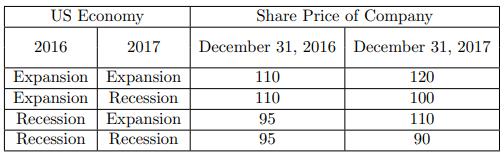
You are given the following with respect to a public company:• The common shares of the company were trading at 100 as of December 31, 2015.• No dividends are paid.• An industry analyst has projected the possible stock prices over the next two years as a function of the performance of the US
For a binomial option pricing model, you are given the following information:• The current stock price is $110.• The strike price is $100.• The interest rate is 5% (continuously compounded)• The continuous dividend yield is 3.5%.• The volatility is 0.30.• The time to expiration is 1
A three-month European call is modeled by a single period binomial tree using the following parameters:• Continuously compounded risk-free rate = 4%• Dividend = 0• Annual volatility = 15%• Current stock price = 10• Strike price = 10.5Calculate the value of the call option.(A) Less than
You use the following information to construct a binomial forward tree for modeling the price movements of a stock:(i) The length of each period is 1 year.(ii) The current stock price is 190.(iii) The stock’s volatility is 30%.(iv) The stock pays dividends continuously at a rate proportional to
A one-year European call option is currently valued at 0.9645. The following parameters are given.• Current stock price = 10• Continuously compounded risk-free rate = 6%• Continuously compounded dividend rate = 1%• Strike price = 10Using a single period binomial tree, calculate the implied
For a 10-period binomial stock price model, you are given:(i) The length of each period is one year.(ii) The current stock price is 1,000.(iii) At the end of every year, the stock price will either increase by 5% or decrease by 5% in proportion. (iv) The stock pays dividends continuously at a rate
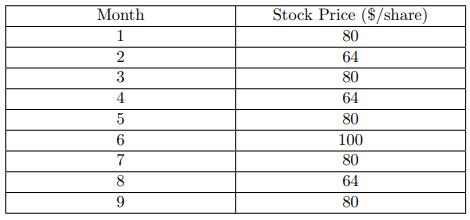
You are to estimate a nondividend-paying stock’s annualized volatility using its prices in the past nine months.Calculate the historical volatility for this stock over the period.(A) 83%(B) 77%(C) 24%(D) 22%(E) 20% Month 1 23 1678 5 6 9 Stock Price ($/share) 80 64 80 64 80 100 80 64 80
Let S(t) be the time-t price of a nondividend-paying stock. For a three-period binomial stock price model, you are given:(i) The length of each period is one year.(ii) S(0) = 100.(iii) u = 1.1, where u is one plus the percentage change in the stock price per period if the price goes up.(iv) d =
For a two-period binomial model for stock prices, you are given:(i) The length of each period is one year.(ii) The current price of a nondividend-paying stock is $150.(iii) u = 1.25, where u is one plus the percentage change in the stock price per period if the price goes up.(iv) d = 0.80, where d
For a two-period binomial model for stock prices, you are given:(i) The length of each period is one year.(ii) The current price of a nondividend-paying stock is $40.(iii) u = 1.05, where u is one plus the percentage change in the stock price per period if the price goes up.(iv) d = 0.9, where d is
For a binomial forward tree modeling the price movements of a stock, you are given:(i) The length of each period is 6 months.(ii) The current price of a nondividend-paying stock is $9,000.(iii) The stock’s volatility is 32%.(iv) The continuously compounded risk-free interest rate is 20%.Consider
You use the following information to construct a binomial forward tree for modeling the price movements of a nondividend-paying stock:(i) The length of each period is 6 months.(ii) The current stock price is 100.(iii) The stock’s volatility is 20%.(iv) The continuously compounded risk-free
You use the following information to construct a binomial forward tree for modeling the price movements of a stock.(i) The length of each period is 4 months.(ii) The current stock price is 100.(iii) The stock’s volatility is 30%.(iv) The stock pays no dividends.(v) The continuously compounded
The Ashwaubenon Company (Ash Co) needs to raise capital to support its rapidly growing business. One proposal is to publicly issue a certain number of equity units, each of which consists of one share of stock and a warrant to purchase one share of stock.Assume that the price of the underlying
You use the following information to construct a binomial forward tree for modeling the price movements of a stock:(i) The length of each period is 4 months.(ii) The current stock price is 55.(iii) The stock’s volatility is 30%.(iv) The stock pays dividends continuously at a rate proportional to
You use the following information to construct a two-period binomial forward tree for modeling the movements of the dollar-euro exchange rate:(i) The current dollar-euro exchange rate is $1.50/AC.(ii) The volatility of the exchange rate is 20%.(iii) The continuously compounded risk-free interest
For a four-period binomial tree model for the dollar/pound exchange rate, you are given:(i) The length of each period is 3 months.(ii) The current dollar/pound exchange rate is 1.4.(iii) u = 1.1 and d = 0.9, where u and d are one plus the percentage change in the dollar/pound exchange rate per
You use the following information to construct a binomial tree for modeling the price movements of a futures contract on the S&V 150:(i) The length of each period is 6 months.(ii) The initial futures price is 500.(iii) u = 1.2363, where u is one plus the percentage change in the futures price per
You use the following information to construct a one-period binomial forward tree for modeling the price movements of a nondividend-paying stock:(i) The current stock price is 82.(ii) The stock’s volatility is 30%.(iii) The continuously compounded risk-free interest rate is 8%.(iv) The
You use the following information to construct a binomial forward tree for modeling the price movements of a nondividend-paying stock:(i) The length of each period is 4 months.(ii) The current stock price is 50.(iii) The stock’s volatility is 30%.(iv) The continuously compounded risk-free
You use the following information to construct a binomial forward tree for modeling the price movements of a nondividend-paying stock:(i) The length of each period is 4 months.(ii) The current stock price is 123.(iii) The stock’s volatility is 30%.(iv) The continuously compounded risk-free
Assume the Black-Scholes framework. Let S(t) denote the time-t price of a nondividend-paying stock. You are given: (i) The current stock price is 38. (ii) The stock’s volatility is 35%. (iii) The continuously compounded expected return on the stock is 16%(iv) The continuously compounded
You are given the following information about a European call option. • The current stock price is $35.• The exercise price is $40.• The option matures in 6 months.• The expected return on the stock is 18% per annum.• The volatility, σ, of the stock price is 24% per annum.• The
Consider a nondividend-paying stock whose current price is 100.The stock-price process is a lognormal process with volatility 30%.The continuously compounded expected return on the stock is 10%.The continuously compounded risk-free interest rate is 7%.Calculate the probability that a nine-month
You are given the following information about a nondividend-paying stock:(i) The current stock price is 100.(ii) Stock prices are lognormally distributed.(iii) The continuously compounded expected return on the stock is 10%.(iv) The stock’s volatility is 30%.Consider a nine-month 125-strike
Assume the Black-Scholes framework. You are given:(i) The current stock price is 100.(ii) The stock pays dividends continuously at a rate proportional to its price. The dividend yield is 2.5%.(iii) The continuously compounded expected rate of return on the stock is 6%.(iv) The stock’s volatility
Assume the Black-Scholes framework.You are given the following information for a stock that pays dividends continuously at a rate proportional to its price.(i) The current stock price is 0.25.(ii) The stock’s volatility is 0.35.(iii) The continuously compounded expected rate of stock-price
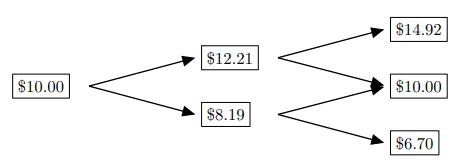
Two actuaries, A and B, use a two-period binomial forward tree to compute the prices of a European call and a European put using different parameters.You are given:Describe the relationship between the call price computed by Actuary A and the put price computed by Actuary B. Actuary
Showing 400 - 500
of 428
1
2
3
4
5
Step by Step Answers

 Get 50% OFF
Claim Now
Get 50% OFF
Claim Now