New Semester
Started
Get
50% OFF
Study Help!
--h --m --s
Claim Now
Question Answers
Textbooks
Find textbooks, questions and answers
Oops, something went wrong!
Change your search query and then try again
S
Books
FREE
Study Help
Expert Questions
Accounting
General Management
Mathematics
Finance
Organizational Behaviour
Law
Physics
Operating System
Management Leadership
Sociology
Programming
Marketing
Database
Computer Network
Economics
Textbooks Solutions
Accounting
Managerial Accounting
Management Leadership
Cost Accounting
Statistics
Business Law
Corporate Finance
Finance
Economics
Auditing
Tutors
Online Tutors
Find a Tutor
Hire a Tutor
Become a Tutor
AI Tutor
AI Study Planner
NEW
Sell Books
Search
Search
Sign In
Register
study help
mathematics
calculus with applications
Calculus With Applications 12th Edition Margaret L. Lial - Solutions
What is the difference between a particular solution and a general solution to a differential equation?
Suppose two random variables have standard deviations of 0.10 and 0.23, respectively. What does this tell you about their distributions?
Find the proportion of observations of a standard normal distribution that are between the given z-scores.-2.13 and -0.04
In Exercises, use Euler’s method to approximate the indicated function value to 3 decimal places, using h = 0.1. Next, solve the differential equation and find the indicated function value to 3 decimal places. Compare the result with the approximation. dy dx = 4x + 3; y(1) = 0; find y(1.5)
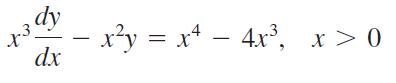
Find the general solution for each differential equation. dy dx - x²y = x² - 4x³, x > 0
Decide whether the functions defined as follows are probability density functions on the indicated intervals. If not, tell why.ƒ(x) = 2x2; [-1, 1]
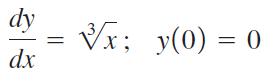
Use Method 2 or 3 in Example 1 to construct a table like the ones in the examples for 0 ≤ x ≤ 1, with h = 0.2. dy dx = √x; y(0) = 0
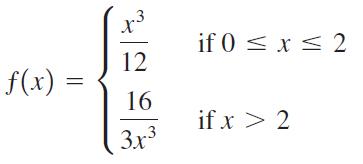
Find the expected value, the variance, and the standard deviation, when they exist, for each probability density function. f(x) = X 12 16 3x³ if 0 ≤ x ≤ 2 if x > 2
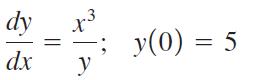
Find the particular solution for each initial value problem. dy dx +3 y y(0) = 5
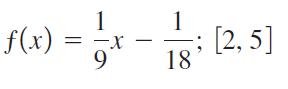
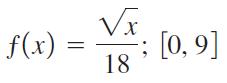
Find the cumulative distribution function for the probability density function in each of the following exercises.Exercise 7Decide whether the functions defined as follows are probability density functions on the indicated intervals. If not, tell why. 1 √(x)=√x – 18:[2,5] 9
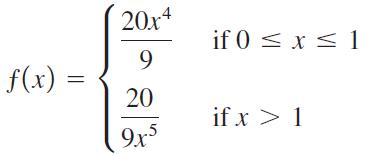
Find the expected value, the variance, and the standard deviation, when they exist, for each probability density function. f(x) = 20x4 9 20 9x5 if 0 ≤ x ≤ 1 if x > 1
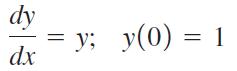
Use Method 2 or 3 in Example 1 to construct a table like the ones in the examples for 0 ≤ x ≤ 1, with h = 0.2. dy dx y; y(0) = 1
Prove the z-scores theorem.
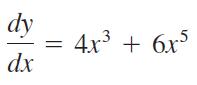
Find the general solution for each differential equation. dy dx = 4x³ + 6x5
Shauntel is investing $2000 through Quickbucks Banking. Quickbucks promises an annual return of 5%, but it charges a yearly fee of $50 for its services.(a) Set up a first-order differential equation to represent the change in Shauntel’s money over time.(b) Solve the differential equation using an
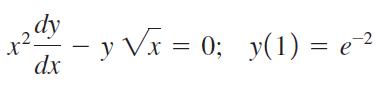
Find the particular solution for each initial value problem. X2 dy dx − y √x = 0; _y(1) = e¯²
Solve Exercise 22 if pure water is added instead of brine.Exercise 22A tank holds 100 gal of water that contains 20 lb of dissolved salt. A brine (salt) solution is flowing into the tank at the rate of 2 gal per minute while the solution flows out of the tank at the same rate. The brine solution
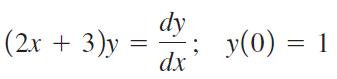
Find the particular solution for each initial value problem. (2x + 3)y = dy dx y(0) = 1
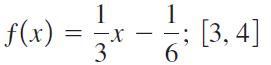
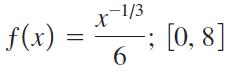
Find the cumulative distribution function for the probability density function in each of the following exercises.Exercise 8Decide whether the functions defined as follows are probability density functions on the indicated intervals. If not, tell why. f(x) = x - -—; [3,4] 1 3 6
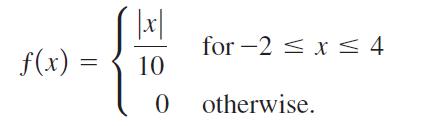
Let X be a continuous random variable with density functionCalculate the expected value of X. Choose one of the following.(a) 1/5 (b) 3/5 (c) 1(d) 28/15 (e) 12/5 f(x) = = |x| 10 for-2 ≤ x ≤ 4 0 otherwise.
Show that a normal random variable has inflection points at x = μ - σ and x = μ + σ.
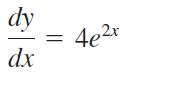
Find the general solution for each differential equation. dy dx = 4e2x
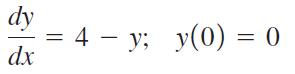
Use Method 2 or 3 in Example 1 to construct a table like the ones in the examples for 0 ≤ x ≤ 1, with h =Use Method 2 or 3 in Example 1 to construct a table like the ones in the examples for 0 ≤ x ≤ 1, with h = 0.2. 0.2. dy dx = 4 y; y(0) = 0 -
Solve the differential equation in Exercise 25 using separation of variables.Exercise 25Shauntel is investing $2000 through Quickbucks Banking. Quickbucks promises an annual return of 5%, but it charges a yearly fee of $50 for its services.
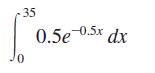
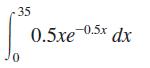
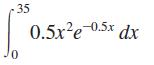
Use Simpson’s rule with n = 140, or use the integration feature on a graphing calculator, to approximate the following integrals.(a)(b)(c) -35 Jo 0.5e 0.5x dx
Five grams of a chemical are dissolved in 100 liters of alcohol. Pure alcohol is added at the rate of 2 liters per minute and at the same time the solution is being drained at the rate of 1 liter per minute.(a) Find an expression for the amount of the chemical in the mixture at any time.(b) How
The logistic equation introduced in Section 1,can be written aswhere c and p are positive constants. Although this is a nonlinear differential equation, it can be reduced to a linear equation by a suitable substitution for the variable y.(a) Letting y = 1/z and dy/dx = (-1/z2)dz/dx, rewrite
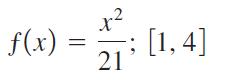
Find the cumulative distribution function for the probability density function in each of the following exercises.Exercise 9Decide whether the functions defined as follows are probability density functions on the indicated intervals. If not, tell why. f(x) || x² X 21 [1,4]
Solve Exercise 26 if a 25% solution of the same mixture is added instead of pure alcohol.Exercise 26Five grams of a chemical are dissolved in 100 liters of alcohol. Pure alcohol is added at the rate of 2 liters per minute and at the same time the solution is being drained at the rate of 1 liter per
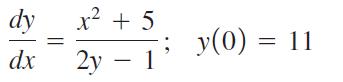
Find the particular solution for each initial value problem. dy dx = x² + 5 2y - 1 y(0) = 11
The exponential distribution with a = 0.5, the total probability is 1, and both the mean and the standard deviation are equal to 1/a.
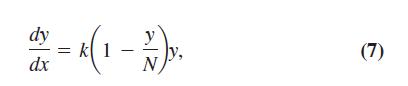
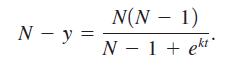
In Example 3, the number of infected individuals is given by Equation (7).(a) Show that the number of uninfected individuals is given by(b) Graph the equation in part (a) and Equation (7) on the same axes when N = 100 and k = 1.(c) Find the common inflection point of the two graphs.(d) What is the
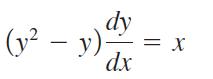
Find the general solution for each differential equation. Verify that each solution satisfies the original differential equation. dy (y²-y)- = X dx
In Exercises, the probability density function of a random variable is defined.(a) Find the expected value to the nearest hundredth.(b) Find the variance to the nearest hundredth.(c) Find the standard deviation. Round to the nearest hundredth.(d) Find the probability that the random variable has a
How can you tell that a differential equation is separable? That it is linear?
Find a z-score satisfying the conditions given in Exercises.10% of the total area is to the left of z.
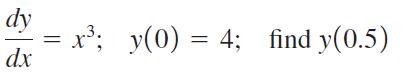
In Exercises, use Euler’s method to approximate the indicated function value to 3 decimal places, using h = 0.1. Next, solve the differential equation and find the indicated function value to 3 decimal places. Compare the result with the approximation. dy dx = = x³; y(0) = 4; find y(0.5)
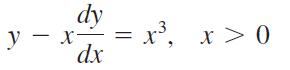
Find the general solution for each differential equation. dy y x- - x² = x³, x>0 dx -
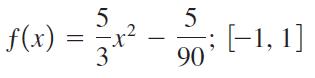
Decide whether the functions defined as follows are probability density functions on the indicated intervals. If not, tell why. f(x) = 5 3x² 5 90 ; [-1,1]
An influenza epidemic spreads at a rate proportional to the product of the number of people infected and the number not yet infected. Assume that 100 people are infected at the beginning of the epidemic in a community of 20,000 people, and 400 are infected 10 days later.(a) Write an equation for
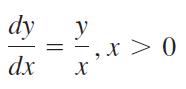
Find the general solution for each differential equation. Verify that each solution satisfies the original differential equation. dy y = dx X 0 < x
In Exercises, the probability density function of a random variable is defined.(a) Find the expected value to the nearest hundredth.(b) Find the variance to the nearest hundredth.(c) Find the standard deviation. Round to the nearest hundredth.(d) Find the probability that the random variable has a
Can a differential equation be both separable and linear? Explain why not, or give an example of an equation that is both.
Find a z-score satisfying the conditions given in Exercises.2% of the total area is to the left of z.
In Exercises, use Euler’s method to approximate the indicated function value to 3 decimal places, using h = 0.1. Next, solve the differential equation and find the indicated function value to 3 decimal places. Compare the result with the approximation. dy 3 dx X = y(1) = 2; find y(1.4)
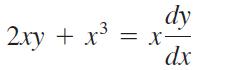
Find the general solution for each differential equation. dy 2xy + x³ = x= dx
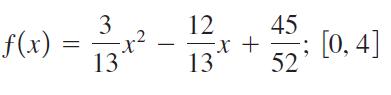
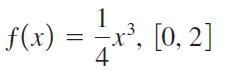
Decide whether the functions defined as follows are probability density functions on the indicated intervals. If not, tell why. f(x): 3 13 12 -x + 13 45 52 [0, 4]
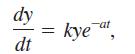
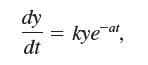
The Gompertz growth law,for constants k and a, is another model used to describe the growth of an epidemic. Repeat Exercise 15, using this differential equation with a = 0.02. Exercise 15An influenza epidemic spreads at a rate proportional to the product of the number of people infected and
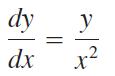
Find the general solution for each differential equation. Verify that each solution satisfies the original differential equation. dy dx y .2 X
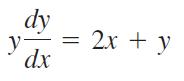
Classify each equation as separable, linear, both, or neither. dy y dx || 2x + y
In Exercises, the probability density function of a random variable is defined.(a) Find the expected value to the nearest hundredth.(b) Find the variance to the nearest hundredth.(c) Find the standard deviation. Round to the nearest hundredth.(d) Find the probability that the random variable has a
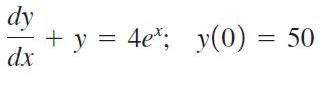
Solve each differential equation, subject to the given initial condition. dy dx + y = 4e*; y(0) = 50
In Exercises, use Euler’s method to approximate the indicated function value to 3 decimal places, using h = 0.1. Next, solve the differential equation and find the indicated function value to 3 decimal places. Compare the result with the approximation. dy dx 2xy; y(1) = 1; find y(1.6)
Find a value of k that will make f a probability density function on the indicated interval.ƒ(x) = kx1/2; [1, 4]
Find a z-score satisfying the conditions given in Exercises.18% of the total area is to the right of z.
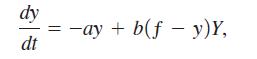
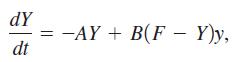
Gonorrhea is spread by sexual contact, takes 3 to 7 days to incubate, and can be treated with antibiotics. There is no evidence that a person ever develops immunity. One model proposed for the rate of change in the number of men infected by this disease iswhere y is the fraction of men infected, f
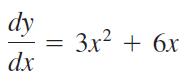
Find the general solution for each differential equation. dy dx = 3x² + 6x
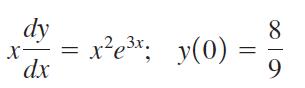
Find the particular solution for each initial value problem. dy X- dx = x²e³x; y(0) || ∞ 19 8
Solve each differential equation, subject to the given initial condition. dy dx + 3x²y - 2xe-x³ = 0; y(0) = 1000
Repeat Exercise 20 with h = 0.05. Calculate the error and the percentage error, and compare with the result of Exercise 20.Exercise 20In Exercises, use Euler’s method to approximate the indicated function value to 3 decimal places, using h = 0.1. Next, solve the differential equation and find the
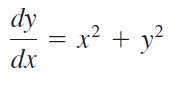
Classify each equation as separable, linear, both, or neither. dy dx = x² + y²
Solve Exercise 22 if the brine solution is introduced at the rate of 1 gal per minute while the rate of outflow stays the same.Exercise 22A tank holds 100 gal of water that contains 20 lb of dissolved salt. A brine (salt) solution is flowing into the tank at the rate of 2 gal per minute while the
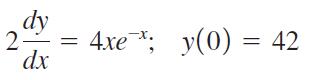
Find the particular solution for each initial value problem. dy 2- = dx 4xe; y(0) = 42
Find a value of k that will make f a probability density function on the indicated interval.ƒ(x) = kx3; [2, 4]
We defined the median of a probability distribution as an integral. The median also can be defined as the number m such that P(X ≤ m) = P(X ≥ m).Verify the expected value and standard deviation of the exponential distribution given in the text.
For Exercises, (a) Find the median of the random variable with the probability density function given, and (b) Find the probability that the random variable is between the expected value (mean) and the median.ƒ(x) = 3x-4; [1, ∞)
Solve Exercise 22 if the brine solution is introduced at the rate of 3 gal per minute while the rate of outflow remains the same.Exercise 22A tank holds 100 gal of water that contains 20 lb of dissolved salt. A brine (salt) solution is flowing into the tank at the rate of 2 gal per minute while the
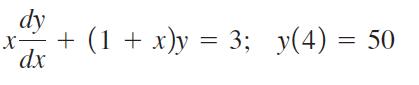
Solve each differential equation, subject to the given initial condition. dy x = + (1 + x)y = 3; y(4) = 50 dx
Find a value of k that will make f a probability density function on the indicated interval.ƒ(x) = kx3; [1, 5]
Repeat Exercise 19 with h = 0.05. Calculate the error and the percentage error, and compare with the result of Exercise 19.Exercise 19In Exercises, use Euler’s method to approximate the indicated function value to 3 decimal places, using h = 0.1. Next, solve the differential equation and find the
We defined the median of a probability distribution as an integral. The median also can be defined as the number m such that P(X ≤ m) = P(X ≥ m).Find an expression for the median of the exponential distribution.
Find a z-score satisfying the conditions given in Exercises.22% of the total area is to the right of z.
For Exercises, (a) Find the median of the random variable with the probability density function given, and (b) Find the probability that the random variable is between the expected value (mean) and the median.ƒ(x) = 4x-5; [1, ∞)
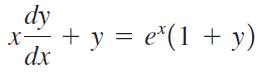
Classify each equation as separable, linear, both, or neither. dy x + y = e*(1 + y) dx
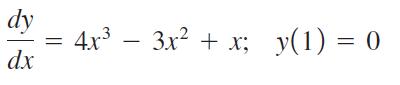
Find the particular solution for each initial value problem. dy dx = 4x³ 3x² + x; y(1) = 0 -
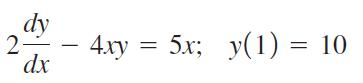
Solve each differential equation, subject to the given initial condition. dy 2 dx - 4xy = 5x; y(1) = 10
A tank holds 100 gal of water that contains 20 lb of dissolved salt. A brine (salt) solution is flowing into the tank at the rate of 2 gal per minute while the solution flows out of the tank at the same rate. The brine solution entering the tank has a salt concentration of 2 lb per gal.(a) Find an
Find a value of k that will make f a probability density function on the indicated interval.ƒ(x) = kx; [2, 3]
In Exercises, use Euler’s method to approximate the indicated function value to 3 decimal places, using h = 0.1. Next, solve the differential equation and find the indicated function value to 3 decimal places. Compare the result with the approximation. dy dx 2y = ²x; y(0) y(0) = 10; find y(0.4)
We defined the median of a probability distribution as an integral. The median also can be defined as the number m such that P(X ≤ m) = P(X ≥ m).Find an expression for the median of the uniform distribution.
For Exercises, (a) Find the median of the random variable with the probability density function given, and (b) Find the probability that the random variable is between the expected value (mean) and the median.ƒ(x) = 2(1 - x); [0, 1]
Classify each equation as separable, linear, both, or neither. x dy y dx = 4 + x3/2
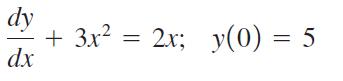
Find the particular solution for each initial value problem. dy dx + 3x² = 2x; y(0) = 5
Repeat Exercise 19 using the Gompertz growth law,for constants k and a, with a = 0.1.Exercise 19The equation developed in the text for the spread of an epidemic also can be used to describe diffusion of information. In a population of size N, let y be the number who have heard a particular piece of
Find a value of k that will make f a probability density function on the indicated interval.ƒ(x) = kx; [0, 3]
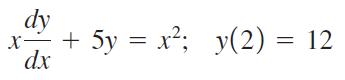
Solve each differential equation, subject to the given initial condition. x + 5y + 5y = x; y(2) = 12 dy dx
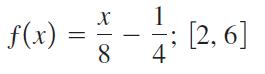
For Exercises, (a) Find the median of the random variable with the probability density function given, and (b) Find the probability that the random variable is between the expected value (mean) and the median. X f(x) = -1; [2,6] 8 4
In Exercises, use Euler’s method to approximate the indicated function value to 3 decimal places, using h = 0.1. Next, solve the differential equation and find the indicated function value to 3 decimal places. Compare the result with the approximation. dy dx + y = 2er; y(0) = 100; find y(0.3)
Describe the shape of the graph of each probability distribution.(a) Uniform (b) Exponential (c) Normal
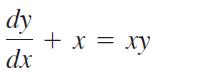
Classify each equation as separable, linear, both, or neither. dy dx + x = xy
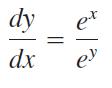
Find the general solution for each differential equation. Verify that each solution satisfies the original differential equation. dy dx = ex
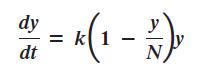
The equation developed in the text for the spread of an epidemic also can be used to describe diffusion of information. In a population of size N, let y be the number who have heard a particular piece of information. Thenfor a positive constant k. Use this model in Exercises.A news item is heard on
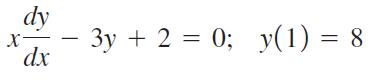
Solve each differential equation, subject to the given initial condition. dy X- dx 3y + 2 = 0; y(1) = 8
Find a value of k that will make f a probability density function on the indicated interval.ƒ(x) = kx2; [-1, 2]
In Exercises, use Euler’s method to approximate the indicated function value to 3 decimal places, using h = 0.1. Next, solve the differential equation and find the indicated function value to 3 decimal places. Compare the result with the approximation. dy 2x dx y = y(0) = 3; find y(0.6)
What is a z-score? How is it used?
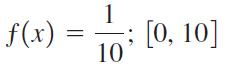
For Exercises, (a) Find the median of the random variable with the probability density function given, and (b) Find the probability that the random variable is between the expected value (mean) and the median. f(x) = 1 10 ; [0, 10]
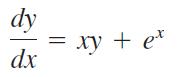
Classify each equation as separable, linear, both, or neither. dy dx = xy + ex
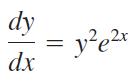
Find the general solution for each differential equation. Verify that each solution satisfies the original differential equation. dy dx = yzer
The equation developed in the text for the spread of an epidemic also can be used to describe diffusion of information. In a population of size N, let y be the number who have heard a particular piece of information. Thenfor a positive constant k. Use this model in Exercises.A rumor spreads at a
Showing 5100 - 5200
of 8662
First
45
46
47
48
49
50
51
52
53
54
55
56
57
58
59
Last
Step by Step Answers

 Get 50% OFF
Claim Now
Get 50% OFF
Claim Now