New Semester
Started
Get
50% OFF
Study Help!
--h --m --s
Claim Now
Question Answers
Textbooks
Find textbooks, questions and answers
Oops, something went wrong!
Change your search query and then try again
S
Books
FREE
Study Help
Expert Questions
Accounting
General Management
Mathematics
Finance
Organizational Behaviour
Law
Physics
Operating System
Management Leadership
Sociology
Programming
Marketing
Database
Computer Network
Economics
Textbooks Solutions
Accounting
Managerial Accounting
Management Leadership
Cost Accounting
Statistics
Business Law
Corporate Finance
Finance
Economics
Auditing
Tutors
Online Tutors
Find a Tutor
Hire a Tutor
Become a Tutor
AI Tutor
AI Study Planner
NEW
Sell Books
Search
Search
Sign In
Register
study help
mathematics
precalculus 1st
Precalculus 1st Edition Jay Abramson - Solutions
For the following exercises, evaluate the exponential functions for the indicated value of x.f(x) = 4(2)x − 1 − 2 for f(5).
Use the definition of a logarithm to solve. −5log7 (10n) = 5.
For the following exercises, solve each equation for x.log(x + 12) = log(x) + log(12)
For the following exercises, refer to Table 11.Use a graphing calculator to create a scatter diagram of the data. 1 f(x) 8.7 8 2 3 12.3 15.4 4 18.5 5 20.7 Table 11 6 7 8 9 10 22.5 23.3 24 24.6 24.8
For the following exercises, refer to Table 10.Graph the logarithmic equation on the scatter diagram. X f(x) 1 7.5 26 6 3 5.2 4 4.3 Table 10 5 3.9 6 3.4 7 3.1 8 2.9
For the following exercises, solve each equation for x.log2 (7x + 6) = 3
For the following exercises, determine whether the equation represents continuous growth, continuous decay, or neither. Explain.Suppose an investment account is opened with an initial deposit of $12,000 earning 7.2% interest compounded continuously. How much will the account be worth after 30 years?
Find the exact solution for 2e5x − 2 − 9 = −56. If there is no solution, write no solution.
For the following exercises, refer to Table 10.Use the logarithmic function to find the value of the function when x = 10. X f(x) 1 7.5 26 6 3 5.2 4 4.3 Table 10 5 3.9 6 3.4 7 3.1 8 2.9
For the following exercises, use the one-to-one property of logarithms to solve.ln(x2 − 10) + ln(9) = ln(10)
For the following exercises, sketch the graph of the indicated function.f(x) = ln(−x)
For the following exercises, use this scenario: A turkey is taken out of the oven with an internal temperature of 165° Fahrenheit and is allowed to cool in a 75° F room. After half an hour, the internal temperature of the turkey is 145° F.Write a formula that models this situation.
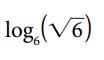
For the following exercises, evaluate the base b logarithmic expression without using a calculator. log (V6)
Find the exact solution for 52x − 3 = 7x + 1. If there is no solution, write no solution.
For the following exercises, evaluate each function. Round answers to four decimal places, if necessary.f(x) = 2(5)x , for f(−3)
For the following exercises, refer to Table 10.Use the intersect feature to find the value of x for which f(x) = 8. 1 f(x) 7.5 8 26 6 3 5.2 4 4.3 Table 10 5 3.9 6 3.4 7 3.1 8 2.9
Find the exact solution for e2x − ex − 110 = 0. If there is no solution, write no solution.
For the following exercises, solve each equation for x.ln(x) + ln(x − 3) = ln(7x)
For the following exercises, use this scenario: A turkey is taken out of the oven with an internal temperature of 165° Fahrenheit and is allowed to cool in a 75° F room. After half an hour, the internal temperature of the turkey is 145° F.To the nearest minute, how long will it take the turkey
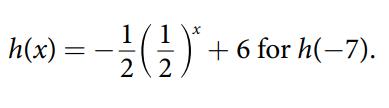
For the following exercises, evaluate the exponential functions for the indicated value of x. h(x) = 1/1 22 1) ². + 6 for h(-7).
For the following exercises, evaluate the base b logarithmic expression without using a calculator. 6 log (4)
For the following exercises, evaluate each function. Round answers to four decimal places, if necessary.f(x) = −42x + 3, for f(−1)
Rewrite 512x − 17 = 125 as a logarithm. Then apply the change of base formula to solve for x using the common log. Round to the nearest thousandth.
For the following exercises, sketch the graphs of each pair of functions on the same axis.f(x) = ex and g(x) = ln(x)
For the following exercises, use the one-to-one property of logarithms to solve.log13(5n − 2) = log13(8 − 5n)
For the following exercises, use this scenario: A tumor is injected with 0.5 grams of Iodine-125, which has a decay rate of 1.15% per day.A research student is working with a culture of bacteria that doubles in size every twenty minutes. The initial population count was 1350 bacteria. Rounding to
For the following exercises, start with the graph of f(x) = 4x. Then write a function that results from the given transformation.Reflect f(x) about the y-axis
For the following exercises, use the definition of common and natural logarithms to simplify.10log(32)
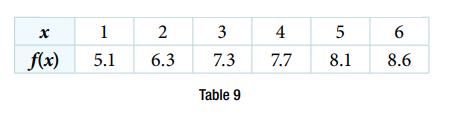
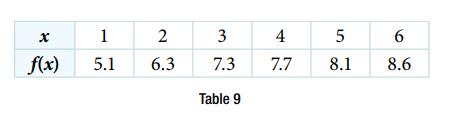
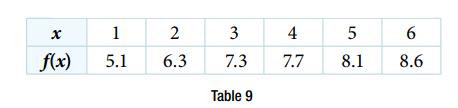
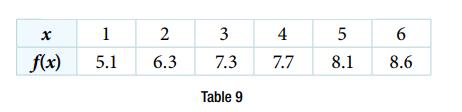
For the following exercises, refer to Table 9.Use the logarithmic function to find the value of the function when x = 10. X 1 f(x) 5.1 2 6.3 3 7.3 Table 9 4 7.7 5 8.1 6 8.6
For the following exercises, use the change-of-base formula to evaluate each expression as a quotient of natural logs. Use a calculator to approximate each to five decimal places.log4 (15/2)
For the following exercises, sketch the graphs of each pair of functions on the same axis.f (x) = log4(x) and g(x) = ln(x)
For the following exercises, use the one-to-one property of logarithms to solve.ln(10 − 3x) = ln(−4x)
For the following exercises, refer to Table 9.Use the LOGarithm option of the REGression feature to find a logarithmic function of the form y = a + bln(x) that best fits the data in the table. x 1 f(x) 5.1 2 6.3 3 7.3 Table 9 4 7.7 5 8.1 6 8.6
For the following exercises, use this scenario: A tumor is injected with 0.5 grams of Iodine-125, which has a decay rate of 1.15% per day.A wooden artifact from an archeological dig contains 60 percent of the carbon-14 that is present in living trees. To the nearest year, about how many years old
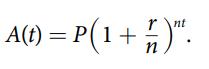
For the following exercises, use the compound interest formula, Use properties of rational exponents to solve the compound interest formula for the interest rate, r. A(t) = P(1 + 7)". r nt
For the following exercises, start with the graph of f(x) = 4x. Then write a function that results from the given transformation.Reflect f(x) about the x-axis
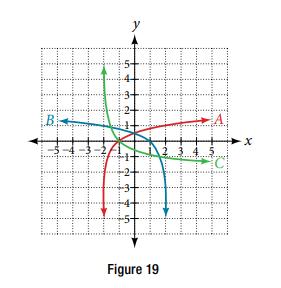
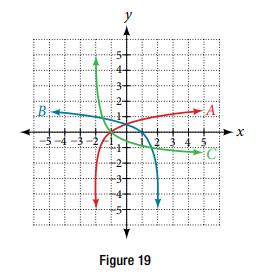
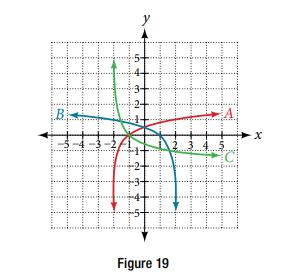
For the following exercises, match each function in Figure 19 with the letter corresponding to its graph.f(x) = log4 (−x + 2) B -4-3-2/1 Figure 19 A 2 3 4 5 X
Solve 2163x · 216x = 363x + 2 by rewriting each side with a common base.
Use the product rule for logarithms to find all x values such that log12(2x + 6) + log12(x + 2) = 2. Show the steps for solving.
For the following exercises, use this scenario: A biologist recorded a count of 360 bacteria present in a culture after 5 minutes and 1,000 bacteria present after 20 minutes.To the nearest whole number, what was the initial population in the culture?
For the following exercises, use the definition of common and natural logarithms to simplify.2log(0.0001)
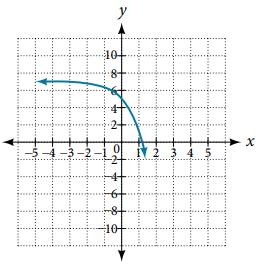
For the following exercises, each graph is a transformation of y = 2x. Write an equation describing the transformation. -5-4-3-2 y -5- [TIT 2 3 4 5 X
For the following exercises, use the compound interest formula, Use the formula found in the previous exercise to calculate the interest rate for an account that was compounded monthly, had an initial deposit of $5,500, and was worth $38,455 after 30 years. A(t) = P(1 + 7)". r nt
For the following exercises, refer to Table 9.Graph the logarithmic equation on the scatter diagram. x 1 f(x) 5.1 2 6.3 3 7.3 Table 9 4 7.7 5 8.1 6 8.6
For the following exercises, match each function in Figure 19 with the letter corresponding to its graph.g(x) = −log4 (x + 2) B II 54 21 3 i in y ILLE Figure 19
Use the quotient rule for logarithms to find all x values such that log6 (x + 2) − log6 (x − 3) = 1. Show the steps for solving.
For the following exercises, use the one-to-one property of logarithms to solve.ln(−3x) = ln(x2 − 6x)
For the following exercises, use this scenario: A biologist recorded a count of 360 bacteria present in a culture after 5 minutes and 1,000 bacteria present after 20 minutes.Rounding to six significant digits, write an exponential equation representing this situation. To the nearest minute, how
For the following exercises, each graph is a transformation of y = 2x. Write an equation describing the transformation. -5-4-3-2-1 y III 3 4 5 X
For the following exercises, use the definition of common and natural logarithms to simplify.eln(1.06)
For the following exercises, refer to Table 9.Use the intersect feature to find the value of x for which f(x) = 7. x 1 f(x) 5.1 2 6.3 3 7.3 Table 9 4 7.7 5 8.1 6 8.6
Use logarithms to find the exact solution for 7 · 17−9x − 7 = 49. If there is no solution, write no solution.
For the following exercises, match each function in Figure 19 with the letter corresponding to its graph.h(x) = log4 (x + 2) B y Figure 19 2 3 4 5
Can the power property of logarithms be derived from the power property of exponents using the equation bx = m? If not, explain why. If so, show the derivation.
For the following exercises, use the one-to-one property of logarithms to solve.log4 (6 − m) = log4 3(m)
For the following exercises, use this scenario: A pot of boiling soup with an internal temperature of 100° Fahrenheit was taken off the stove to cool in a 69° F room. After fifteen minutes, the internal temperature of the soup was 95° F.Use Newton’s Law of Cooling to write a formula that
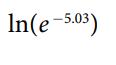
For the following exercises, use the definition of common and natural logarithms to simplify. In(e-5.03)
For the following exercises, each graph is a transformation of y = 2x. Write an equation describing the transformation. y TI -5-4-3-2- 0 1 2 3 4 5 1 H TIT -5+ I X
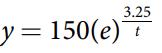
For the following exercises, determine whether the equation represents continuous growth, continuous decay, or neither. Explain. y = 150(e) 3.25 t
Use logarithms to find the exact solution for 3e6n − 2 + 1 = −60. If there is no solution, write no solution.
For the following exercises, refer to Table 10.Use a graphing calculator to create a scatter diagram of the data. 1 f(x) 7.5 8 2 6 3 5.2 4 4.3 Table 10 5 3.9 6 3.4 7 3.1 8 2.9
Prove that logb (n) =1/logn (b) for any positive integers b > 1 and n > 1.
For the following exercises, use the one-to-one property of logarithms to solve.ln(x − 2) − ln(x) = ln(54)
For the following exercises, sketch the graph of the indicated function.f(x) = log2 (x + 2)
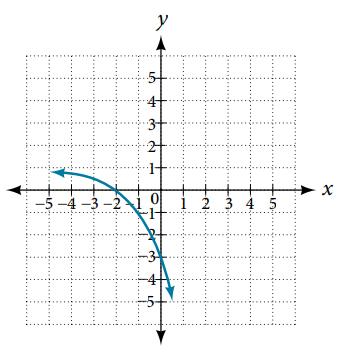
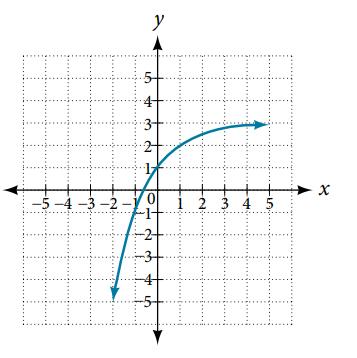
For the following exercises, find an exponential equation for the graph. y -5-4-3-2-1 0 1 2 3 4 5 -2- CITIT X
For the following exercises, use this scenario: A pot of boiling soup with an internal temperature of 100° Fahrenheit was taken off the stove to cool in a 69° F room. After fifteen minutes, the internal temperature of the soup was 95° F.To the nearest minute, how long will it take the soup to
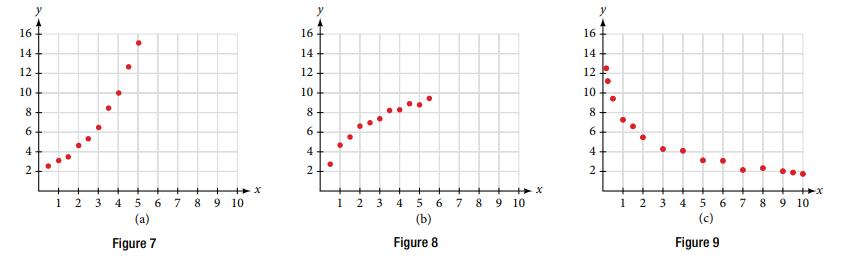
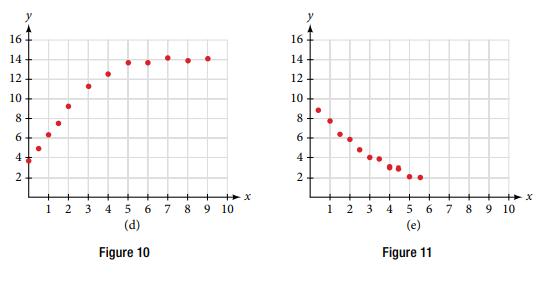
For the following exercises, match the given function of best fit with the appropriate scatterplot in Figure 7 through Figure 11. Answer using the letter beneath the matching graph.y = 5.598 − 1.912ln(x) 16 14 12+ 10 8 6 4 2 1 2 3 ● 4 5 6 7 8 (a) Figure 7 9 +
Does the equation y = 2.294e−0.654t represent continuous growth, continuous decay, or neither? Explain.
Evaluate ln(0.716) using a calculator. Round to the nearest thousandth.
Rewrite log(17a · 2b) as a sum.
Rewrite log8 (a1/b as a product.
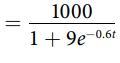
For the following exercises, use a graphing calculator and this scenario: the population of a fish farm in t years is modeled by the equation P(t) To the nearest whole number, what will the fish population be after 2 years? || 1000 1+9e-0. -0.6t
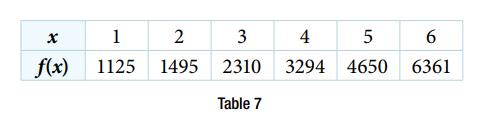
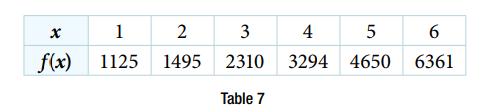
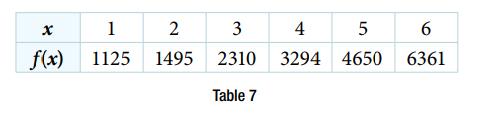
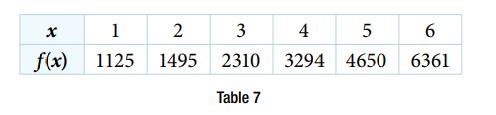
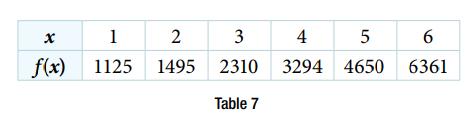
For the following exercises, refer to Table 7.Use a graphing calculator to create a scatter diagram of the data. X 1 f(x) 1125 2 3 1495 2310 Table 7 4 5 3294 4650 6 6361
The formula for an increasing population is given by P(t) = P0 ert where P0 is the initial population and r > 0. Derive a general formula for the time t it takes for the population to increase by a factor of M.
Rewrite ln(7r · 11st) in expanded form.
Prove that bx = exln(b) for positive b ≠ 1.
Use the one-to-one property of logarithms to find an exact solution for log(4x2 − 10) + log(3) = log(51) If there is no solution, write no solution.
For the following exercises, refer to Table 7.Use the regression feature to find an exponential function that best fits the data in the table. X 1 f(x) 1125 2 3 1495 2310 Table 7 4 3294 10 5 4650 6 6361
Rewrite logm (67/83) in expanded form.
For the following exercises, use this scenario: A doctor prescribes 125 milligrams of a therapeutic drug that decays by about 30% each hour.To the nearest hour, what is the half-life of the drug?
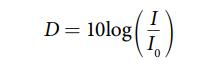
The formula for measuring sound intensity in decibels D is defined by the equation where I is the intensity of the sound in watts per square meter and I0 = 10−12 is the lowest level of sound that the average person can hear. How many decibels are emitted from a rock concert with a sound intensity
For the following exercises, refer to Table 7.Write the exponential function as an exponential equation with base e. x 1 f(x) 1125 2 3 1495 2310 Table 7 4 5 3294 4650 6 6361
For the following exercises, refer to Table 7.Graph the exponential equation on the scatter diagram. 1 2 3 f(x) 1125 1495 2310 Table 7 ४ 4 5 3294 4650 6 6361
Rewrite ln(z) – ln(x) – ln(y) in compact form.
For the following exercises, use this scenario: A doctor prescribes 125 milligrams of a therapeutic drug that decays by about 30% each hour.Write an exponential model representing the amount of the drug remaining in the patient’s system after t hours. Then use the formula to find the amount of
A radiation safety officer is working with 112 grams of a radioactive substance. After 17 days, the sample has decayed to 80 grams. Rounding to five significant digits, write an exponential equation representing this situation. To the nearest day, what is the half-life of this substance?
For the following exercises, refer to Table 7.Use the intersect feature to find the value of x for which f(x) = 4000. 1 f(x) 1125 ४ 2 3 1495 2310 Table 7 4 5 3294 4650 6 6361
For the following exercises, use this scenario: A doctor prescribes 125 milligrams of a therapeutic drug that decays by about 30% each hour.Using the model found in the previous exercise, find f(10) and interpret the result. Round to the nearest hundredth.
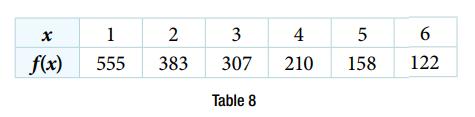
For the following exercises, refer to Table 8.Use a graphing calculator to create a scatter diagram of the data. f(x) 1 555 2 383 3 307 Table 8 4 210 5 158 6 122
Write the formula found in the previous exercise as an equivalent equation with base e. Express the exponent to five significant digits.
Rewrite −logy (1/12) as a single logarithm.
For the following exercises, use this scenario: A tumor is injected with 0.5 grams of Iodine-125, which has a decay rate of 1.15% per day.To the nearest day,how long will it take for half of the Iodine-125 to decay?
A bottle of soda with a temperature of 71° Fahrenheit was taken off a shelf and placed in a refrigerator with an internal temperature of 35° F. After ten minutes, the internal temperature of the soda was 63° F. Use Newton’s Law of Cooling to write a formula that models this situation. To the
Use properties of logarithms to expand log 11 r²s¹1 +14
For the following exercises, use this scenario: A tumor is injected with 0.5 grams of Iodine-125, which has a decay rate of 1.15% per day.Write an exponential model representing the amount of Iodine-125 remaining in the tumor after t days. Then use the formula to find the amount of Iodine-125 that
The population of a wildlife habitat is modeled by the equation P(t) = 360/1 + 6.2e−0.35t, where t is given in years. How many animals were originally transported to the habitat? How many years will it take before the habitat reaches half its capacity?
For the following exercises, refer to Table 8.Write the exponential function as an exponential equation with base e. 2 f(x) 1 555 2 383 3 307 Table 8 4 210 5 158 6 122
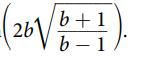
Use properties of logarithms to expand ln (26/b+1 b-1
For the following exercises, use this scenario: A tumor is injected with 0.5 grams of Iodine-125, which has a decay rate of 1.15% per day.A scientist begins with 250 grams of a radioactive substance. After 250 minutes, the sample has decayed to 32 grams. Rounding to five significant digits, write
Enter the data from Table 2 into a graphing calculator and graph the resulting scatter plot. Determine whether the data from the table would likely represent a function that is linear, exponential, or logarithmic. x 1 f(x) 3 2 8.55 3 11.79 4 14.09 5 15.88 Table 2 6 17.33 7 8 9 18.57 19.64
Showing 6500 - 6600
of 8578
First
59
60
61
62
63
64
65
66
67
68
69
70
71
72
73
Last
Step by Step Answers

 Get 50% OFF
Claim Now
Get 50% OFF
Claim Now