New Semester
Started
Get
50% OFF
Study Help!
--h --m --s
Claim Now
Question Answers
Textbooks
Find textbooks, questions and answers
Oops, something went wrong!
Change your search query and then try again
S
Books
FREE
Study Help
Expert Questions
Accounting
General Management
Mathematics
Finance
Organizational Behaviour
Law
Physics
Operating System
Management Leadership
Sociology
Programming
Marketing
Database
Computer Network
Economics
Textbooks Solutions
Accounting
Managerial Accounting
Management Leadership
Cost Accounting
Statistics
Business Law
Corporate Finance
Finance
Economics
Auditing
Tutors
Online Tutors
Find a Tutor
Hire a Tutor
Become a Tutor
AI Tutor
AI Study Planner
NEW
Sell Books
Search
Search
Sign In
Register
study help
mathematics
precalculus
Calculus Of A Single Variable 11th Edition Ron Larson, Bruce H. Edwards - Solutions
Tell how many units and in what directions the graphs of the given equations are to be shifted. Give an equation for the shifted graph. Then sketch the original and shifted graphs together, labeling each graph with its equation. =1/√(x (x + 1) + 5 Down 5, right 1
Graph the following equations and explain why they are not graphs of functions of x.a. |x| + |y| = 1 b. |x + y| = 1
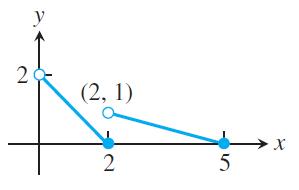
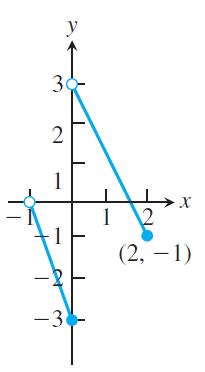
Find a formula for each function graphed.a.b. 2 y (2, 1) 2 5 X
Tell how many units and in what directions the graphs of the given equations are to be shifted. Give an equation for the shifted graph. Then sketch the original and shifted graphs together, labeling each graph with its equation.x2 + y2 = 25 Up 3, left 4
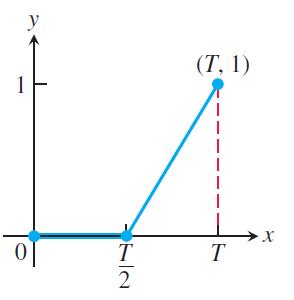
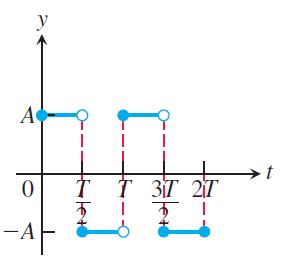
Find a formula for each function graphed.a.b. y T NIN 2 (T, 1) T X
Tell how many units and in what directions the graphs of the given equations are to be shifted. Give an equation for the shifted graph. Then sketch the original and shifted graphs together, labeling each graph with its equation.y = x2/3 Right 1, down 1
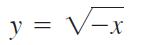
Tell how many units and in what directions the graphs of the given equations are to be shifted. Give an equation for the shifted graph. Then sketch the original and shifted graphs together, labeling each graph with its equation.y = -√x Right 3
Tell how many units and in what directions the graphs of the given equations are to be shifted. Give an equation for the shifted graph. Then sketch the original and shifted graphs together, labeling each graph with its equation.y = 1/x2 Left 2, down 1
What real numbers x satisfy the equation [x] = [x] = ?
Graph the functions.y = √x + 4
Does [-x= = -:x; for all real x? Give reasons for your answer.
Graph the functions.y = √9 - x
What symmetries, if any, do the graphs have? Specify the intervals over which the function is increasing and the intervals where it is decreasing. = y = x-^
Find the domains and ranges of ƒ, g, ƒ + g, and ƒ · g.
Graph the function.y = |1 - x| - 1
What symmetries, if any, do the graphs have? Specify the intervals over which the function is increasing and the intervals where it is decreasing.
Graph the function.y = 1 - √x
What symmetries, if any, do the graphs have? Specify the intervals over which the function is increasing and the intervals where it is decreasing.
Graph the function.y = (x - 8)2/3
Graph the function.y + 4 = x2/3
What symmetries, if any, do the graphs have? Specify the intervals over which the function is increasing and the intervals where it is decreasing.y = -4√x
What symmetries, if any, do the graphs have? Specify the intervals over which the function is increasing and the intervals where it is decreasing.y = (-x)2/3
Say whether the function is even, odd, or neither. Give reasons for your answer.ƒ(x) = 3
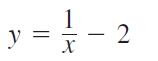
Graph the function. y || 2
Say whether the function is even, odd, or neither. Give reasons for your answer.ƒ(x) = x-5
Say whether the function is even, odd, or neither. Give reasons for your answer.ƒ(x) = x2 + 1
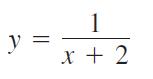
Graph the function. y = 1 x + 2
Say whether the function is even, odd, or neither. Give reasons for your answer.ƒ(x) = x2 + x
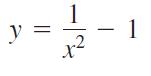
Graph the function. y = x² 1
Say whether the function is even, odd, or neither. Give reasons for your answer.g(x) = x3 + x
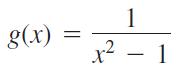
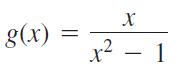
Say whether the function is even, odd, or neither. Give reasons for your answer. g(x) = 1 2 x² - 1 t
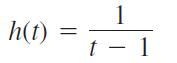
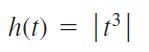
Say whether the function is even, odd, or neither. Give reasons for your answer. h(t) = 1 t - 1
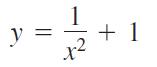
Graph the function. y || 1 + 1
Say whether the function is even, odd, or neither. Give reasons for your answer.g(x) = x4 + 3x2 - 1
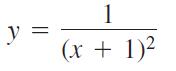
Graph the function. 1 y (x + 1)²
Say whether the function is even, odd, or neither. Give reasons for your answer. g(x) = x² 2 X 1
Say whether the function is even, odd, or neither. Give reasons for your answer. |x²| = (¹)y
Tell by what factor and direction the graphs of the given functions are to be stretched or compressed. Give an equation for the stretched or compressed graph.y = x2 - 1, stretched vertically by a factor of 3
Say whether the function is even, odd, or neither. Give reasons for your answer.h(t) = 2t + 1
Tell by what factor and direction the graphs of the given functions are to be stretched or compressed. Give an equation for the stretched or compressed graph.y = x2 - 1, compressed horizontally by a factor of 2
Say whether the function is even, odd, or neither. Give reasons for your answer.h(t) = 2 |t| + 1
The variable s is proportional to t, and s = 25 when t = 75. Determine t when s = 60.
Tell by what factor and direction the graphs of the given functions are to be stretched or compressed. Give an equation for the stretched or compressed graph.y = 1 + 1/x2, stretched horizontally by a factor of 3
The kinetic energy K of a mass is proportional to the square of its velocity y. If K = 12,960 joules when y = 18 m/sec, what is K when y = 10 m/sec?
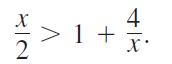
a. Graph the functions ƒ(x) = x/2 and g(x) = 1 + (4/x) together to identify the values of x for whichb. Confirm your findings in part (a) algebraically. 2 >1+ +18
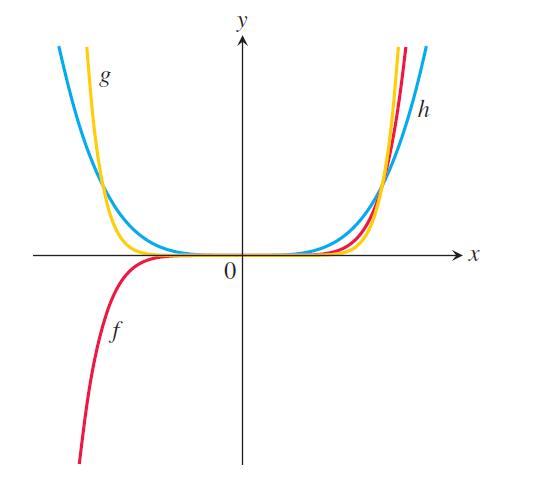
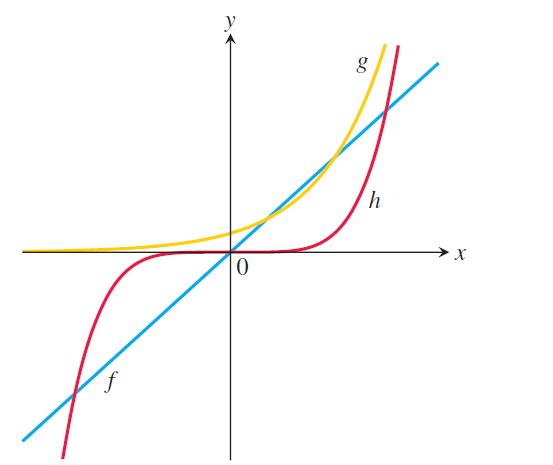
Match each equation with its graph. Do not use a graphing device, and give reasons for your answer.a. y = x4 b. y = x7 c. y = x10 g 0 h X
Tell by what factor and direction the graphs of the given functions are to be stretched or compressed. Give an equation for the stretched or compressed graph.y = √x + 1, compressed horizontally by a factor of 4
The variables r and s are inversely proportional, and r = 6 when s = 4. Determine s when r = 10.
Tell by what factor and direction the graphs of the given functions are to be stretched or compressed. Give an equation for the stretched or compressed graph.y = √x + 1, stretched vertically by a factor of 3
Match each equation with its graph. Do not use a graphing device, and give reasons for your answer.a. y = 5x b. y = 5x c. y = x5 f 0 g h
Boyle’s Law says that the volume V of a gas at constant temperature increases whenever the pressure P decreases, so that V and P are inversely proportional. If P = 14.7 lb/in2 when V = 1000 in3, then what is V when P = 23.4 lb/in2?
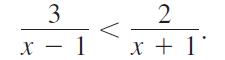
a. Graph the functions ƒ(x) = 3/(x - 1) and g(x) = 2/(x + 1) together to identify the values of x for whichb. Confirm your findings in part (a) algebraically. 3 x - 1 2 x + 1'
Tell by what factor and direction the graphs of the given functions are to be stretched or compressed. Give an equation for the stretched or compressed graph.y = √4 - x2, compressed vertically by a factor of 3
Tell by what factor and direction the graphs of the given functions are to be stretched or compressed. Give an equation for the stretched or compressed graph.y = 1 - x3, compressed horizontally by a factor of 3
Tell by what factor and direction the graphs of the given functions are to be stretched or compressed. Give an equation for the stretched or compressed graph.y = 1 - x3, stretched horizontally by a factor of 2
Three hundred books sell for $40 each, resulting in a revenue of (300)($40) = $12,000. For each $5 increase in the price, 25 fewer books are sold. Write the revenue R as a function of the number x of $5 increases.
A pen in the shape of an isosceles right triangle with legs of length x ft and hypotenuse of length h ft is to be built. If fencing costs $5/ft for the legs and $10/ft for the hypotenuse, write the total cost C of construction as a function of h.
Graph the function y = √| x |.
Can a function be both even and odd? Give reasons for your answer.
Graph the functions ƒ(x) = √x and g(x) = √1 - x together with their (a) Sum, (b) Product, (c) Two differences, (d) Two quotients.
Let ƒ(x) = x - 7 and g(x) = x2. Graph ƒ and g together with ƒ ∘ g and g ∘ ƒ.
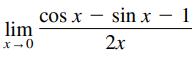
Find the limit of the trigonometric function. lim x-0 cos x sin x - 1 2x
Find the limit of the trigonometric function. sin 3t lim 1-0 2t
Prove that iflim x→c 1 f(x) = 0then lim x→c f(x) does not exist.
Determine whether the statement is true or false. If it is false, explain why or give an example that shows it is false.If the limit of f(x) as x approaches c is 0, then there must exist a number k such that f(k) < 0.001.
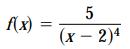
Find the vertical asymptotes (if any) of the graph of the function. f(x) = 5 (x - 2)4 сл
Use the – definition of infinite limits to prove the statement.lim x→5− 1/x − 5 = −∞
Use the – definition of infinite limits to prove the statement.lim x→8+ 3/8 − x = −∞
Use the – definition of infinite limits to prove the statement.lim x→9− 6/9 − x = ∞
Consider the function f(x) = √x.Is lim x→0 √x = 0 a true statement? Explain.
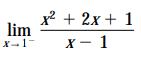
Find the one-sided limit (if it exists). lim x-1- x² + 2x + 1 X - 1
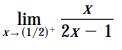
Find the one-sided limit (if it exists). X lim x-(1/2)+ 2x1
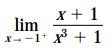
Find the one-sided limit (if it exists). lim x-1+ X x + 1 3 x³ + 1
Describe the interval(s) on which the function is continuous. f(x) = x√x + 3
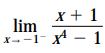
Find the one-sided limit (if it exists). x + 1 lim x--1-¹-1 X
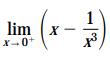
Find the one-sided limit (if it exists). lim X-0+ (x-) 1 - ام 3
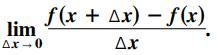
Findf(x) = −6x + 3 lim Δε - 0 f(x + Δx) = f(x) + · ΔΙ
Findf(x) = 3x − 2 lim Δε - 0 f(x + Δx) = f(x) + · ΔΙ
Consider the line f(x) = mx + b, where m ≠ 0. Use the ε-definition of limit to prove that lim x→c f(x) = mc + b.
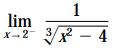
Find the one-sided limit (if it exists). 1 lim X-2- 3²-4
(a) Given thatlim x→0 (3x + 1)(3x − 1)x2 + 0.01 = 0.01prove that there exists an open interval (a, b) containing 0 such that (3x + 1)(3x − 1)x2 + 0.01 > 0 for all x ≠ 0 in (a, b).(b) Given that lim x→c g(x) = L, where L > 0, prove that there exists an open interval (a, b) containing
Findf(x) = 3x2 + 1 lim Δε - 0 f(x + Δx) = f(x) + · ΔΙ
Find the one-sided limit (if it exists). sin 4x lim x−0+ 5x
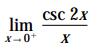
Find the one-sided limit (if it exists). csc 2x lim X-0+ X
Find the one-sided limit (if it exists). lim x-0 sec ³ 3 2x
Findf(x) = 2√x lim Δε - 0 f(x + Δx) = f(x) + · ΔΙ
Find the one-sided limit (if it exists). lim X-0- 2 cos² X X
Findf(x) = √x − 5 lim Δε - 0 f(x + Δx) = f(x) + · ΔΙ
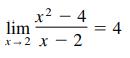
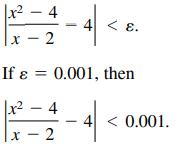
The statementmeans that for each ε > 0 there corresponds a > 0 such that if 0 < ∣x − 2∣ < , thenUse a graphing utility to graph each side of this inequality. Use the zoom feature to find an interval (2 − , 2 +) such that the inequality is true. lim Δε - 0 f(x + Δx) = f(x) +
Explain why the function has at least two zeros in the interval [1, 5].f(x) = 2 cos x
Findf(x) = 3x − 2 lim Δε - 0 f(x + Δx) = f(x) + · ΔΙ
Use the Intermediate Value Theorem and a graphing utility to approximate the zero of the function in the interval [0, 1]. Repeatedly “zoom in” on the graph of the function to approximate the zero accurate to two decimal places. Use the zero or root feature of the graphing utility to approximate
Use the Intermediate Value Theorem and a graphing utility to approximate the zero of the function in the interval [0, 1]. Repeatedly “zoom in” on the graph of the function to approximate the zero accurate to two decimal places. Use the zero or root feature of the graphing utility to approximate
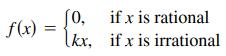
Show that the functionis continuous only at x = 0. (Assume that k is any nonzero real number.) f(x) [0, if x is rational نے kx, if x is irrational
Use the Squeeze Theorem to find lim x→c f(x).c = 04 − x2 ≤ f(x) ≤ 4 + x2
Use the Squeeze Theorem to find lim x→c f(x).c = ab − ∣x − a∣ ≤ f(x) ≤ b + ∣x − a∣
Use a graphing utility to graph the given function and the equations y = ∣x∣ and y = −∣x∣ in the same viewing window. Using the graphs to observe the Squeeze Theorem visually, find lim x→0 f(x).f(x) = x cos 1/x
Verify that the Intermediate Value Theorem applies to the indicated interval and find the value of c guaranteed by the theorem.f(x) = 3√x + 8, [−9, −6], f(c) = 6
Write a function of each specified type that has a limit of 4 as x approaches 8.(a) Linear (b) Polynomial of degree 2 (c) Rational (d) Radical (e) Cosine (f) Sine
Prove that iflim ∆x→0 f(c + ∆x) = f(c)then f is continuous at c.
Showing 14800 - 14900
of 29454
First
142
143
144
145
146
147
148
149
150
151
152
153
154
155
156
Last
Step by Step Answers

 Get 50% OFF
Claim Now
Get 50% OFF
Claim Now