







Question: Identify limiting reactants (maximum product method). Consider the reaction of diboron trioxide with carbon and chlorine. B2O3(s)+3C(s)+3Cl2(g)2BCl3(g)+3CO(g) Determine the limiting reactant in a mixture containing
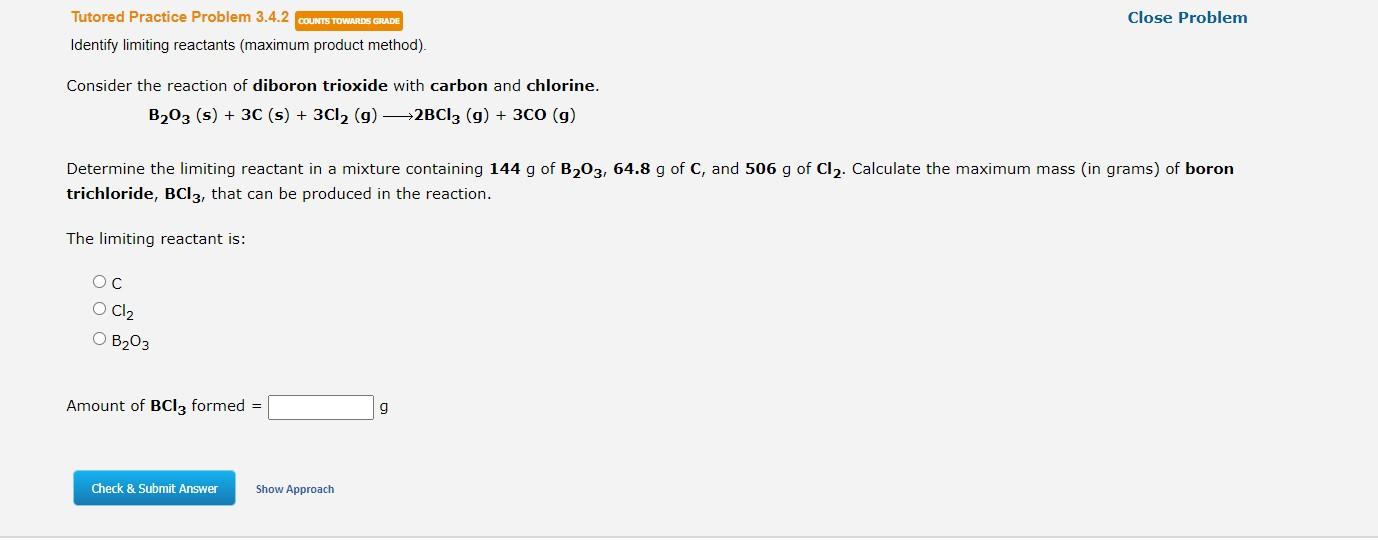
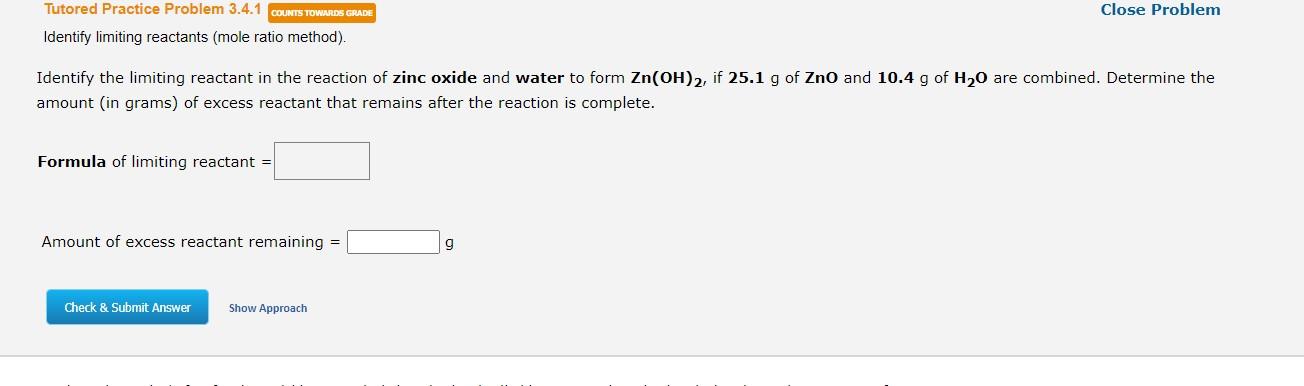
Identify limiting reactants (maximum product method). Consider the reaction of diboron trioxide with carbon and chlorine. B2O3(s)+3C(s)+3Cl2(g)2BCl3(g)+3CO(g) Determine the limiting reactant in a mixture containing 144gofB2O3,64.8g of C, and 506g of Cl2. Calculate the maximum mass (in grams) of boron trichloride, BCl3, that can be produced in the reaction. The limiting reactant is: C Cl2B2O3 Amount of BCl3 formed = g Identify limiting reactants (mole ratio method). Identify the limiting reactant in the reaction of zinc oxide and water to form Zn(OH)2, if 25.1g of ZnO and 10.4g of H2O are combined. Determine the amount (in grams) of excess reactant that remains after the reaction is complete. Formula of limiting reactant = Amount of excess reactant remaining = 9
Step by Step Solution
There are 3 Steps involved in it

Get step-by-step solutions from verified subject matter experts
 Study Help