Question: This is a question I am working on for a chapter. I have attached the referenced chapter if needed too. Thanks for any help on
This is a question I am working on for a chapter. I have attached the "referenced" chapter if needed too.
Thanks for any help on it.
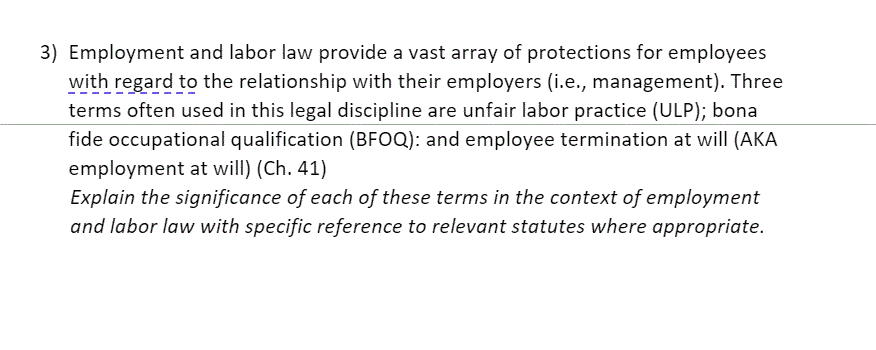
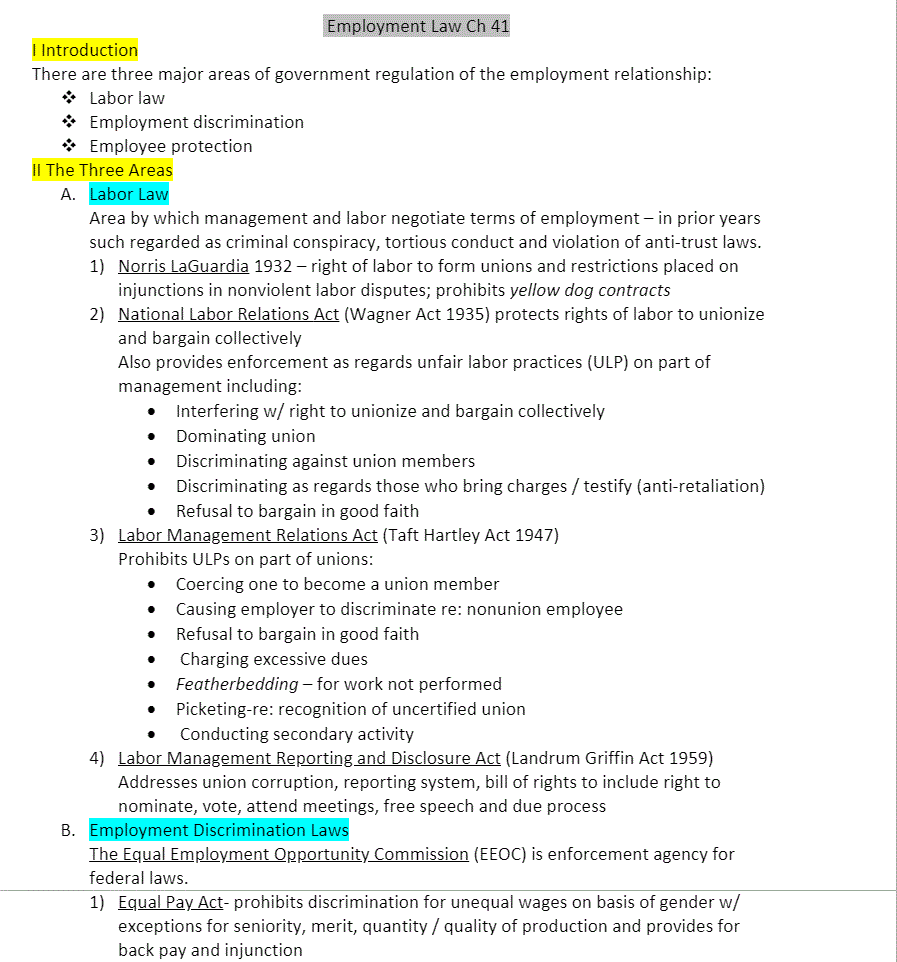
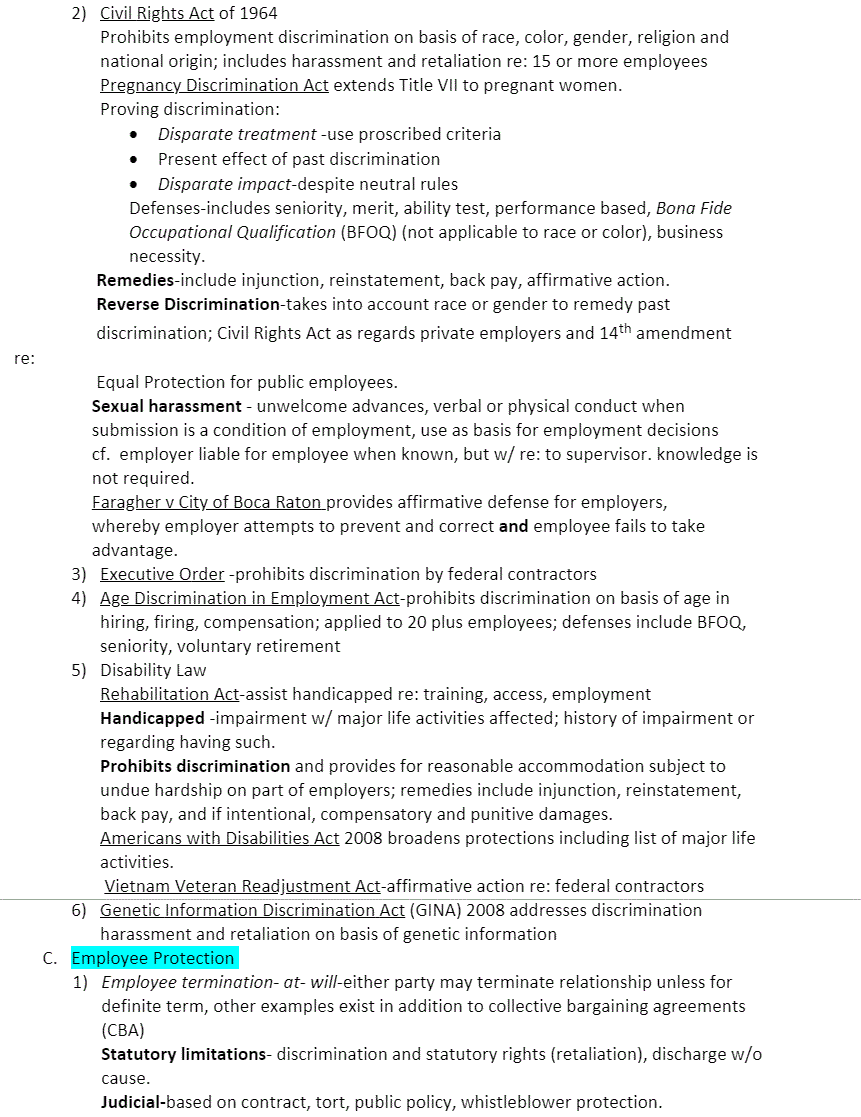
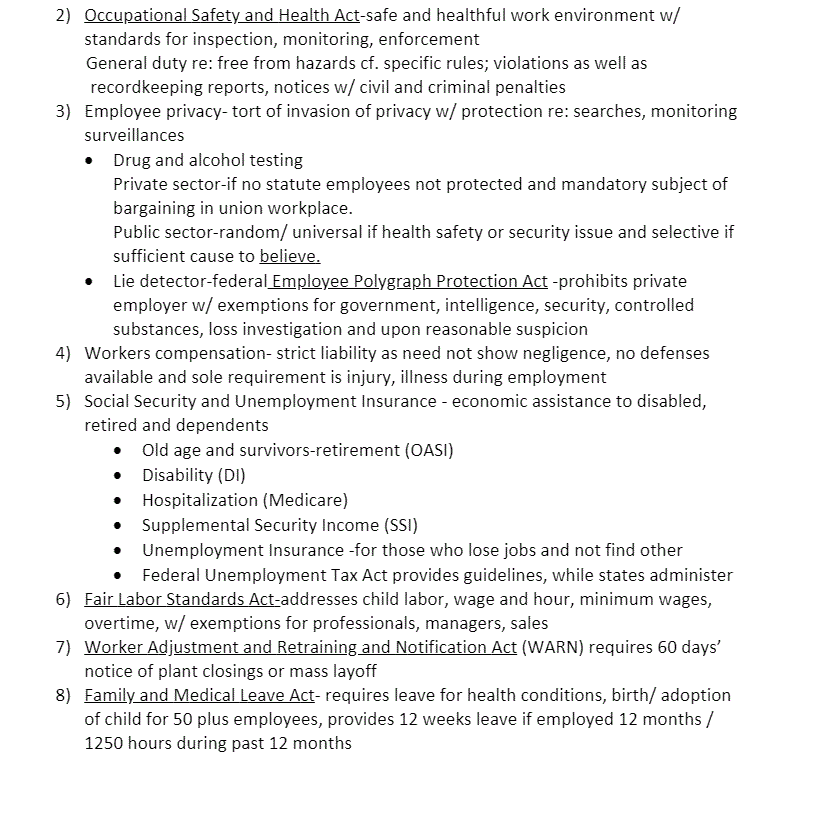
3) Employment and labor law provide a vast array of protections for employees with regard to the relationship with their employers (i.e., management). Three terms often used in this legal discipline are unfair labor practice (ULP); bona fide occupational qualification (BFOQ): and employee termination at will (AKA employment at will) (Ch. 41) Explain the significance of each of these terms in the context of employment and labor law with specific reference to relevant statutes where appropriate. Employment Law Ch 41 I Introduction . . There are three major areas of government regulation of the employment relationship: Labor law Employment discrimination Employee protection Il The Three Areas A. Labor Law Area by which management and labor negotiate terms of employment - in prior years such regarded as criminal conspiracy, tortious conduct and violation of anti-trust laws. 1) Norris LaGuardia 1932 right of labor to form unions and restrictions placed on injunctions in nonviolent labor disputes; prohibits yellow dog contracts 2) National Labor Relations Act (Wagner Act 1935) protects rights of labor to unionize and bargain collectively Also provides enforcement as regards unfair labor practices (ULP) on part of management including: Interfering w/ right to unionize and bargain collectively Dominating union Discriminating against union members Discriminating as regards those who bring charges / testify (anti-retaliation) Refusal to bargain in good faith 3) Labor Management Relations Act (Taft Hartley Act 1947) Prohibits ULPs on part of unions: Coercing one to become a union member Causing employer to discriminate re: nonunion employee Refusal to bargain in good faith Charging excessive dues Featherbedding - for work not performed Picketing-re: recognition of uncertified union Conducting secondary activity 4) Labor Management Reporting and Disclosure Act (Landrum Griffin Act 1959) Addresses union corruption, reporting system, bill of rights to include right to nominate, vote, attend meetings, free speech and due process B. Employment Discrimination Laws The Equal Employment Opportunity Commission (EEOC) is enforcement agency for federal laws. 1) Equal Pay Act-prohibits discrimination for unequal wages on basis of gender w/ exceptions for seniority, merit, quantity / quality of production and provides for back pay and injunction . . . . . . . 2) Civil Rights Act of 1964 Prohibits employment discrimination on basis of race, color, gender, religion and national origin; includes harassment and retaliation re: 15 or more employees Pregnancy Discrimination Act extends Title VII to pregnant women. Proving discrimination: Disparate treatment-use proscribed criteria Present effect of past discrimination Disparate impact-despite neutral rules Defenses-includes seniority, merit, ability test, performance based, Bona Fide Occupational Qualification (BFOQ) (not applicable to race or color), business necessity. Remedies-include injunction, reinstatement, back pay, affirmative action. Reverse Discrimination-takes into account race or gender to remedy past discrimination; Civil Rights Act as regards private employers and 14th amendment re: Equal Protection for public employees. Sexual harassment - unwelcome advances, verbal or physical conduct when submission is a condition of employment, use as basis for employment decisions cf. employer liable for employee when known, but w/ re: to supervisor, knowledge is not required. Faragher v City of Boca Raton provides affirmative defense for employers, whereby employer attempts to prevent and correct and employee fails to take advantage. 3) Executive Order -prohibits discrimination by federal contractors 4) Age Discrimination in Employment Act-prohibits discrimination on basis of age in hiring, firing, compensation; applied to 20 plus employees; defenses include BFOQ, seniority, voluntary retirement 5) Disability Law Rehabilitation Act-assist handicapped re: training, access, employment Handicapped -impairment w/ major life activities affected; history of impairment or regarding having such. Prohibits discrimination and provides for reasonable accommodation subject to undue hardship on part of employers; remedies include injunction, reinstatement, back pay, and if intentional, compensatory and punitive damages. Americans with Disabilities Act 2008 broadens protections including list of major life activities. Vietnam Veteran Readjustment Act-affirmative action re: federal contractors 6) Genetic Information Discrimination Act (GINA) 2008 addresses discrimination harassment and retaliation on basis of genetic information C. Employee Protection 1) Employee termination-at-will-either party may terminate relationship unless for definite term, other examples exist in addition to collective bargaining agreements (CBA) Statutory limitations- discrimination and statutory rights (retaliation), discharge w/o cause. Judicial-based on contract, tort, public policy, whistleblower protection. 2) Occupational Safety and Health Act-safe and healthful work environment w/ standards for inspection, monitoring, enforcement General duty re: free from hazards cf. specific rules; violations as well as recordkeeping reports, notices w/ civil and criminal penalties 3) Employee privacy- tort of invasion of privacy w/ protection re: searches, monitoring surveillances Drug and alcohol testing Private sector-if no statute employees not protected and mandatory subject of bargaining in union workplace. Public sector-random/universal if health safety or security issue and selective if sufficient cause to believe. Lie detector-federal Employee Polygraph Protection Act -prohibits private employer w/ exemptions for government, intelligence, security, controlled substances, loss investigation and upon reasonable suspicion 4) Workers compensation-strict liability as need not show negligence, no defenses available and sole requirement is injury, illness during employment 5) Social Security and Unemployment Insurance - economic assistance to disabled, retired and dependents Old age and survivors-retirement (OASI) Disability (DI) Hospitalization (Medicare) Supplemental Security Income (SSI) Unemployment Insurance -for those who lose jobs and not find other Federal Unemployment Tax Act provides guidelines, while states administer 6) Fair Labor Standards Act-addresses child labor, wage and hour, minimum wages, overtime, w/ exemptions for professionals, managers, sales 7) Worker Adjustment and Retraining and Notification Act (WARN) requires 60 days' notice of plant closings or mass layoff 8) Family and Medical Leave Act-requires leave for health conditions, birth/ adoption of child for 50 plus employees, provides 12 weeks leave if employed 12 months / 1250 hours during past 12 months









 Study Help