Question: This is a question I am struggling with for this chapter. I have attached the referenced chapter if needed. Please be clear. Thanks for any

This is a question I am struggling with for this chapter. I have attached the "referenced" chapter if needed. Please be clear.

Thanks for any help.
This is a question I am struggling with for thisThis is a question I am struggling with for thisThis is a question I am struggling with for this

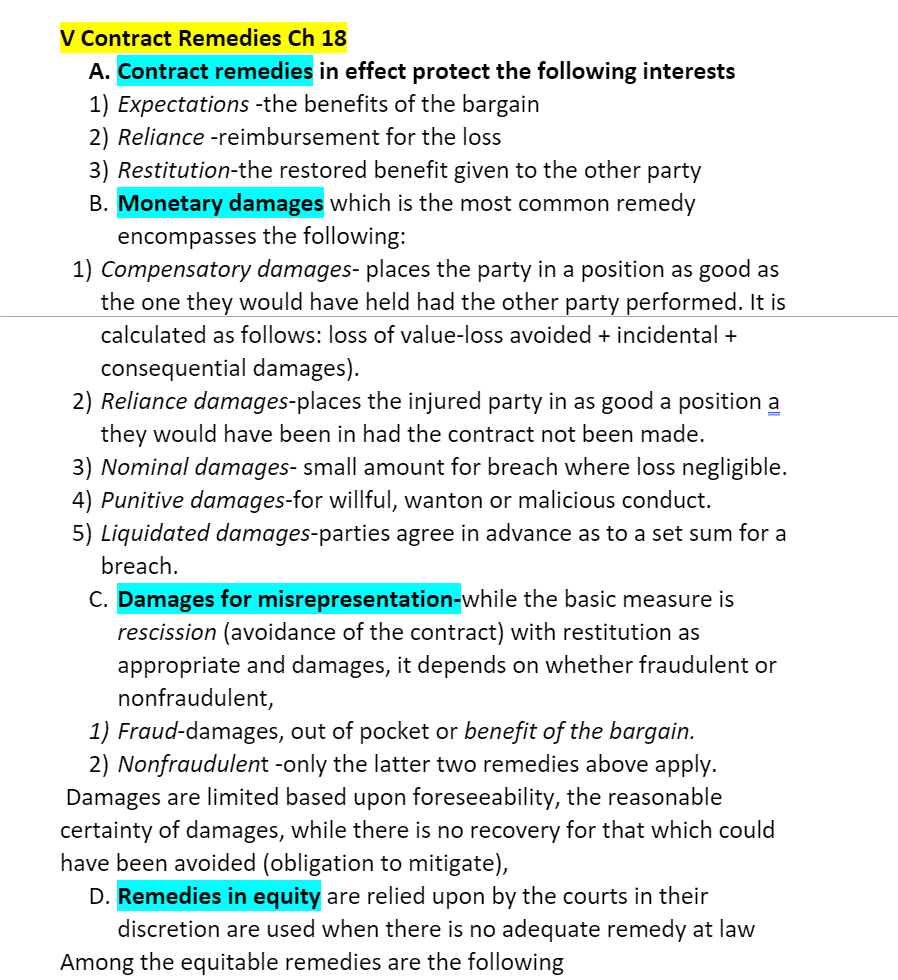
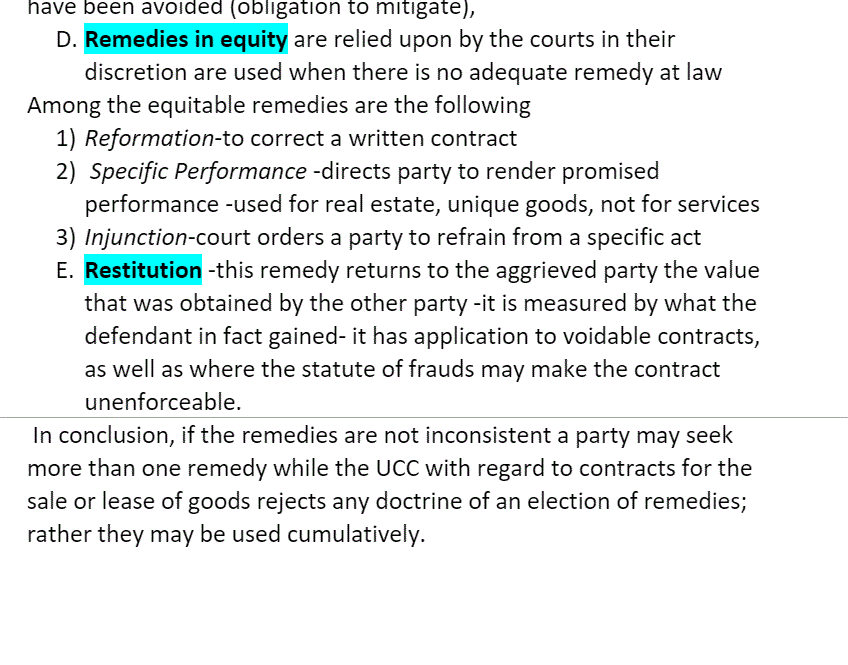
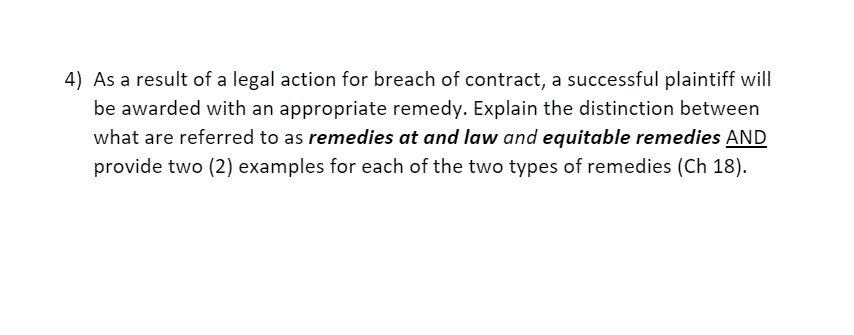
4) As a result of a legal action for breach of contract, a successful plaintiff will be awarded with an appropriate remedy. Explain the distinction between what are referred to as remedies at and law and equitable remedies AND provide two (2) examples for each of the two types of remedies (Ch 18). V Contract Remedies Ch 18 A. Contract remedies in effect protect the following interests 1) Expectations -the benefits of the bargain 2) Reliance -reimbursement for the loss 3) Restitution-the restored benefit given to the other party B. Monetary damages which is the most common remedy encompasses the following: 1) Compensatory damages-places the party in a position as good as the one they would have held had the other party performed. It is calculated as follows: loss of value-loss avoided + incidental + consequential damages). 2) Reliance damages-places the injured party in as good a position a they would have been in had the contract not been made. 3) Nominal damages- small amount for breach where loss negligible. 4) Punitive damages-for willful, wanton or malicious conduct. 5) Liquidated damages-parties agree in advance as to a set sum for a breach. C. Damages for misrepresentation-while the basic measure is rescission (avoidance of the contract) with restitution as appropriate and damages, it depends on whether fraudulent or nonfraudulent, 1) Fraud-damages, out of pocket or benefit of the bargain. 2) Nonfraudulent -only the latter two remedies above apply. Damages are limited based upon foreseeability, the reasonable certainty of damages, while there is no recovery for that which could have been avoided (obligation to mitigate), D. Remedies in equity are relied upon by the courts in their discretion are used when there is no adequate remedy at law Among the equitable remedies are the following have been avoided (obligation to mitigate), D. Remedies in equity are relied upon by the courts in their discretion are used when there is no adequate remedy at law Among the equitable remedies are the following 1) Reformation-to correct a written contract 2) Specific Performance -directs party to render promised performance -used for real estate, unique goods, not for services 3) Injunction-court orders a party to refrain from a specific act E. Restitution -this remedy returns to the aggrieved party the value that was obtained by the other party -it is measured by what the defendant in fact gained- it has application to voidable contracts, as well as where the statute of frauds may make the contract unenforceable. In conclusion, if the remedies are not inconsistent a party may seek more than one remedy while the UCC with regard to contracts for the sale or lease of goods rejects any doctrine of an election of remedies; rather they may be used cumulatively

Step by Step Solution

There are 3 Steps involved in it

1 Expert Approved Answer
Step: 1 Unlock blur-text-image

Question Has Been Solved by an Expert!

Get step-by-step solutions from verified subject matter experts

Step: 2 Unlock
Step: 3 Unlock

Students Have Also Explored These Related General Management Questions!