This is a question I am working on and struggling with. I have attached the "referenced" chapter if needed. Please do be clear.
Thanks for any help.
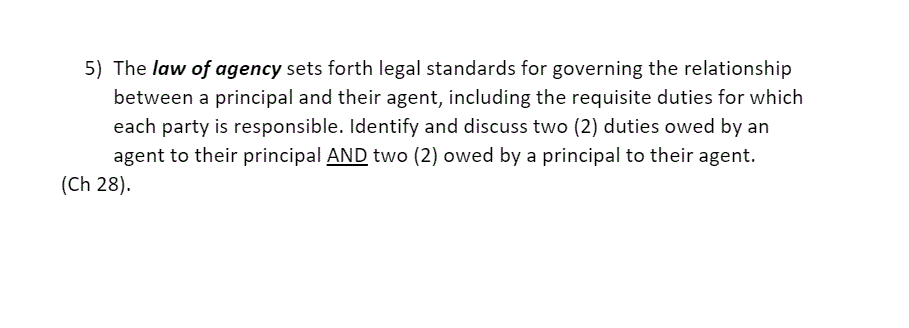
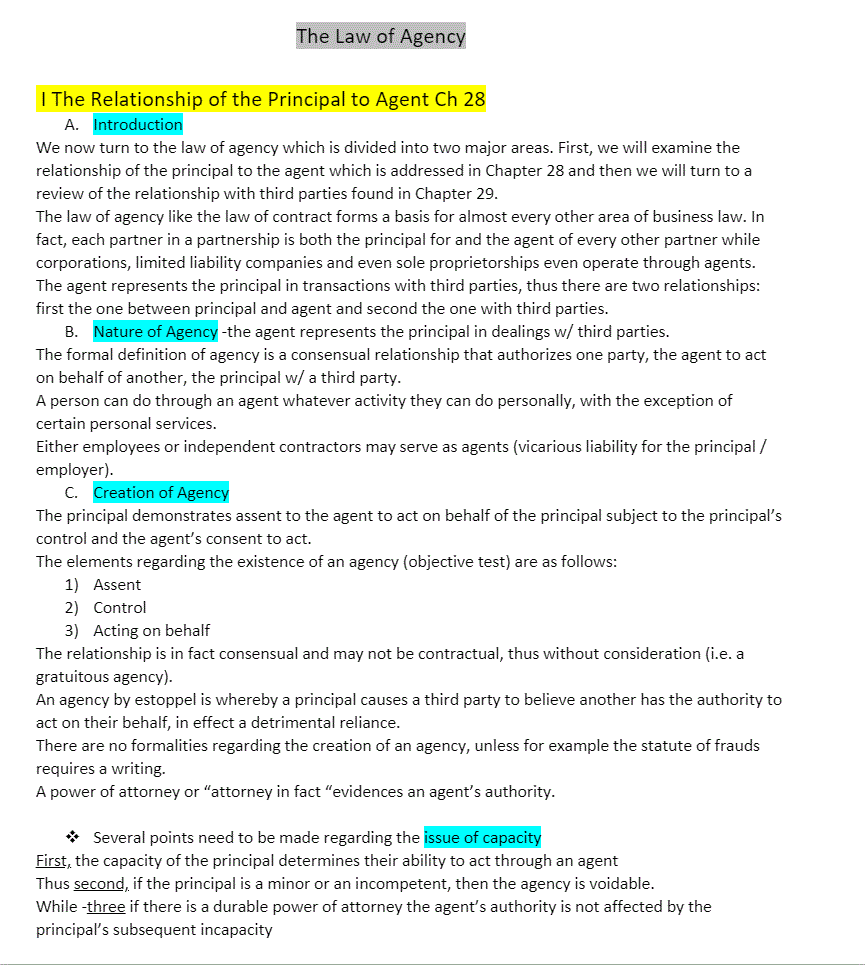
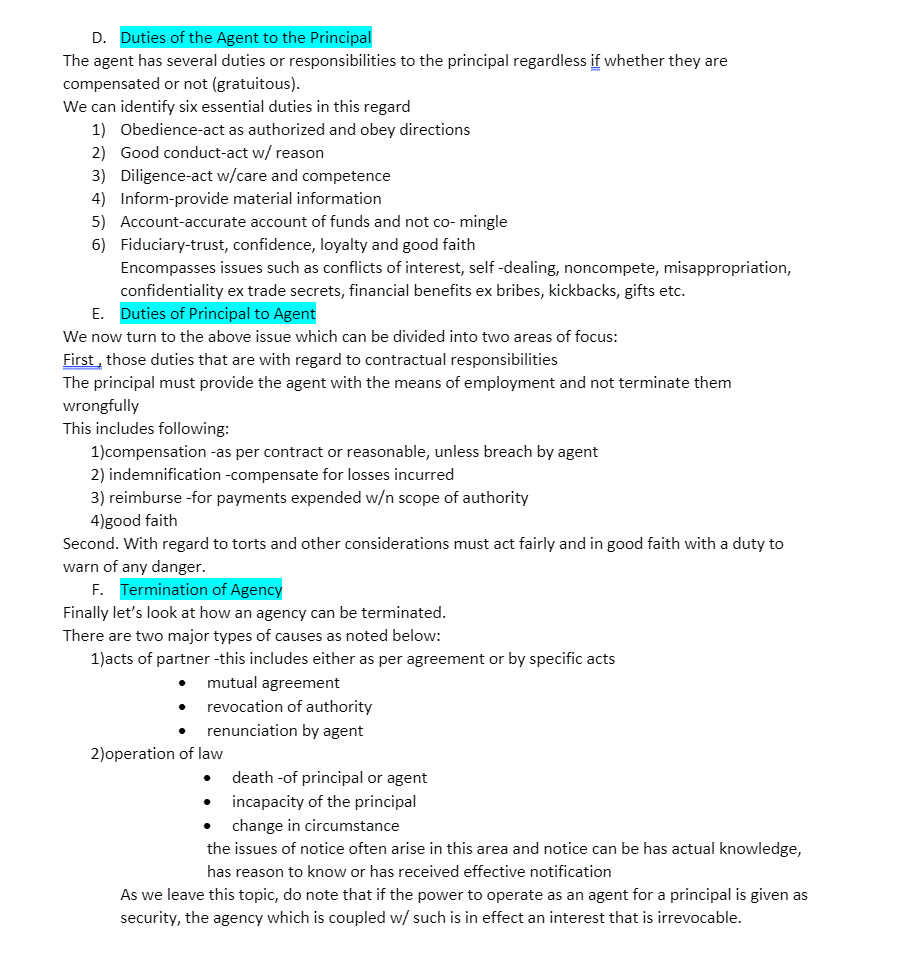
5) The law of agency sets forth legal standards for governing the relationship between a principal and their agent, including the requisite duties for which each party is responsible. Identify and discuss two (2) duties owed by an agent to their principal AND two (2) owed by a principal to their agent. (Ch 28). The Law of Agency | The Relationship of the Principal to Agent Ch 28 A. Introduction We now turn to the law of agency which is divided into two major areas. First, we will examine the relationship of the principal to the agent which is addressed in Chapter 28 and then we will turn to a review of the relationship with third parties found in Chapter 29. The law of agency like the law of contract forms a basis for almost every other area of business law. In fact, each partner in a partnership is both the principal for and the agent of every other partner while corporations, limited liability companies and even sole proprietorships even operate through agents. The agent represents the principal in transactions with third parties, thus there are two relationships: first the one between principal and agent and second the one with third parties. B. Nature of Agency - the agent represents the principal in dealings w/ third parties. The formal definition of agency is a consensual relationship that authorizes one party, the agent to act on behalf of another, the principal w/ a third party. A person can do through an agent whatever activity they can do personally, with the exception of certain personal services. Either employees or independent contractors may serve as agents (vicarious liability for the principal / employer). C. Creation of Agency The principal demonstrates assent to the agent to act on behalf of the principal subject to the principal's control and the agent's consent to act. The elements regarding the existence of an agency (objective test) are as follows: 1) Assent 2) Control 3) Acting on behalf The relationship is in fact consensual and may not be contractual, thus without consideration (i.e. a gratuitous agency). An agency by estoppel is whereby a principal causes a third party to believe another has the authority to act on their behalf, in effect a detrimental reliance. There are no formalities regarding the creation of an agency, unless for example the statute of frauds requires a writing. A power of attorney or "attorney in fact "evidences an agent's authority. Several points need to be made regarding the issue of capacity First, the capacity of the principal determines their ability to act through an agent Thus second, if the principal is a minor or an incompetent, then the agency is voidable. While -three if there is a durable power of attorney the agent's authority is not affected by the principal's subsequent incapacity D. Duties of the Agent to the Principal The agent has several duties or responsibilities to the principal regardless if whether they are compensated or not (gratuitous). We can identify six essential duties in this regard 1) Obedience-act as authorized and obey directions 2) Good conduct-act w/ reason 3) Diligence-act w/care and competence 4) Inform-provide material information 5) Account-accurate account of funds and not co-mingle 6) Fiduciary-trust, confidence, loyalty and good faith Encompasses issues such as conflicts of interest, self-dealing, noncompete, misappropriation, confidentiality ex trade secrets, financial benefits ex bribes, kickbacks, gifts etc. E. Duties of Principal to Agent We now turn to the above issue which can be divided into two areas of focus: First, those duties that are with regard to contractual responsibilities The principal must provide the agent with the means of employment and not terminate them wrongfully This includes following: 1)compensation -as per contract or reasonable, unless breach by agent 2) indemnification -compensate for losses incurred 3) reimburse-for payments expended w scope of authority 4)good faith Second. With regard to torts and other considerations must act fairly and in good faith with a duty to warn of any danger. F. Termination of Agency Finally let's look at how an agency can be terminated. There are two major types of causes as noted below: 1)acts of partner - this includes either as per agreement or by specific acts mutual agreement revocation of authority renunciation by agent 2) operation of law death -of principal or agent incapacity of the principal change in circumstance the issues of notice often arise in this area and notice can be has actual knowledge, has reason to know or has received effective notification As we leave this topic, do note that if the power to operate as an agent for a principal is given as security, the agency which is coupled w/ such is in effect an interest that is irrevocable




