New Semester
Started
Get
50% OFF
Study Help!
--h --m --s
Claim Now
Question Answers
Textbooks
Find textbooks, questions and answers
Oops, something went wrong!
Change your search query and then try again
S
Books
FREE
Study Help
Expert Questions
Accounting
General Management
Mathematics
Finance
Organizational Behaviour
Law
Physics
Operating System
Management Leadership
Sociology
Programming
Marketing
Database
Computer Network
Economics
Textbooks Solutions
Accounting
Managerial Accounting
Management Leadership
Cost Accounting
Statistics
Business Law
Corporate Finance
Finance
Economics
Auditing
Tutors
Online Tutors
Find a Tutor
Hire a Tutor
Become a Tutor
AI Tutor
AI Study Planner
NEW
Sell Books
Search
Search
Sign In
Register
study help
business
essentials organizational behavior
Organizational Behavior Improving Performance And Commitment In The Workplace 4th Edition Jason Colquitt, Jeffery LePine, Michael Wesson - Solutions
How do team processes affect team performance and team commitment?LO1.
What steps can organizations take to improve team processes?LO1.
Taskwork processes are the activities of team members that relate directly to the accomplishment of team tasks. Taskwork processes include creative behavior, decision making, and boundary spanning.LO1.
Teamwork processes refer to the interpersonal activities that facilitate the accomplishment of the team’s work but do not directly involve task accomplishment itself. Teamwork processes include transition processes, action processes, and interpersonal processes.LO1.
Communication is a process through which much of the work in a team is accomplished.Effectiveness in communication can be influenced by the communication competence of the sender and receiver, noise, information richness, and network structure.LO1.
Team states refer to specific types of feelings and thoughts that coalesce in the minds of team members as a consequence of their experience working together. Team states include cohesion, potency, mental models, and transactive memory.LO1.
Teamwork processes have a moderate positive relationship with team performance and a strong positive relationship with team commitment.LO1.
Organizations can use training interventions to improve team processes. Such interventions may include training in transportable teamwork competencies, cross-training, team process training, and team building.LO1.
Before reading this chapter, how did you define teamwork? How did this definition correspond to the definition outlined in this book?LO1.
Which team processes do you believe are most important to the crew of astronauts traveling to Mars? Why? Are there specific team processes you feel are relatively unimportant?Explain.(Appendix)
Describe additional types of information that could be collected by the psychologists to help crews better understand their interactions and how they influence crew effectiveness.(Appendix)
Discuss how team training could be used to build effective processes for the crew traveling to Mars.(Appendix)
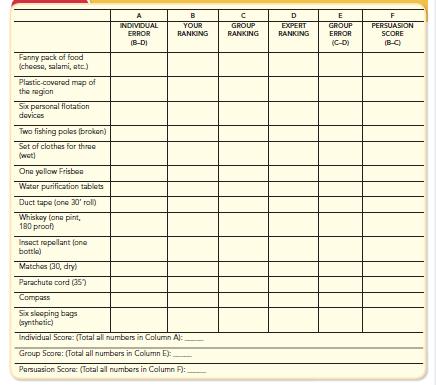
Working individually, consider how important each of the items in the table would be to you in this situation. Begin with the most important item, giving it a rank of “1,” and wind up with the least important item, giving it a rank of “14.” Put your rankings in Column B.(Appendix)
In your groups, come to a consensus about the ranking of the items. Put those consensus rankings in Column C. Group members should not merely vote or average rankings together. Instead, try to get everyone to more or less agree on the rankings. When someone disagrees, try to listen carefully. When
The instructor will create a table similar to the one that follows in an Excel file in the classroom or on the board. All groups should provide the instructor with their Average Member Score (the average of all of the Individual Scores for the group), the Group Score, their Best Member Score (the
Class discussion (whether in groups or as a class) should center on the following questions:Did most groups tend to achieve process gain in terms of group scores that were better than the average individual scores? Were the group scores usually better than the best member’s score? Why not; where
What is leadership, and what role does power play in leadership?LO1.
What are the different types of power that leaders possess, and when can they use those types most effectively?LO1.
What behaviors do leaders exhibit when trying to influence others, and which of these is most effective?LO1.
What is organizational politics, and when is political behavior most likely to occur?LO1.
How do leaders use their power and influence to resolve conflicts in the workplace?LO1.
What are the ways in which leaders negotiate in the workplace?LO1.
How do power and influence affect job performance and organizational commitment?LO1.
Leadership is the use of power and influence to direct the activities of followers toward goal achievement. Power is the ability to influence the behavior of others and resist unwanted influence in return. Power is necessary, in that it gives leaders the ability to influence others.LO1.
Leaders have five major types of power. There are three organizational forms of power:Legitimate power is based on authority or position, reward power is based on the distribution of resources or benefits, and coercive power is based on the handing out of punishments. There are two personal forms
Leaders can use at least 10 different influence tactics to achieve their objectives.The most effective are rational persuasion, consultation, inspirational appeals, and collaboration. The least effective are pressure and the forming of coalitions. Tactics with moderate levels of effectiveness are
Organizational politics are individual actions that are directed toward the goal of furthering a person’s own self-interests. Political behavior is most likely to occur in organizational situations in which individual outcomes are uncertain.LO1.
Leaders use power and influence to resolve conflicts through five conflict resolution styles: avoidance, competing, accommodating, collaborating, and compromising. The most effective, and most difficult, tactic is collaboration.LO1.
Leaders use both distributive and integrative bargaining strategies to negotiate outcomes.The process of negotiating effectively includes four steps: preparation, exchanging information, bargaining, and closing and commitment.LO1.
Power and influence have moderate positive relationships with job performance and organizational commitment. However, for these beneficial effects to be realized, leaders must wield their power effectively and rely on effective influence tactics in negotiating outcomes.LO1.
Which forms of power do you consider to be the strongest? Which types of power do you currently have? How could you go about obtaining higher levels of the forms that you’re lacking?LO1.
Who is the most influential leader you have come in contact with personally? What forms of power did they have, and which types of influence did they use to accomplish objectives?LO1.
What would it take to have a “politically free” environment? Is that possible?LO1.
Think about the last serious conflict you had with a coworker or group member. How was that conflict resolved? Which approach did you take to resolve it?LO1.
Think of a situation in which you negotiated an agreement. Which approach did you take?Was it the appropriate one? How might the negotiation process have gone more smoothly?LO1.
What are the issues that arise when two people try to “share” leadership? What is likely to contribute to the success or failure of such a partnership?(Appendix)
What types of influence tactics are likely to be most important to a CEO during a time of transition such as when Burns took over the company? Do those differ from what is necessary during a merger?(Appendix)
Do you think women naturally use different forms of power or influence tactics? Does Burns show this?(Appendix)
What are the five general team types and their defining characteristics?LO1.
What are the three general types of team interdependence?LO1.
What factors are involved in team composition?LO1.
What are the types of team diversity and how do they influence team functioning?LO1.
How do team characteristics influence team effectiveness?LO1.
How can team compensation be used to manage team effectiveness?LO1.
There are several different types of teams—work teams, management teams, action teams, project teams, and parallel teams—but many teams in organizations have characteristics that fit in multiple categories and differ from one another in other ways.LO1.
Teams can be interdependent in terms of the team task, goals, and outcomes. Each type of interdependence has important implications for team functioning and effectiveness.LO1.
Team composition refers to the characteristics of the members who work in the team.These characteristics include roles, ability, personality, and member diversity, as well as the number of team members.LO1.
The effect of diversity on the team depends on time and whether the diversity is surfacelevel or deep-level. The effects of surface-level diversity tend to diminish with time, whereas the effects of deep-level diversity tend to increase over time.LO1.
Task interdependence has a moderate positive relationship with team performance and a weak relationship with team commitment.LO1.
Outcome interdependence has important effects on teams, which can be managed with compensation practices that take team performance into account.LO1.
In which types of teams have you worked? Were these teams consistent with the taxonomy of team types discussed in this chapter, or were they a combination of types?LO1.
What type of roles do you normally take on in a team setting? Are there task or social roles that you simply don’t perform well? If so, why do you think this is?LO1.
With what general type of diversity does Ford seem most concerned? Why? Describe how teams composed of this type of diversity are likely to function. Which team characteristics would influence the effects of this type of diversity?(Appendix)
Describe how Ford’s approach to diversity accounts for both the “value in diversity problem solving” and “similarity-attraction” approaches.(Appendix)
Is an employee resource group a team? If so, what type is it? How might employee resource groups inadvertently create faultlines? What could Ford do to mitigate this possibility?(Appendix)
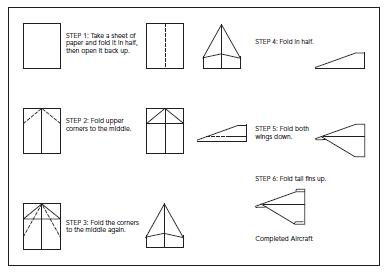
Your group is the complete workforce for the Paper Plane Corporation. Established in 1943, Paper Plane has led the market in paper plane production. Presently under new management, the company is contracting to make aircraft for the U.S. Air Force. You must determine the most efficient method for
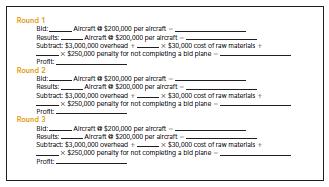
In the first round of the airplane manufacturing process, the Air Force has asked you to focus on individuality. Each Paper Plane worker should manufacture his or her own planes from start to finish. When each plane is finished, it should be put in a central location for quality inspection. When
In the second round of manufacturing, the Air Force has asked you to give each worker a specific job. In other words, the manufacturing process will take place in an assembly-line fashion. When planes come off the assembly line, they will be given directly to the quality control manager for
In the final round of manufacturing, the Air Force has asked your team to devise a manufacturing process that will maximize both efficiency and effectiveness. You may do whatever you like in terms of creating paper airplanes. You will have the same amount of time that you did in the two previous
Class discussion (whether in groups or as a class) should center on the following questions:a. Did pooled interdependence (Round 1) or sequential interdependence (Round 2) work better for your group in terms of the number of planes made correctly? Why do you think you got the result you did?b. How
What is ability?LO1.
What are the various types of cognitive ability?LO1.
What are the various types of emotional ability?LO1.
What are the various types of physical ability?LO1.
How does cognitive ability affect job performance and organizational commitment?LO1.
What steps can organizations take to hire people with high levels of cognitive ability?LO1.
Ability refers to the relatively stable capabilities of people to perform a particular range of different but related activities. Differences in ability are a function of both genes and the environment.LO1.
Cognitive abilities include verbal ability, quantitative ability, reasoning ability, spatial ability, and perceptual ability. General cognitive ability, or g, underlies all of these more specific cognitive abilities.LO1.
Emotional intelligence includes four specific kinds of emotional skills: self-awareness, other awareness, emotion regulation, and use of emotions.LO1.
Physical abilities include strength, stamina, flexibility and coordination, psychomotor abilities, and sensory abilities.LO1.
General cognitive ability has a strong positive relationship with job performance, due primarily to its effects on task performance. In contrast, general cognitive ability is only weakly related to organizational commitment.LO1.
Many organizations use cognitive ability tests to hire applicants with high levels of general cognitive ability. One of the most commonly used tests is the Wonderlic Cognitive Ability Test.LO1.
What combination of abilities is appropriate for the job of your dreams? Do you possess those abilities? If you fall short on any of these abilities, what could you do to improve?LO1.
Describe how the cognitive and emotional abilities mentioned in this case are associated with different aspects of job performance.LO1.
Consider the abilities required by IDEO and explain why you would, or would not, fit the job well.LO1.
Think about situations in which you’ve experienced each of the following four emotions:• Hoy• Anxiety• Sadness• Anger LO1.
Stress refers to the psychological response to demands when there’s something at stake for the individual and coping with these demands would tax or exceed the individual’s capacity or resources. Stressors are the demands that cause the stress response, and strains are the negative consequences
Stressors come in two general forms: challenge stressors, which are perceived as opportunities for growth and achievement, and hindrance stressors, which are perceived as hurdles to goal achievement. These two stressors can be found in both work and nonwork domains.LO1.
Coping with stress involves thoughts and behaviors that address one of two goals:addressing the stressful demand or decreasing the emotional discomfort associated with the demand.LO1.
Individual differences in the Type A Behavior Pattern affect how people experience stress in three ways. Type A people tend to experience more stressors, appraise more demands as stressful, and are prone to experiencing more strains.LO1.
The effects of stress depend on the type of stressor. Hindrance stressors have a weak negative relationship with job performance and a strong negative relationship with organizational commitment. In contrast, challenge stressors have a weak positive relationship with job performance and a moderate
Because of the high costs associated with employee stress, organizations assess and manage stress using a number of different practices. In general, these practices focus on reducing or eliminating stressors, providing resources that employees can use to cope with stressors, or trying to reduce the
Prior to reading this chapter, how did you define stress? Did your definition of stress reflect stressors, the stress process, strains, or some combination?LO1.
If you had several job offers after graduating, to what degree would the level of challenge stressors in the different jobs influence your choice of which job to take? Why?LO1.
How would you assess your ability to handle stress? Given the information provided in this chapter, what could you do to improve your effectiveness in this area?LO1.
Consider Best Buy’s Results Only Work Environment. What are the major strengths of this program in regard to the management of employee stress? Are there weaknesses of the program in this regard? That is, how could the practice actually increase employee stress?LO1.
What do the comments of the Best Buy CEO and company spokesperson reveal about their beliefs regarding employee stress and the effect it has on employee and organizational outcomes?In what ways are their beliefs justified and unjustified?LO1.
What could Best Buy do to manage employee stress during the organization’s transformation?LO1.
Motivation is defined as a set of energetic forces that originates both within and outside an employee, initiates work-related effort, and determines its direction, intensity, and persistence.LO1.
According to expectancy theory, effort is directed toward behaviors when effort is believed to result in performance (expectancy), performance is believed to result in outcomes(instrumentality), and those outcomes are anticipated to be valuable (valence).LO1.
According to goal setting theory, goals become strong drivers of motivation and performance when they are difficult and specific. Specific and difficult goals affect performance by increasing self-set goals and task strategies. Those effects occur more frequently when employees are given feedback,
According to equity theory, rewards are equitable when a person’s ratio of outcomes to inputs matches those of some relevant comparison other. A sense of inequity triggers equity distress. Underreward inequity typically results in lower levels of motivation or higher levels of counterproductive
Psychological empowerment reflects an energy rooted in the belief that tasks are contributing to some larger purpose. Psychological empowerment is fostered when work goals appeal to employees’ passions (meaningfulness), employees have a sense of choice regarding work tasks (self-determination),
Motivation has a strong positive relationship with job performance and a moderate positive relationship with organizational commitment. Of all the energetic forces subsumed by motivation, self-efficacy/competence has the strongest relationship with performance.LO1.
Organizations use compensation practices to increase motivation. Those practices may include individual-focused elements (piece-rate, merit pay, lump-sum bonuses, recognition awards), unit-focused elements (gain sharing), or organization-focused elements (profit sharing).LO1.
Think about a job that you’ve held in which you felt very low levels of psychological empowerment. What could the organization have done to increase empowerment levels?LO1.
To what extent do employees look to their CEOs for motivational signals? Do you think Netflix employees grow to be motivated by the same things that engage Hastings?LO1.
Which theories seem relevant to customers’ motivations (to pick certain titles), not just employees’ motivations (to perform their tasks well)?LO1.
When it comes to complex work—like Netflix engineers analyzing data on customer viewing habits—will intrinsic or extrinsic motivators prove more effective? Why?LO1.
Read the following scenario:Chris Clements and Pat Palmer are both computer programmers working for the same Fortune 500 company. One day they found out that Chris earns $60,820 per year, while Pat earns $72,890. Chris was surprised and said, “I can’t think of any reason why we should be paid
Showing 1800 - 1900
of 2441
First
11
12
13
14
15
16
17
18
19
20
21
22
23
24
25
Step by Step Answers

 Get 50% OFF
Claim Now
Get 50% OFF
Claim Now