New Semester
Started
Get
50% OFF
Study Help!
--h --m --s
Claim Now
Question Answers
Textbooks
Find textbooks, questions and answers
Oops, something went wrong!
Change your search query and then try again
S
Books
FREE
Study Help
Expert Questions
Accounting
General Management
Mathematics
Finance
Organizational Behaviour
Law
Physics
Operating System
Management Leadership
Sociology
Programming
Marketing
Database
Computer Network
Economics
Textbooks Solutions
Accounting
Managerial Accounting
Management Leadership
Cost Accounting
Statistics
Business Law
Corporate Finance
Finance
Economics
Auditing
Tutors
Online Tutors
Find a Tutor
Hire a Tutor
Become a Tutor
AI Tutor
AI Study Planner
NEW
Sell Books
Search
Search
Sign In
Register
study help
business
management and artificial intelligence
Artificial Intelligence: A Modern Approach 2nd Edition Stuart Russell, Peter Norvig - Solutions
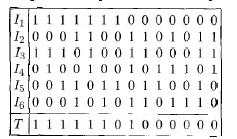
Consider the following set of examples, each with six inputs and one target output:a. Run the perceptron learning rule on these data arid show the final weights.b. Run the decision tree learning rule, and show the resulting decision tree.c. Comment on your results. 411111110000000 1200 12 0 0 0 1 1
Recall from Chapter 18 that there are 22n distinct Boolean functions of n inputs. How many of these are representable by a threshold perceptron?
Construct a support vector machine that computes the XOR function. It will be convenient to use values of 1 and -1 instead of 1 and 0 fair the inputs and for the outputs. So an example looks like ( [- 1, I], 1) or ( [- 1, - 11, - 1). It is typical to map an input x irrto a space consisting of five
Consider the application of EM to learn the parameters for the network in Figure 20.1 O(a), given the true parameters in Equation (20.7).a. Explain why the EM algorithm would not work if there were just two attributes in the model rather than three.b. Show the calculations for the first iteration
This exercise investigates properties of the Beta distribution defined in Equation (20.6).a. By integrating over the range [0, 11, show that the normalization constant for the distribution beta[a, b] is given by a = r(a + b)/r(a)r(b) where r(x) is the Gamma GAMMA FUNCTION function, defined by r(x +
Consider the noisy-OR model for fever described in Section 14.3. Explain how to apply maximum-likelihood learning to fit the parameters of such a model to a set of complete data. (Hint: use the chain rule for partial derivatives.)
Consider m data points ( x j, yj ) , where the yj s are generated from the xj s according to the linear Gaussian model in Equation (20.5). Find the values of 01, 02, and CT that maximize the conditional log likelihood of the data.
Explain how to apply the boosting method of Chapter 18 to naive Bayes learning. Test the performance of the resulting algorithm on the restaurant learning problem.
Suppose that Ann's utilities for cherry and lime candies are c~ and QA, whereas Bob's utilities are cg and QB. (But once Ann has unwrappt:d a piece of candy, Bob won't buy it.) Presumably, if Bob likes lime candies much more than .4nn, it would be wise for Ann to sell her bag of candies once she is
Repeat Exercise 20.1, this time plotting the values of P(Dm+l = lime1 hnlAp) and P(Dmtl = limeIhM~).
The data used for Figure 20.1 can be viewed as being generated by h5. For each of the other four hypotheses, generate a data set of length 100 and plot the corresponding graphs for P(hi(dl,.. . ,dm) and P(D,+l = limeldl,.. . , dm). Comment on your results.
Using the data from the family tree in Figure 19.11, or a subset thereof, apply the FOIL algorithm to learn a definition for the Ancestor predicate.
Suppose one writes a logic program that carries out a resolution inference step. That is, let Resolve(cl, c2,c) succeed if c is the result of resolving cl and cz. Normally, Resolve would be used as part of a theorem prover by calling it with cl and c2 instantiated to particular clauses, thereby
Fill in the missing values for the clauses C1 or Cz (or both) in the following sets of clauses, given that C is the resolvent of Cl and Cz:a. C = True + P(AB,) ,C 1 = P(x,y)+ Q(xy,), Cz =??.b. C = True =+ P(A,B ),C 1 =??, Cz =??.c. C = P(x,y) =+ P(x,f( y)), C1 =??, C2 =??.If there is more than one
Show, by translating into conjunctive normal form and applying resolution, that the conclusion drawn on page 694 concerning Brazilians is sound.
Consider an ensemble learning algorithm that uses simple majority voting among M learned hypotheses. Suppose that each hypothesis has error E and that the errors made by each hypothesis are independent of the others'. Calculate a formula for the error of the ensemble algorithm in terms of M and E,
Modify DECISION-TREE-LEARNING to include X2-pruning. You might wish to consult Quinlan (1986) for details.
In the recursive construction of decision trees, it sometimes happens that a mixed set of positive and negative examples remains at a leaf node, even after all the attributes have been used. Suppose that we have p positive examples and n negative examples.a. Show that the solution used by
Solve the game of three-finger Mona.
Show that a dominant strategy equilibrium is a Nash equilibrium, but not vice versa.
on page 190. Draw the state space (rather than the game tree), showing the moves by A as solid lines and moves by B as dashed lines. Mark each state with R(s). You will find it helpful to arrange the states (sA, sB)on a two-dimensional grid, using SA and SB as "coordinates."d. Now apply two-player
In this exercise we will consider two-player MDPs that correspond to zero-sum, turntaking games like those in Chapter 6. Let the players be: A and B, and let R(s) be the reward for player A in s. (The reward for B is always equal and opposite.)a. Let UA(s) be the utility of state s when it is A's
For the environment shown in Figure 17.1, find all the threshold values for R(s) such that the optimal policy changes when the threshold is crossed. You will need a way to calculate the optimal policy and its value for fixed R(s). [Hint: Prove that the value of any fixed policy varies linearly with
For the 4 x 3 world shown in Figure 17.1, calculate which squares can be reached from(1,l) by the action sequence [Up, Up, Right, Right, Right] and with what probabilities. Explain how this computation is related to the task of projecting a hidden Markov model.
Modify and extend the Bayesian network code in the code repository to provide for creation and evaluation of decision networks and the calculation of information value.The answers to Exercise 16.1(where M stands for million): First set: 3M, 1.6M, 1541,41M, 4768, 221, 649M, 295M, 132, 25,546. Second
(Adapted from Pearl (1988).) A used-car buyer can decide to carry out various tests with various costs (e.g., kick the tires, take the car to a qualified mechanic) and then, depending on the outcome of the tests, decide which car to buy. We will assume that the buyer is deciding whether to buy car
and 16.9, to which conditional probability table entry is the utility most sensitive, given the available evidence?
For either of the airport-siting diagrams from Exercises
Repeat Exercise 16.8, using the action-utility representation shown in Figure 16.6.
Show that if X1 and X2 are preferentially independent of X3, and X2 and X3 are preferentially independent of X1, then X3 and XI are prefere:ntially independent of X2.
Assess your own utility for different incremental amounts of money by running a series of preference tests between some definite amount MI and a lottery Ip, M2; (1 -p), 01. Choose different values of MI and M2, and vary p until you are indifferent between the two choices.Plot the resulting utility
Tickets to a lottery cost $1. There are two possible prizes: a $10 payoff with probability 1/50, and a $1,000,000 payoff with probability 1/2,000,000. What is the expected monetary value of a lottery ticket? When (if ever) is it rational to buy a ticket? Be precise-show an equation involving
Calculate the most probable path through the HMM. in Figure 15.20 for the output sequence [C1, C2, C3, C4, C4, C6, C7]. Also give its probability.
Consider applying the variable elimination algorithm to the umbrella DBN unrolled for three slices, where the query is P(R31Ul, U2, Us). Shtow that the complexity of the algorithm--the size of the largest factor-is the same, regardless of whether the rain variables are eliminated in forward or
In this exercise, we analyze in more detail the persistent-failure model for the battery sensor in Figure 15.13(a).a. Figure 15.13(b) stops at t = 32. Describe qualitatively what should happen as t i. oo if the sensor continues to read 0.b. Suppose that the external temperature affects the .battery
Let us examine the behavior of the variance update in Equation (15.18).a. Plot the value of a? as a function oft, given various values for a; and 02.b. Show that the update has a fixed point a2 such that a: a2 as t -+ oo, and calculate the value of 02.c. Give a qualitative explanation for what
On page 547, we outlined a flawed procedure for finding the most likely state sequence, given an observation sequence. The procedure involves finding the most likely state at each time step, using smoothing, and returning the sequence compose dl of these states. Show that, for some temporal
This exercise develops a space-efficient variant of the forward-backward algorithm described in Figure 15.4. We wish to compute P(Xklel,t) for lc = 1, . . . , t. This will be done with a divide-and-conquer approach.a. Suppose, for simplicity, that t is odd, and let the halfway point be h = (t +
In this exercise, we examine what happens to the probabilities in the umbrella world in the limit of long time sequences.a. Suppose we observe an unending sequence of days on which the umbrella appears.Show that, as the days go by, the probability of rain on the current day increases monotonically
Three soccer teams A, B, and C, play each other once. Each match is between two teams, and can be won, drawn, or lost. Each team has a fixed, unknown degree of qualityan integer ranging from 0 to 3-and the outcome of a match depends probabilistically on the difference in quality between the two
1(a)and how MCMC can answer it.a. How many states does the Markov chain have?b. Calculate the transition matrix Q containing q(y + y') for all y, y'.c. What does Q~th,e square of the transition matrix, represent?d. What about Qn as n -t GO?e. Explain how to do probabilistic inference in Bayesian
Consider the query P(Rain(Sprink1er= true, WetGrass= true) in Figure
The Markov blanket of a variable is defined on page 499.a. Prove that a variable is independent of all other variables in the network, given its Markov blanket.b. Derive Equation (14.11).
Consider the network shown in Figure 14.19(ii), and assume that the two telescopes work identically. N E {1,2,3) and MI, M2 E {Oil, 2,3,4), with the symbolic CPTs as described in Exercise 14.3. Using the enumeration algorithm, calculate the probability distribution P(NIMl = 2, M2 = 2).
In our analysis of the wumpus world, we used the fact that each square contains a pit with probability 0.2, independently of the contents of the other squares. Suppose instead that exactly N/5 pits are scattered uniformly at random among the N squares other than [I, 11. Are the variables Pi and
(Adapted from Pearl (1988).) Suppose you are a witness to a nighttime hit-and-run accident involving a taxi in Athens. All taxis in Athens are blue or green. You swear, under oath, that the taxi was blue. Extensive testing shows that, under the dim lighting conditions, discrimination between blue
This exercise investigates the way in which conditional independence relationships affect the amount of information needed for probabilistic calculations.a. Suppose we wish to calculate P(hlel, ez) and we have no conditional independence information. Which of the following sets of numbers are
In this exercise, you will complete the normalization calculation for the meningitis example. First, make up a suitable value for P(S(lM)a,n d use it to calculate unnormalized values for P(MIS) and P(1M IS) (i.e., ignoring the P(S) term in the Bayes' rule expression).Now normalize these values so
Show that the statementis equivalent to either of the statements P(AIB,C) =P(A(C) and P(BIA,C)=P(B(C). P(A, B|C) P(A|C)P(B|C)
Give11 the full joint distribution shown in Figure 13.3, calculate the following:a. P(toothache)b. P(Cavity)c. P( Toothache (cavity)d. P(Cavity(toothache V catch).
This question deals with the properties of atomic events, as discussed on page 468.a. Prove that the disjunction of all possible atomic events is logically equivalent to true.[Hint: Use a proof by induction on the number sf random variables.]b. Prove that any proposition is logically equivalent to
Would it be rational for an agent to hold the three beliefs P(A) = 0.4, P(B) = 0.3, and P(A V B) = 0.5? If so, what range of probabilities would be rational for the agent to hold for A A B? Make up a table like the one in Figure 13.2, and show how it supports your argument about rationality. Then
Show from first principles that P(alb Aa) = 1.
To the medication problem in the previous exercise, add a Test action that has the conditional effect CultureGrowth when Disease is true and in any case has the perceptual effect Known ( Culture Growth). Diagram a conditional plan that solves the problem and minimizes the use of the Medicate action.
Look at the list on page 445 of things that the replanning agent can't do. Sketch an algorithm that can handle one or more of them.
Explain precisely how to modify the AND-OR-GRAPH-SEARCH algorithm to generate a cyclic plan if no acyclic plan exists. You will need to deal with three issues: labeling the plan steps so that a cyclic plan can point back tc~a n earlier part of the plan, modifying OR-SEARCH so that it continues to
for an example.) Determine the information that should be stored and how the algorithm should use that information when a repeated state is found. (Hint: You will need to distinguish at least between states for which a successful subplan was constructed previously and states for which no subplan
checks for repeated states only on the path from the root to the current state. Suppose that, in addition, the algorithm were to store every visited state and check against that list. (See GRAPH-SEARCH in Figure
The AND-OR-GRAPH-SEARCH algorithm in Figure
Show how a standard STRIPS action description can be rewritten as an HTN decomposition, using the notation Achieve(p) to denote the actilvity of' achieving the condition p.
Give an example in the house-building domain of two1 abstract subplans that cannot be merged into a consistent plan without sharing steps. (.Hint: Places where two physical parts of the house come together are also places where two subplalns tend to interact.)
Give decompositions for the HireBuilder and GetPernzit steps in Figure 12.7, and show how the decomposed subplans connect into the overalll plan.
so that there are KO0 screws initially, engine El requires 40 screws, and engine E:2 requires 50 screws. 'The + and- function symbols may be used in effect literals for resources.b. Explain how the definition of conflict between causal links and actions in partial-order planning must be modified to
A consumable resource is a resource that is (partially) used up by an action. For example, attaching engines to cars requires screws. The screws, once used, are not available for other attachments.a. Explain how to modify the representation in Fi,gure
Examine carefully the representation of time aind resources in Section 12.1.a. Why is it a good idea to have Duration(d) be a11 effect of an action, rather than having a separate field in the action of the form DURA.TIONd:? (Hint: Consider conditional effects and disjunctive effects.)b. Why is
In the SATPLAN algorithm in Figure 11.15, each call to the satisfiability algorithm asserts a goal gT, where T ranges from 0 to T,,,. Suppose instead that the satisfiability algorithm is called only once, with the goal go V g1 V . . . V gTmax.a. Will this always return a plan if one exists with
Giving examples from the airport domain, explain how symbol-splitting reduces the size of the precondition axioms and the action exclusion axioms. Derive a general formula for the size of each axiom set in terms of the number of time steps, the number of action schemata, their arities, and the
Up to now we have assumed that actions are only executed in the appropriate situations.Let us see what propositional successor-state axioms sixh as Equation (1 1.1) have to say about actions whose preconditions are not satisfied.a. Show that the axioms predict that nothing will happen when an
We saw that planning graphs can handle only propositional actions. What if we want to use planning graphs for a problem with variables in the goal.,s uch as At (PIx, )A At (P2x, ), where x ranges over a finite domain of locations? How could you encode such a problem to work with planning graphs?
in STRIPS notation.Construct a plan for Shakey to get Boxz into Rooma.
The original STRIPS program was designed to control Shakey the robot. Figure 11.17 shows a version of Shakey's world consisting of four rooms lined up along a corridor, where each room has a door and a light switch.The actions in Shakey's world include moving from place to place, pushing movable
Prove the following assertions about planning graphs:m A literal that does not appear in the final level of the graph cannot be achieved.e The level cost of a literal in a serial graph is no greater than the actual cost of an optimal plan for achieving it.
Construct levels 0, 1, and 2 of the planning graph for the problem in Figure 11.2.
Examine the definition of bidirectional search in Chapter 3.a. Would bidirectional state-space search be a good idea fior planning?b. What about bidirectional search in the space of partial-order plans?e. Devise a version of partial-order planning in which an action can be added to a plan if its
Let us consider how we might translate a set of STRIPS schemata into the successorstate axioms of situation calculus. (See Chapter 10.)a Consider the schema for Fly@, from, to). Write a logical definition for the predicate FlyPrecond(p, from, to, s), which is true if the preconditions for Fly(p,
Given the axioms from Figure 11.2, what are all the applicable concrete instances of Fly(p, from, to) in the state described by At(Pl, JFK) A At(&, SFO) A Plane(Pl) A Plane(P2)A Airport(JFK) A Ail-port(SF0) ?
Recall that inheritance information in semantic networks can be captured logically by suitable implication sentences. In this exercise, we will consider the efficiency of using such sentences for inheritance.a. Consider the information content in a used-car catalog such as Kelly's Blue Bookfor
Make the necess,ary additions or changes to your knowledge base from the: previous exercise so that the questions that follow can be answered. Show that they can indeed be answered by the KB, and include in your report a discussion of the fixes, explaining why they were needed, whether they were
(Adapted from an example by Doug Lenat.) Your mission is to capture, in logical form, enough knowledge to answer a series of questions about the following simple sentence:Yesterday John went to the North Berkeley Safeway supermarket and bought two pounds of tomatoes and a pound of ground beef.Start
A complete solution to the problem of inexact matches to the buyer's description in shopping is very difficult and requires a full array of natural language processing and information retrieval techniques. (See Chapters 22 and 23.) One small step is to allow the user to specify minimum and maximum
In this exercise, we will consider the problem of planning a route for a robot to take from one city to another. The basic action taken by the robot is Go(x, y), which takes it from city x to city y if there is a direct route between those cities. DzrectRoute(x, y) is true if and only if there is a
Within situation calculus, write an axiom to associate tirne 0 with the situation So and another axiom to associate the time t with any situation that is derived from So by a sequence of t actions.
Here are two sentences in the language of first-order logic:(A):vx 39 (x 2 y)(B):jy vx (x 1 Y)a. Assume that the variables range over all the natural numbers O,1,2, . . . , m and that the">" predicate means "is greater than or equal to." Under this interpretation, translate(A) and (B) into
In this exercise, we will look at sorting in Prolog.a. Write Prolog clauses that define the predicate sorted (L ) , which is true if and only if list L is sorted in ascending order.b. Write a Prolog definition for the predicate perm (L, M), which is true if and 113nliyf L is a permutation of bT.c.
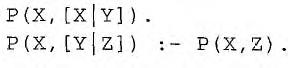
The following Prollog code defines a predicate P:a. Showprooftreesandsolutionsforthequeries~(~[,1 ,2,3])a ndp(2, [1,~,3]).b. What standard list operation does P represent? P (X, [XY]). P(X, [YZ]) - P(X,Z).
Trace the execution of the backward chaining algorithm in Figure 9.6 when it is applied to solve the crime problem. Show the sequence of values taken on by the goals variable, and arrange them into a tree.
A popular childre11's riddle is "Brothers and sisters have I none, but that man's father is my father's son." Use the rules of the family domain (Chapter 8) to show who that man is.You may apply any of the: inference methods described in this chapter. Why do you think that this riddle is difficult?
In this question we will use the sentences you wrote in Exercise 9.9 to answer a question using a backward-chaining algorithm.a. Draw the proof tree generated by an exhaustive backward-chaining algorithm for the query 3 h Horse (1%,) where clauses are matched in the order given.b. What do you
One might suppose that we can avoid the problem of variable conflict in unification during backward chaining by standardizing apart all of the sentences in the knowledge base once and for all. Show that, for some sentences, this approach cannot work. (Hint: Consider a sentence, one part of which
Consider the subsumption lattices shown in Figure 9.2.a. Construct the lattice for the sentence Employs(Mother(John), Father(Richard)).b. Construct the lattice for the sentence Employs(IBM, y) ("Everyone works for IBM).Remember to include every kind of query that unifies with the sentence.c. Assume
For each pair of atomic sentences, give the most general unifier if it exists:a. P(A,B ,B ),P (x,y ,2 ).b. Q(Y, G(A,B )),& (G(X4?1 Y) .c. Older(Father(y),y ), Older(Father(x),J ohn).d. Knows(Father(y), y), Knows(x, x).
Suppose a knowledge base contains just one sentence, 3 x AsHzghAs (x, Everest).'Which of the following are legitimate results of applying Existential Instantiation?a. AsHzghAs(Everest, Everest).b. AsHighAs (Kilimar~~arEov,e rest).c. AsHighAs (Kzlimanjaro, Everest) A AsHighAs (BenNevis,
From Likes (Jerry, Icecream) it seems reasonable to infer 3 x Likes (x, Ice Cream.).EINXTISRTOEDNUT,I~ATLI ON Write down a general inference rule, Existential Introduction, that sanctions this inference.State carefully the conditions that must be satisfied by the variables and terms involvIcd.
Prove from first prjlnciples that Universal Instantiation is sound and that Existential Instantiation produces an inferentially equivalent knowledge base.
and the four-bit adder in Figure 8.6, and explain what queries you would use to verify the designs. What lunds of queries are not supported by this representation that (are supported by the representation in Section 8.4.?
The circuit representation in the chapter is more detailed than necessary if we care only about circuit functionality. A simpler formulation describes any m-input, n-output gate or circuit using a predicate with m + n arguments, such that the predicate is true exactly when the inputs and outputs
Explain what is wrong with the following proposed definition of adjacent squares in the wumpus world:Vx, y Adjacent([x, y], [x + 1, yl) A Adjacent([x, y], [x, y + 11) .
Explain what is wrong with the following proparsed definition of the set membership predicate E : Vx,s x = {x\s} {s h} = x h = x x
Is the sentence 3 z, y x = y valid? Explain.
Consider a knowledge base containing just two sentences: P(a) and P(b). Does this knowledge base entail 'v'x P(x)? Explain your answer in terms of models.
Showing 4500 - 4600
of 4756
First
34
35
36
37
38
39
40
41
42
43
44
45
46
47
48
Step by Step Answers

 Get 50% OFF
Claim Now
Get 50% OFF
Claim Now