New Semester
Started
Get
50% OFF
Study Help!
--h --m --s
Claim Now
Question Answers
Textbooks
Find textbooks, questions and answers
Oops, something went wrong!
Change your search query and then try again
S
Books
FREE
Study Help
Expert Questions
Accounting
General Management
Mathematics
Finance
Organizational Behaviour
Law
Physics
Operating System
Management Leadership
Sociology
Programming
Marketing
Database
Computer Network
Economics
Textbooks Solutions
Accounting
Managerial Accounting
Management Leadership
Cost Accounting
Statistics
Business Law
Corporate Finance
Finance
Economics
Auditing
Tutors
Online Tutors
Find a Tutor
Hire a Tutor
Become a Tutor
AI Tutor
AI Study Planner
NEW
Sell Books
Search
Search
Sign In
Register
study help
computer science
signals and systems
Signals and Systems using MATLAB 2nd edition Luis Chaparro - Solutions
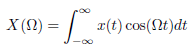
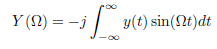
Let the signal x(t) = r(t + 1) − 2r(t) + r(t − 1) and y(t) = dx(t)/dt.(a) Plot x(t) and y(t)(b) Find X(Ω) and carefully plot its magnitude spectrum. Is X(Ω) real? Explain.(c) Find Y(Ω)(use properties of Fourier transform) and carefully plot its magnitude spectrum. Is Y(Ω) real? Explain.(d)
For signals with infinite support, their Fourier transforms cannot be derived from the Laplace transform unless they are absolutely integrable or the region of convergence of the Laplace transform contains the j??-axis. Consider the signal x(t) = 2e?2?t? (a) Plot the signal x(t) for ?? (b) Use the
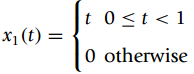
The Fourier transform of finite support signals, which are absolutely integrable or finite energy, can be obtained from their Laplace transform rather than doing the integral. Consider the following signalsx1(t) = u(t + 0.5) − u(t − 0.5), x2(t) = sin(2π t) [u(t) − u(t − 0.5)]x3(t) = r(t +
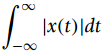
Consider a signal x(t) = cos(t), 0 ≤ t ≤ 1(a) Find its Fourier transform X(Ω).(b) Let y(t) = x(2t), find Y(Ω), let z(t) = x(t/2), find Z(Ω).(c) Compare Y(Ω) and Z(Ω) with X(Ω).
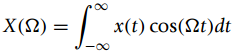
The Fourier transforms of even and odd functions are very important. Let x(t) = e??t? and y(t) = e?t u(t) ? et u(?t). (a) Plot x(t) and y(t), and determine whether they are even or odd. (b) Show that the Fourier transform of x(t) is found from which is real function of ??, therefore its
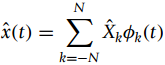
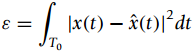
To understand the Fourier series consider a more general problem, where a periodic signal x(t), of period T0, is approximated as a finite sum of terms where {?k (t)} are ortho-normal functions. To pose the problem as an optimization problem, consider the square error and we look for the
As you know, π is an irrational number that can only be approximated by a number with a finite number of decimals. How to compute this value recursively is a problem of theoretical interest. In this problem we show that the Fourier series can provide that formulation.(a) Consider a train of
The problem with thresholding the DCT coefficients of an image to compress it, is that the locations of the chosen coefficients are arbitrary and difficult to code. Consider then using a mask W(k, ℓ)of the same dimension as the DCT array fCx(k, ℓ)g. Now the location of the chosen DCT
An image can be blurred by means of a Gaussian filter which has an impulse response(a) If h[m, n] = h1[m]h1[n], i.e., separable determine h1[n]. Find the DFT of h[m, n] and plot its magnitude response. Use the functions mesh and contour to display the characteristics of the Gaussian filter
Image filtering using 2D-FFT — Consider the linear filtering of an image using the 2D-FFT. Load the image clown and use three different filters to process it given in different formats.• Low-pass FIR filter with impulse response• High-pass FIR filter with transfer function• Six-order
To compute the 2D-DFT one can use 1D-DFT by separating the equation for the 2D-DFT as(a) Using the one-dimensional MATLAB function fft to implement the above result, and for the signalwith values M = N = 10. compute X(m, ℓ) for every value of m and then find X(k, ℓ), the two-dimensional DFT of
The convolution sum is a fast way to find the coefficients of the polynomial resulting from the multiplication of two polynomials.(a) Suppose x[n] = u[n] - u[n - 3] find its Z-transform X(z), a second order polynomial in z-1.(b) Multiply X(z) by itself to get a new polynomial Y(z) = X(z)X(z) =
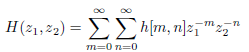
A filter has a transfer function(a) Find the poles and zeros of H(z1; z2).(b) For what values of ẑ1 and ẑ2 is H(ẑ1, ẑ2) = 0/0?(c) Ignoring the numerator, i.e., lettingis this filter BIBO stable? Show your work. -1 1 – 27' H(21, 2) = 1+0.527 +1.5z, Ĥ (21, 2) -1 1+0.5z7' + 1.52,
Consider a system represented by the convolution sum(a) Obtain the BIBO stability condition for this system, assuming that the input x[m, n] is bounded.(b) Use the variable transformation
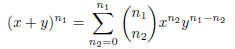
Use the binomial theoremto express the transfer functionasand determine the impulse response of the system. (z + y)* = E ()-"2 y"= =ng mi-n2 n2=0 H(21, 2) = 1/(1 – (2ī' + 2,')
Consider the separable two-dimensional Z-transformwhere p0 and p1 are poles of X(z1, z2).(a) Determine the poles and zeros of X(z1, z2).(b) Carefully indicate the ROC and the location of the unit bidisc in a a (|z1|, |z2|) plane. According to this, does X(ejw1 , ejw2 ) exist?(c) Find the inverse
Detection of edges is a very important application in image processing. Taking the gradient of a two-dimensional function detects the changes the edges of an image. A filter than is commonly used in edge detection is Sobel’s filter. Consider the generation of two related impulse responsesFor a
Use the function imread, rgb2gray and double to read the color image peppers.png. Convert it into a gray level image I[m, n] with double precision. Add noise to it using the function randn (Gaussian number generator) multiplied by 40. Create a onedimensional moving average filter with impulse
Let the inputand the impulse response of an FIR filter be(a) Use the two-dimensional convolution function conv2 to find the output y[m; n].(b) Is the impulse response separable, i.e., h[m; n] = h1[m]h2[n]? If so, determine the onedimensional impulse responses h1[m], and h2[n] and use them to verify
A discrete-time system has a unit impulse response h[n].(a) Let the input to the discrete-time system be a pulse x[n] = u[n] - [n - 4] compute the output of the system in terms of the impulse response.(b) Let h[n] = 0.5nu[n] what would be the response of the system y[n] to x[n] = u[n] - u[n - 4]?
Echoing in music — An effect similar to multi-path in acoustics is echoing or reverberation. To see the effects of an echo in an acoustic signal consider the simulation of echoes on the handel.mat signal y[n]. Pretend that this piece is being played in a round theater where the orchestra is in
The impulse responsesatisfies the difference equationwith zero boundary conditions. By definition(a) Use the difference equation to show that(b) Show that for m ≥ 0; n > 0determine the values of h[m; 0] form ≥ 0, and use these equations to compute the impulse response h[m; n]. Plot the
Consider the line impulseswhere -∞ < m < ∞ and -∞ < n < ∞.(a) Draw the line impulses x[m; n] and y[m; n]. Determine if they are separable.(b) Consider the product z[m; n] = x[m; n]y[m; n]. Express z[m; n] in terms of unit-step functions u14[m; n], with support in the first and
For the two-dimensional signals(a) Draw their supports, and express these domains in terms of u1[m; n].(b) Let z[m, n] = x[m, n] - y[m, n], and draw its support. r[m, n] = am+"u12[m, n] m+ru14[m, n] ут, п] %3 ат+"ua(т, п)]
The input of an LTI continuous-time system is x(t) = u(t) - u(t – 3.5). The system’s impulse response is h(t) = u(t) - u(t – 2.5).(a) Find the system’s output y(t) by graphically computing the convolution integral of x(t) and h(t). Sketch x(t), h(t) and the found y(t).(b) Suppose we sample
Suppose we would like to send the two messages mi(t), i = 1; 2, created in Problem 12 using the same bandwidth and to recover them separately. To implement this consider the QAMapproach where the transmitted signal iss(t) = m1(t) cos(50t) + m2(t) sin(50t)Suppose that at the receiver we receive s(t)
The signal at the input of an AM receiver is u(t) = m1(t) cos(20t) + m2(t) cos(100t) where the messages mi(t), i = 1; 2 are the outputs of a low–pass Butterworth filter with inputsx1(t) = r(t) - 2r(t - 1) + r(t - 2); and x2(t) = u(t) - u(t - 4)respectively. Suppose we are interested in recovering
Consider the transmission of a sinusoid x(t) = cos(2f0t) through a channel affected by multi-path and Doppler. Let there be two paths, and assume the sinusoid is being sent from a moving object so that a Doppler frequency shift occurs. Let the received signal bewhere 0 ≤ i ≤ 1 , i = 0; 1, are
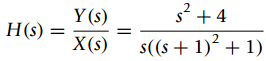
Control systems attempt to follow the reference signal at the input, but in many cases they cannot follow particular types of inputs. Let the system we are trying to control have a transfer function G(s), and the feedback transfer function be H(s). If X(s) is the Laplace transform of the reference
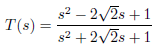
Suppose you would like to obtain a feedback implementation of an all pass system with transfer function(a) Determine the feed–forward transfer function G(s) and the feedback transfer function H(s) of a negative feedback system that has T(s) as its overall transfer function.(b) Would it be
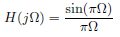
Consider a filter with frequency responseor a sinc function in frequency.(a) Find the impulse response h(t) of this filter. Plot it and indicate whether this filter is a causal system or not.(b) Suppose you wish to obtain a band-pass filter G(jΩ) from H(jΩ). If the desired center frequency of
The Fourier transforms of even and odd functions are very important. Let x(t) = e-|t| andy(t) = e-tu(t) - etu(-t).(a) Plot x(t) and y(t), and determine whether they are even or odd.(b) Show that the Fourier transform of x(t) which is even is found fromwhich is real function of Ω, therefore its
An inverted sawtooth signal is given by the reflection x(-t), where x(t) is the sawtooth signal. Use the entry for the sawtooth signal in Table 4.2 to obtain a zeromean inverted sawtooth signal y(t) of period T1 = 2 and maximum amplitude 2. Use our function InvFSeries to verify your result.
Consider the entries in Table 4.2 for the sawtooth and the triangular signals normalized in magnitude and period. Use their Fourier coefficients to obtain corresponding periodic signals that are zero-mean, maximum amplitude of one and that are odd.
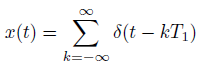
The periodic impulse signal with period T1 ishas Fourier coefficients Xk = 1 = T1. Suppose y1(t) is a pulse of support 0 ≤ t ≤ T1, determine the convolution y(t) = x(t) * y1(t) using the above expression for x(t) and the one given by its Fourier series. What do you get? Explain. 8(t – kT1) У
We wish to obtain a discrete approximation to a sinusoid x(t) = sin(3πt) from 0 to 2.5 seconds. To do so a discretized signal x(nTs), with Ts = 0:001, is multiplied it by a causal window w(nTs) of duration 2.5, i.e., w(nTs) = 1 for 0 ≤ n ≤ 2500 and zero otherwise. Use our scale shift function
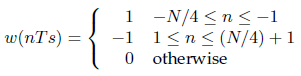
The discretized approximation of a pulse is given bywhere N = 10000 and Ts = 0:001 seconds.(a) Obtain this signal and let the plotted signal using plot be the analog signal. Determine the duration of the analog signal.(b) There are two possible ways to visualize the shifting of an analog signal.
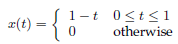
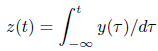
Consider the following continuous-time signalCarefully plot x(t) and then find and plot the following signals:(a) x(t + 1), x(t - 1) and x(-t)(b) 0:5[x(t) + x(-t)] and 0:5[x(t) - x(-t)](c) x(2t) and x(0:5t)(d) y(t) = dx(t) = dt and 2(t) = 1-t 0
Algebra of complex numbers - Consider complex numbers z = 1 + j, w = -1 + j, v = -1 - j and u = 1 - j. You may use MATLAB compass to plot vectors corresponding to complex numbers to verify your analytic results.(a) In the complex plane, indicate the point (x; y) that corresponds to z and then show
Exponentials — The exponential x(t) = eαt for t ≥ 0 and zero otherwise is a very common continuoustime signal. Likewise, y(n) = αn for integers n ≥ 0 and zero otherwise is a very common discrete-time signal. Let us see how they are related. Do the following using MATLAB:(a) Let α = -0:5,
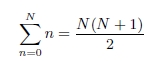
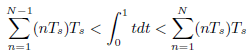
Suppose you wish to find the area under a signal x(t) using sums. You will need the following result found above(a) Consider first x(t) = t, 0 ≤ t ≤ 1, and zero otherwise. The area under this signal is 0:5. The integral can be approximated from above and below aswhere NTs = 1 (i.e., we divide
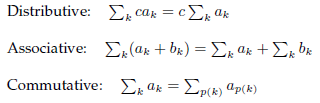
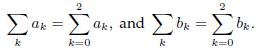
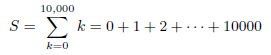
Three laws in the computation of sums arefor any permutation p(k) of the set of integers k in the summation.(a) Explain why the above rules make sense when computing sums. To do that considerLet c be a constant, and choose any permutation of the values [0; 1; 2] for instance [2; 1; 0] or [1; 0;
Another definition for the finite difference is the backward difference:(Δ1[x(nTs)]=Ts approximates the derivative of x(t)).(a) Indicate how this new definition connects with the finite difference defined earlier in this Chapter.(b) Solve Problem 9 with MATLAB using this new finite difference and
Let Find y(t) analytically and determine a value of Ts for which(consider as possible values Ts = 0:01 and Ts = 0:1). Use the MATLAB function diff or create your own to compute the finite difference. Plot the finite difference in the range [0; 1] and compare it with the actual derivative y(t)
To get an idea of the number of bits generated and processed by a digital system consider the following applications:(a) A compact disc (CD) is capable of storing 75 minutes of “CD quality” stereo (left and right channels are recorded) music. Calculate the number of bits that are stored in the
A phasor can be thought of as a vector, representing a complex number, rotating around the polar plane at a certain frequency in radians/second. The projection of such a vector onto the real axis gives a cosine with a certain amplitude and phase. This problem will show the algebra of phasors which
Consider a function of z = 1 + j1, w = ez(a) Find (i) log(w), (ii) Re(w), (iii) Im(w)(b) What is w + w*, where w* is the complex conjugate of w?(c) Determine |w|, ∠w and | log(w)|2 ?(d) Express cos(1) in terms of w using Euler’s identity.
Consider the calculation of roots of an equation zN = α where N ≥ 1 is an integer and α = |α|ejϕ a nonzero complex numb(a) First verify that there are exactly N roots for this equation and that they are given byzk = rejθk where r = |α|1/N and θk = (ϕ + 2πk)/N for k = 0, 1, ... , N –
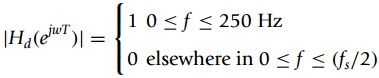
Design a causal low-pass FIR digital filter with N = 21. The desired magnitude response of the filter isand the phase is zero for all frequencies. The sampling frequency fs = 2000 Hz.(a) Use a rectangular window in your design. Plot magnitude and phase of the designed filter.(b) Use a
A chirp signal is a sinusoid of continuously changing frequency. Chirps are frequently used to jam communication trans-missions. Consider the chirp(a) A measure of the frequency of the chirp is the so-called instantaneous frequency which is defined as the derivative of the phase in the
To design a three-band discrete spectrum analyzer for audio signals, we need to design a low-pass, a band-pass, and a high-pass IIR filters. Let the sampling frequency be Fs =10 kHz. Consider the three bands, in kHz, to be [0 Fs/4], (Fs/4 3Fs/8], and (3Fs/8Fs/2].(a) Let all the filters be of
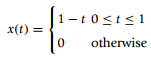
Consider the following continuous-time signal 1-t 0st
Given the causal full-wave rectified signal x(t) = ∣sin(2πt)∣u(t)(a) Find the even component of x(t), call it xe(t) and plot it. Is xe(t) periodic? if so, what is its fundamental period Te? Would the odd component of x(t) or xo(t) be periodic too?(b) Are xe(t) and xo(t) causal
The following problems relate to the periodicity of signals:(a) Determine the frequency Ω0 in rad/sec, the corresponding frequency f0 in Hz, and the fundamental period T0 sec of these signals defined in −∞< t< ∞,(i) cos(2πt),
In the following problems find the fundamental period of signals and determine periodicity.(a) Find the fundamental period of the following signals, and verify it(i) x(t) = cos(t + π/4),
The following problems are about energy and power of signals.(a) Plot the signal x(t) = eˆ’t u(t) and determine its energy. What is the power of x(t)?(b) How does the energy of z(t) = eˆ’ˆ£tˆ£, ˆ’ˆž < t < ˆž,
Consider the periodic signal x(t) = cos(πt) of fundamental period T0 =2 sec.(a) Is the expanded signal x(t/2) periodic? if periodic indicate its fundamental period.(b) Is the compressed signal x(2t) periodic? if periodic indicate its fundamental period.
Pure tones or sinusoids are not very interesting to listen to. Modulation and other techniques are used to generate more interesting sounds. Chirps, which are sinusoids with time-varying frequency, are some of those more interesting sounds. For instance, the following is a chirp signaly(t) = A
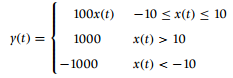
The input-output equation characterizing an amplifier that saturates once the input reaches certain values iswhere x(t) is the input and y(t) the output.(a) Plot the relation between the input x(t) and the output y(t). Is this a linear system? For what range of input values is the system linear, if
The following problems relate to linearity, time-invariance, and causality of systems.(a) A system is represented by the equation z(t) = v(t) f(t) + B where v(t) is the input, z(t) the output, f(t) a function, and B a constant.i. Let f(t) = A, a constant. Is the system linear if B
A fundamental property of linear time-invariant systems is that when-ever the input of the system is a sinusoid of a certain frequency the output will also be a sinusoid of the same frequency but with an amplitude and phase determined by the system. For the following systems let the input be x(t) =
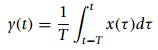
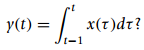
The impulse response of an LTI continuous-time system is h(t) = u(t) ˆ’ u(t ˆ’ 1).(a) If the input of this system is x(t), is it true that the system output is(b) If the input is x(t) = u(t), graphically determine the corresponding output y(t) of the system. y(t) = x(t)dr? I-1
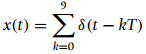
The input of an LTI continuous-time system with impulse response h(t) = u(t) ˆ’ u(t ˆ’ 1) is(a) Find the output y(t) of the system using the convolution integral.(b) If T = 1, obtain and plot the system output y(t). )Σδ(t - kT) x(t) k=0 k=0
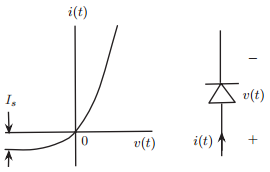
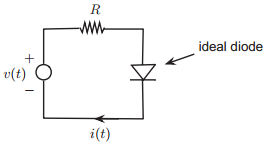
The voltage-current characterization of a p-n diode is given by (see Figure 2.22)i(t) = Is(eqv(t)/kTˆ’1)where i(t) and v(t) are the current and the voltage in the diode (in the direction indicated in the diode) Is is the reversed saturation current, and kT/q is a
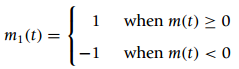
Consider an envelope detector that is used to detect the message sent in the AM system shown in the examples. The envelope detector as a system is composed of two cascaded systems: one which computes the absolute value of the input (implemented with ideal diodes), and a second that low-pass filters
Frequency modulation, or FM, uses a wider bandwidth than amplitude modulation, or AM, but it is not affected as much by noise as AM is. The output of an FM transmitter is of the formwhere m(t) is the message and νis a factor in Hz/volt if the units of the message are in
The support of a period of a periodic signal relates inversely to the support of the line spectrum. Consider two periodic signals: x(t) of fundamental period T0 = 2 and y(t) of fundamental period T1 = 1, and with periodsx1(t) = u(t) − u(t − 1) 0 ≤ t ≤ 2y1(t) = u(t) − u(t − 0.5) 0 ≤ t
In the computer generation of musical sounds, pure tones need to be windowed to make them more interesting. Windowing mimics the way a musician would approach the generation of a certain sound. Increasing the richness of the harmonic frequencies is the result of the windowing as we will see in this
Consider a saw-tooth signal x(t) with fundamental period T0= 2 and period(a) Find the Fourier coefficients Xk using the Laplace transform. Consider the cases when kis odd and even (k ‰ 0). You need to compute X0 directly from the signal.(b) Let y(t) = x(ˆ’t), find the
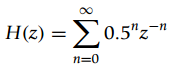
The modulation-based frequency transformation of the DTFT is applicable to IIR filters. It is obvious in the case of FIR filters, but requires a few more steps in the case of IIR filters. In fact, if we have that the transfer function of the prototype IIR low-pass filter is H(z) = B(z)/A(z), with
A low-pass IIR discrete filter has a transfer function(a) Find the poles and zeros of this filter.(b) Suppose that you multiply the impulse response of the low-pass filter by (ˆ’1)n so that you obtain a new transfer functionFind the poles and zeros for H1(z). What type of
A second-order analog Butterworth filter has a transfer function(a) Is the half-power frequency of this filter Ωhp = 1 rad/sec?(b) To obtain a discrete Butterworth filter we choose the bilinear transformationWhat is the half-power frequency of the discrete filter?(c) Find
An FIR filter has a system function H(z) = 0.05z2 + 0.5z + 1 + 0.5z−1 + 0.05z−2.(a) Find the magnitude |H(ejω)| and phase response ∠H(ejω) at frequencies ω = 0, π/2 and π. Sketch each of these responses for – π ≤ ω < π, and indicate the type of filter.(b) Determine
The impulse response h[n] of an FIR is given by h[0] = h[3], h[1] = h[2], the other values are zero.(a) Find the Z-transform of the filter H(z)and the frequency response H(ejω).(b) Let h[0] = h[1] = h[2] = h[3] = 1, Determine the zeros of the filter. Determine if the phase ∠H(ejω)
If x[n] is periodic of period N1> 0 and y[n] is periodic of period N2> 0(a) What should be the condition for the sum z[n] of x[n] and y[n] to be periodic?(b) What would be the period of the product v[n] = x[n] y[n](c) Would the formula(gcd[N1, N2] stands for the greatest common
A discrete-time averager is represented by the input/output equation y[n] = (1/3)(x[n + 1] + x[n] + x[n − 1]), where x[n] is the input and y[n] the output.(a) Determine whether this system is causal or not. Explain.(b) Determine whether this system is BIBO stable or not.
The following difference equation is used to obtain recursively the ratio α/βc[n + 1] = (1 − β) c [n] + α n ≥ 0with c[0] as an initial condition. Solve the difference equation, and find under what condition(s) the solution c[n] will converge
A sinusoid x(t) = cos(t) is a band-limited signal with maximum frequency Ωmax = 1(a) Using Fourier transform properties determine the maximum frequency of x2(t). What sampling period Ts can be used to sample x2(t) without aliasing. Verify your results using trigonometric identities.(b) Can you
Consider the impulse response of a LTI system h(t) = eˆ’at[u(t) ˆ’ u(t ˆ’ 1)] a >0.(a) Obtain the transfer function H(s).(b) Find the poles and zeros of H(s).(c) Is lima†’0H(s) equal to(d) Indicate how the poles and zeros of H(s)move in the
The transfer function of a causal LTI system is(a) Find the ordinary differential equation that relates the system input x(t)to the system output y(t).(b) Find the input x(t)so that for initial conditions y(0) = 0 and dy(0)/dt = 1, the corresponding output y(t)is identically zero.(c)
We would like to find the Fourier series of a saw-tooth periodic signal x(t) of period T0 =1. The period of x(t) isx1(t) = r(t) − r(t − 1) − u(t − 1)(a) Sketch x(t) and compute the Fourier coefficients Xk using the integral definition.(b) An easier way to do this is to use the
The unit-step response of a system is s(t) = [0.5−e−t + 0.5e−2t] u(t).(a) Find the transfer function H(s)of the system.(b) How could you use s(t)to find the impulse response h(t)and the ramp response ρ(t)in the time and in the Laplace domains?
Consider the following impulse responsesh1(t) = [(2/3)e−2t + (1/3)et] u(t),h2(t) = (2/3)e−2t u(t) − (1/3)et u( − t),h3(t) = −(2/3)e−2t u( − t) − (1/3)et u( − t)(a) From the expression for h1(t)determine if the system is causal and BIBO stable. Find its Laplace transform
Consider a LTI system with transfer function(a) Determine if the system is BIBO stable or not.(b) Let the input be x(t) = cos(2t) u(t) find the response y(t)and the corresponding steady-state response.(c) Let the input be x(t) = sin(2t) u(t) find the response y(t)and the
A continuous-time periodic signal x(t) with fundamental period T0 = 2 has a period x1(t) = u(t) − u(t − 1).(a) Is x(t)a band-limited signal? Find the Fourier coefficients Xk of x(t).(b) Would Ωmax = 5π be a good value for the maximum frequency of x(t)? Explain.(c) Let Ts
The output of an ideal low-pass filter is(a) Assume the filter input is a periodic signal x[n]. What is its fundamental frequency ω0? What is the fundamental period N0?(b) When the filter is low-pass with H(ej0) = H(ejω0) = H(eˆ’jω0) = 1 and
You have designed an IIR low-pass filter with an input-output relation given by the difference equation(i) y[n] = 0.5y[n − 1] + x[n] + x[n − 1] n ≥ 0where x[n] is the input and y[n] the output. You are told that by changing the difference equation to(ii)
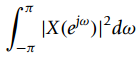
For simple signals it is possible to obtain some information on their DTFTs without computing it. Letx[n] = δ[n] + 2δ[n ˆ’ 1] + 3δ[n ˆ’ 2] + 2δ[n ˆ’ 3] + δ[n ˆ’ 4].(a) Find X(ej0) and
Let x1[n] = 0.5 n ,0 ≤ n ≤ 9 be a period of a periodic signal x[n].Use the Z-transform to compute the Fourier series coefficients of x[n].
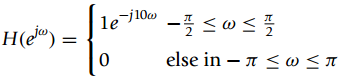
Inputs to an ideal low-pass filter with frequency response
The frequency response of a filter is H(ejω) = 1.5 + cos(2ω),− π ≤ ω ≤ π.(a) Is |H(ejω)| = H(ejω)? Is phase zero?(b) Find the impulse response h[n]of this filter. What type of filter is it? FIR? IIR? Is it causal? Explain.(c) Let H1(ejω) = e−jNω H(ejω) determine
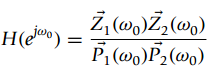
An FIR filter has a transfer function H(z) = zˆ’2(zˆ’ejÏ€/2)(zˆ’eˆ’jÏ€/2).(a) Find and plot the poles and zeros of this filter.(b) Expressing the frequency response at some frequency ω0 as carefully draw
The impulse response of an FIR filter is h[n] = αδ[n] + βδ[n − 1] + αδ[n − 2], α > 0 and β > 0.(a) Determine the value of α and β for which this filter has a dc gain |H(ej0)|= 1, and linear phase ∠H(ejω)= − ω.(b) For the smallest possible β and the
The transfer function of an FIR filter is H(z) = z−2 (z − 2)(z − 0.5).(a) Find the impulse response h[n] of this filter and plot it. Comment on any symmetries it might have.(b) Find the phase ∠H(ejω) of the filter and carefully plot it. Is this phase linear for all
The transfer function of an IIR filter is(a) Calculate the impulse response h[n]of the filter.(b) Would it be possible for this filter to have linear phase? Explain.(c) Sketch the magnitude response |H(ejω)| using a plot of the poles and zeros of H(z) in the Z-plane. Use
The transfer function of an IIR filter isFind the magnitude response of this filter at ω = 0, ω = Ï€/2, and ω = Ï€.From the poles and the zeros of H(z) find geometrically the magnitude response and indicate the type of filter. (z + 2)(z – 2) (z
Consider the following problems related to the specification of IIR filters(a) The magnitude specifications for a low-pass filter are1 – δ ≤ |H(ejω)| ≤ 1 0 ≤ ω ≤ 0.5 π0 < |H(ejω)| ≤ δ
A first-order low-pass analog filter has a transfer function H(s) = 1/(s + 1).(a) If for this filter, the input is x(t) and the output is y(t) what is the ordinary differential equation representing this filter.(b) Suppose that we change this filter into a discrete filter using the
Given the discrete IIR filter realization shown in Figure 12.31 where G is a gain value(a) Determine the difference equation that corresponds to the filter realization.(b) Determine the range of values of the gain G so that the given filter is BIBO stable and has complex conjugate
Consider the following transfer function:(a) Develop a cascade realization of H(z) using a first-order and a sec-ond-order sections. Use minimal direct form to realize each of the sections.(b) Develop a parallel realization of H(z)by considering first and second-order sections, each
Showing 100 - 200
of 522
1
2
3
4
5
6
Step by Step Answers

 Get 50% OFF
Claim Now
Get 50% OFF
Claim Now





![-(m²+n²) e 4σ4 h[m, n] - 3σ< m< 3σ, -3σ<n< 3 σ](https://dsd5zvtm8ll6.cloudfront.net/si.question.images/images/question_images/1566/8/1/6/3385d63b8523a7391566799553534.jpg)
![S 1/100 0< m, n< 10 otherwise hi[m, n] =](https://dsd5zvtm8ll6.cloudfront.net/si.question.images/images/question_images/1566/8/1/5/9545d63b6d268a831566799169765.jpg)

![N-1 — )2т km M-1 м- — )2тёn' E [m, n] exp ( en X (k, €) |exp Σ т-0 м п-0 X(т,0) - )2лkm I X(m, 0)ехp (](https://dsd5zvtm8ll6.cloudfront.net/si.question.images/images/question_images/1566/8/1/5/7215d63b5e9c1a0b1566798937142.jpg)
![1 0< m< (M1 – 1), 0<n< (N1 – 1) O M1 <m < (M – 1), N1 <n < (N – 1) r[m,n]](https://dsd5zvtm8ll6.cloudfront.net/si.question.images/images/question_images/1566/8/1/5/7435d63b5ffc13e51566798959131.jpg)


![| yim, n] ΣΣ hm-L,n- qrk, k=0 €=-k](https://dsd5zvtm8ll6.cloudfront.net/si.question.images/images/question_images/1566/8/0/9/8135d639ed57ae821566793029055.jpg)


![h„[m, n] = ő[m, n] – 8[m – 2, n] + 26[m, n – 1] – 26[m – 2, n – 1] + ő[m, n – 2] – 6[m – 2, n –](https://dsd5zvtm8ll6.cloudfront.net/si.question.images/images/question_images/1566/5/7/8/9355d6018f7d674e1566562143765.jpg)
![Y1[m, n] = (h, * x)[m,n], y2[m, n] = (h, * 1)[m, n] y[m, n] = V(yn [m, n])? + (y2[m, n])²](https://dsd5zvtm8ll6.cloudfront.net/si.question.images/images/question_images/1566/5/7/8/9785d601922561a81566562186265.jpg)
![8 n – 1] + o[n – 2] + 8[n – 3). h[n] = 0.25(8[n] + d[n – 1] + d[n – 2] + ő[n – 3]).](https://dsd5zvtm8ll6.cloudfront.net/si.question.images/images/question_images/1566/5/7/8/7295d601829d67e51566561937725.jpg)
![бт, п] + 25(m — 1, п] + 36|т — 2, п] + 46(m, п — 1] + 56(т - 1, п — 1] + 66|m - 2, п — 1] гm, п] +](https://dsd5zvtm8ll6.cloudfront.net/si.question.images/images/question_images/1566/5/7/8/3485d6016ac07f2e1566561555931.jpg)
![|h m, п] %3D бт, п] + бm — 1, п] — б[т, п — 1]— 6\т — 1, п — 1]](https://dsd5zvtm8ll6.cloudfront.net/si.question.images/images/question_images/1566/5/7/8/3705d6016c20aa4e1566561577906.jpg)
![r[n] = y[n] + 0.8y[n – N1] + 0.6y[n – N2]](https://dsd5zvtm8ll6.cloudfront.net/si.question.images/images/question_images/1566/5/7/7/2395d6012575fac51566560447278.jpg)
![hm, п] 3 т +n т](https://dsd5zvtm8ll6.cloudfront.net/si.question.images/images/question_images/1566/5/7/6/8625d6010de5bfa21566560070292.jpg)
![h[m, n] = h[m – 1, n] + [m,n – 1] + ő[m, n]](https://dsd5zvtm8ll6.cloudfront.net/si.question.images/images/question_images/1566/5/7/6/8765d6010ec1e9961566560084051.jpg)

![r[m, n] = style=](https://dsd5zvtm8ll6.cloudfront.net/si.question.images/images/question_images/1566/5/7/6/7425d601066e3f8a1566559950856.jpg)
![r[m, n] = am+](https://dsd5zvtm8ll6.cloudfront.net/si.question.images/images/question_images/1566/5/7/6/6825d60102a8f79d1566559890528.jpg)





![A#(nT,)]/T. = y(nT.)](https://dsd5zvtm8ll6.cloudfront.net/si.question.images/images/question_images/1566/4/8/6/3955d5eaf7be71111566469595112.jpg)

![r(t) = A cos(Qot) is Ae10 so that r(t) = Re[Ae³°e%ot].](https://dsd5zvtm8ll6.cloudfront.net/si.question.images/images/question_images/1566/4/8/5/8775d5ead75a15ca1566469076730.jpg)

![x[n] = cos(en)u[n], 0 = ,0 < n <L– 1.](https://dsd5zvtm8ll6.cloudfront.net/si.question.images/images/question_images/1545/9/0/3/2415c249c89a33721545885825170.jpg)


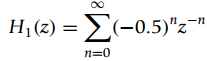
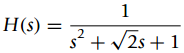
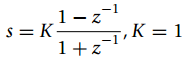
![N,N2 gcd[N1, N2]](https://dsd5zvtm8ll6.cloudfront.net/si.question.images/images/question_images/1545/6/4/6/7605c20b2a81de7c1545629348258.jpg)

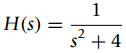
![y[n] = 1+(2/k) cos(0.2t kn) 0 < n < ∞. k=1 |](https://dsd5zvtm8ll6.cloudfront.net/si.question.images/images/question_images/1545/8/3/4/1685c238eb8cd4531545816753537.jpg)
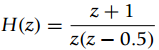
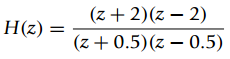
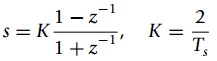
![y[n] r[n] + e[n]](https://dsd5zvtm8ll6.cloudfront.net/si.question.images/images/question_images/1545/9/2/2/4815c24e7b1242fd1545905064130.jpg)



