New Semester
Started
Get
50% OFF
Study Help!
--h --m --s
Claim Now
Question Answers
Textbooks
Find textbooks, questions and answers
Oops, something went wrong!
Change your search query and then try again
S
Books
FREE
Study Help
Expert Questions
Accounting
General Management
Mathematics
Finance
Organizational Behaviour
Law
Physics
Operating System
Management Leadership
Sociology
Programming
Marketing
Database
Computer Network
Economics
Textbooks Solutions
Accounting
Managerial Accounting
Management Leadership
Cost Accounting
Statistics
Business Law
Corporate Finance
Finance
Economics
Auditing
Tutors
Online Tutors
Find a Tutor
Hire a Tutor
Become a Tutor
AI Tutor
AI Study Planner
NEW
Sell Books
Search
Search
Sign In
Register
study help
engineering
introduction to quantum mechanics
Introduction To Quantum Mechanics 3rd Edition David J. Griffiths, Darrell F. Schroeter - Solutions
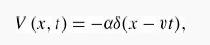
Consider the moving delta-function well:where v is the (constant) velocity of the well.(a) Show that the time-dependent Schrödinger equation admits the exact solution.where E = -mα2/2ћ2 is the bound-state energy of the stationary delta function.(b) Find the expectation value of the
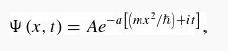
(a) Show thatsatisfies the time-dependent Schrödinger equation for the harmonic oscillator potential (Equation 2.44). Here is any real constant with the dimensions of length.(b) Find |Ψ (x, t)|2, and describe the motion of the wave packet.(c) Compute (x) and (P), and check that Ehrenfest’s
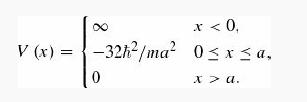
Consider a particle of mass m in the potential(a) How many bound states are there?(b) In the highest-energy bound state, what is the probability that the particle would be found outside the well (x > α)? x < 0. V (x) = -32h²/ma² 0≤x≤a, -E 0 x > a.
For the distribution of ages in the example in Section 1.3.1:(a) Compute (j2) and (j2).(b) Determine Δj for each j, and use Equation 1.11 to compute the standard deviation.(c) Use your results in (a) and (b) to check Equation 1.12.Equation 1.11Equation 1.12 o² = ((Aj)²). (1.11)
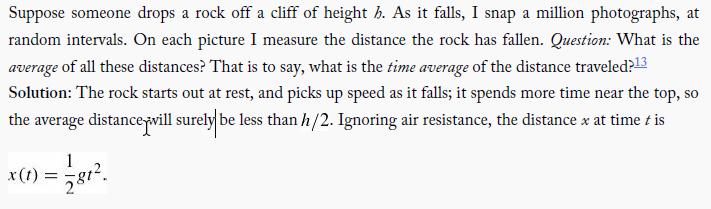
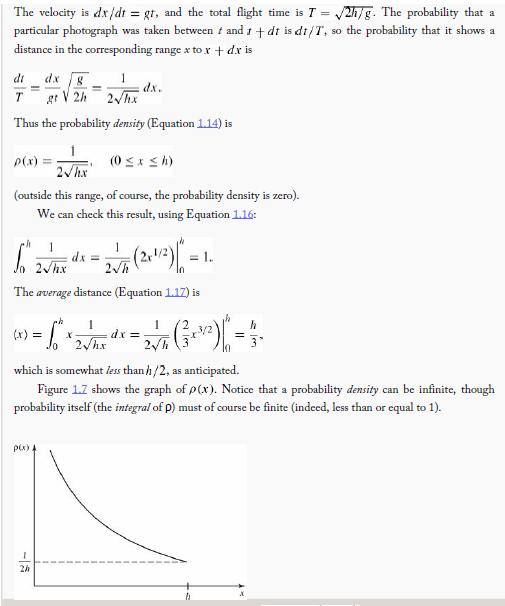
(a) Find the standard deviation of the distribution in Example 1.2.(b) What is the probability that a photograph, selected at random, would show a distance x more than one standard deviation away from the average? Suppose someone drops a rock off a cliff of height b. As it falls, I snap a million
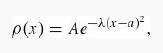
Consider the gaussian distributionwhere A, a, and λ are positive real constants. (The necessary integrals are inside the back cover.)(a) Use Equation 1.16 to determine A.(b) Find (x), (x2) and σ.(c) Sketch the graph of ρ(x). P(x) = Ae-(x-a)²
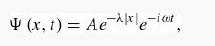
Consider the wave functionwhere A, λ, and ω are positive real constants. (We’ll see in Chapter 2 for what potential (V) this wave function satisfies the Schrödinger equation.)(a) Normalize Ψ.(b) Determine the expectation values of x and x2.(c) Find the standard deviation of x. Sketch the
What if we were interested in the distribution of momenta (p = mv), for the classical harmonic oscillator (Problem 1.11(b)).(a) Find the classical probability distribution ρ(p) (note that p ranges from (b) Calculate (p), (p2), and σp.(c) What’s the classical uncertainty product, σx σp,
Calculate d(p) / dt.This is an instance of Ehrenfest’s theorem, which asserts that expectation values obey the classical laws. d(p) 豐ㅏㅏ dt ax (1.38)
A particle of mass m has the wave functionwhere A and a are positive real constants.(a) Find A.(b) For what potential energy function, V(x), is this a solution to the Schrödinger equation?(c) Calculate the expectation values of x,x2, p, and p2.(d) Find σx and σp . Is their product
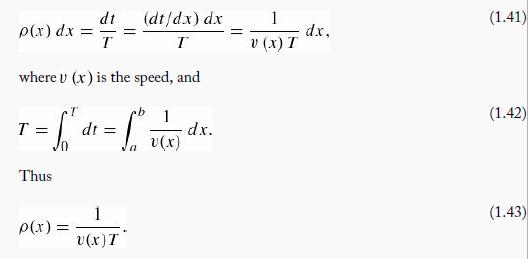
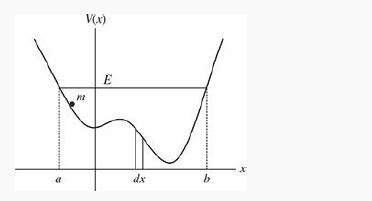
Imagine a particle of mass m and energy E in a potential well , sliding frictionlessly back and forth between the classical turning points (a and b in Figure 1.10). Classically, the probability of finding the particle in the range dx (if, for example, you took a snapshot at a random time t) is
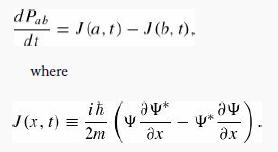
Let Pab (t) be the probability of finding the particle in the range (a < x < b), at time t.(a) Show thatWhat are the units of J (x,t)? J is called the probability current because it tells you the rate at which probability is “flowing” past the point x. If is Pab (t) is increasing, then
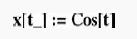
Check your results in Problem 1.11(b) with the following “numerical experiment.” The position of the oscillator at time t is x(t) = A cos(ωt).You might as well take ω = 1 (that sets the scale for time) and A = 1 (that sets the scale for length). Make a plot of x at 10,000 random times, and
Suppose you add a constant V0 to the potential energy (by “constant” I mean independent of x as well as t). In classical mechanics this doesn’t change anything, but what about quantum mechanics? Show that the wave function picks up a time-dependent phase factor: exp (-iV0t /h). What effect
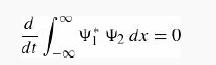
Show thatfor any two (normalizable) solutions to the Schrödinger equation (with the same V (x) ), Ψ1 and Ψ2. P d√x 4₁ 42 dx = 0 -8 iP
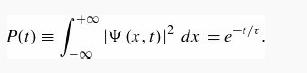
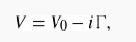
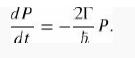
Suppose you wanted to describe an unstable particle, that spontaneously disintegrates with a “lifetime” τ. In that case the total probability of finding the particle somewhere should not be constant, but should decrease at (say) an exponential rate:A crude way of achieving this result is as
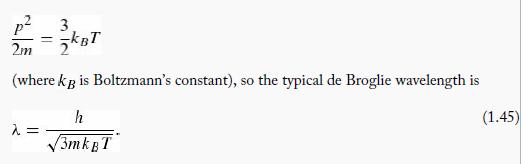
Very roughly speaking, quantum mechanics is relevant when the de Broglie wavelength of the particle in question (h/p) is greater than the characteristic size of the system (d) . In thermal equilibrium at (Kelvin) temperature T, the average kinetic energy of a particle is The purpose of this
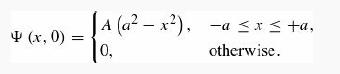
A particle is represented (at time t = 0) by the wave function(a) Determine the normalization constant A.(b) What is the expectation value of x?(c) What is the expectation value of p?(d) Find the expectation value of x2.(e) Find the expectation value of p2.(f) Find the uncertainty in x (σx).(g)
Showing 400 - 500
of 418
1
2
3
4
5
Step by Step Answers

 Get 50% OFF
Claim Now
Get 50% OFF
Claim Now