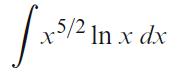
New Semester
Started
Get
50% OFF
Study Help!
--h --m --s
Claim Now
Question Answers
Textbooks
Find textbooks, questions and answers
Oops, something went wrong!
Change your search query and then try again
S
Books
FREE
Study Help
Expert Questions
Accounting
General Management
Mathematics
Finance
Organizational Behaviour
Law
Physics
Operating System
Management Leadership
Sociology
Programming
Marketing
Database
Computer Network
Economics
Textbooks Solutions
Accounting
Managerial Accounting
Management Leadership
Cost Accounting
Statistics
Business Law
Corporate Finance
Finance
Economics
Auditing
Tutors
Online Tutors
Find a Tutor
Hire a Tutor
Become a Tutor
AI Tutor
AI Study Planner
NEW
Sell Books
Search
Search
Sign In
Register
study help
mathematics
applied calculus
Calculus And Its Applications 14th Edition Larry Goldstein, David Lay, David Schneider, Nakhle Asmar - Solutions
Find the area under the graph of y = 1/x2 for x ≥ 2.
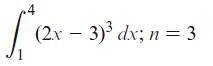
Approximate the following integrals by the midpoint rule, the trapezoidal rule, and Simpson’s rule. Then, find the exact value by integration. Express your answers to five decimal places. S (2x − 3)³ dx; n = 3 -
Find the area under the graph of y = (x + 1)-2 for x ≥ 0.
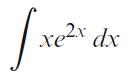
Determine the following indefinite integrals: xp zx UI z x で u[ で [x
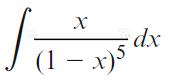
Determine the following indefinite integrals: X (1 − x)5 dx
Determine the integrals in Exercises by making appropriate substitutions. dx I + z ²x^
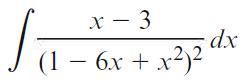
Determine the integrals in Exercises by making appropriate substitutions. S x-3 (1 - 6x + x²)² dx
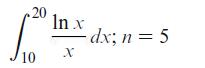
Approximate the following integrals by the midpoint rule, the trapezoidal rule, and Simpson’s rule. Then, find the exact value by integration. Express your answers to five decimal places. 20 foo 10 ln x X - dx; n = 5
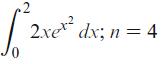
Approximate the following integrals by the midpoint rule, the trapezoidal rule, and Simpson’s rule. Then, find the exact value by integration. Express your answers to five decimal places. 2x0² dx; n = 4
Find the area under the graph of y = e-x/2 for x ≥ 0.
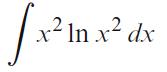
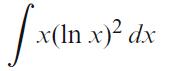
Determine the following indefinite integrals: S x(In x)² dx
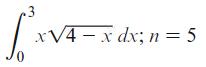
Approximate the following integrals by the midpoint rule, the trapezoidal rule, and Simpson’s rule. Then, find the exact value by integration. Express your answers to five decimal places. LAVA xV4-x dx; n = 5
Find the area under the graph of y = 4e-4x for x ≥ 0.
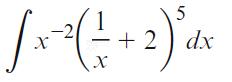
Determine the integrals in Exercises by making appropriate substitutions. √ x ²2 ( 1 + 2 ) ² dx
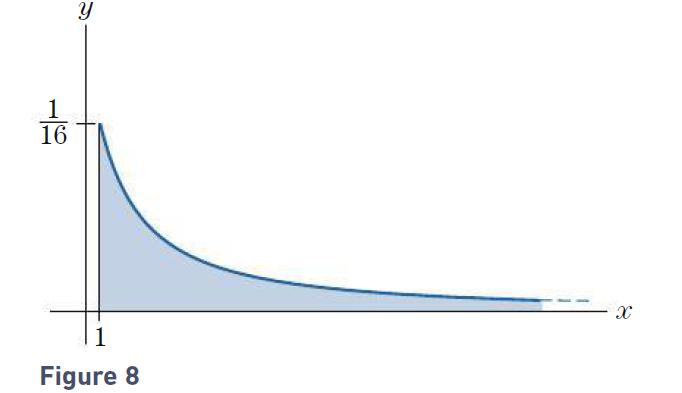
Find the area under the graph of y = (2x + 6)-4/3 for x ≥ 1. 1 16 Y Figure 8 X
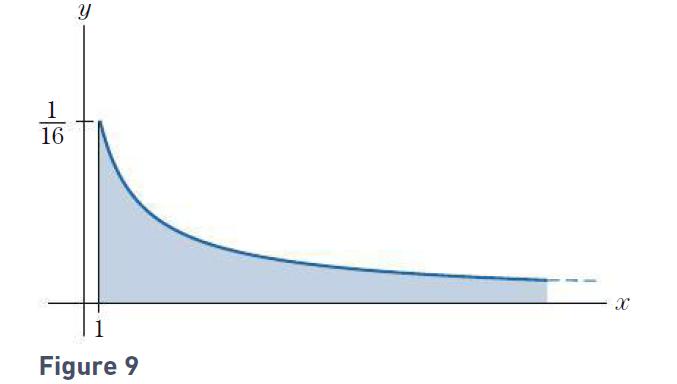
Show that the region under the graph of y = (14x + 18)-4/5 for x ≥ 1 cannot be assigned any finite number as its area. 16 Y Figure 9 X
Find the area under the graph of y = (x + 1)-3/2 for x ≥ 3.
Decide whether integration by parts or a substitution should be used to compute the indefinite integral. If substitution, indicate the substitution to be made. If by parts, indicate the functions f (x) and g(x) to be used in formula (1) of Section 9.2. Integration by Parts [ f(x)g(x)dx = f(x (x)dx
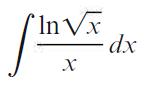
Determine the integrals in Exercises by making appropriate substitutions. 'In Vx X dx
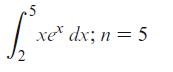
Approximate the following integrals by the midpoint rule, the trapezoidal rule, and Simpson’s rule. Then, find the exact value by integration. Express your answers to five decimal places. .5 √2 xe dx; n = 5
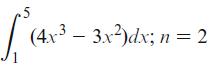
Approximate the following integrals by the midpoint rule, the trapezoidal rule, and Simpson’s rule. Then, find the exact value by integration. Express your answers to five decimal places. 5 [²(41³3 (4x3 3x²)dx; n = 2
Decide whether integration by parts or a substitution should be used to compute the indefinite integral. If substitution, indicate the substitution to be made. If by parts, indicate the functions f (x) and g(x) to be used in formula (1) of Section 9.2. Integration by Parts [ f(x)g(x)dx = f(x (x)dx
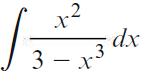
Determine the integrals in Exercises by making appropriate substitutions. S x2 X dx 3-x3
Decide whether integration by parts or a substitution should be used to compute the indefinite integral. If substitution, indicate the substitution to be made. If by parts, indicate the functions f (x) and g(x) to be used in formula (1) of Section 9.2. Integration by Parts [ f(x)g(x)dx = f(x (x)dx
Determine the integrals in Exercises by making appropriate substitutions. x3 x² - 2x X 3x² + 1 dx
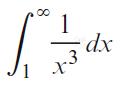
Evaluate the following improper integrals whenever they are convergent. 1 - x3 dx
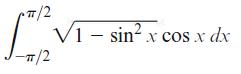
Use substitutions and the fact that a circle of radius r has area πr2 to evaluate the following integrals. TT/2 1/2 V1-sin² x cos x dx -π/2
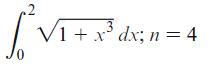
The following integrals cannot be evaluated in terms of elementary antiderivatives. Find an approximate value by Simpson’s rule. Express your answers to five decimal places. S V₁ + x³ dx; n = 4 3
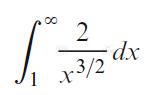
Evaluate the following improper integrals whenever they are convergent. S 2 x3/2 dx
Show that the region under the graph of y = (x - 1)-1/3 for x ≥ 2 cannot be assigned any finite number as its area.
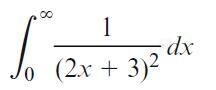
Evaluate the following improper integrals whenever they are convergent. ,00 1 (2x + 3)² dx
Decide whether integration by parts or a substitution should be used to compute the indefinite integral. If substitution, indicate the substitution to be made. If by parts, indicate the functions f (x) and g(x) to be used in formula (1) of Section 9.2. Integration by Parts [ f(x)g(x)dx = f(x (x)dx
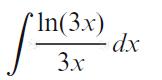
Determine the integrals in Exercises by making appropriate substitutions. (ln(3x) 3x dx
Decide whether integration by parts or a substitution should be used to compute the indefinite integral. If substitution, indicate the substitution to be made. If by parts, indicate the functions f (x) and g(x) to be used in formula (1) of Section 9.2. Integration by Parts [ f(x)g(x)dx = f(x (x)dx
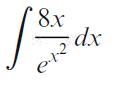
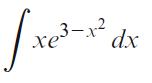
Determine the integrals in Exercises by making appropriate substitutions. / 8.x Rar ex
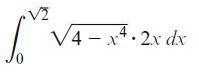
Use substitutions and the fact that a circle of radius r has area πr2 to evaluate the following integrals. Jo V2 V4x4.2x dx
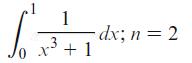
The following integrals cannot be evaluated in terms of elementary antiderivatives. Find an approximate value by Simpson’s rule. Express your answers to five decimal places. 1 10 x 1 3+1 -dx; n = 2
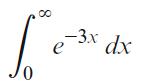
Evaluate the following improper integrals whenever they are convergent. 00 So 0 ₂-3x dx
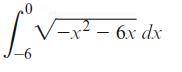
Use substitutions and the fact that a circle of radius r has area πr2 to evaluate the following integrals. fo -6 V-x² - 6x dx
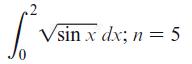
The following integrals cannot be evaluated in terms of elementary antiderivatives. Find an approximate value by Simpson’s rule. Express your answers to five decimal places. .2 Vsin x dx; n = 5
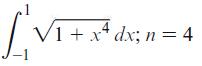
The following integrals cannot be evaluated in terms of elementary antiderivatives. Find an approximate value by Simpson’s rule. Express your answers to five decimal places. -1 V1 + x4 dx; n = 4
Decide whether integration by parts or a substitution should be used to compute the indefinite integral. If substitution, indicate the substitution to be made. If by parts, indicate the functions f (x) and g(x) to be used in formula (1) of Section 9.2. Integration by Parts [ f(x)g(x)dx = f(x (x)dx
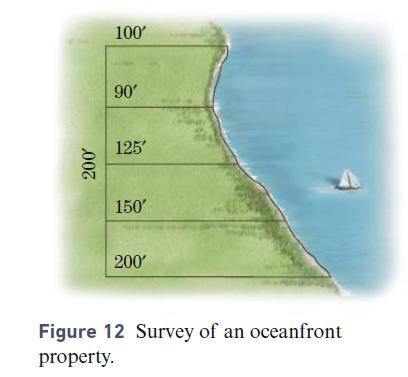
In a survey of a piece of oceanfront property, measurements of the distance to the water were made every 50 feet along a 200-foot side. (See Fig. 12.) Use the trapezoidal rule to estimate the area of the property. 200' 100' 90' 125' 150' 200' Figure 12 Survey of an oceanfront property.
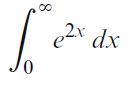
Evaluate the following improper integrals whenever they are convergent. 00 S. 0 e2x dx
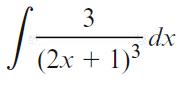
Determine the integrals in Exercises by making appropriate substitutions. 3 (2x + 1)³ Ta dx
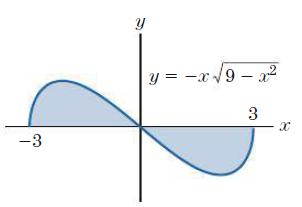
Find the area of the shaded regions. -3 y=-x √√9-2² co 3 X
Decide whether integration by parts or a substitution should be used to compute the indefinite integral. If substitution, indicate the substitution to be made. If by parts, indicate the functions f (x) and g(x) to be used in formula (1) of Section 9.2. Integration by Parts [ f(x)g(x)dx = f(x (x)dx
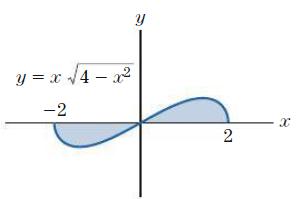
Find the area of the shaded regions. y=x√√4x² -2 h y 2 X
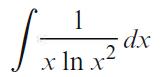
Determine the integrals in Exercises by making appropriate substitutions. 1 x ln x² dx
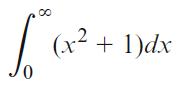
Evaluate the following improper integrals whenever they are convergent. S (x² + 1)dx
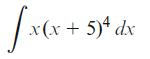
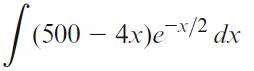
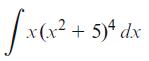
Evaluate the following integrals using techniques studied thus far. S x(x + 5)² dx
Decide whether integration by parts or a substitution should be used to compute the indefinite integral. If substitution, indicate the substitution to be made. If by parts, indicate the functions f (x) and g(x) to be used in formula (1) of Section 9.2. Integration by Parts [ f(x)g(x)dx = f(x (x)dx
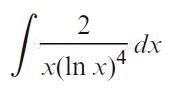
Determine the integrals in Exercises by making appropriate substitutions. 2 1x0² x(In x)4 dx
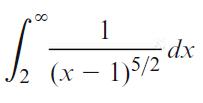
Evaluate the following improper integrals whenever they are convergent. ∞o 1 √2 (x - 1)5/2 dx
Decide whether integration by parts or a substitution should be used to compute the indefinite integral. If substitution, indicate the substitution to be made. If by parts, indicate the functions f (x) and g(x) to be used in formula (1) of Section 9.2. Integration by Parts [ f(x)g(x)dx = f(x (x)dx
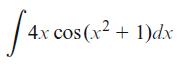
Evaluate the following integrals using techniques studied thus far. [4x co 4x cos(x² + 1)dx
To determine the amount of water flowing down a certain 100-yard-wide river, engineers need to know the area of a vertical cross section of the river. Measurements of the depth of the river were made every 20 yards from one bank to the other. The readings in fathoms were 0, 1, 2, 3, 1, 0. (One
In a drive along a country road, the speedometer readings are recorded each minute during a 5-minute interval.Use the trapezoidal rule to estimate the distance traveled during the 5 minutes. Time (minutes) Velocity (mph) 0 1 33 32 2 28 3 30 4 32 5 35
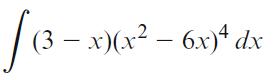
Determine the integrals in Exercises by making appropriate substitutions. s (3 - x)(x² - 6x) dx
Evaluate the following integrals using techniques studied thus far. [x(x². x(x² + 5)4 dx
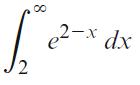
Evaluate the following improper integrals whenever they are convergent. e xp x-7³ I 00
Upon takeoff, the velocity readings of a rocket noted every second for 10 seconds were 0, 30, 75, 115, 155, 200, 250, 300, 360, 420, and 490 feet per second. Use the trapezoidal rule to estimate the distance the rocket traveled during the first 10 seconds.
Decide whether integration by parts or a substitution should be used to compute the indefinite integral. If substitution, indicate the substitution to be made. If by parts, indicate the functions f (x) and g(x) to be used in formula (1) of Section 9.2. Integration by Parts [ f(x)g(x)dx = f(x (x)dx
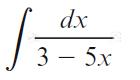
Determine the integrals in Exercises by making appropriate substitutions. dx 3 – 5r
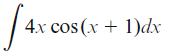
Evaluate the following integrals using techniques studied thus far. [4x 4x cos(x + 1)dx
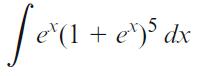
Determine the integrals in Exercises by making appropriate substitutions. Tex *(1 + e^¹)³ dx
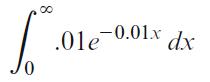
Evaluate the following improper integrals whenever they are convergent. 00 S .01e-0.01x dx
Decide whether integration by parts or a substitution should be used to compute the indefinite integral. If substitution, indicate the substitution to be made. If by parts, indicate the functions f (x) and g(x) to be used in formula (1) of Section 9.2. Integration by Parts [ f(x)g(x)dx = f(x (x)dx
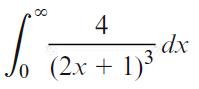
Evaluate the following improper integrals whenever they are convergent. 4 S Jo (2x + 1)³ - dx
Decide whether integration by parts or a substitution should be used to compute the indefinite integral. If substitution, indicate the substitution to be made. If by parts, indicate the functions f (x) and g(x) to be used in formula (1) of Section 9.2. Integration by Parts [ f(x)g(x)dx = f(x (x)dx
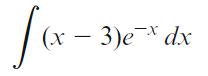
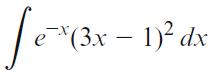
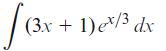
Evaluate the following integrals using techniques studied thus far. [(3 (3x + 1)ex/3 dx
Consider ∫02 f (x)dx, where f(x) = 1/12x4 + 3x2.(a) Make a rough sketch of the graph of f″(x) for 0 ≤ x ≤ 2.(b) Find a number A such that |f″(x)| ≤ A for all x satisfying 0 ≤ x ≤ 2.(c) Obtain a bound on the error of using the midpoint rule with n = 10 to approximate the definite
Consider ∫12 f (x)dx, where f (x) = 3 ln x.(a) Make a rough sketch of the graph of the fourth derivative of f (x) for 1 ≤ x ≤ 2.(b) Find a number A such that |f″″(x)| ≤ A for all x satisfying 1 ≤ x ≤ 2.(c) Obtain a bound on the error of using Simpson’s rule with n = 2 to
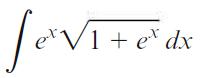
Determine the integrals in Exercises by making appropriate substitutions. Javi √1 + ex dx
When -π/2 < t < 0, is tan t positive or negative?
Construct angles with the following radian measure.- π/3, - 3π/4, - 7π/2
Differentiate (with respect to t or x):y = 4 sin t
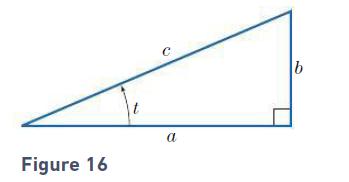
Exercises refer to various right triangles whose sides and angles are labeled as in Fig. 16. Round off all lengths of sides to one decimal place.If t = 1.1 and b = 3.2, find c. Figure 16 C a b
Exercises refer to various right triangles whose sides and angles are labeled as in Fig. 16. Round off all lengths of sides to one decimal place.If t = .4 and c = 5.0, find a. Figure 16 C a b
Exercises refer to various right triangles whose sides and angles are labeled as in Fig. 16. Round off all lengths of sides to one decimal place.If t = .4 and a = 10.0, find c. Figure 16 C a b
Differentiate (with respect to t or x):f (t) = cot 3t
Differentiate (with respect to t or x):y = √sin(x - 1)
Construct angles with the following radian measure.- π/4, - 3π/2, - 3π
Exercises refer to various right triangles whose sides and angles are labeled as in Fig. 16. Round off all lengths of sides to one decimal place.If t = .9 and c = 20.0, find a and b. Figure 16 C a b
When π/2 < t < p, is sin t positive or negative?
Differentiate (with respect to t or x):y = ecos x
Differentiate (with respect to t or x):f (t) = tan 4t
Construct angles with the following radian measure.π/6, - 2π/3, - π
A gabled roof is to be built on a house that is 30 feet wide so that the roof rises at a pitch of 23°. Determine the length of the rafters needed to support the roof.
Differentiate (with respect to t or x):y = (1 + cos t)8
Exercises refer to various right triangles whose sides and angles are labeled as in Fig. 16. Round off all lengths of sides to one decimal place.If t = .5 and a = 2.4, find b and c. Figure 16 C a b
Differentiate (with respect to t or x):f (t) = tan πt
Construct angles with the following radian measure.2π/3, - π/6, 7π/2
Exercises refer to various right triangles whose sides and angles are labeled as in Fig. 16. Round off all lengths of sides to one decimal place.If t = 1.1 and b = 3.5, find a and c. Figure 16 C a b
A tree casts a 60-foot shadow when the angle of elevation of the sun (measured from the horizontal) is 53°. How tall is the tree?
Differentiate (with respect to t or x):y = 3√ sin pt
Differentiate (with respect to t or x):f (x) = 3 tan(π - x)
Differentiate (with respect to t or x):y = cos2 x3
Differentiate (with respect to t or x):f (x) = 5 tan(2x + 1)
Differentiate (with respect to t or x):y = cos2 x + sin2 x
Showing 3400 - 3500
of 5529
First
28
29
30
31
32
33
34
35
36
37
38
39
40
41
42
Last
Step by Step Answers

 Get 50% OFF
Claim Now
Get 50% OFF
Claim Now