New Semester
Started
Get
50% OFF
Study Help!
--h --m --s
Claim Now
Question Answers
Textbooks
Find textbooks, questions and answers
Oops, something went wrong!
Change your search query and then try again
S
Books
FREE
Study Help
Expert Questions
Accounting
General Management
Mathematics
Finance
Organizational Behaviour
Law
Physics
Operating System
Management Leadership
Sociology
Programming
Marketing
Database
Computer Network
Economics
Textbooks Solutions
Accounting
Managerial Accounting
Management Leadership
Cost Accounting
Statistics
Business Law
Corporate Finance
Finance
Economics
Auditing
Tutors
Online Tutors
Find a Tutor
Hire a Tutor
Become a Tutor
AI Tutor
AI Study Planner
NEW
Sell Books
Search
Search
Sign In
Register
study help
mathematics
calculus 10th edition
Calculus 10th Edition Ron Larson, Bruce H. Edwards - Solutions
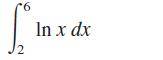
In Exercises use the Trapezoidal Rule and Simpson's Rule to approximate the value of the definite integral. Let n = 4 and round your answer to four decimal places. Use a graphing utility to verify your result. J2 In x dx
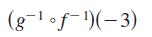
In Exercises use the functions ƒ(x) = 1/8x − 3 and g(x) = x³ to find the given value. (g-¹ of ¹)(-3)
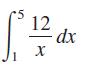
In Exercises use the Trapezoidal Rule and Simpson's Rule to approximate the value of the definite integral. Let n = 4 and round your answer to four decimal places. Use a graphing utility to verify your result. 12 X dx
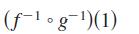
In Exercises use the functions ƒ(x) = 1/8x − 3 and g(x) = x³ to findthe given value. (f-¹ og ¹)(1)
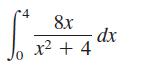
In Exercises use the Trapezoidal Rule and Simpson's Rule to approximate the value of the definite integral. Let n = 4 and round your answer to four decimal places. Use a graphing utility to verify your result. 4 8x x² + 4 So dx
In Exercises find the area of the region bounded by the graphs of the equations. Use a graphing utility to verify your result. y = 2x - tan 0.3x, x = 1, x = 4, y = 0
In Exercises find the area of the region bounded by the graphs of the equations. Use a graphing utility to verify your result. y = 2x - tan 0.3x, x = 1, x = 4, y = 0
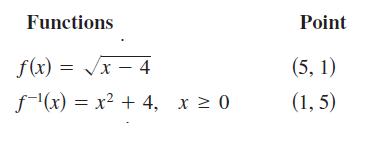
In Exercises (a) Find the domains of ƒ and ƒ-¹(b) Find the ranges of ƒ and ƒ-¹ (c) Graph ƒ and ƒ-¹(d) Show that the slopes of the graphs of ƒ and ƒ-¹ are reciprocals at the given points. Functions f(x)=√x - 4 f¹(x) = x² + 4, x ≥ 0 Point (5, 1) (1,5)
In Exercises find the area of the region bounded by the graphs of the equations. Use a graphing utility to verify your result. Π.Χ. y = 2 sec. 6 x = 0, x = 2, y = 0
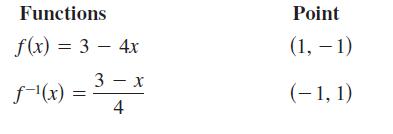
In Exercises (a) Find the domains of ƒ and ƒ-¹(b) Find the ranges of ƒ and ƒ-¹ (c) Graph ƒ and ƒ-¹(d) Show that the slopes of the graphs of ƒ and ƒ-¹ are reciprocals at the given points. Functions f(x) = 3 - 4x 3 - x 4 f-¹(x) = Point (1, -1) (-1, 1)
In Exercises find the area of the region bounded by the graphs of the equations. Use a graphing utility to verify your result. y x² + 4 X x = 1, x = 4, y = 0
In Exercises find the area of the region bounded by the graphs of the equations. Use a graphing utility to verify your result. y = 5x x² + 2² x = 1, x = 5, y = 0
In Exercises verify that ƒ has an inverse. Then use the function ƒ and the given real number a to find (ƒ-¹)'(a). f(x) = x + 3 x + 1' x > -1, a = 2
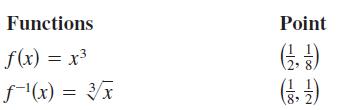
In Exercises (a) Find thedomains of ƒ and ƒ-¹(b) Find the ranges of ƒ and ƒ-¹ (c) Graphƒ and ƒ-¹(d) Show that the slopes of the graphs of ƒ andƒ-¹ are reciprocals at the given points. Functions f(x) = x³ f-¹(x) = 3√x Point (19) 11218 -10 −12 (1)
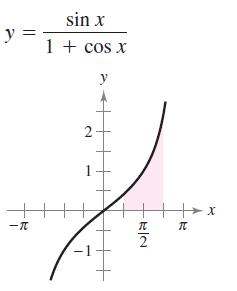
In Exercises find the area of the given region. Use a graphing utility to verify your result. -IC sin x 1 + cos x 2 y E|N +x I
In Exercises verify that ƒ has an inverse. Then use the function ƒ and the given real number a to find (ƒ-¹)'(a). f(x) = x + 6 x - 2' x > 2, a = 3
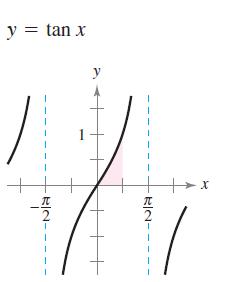
In Exercises find the area of the given region. Use a graphing utility to verify your result. y = tan x 1 RIN- y + R|N- X
In Exercises verify that ƒ has an inverse. Then use the function ƒ and the given real number a to find (ƒ-¹)'(a). f(x) = cos 2x, 0 ≤ x ≤ 2, a = 1
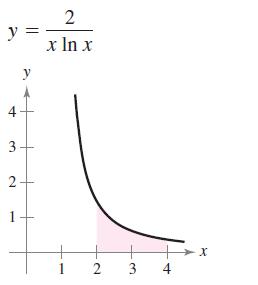
In Exercises find the area of the given region. Use a graphing utility to verify your result. y 3 2 1 y 2 x ln x 12 3 4 X
In Exercises verify that ƒ has an inverse. Then use the function ƒ and the given real number a to find (ƒ-¹)'(a). f(x) = sin x, ㅠ - 1 ≤ x ≤ 1, a = 1/2 2
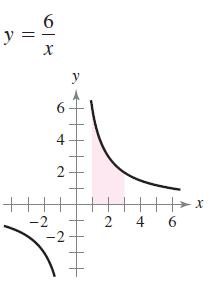
In Exercises find the area of the given region. Use a graphing utility to verify your result. || y = 6 × 19 X -2 6 4 2 tex 246
In Exercises verify that ƒ has an inverse. Then use the function ƒ and the given real number a to find (ƒ-¹)'(a). f(x) = (x³ + 2x³), a = −11 sx)
In Exercises verify that ƒ has an inverse. Then use the function ƒ and the given real number a to find (ƒ-¹)'(a). f(x) = √√√x - 4, a = 2
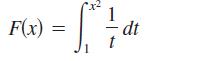
In Exercises find F'(x). F(x) = f² 1 - dt
In Exercises verify that ƒ has an inverse. Then use the function ƒ and the given real number a to find (ƒ-¹)'(a). f(x) = x³ + 2x - 1, a = 2
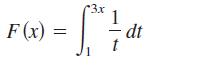
In Exercises find F'(x). 3x F(x) = • Sort 1/1 di = - dt
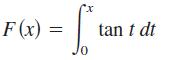
In Exercises find F'(x). F(x) = - So tan t dt
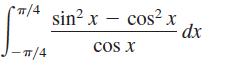
In Exercises use a computer algebra system to find or evaluate the integral. π/4 J-π/4 sin² x - cos²x COS X dx
In Exercises verify that ƒ has an inverse. Then use the function ƒ and the given real number a to find (ƒ-¹)'(a). f(x) = 5 - 2x³, a = 7
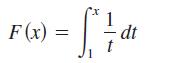
In Exercises find F'(x). F(x) S = = dt t
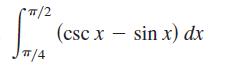
In Exercises use a computer algebra system to find or evaluate the integral. π/2 π/4 (cscx sin x) dx -
In Exercises use a computer algebra system to find or evaluate the integral. dx 1 I - X zł *S
In Exercises decide whether the function has an inverse function. If so, what is the inverse function?A(r) is the area of a circle of radius r.
In Exercises decide whether the function has an inverse function. If so, what is the inverse function?C(t) is the cost of a long distance call lasting t minutes.
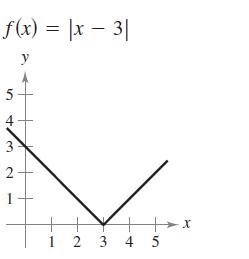
In Exercises delete part of the domain so that the function that remains is one-to-one. Find the inverse function of the remaining function and give the domain of the inverse function. f(x) = |x - 3| y 5 4 3 2 1 2 3 4 5 X
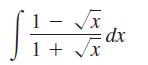
In Exercises use a computer algebra system to find or evaluate the integral. 1-√√√x 1 + √√√x dx
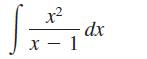
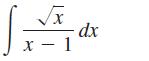
In Exercises use a computer algebra system to find or evaluate the integral. √x S = x-1 dx
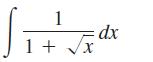
In Exercises use a computer algebra system to find or evaluate the integral. 1 Sitro 1 + dx
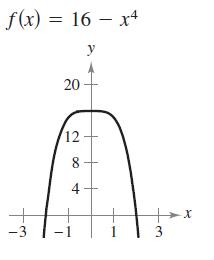
In Exercises delete part of the domain so that the function that remains is one-to-one. Find the inverse function of the remaining function and give the domain of the inverse function. f(x) = 16x4 -3 20 12 8 4 y 3 نرا X
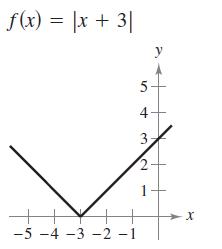
In Exercises delete part of the domain so that the function that remains is one-to-one. Find the inverse function of the remaining function and give the domain of the inverse function. f(x) = |x + 3| -5 -4 -3 -2 -1 5 4 3 1 y X
In Exercises decide whether the function has an inverse function. If so, what is the inverse function?g(t) is the volume of water that has passed through a water line t minutes after a control valve is opened.
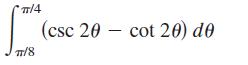
In Exercises evaluate the definite integral. Use a graphing utility to verify your result. TT/4 77/8 (csc 20 cot 20) de
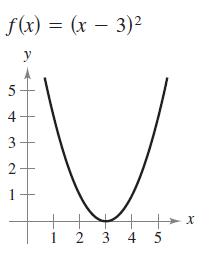
In Exercises delete part of the domain so that the function that remains is one-to-one. Find the inverse function of the remaining function and give the domain of the inverse function. f(x) = (x - 3)² y 5 4 3 2 1 نرا V ++ X 1 2 3 4 5
In Exercises determine whether the function is one-to-one. If it is, find its inverse function. f(x) = x 21, x ≤ 2
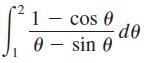
In Exercises evaluate the definite integral. Use a graphing utility to verify your result. 1 - cos 0 sin 0 0 do
In Exercises determine whether the function is one-to-one. If it is, find its inverse function. f(x) = ax + b, a ‡0
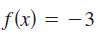
In Exercises determine whether the function is one-to-one. If it is, find its inverse function. f(x) = -3
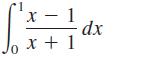
In Exercises evaluate the definite integral. Use a graphing utility to verify your result. S x-1 x + 1 dx
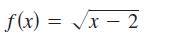
In Exercises determine whether the function is one-to-one. If it is, find its inverse function. f(x) = √√x - 2
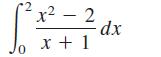
In Exercises evaluate the definite integral. Use a graphing utility to verify your result. 2 0 x² - 2 x + 1 dx
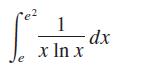
In Exercises evaluate the definite integral. Use a graphing utility to verify your result. Je 1 x ln x dx
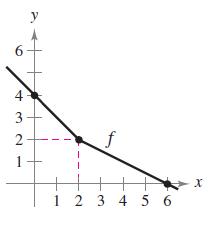
In Exercises use the graph of the function ƒ to make a table of values for the given points. Then make a second table that can be used to find ƒ-¹, and sketch the graph of ƒ-¹. 6 4 3 2 1 y 1 2 3 4 456 -x
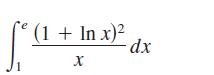
In Exercises evaluate the definite integral. Use a graphing utility to verify your result. (1 + In x)² X xp.
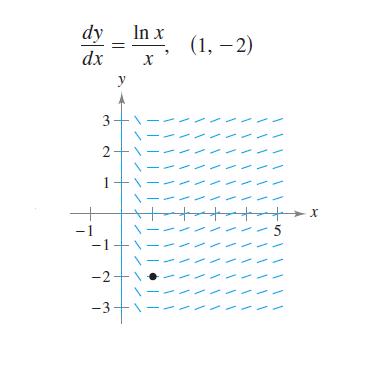
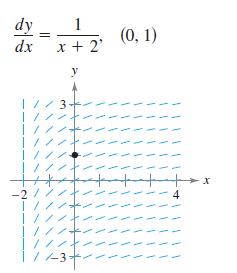
In Exercises a differential equation, a point, and a slope field are given. (a) Sketch two approximate solutions of the differential equation on the slope field, one of which passes through the given point. (b) Use integration to find the particular solution of the differential equation
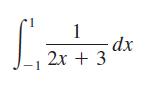
In Exercises evaluate the definite integral. Use a graphing utility to verify your result. S'₁ 1 2x + 3 dx
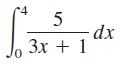
In Exercises evaluate the definite integral. Use a graphing utility to verify your result. 5 3x + 1 dx
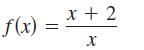
In Exercises(a) Find the inverse function of ƒ(b) Graph ƒ and ƒ-1 on the same set of coordinate axes(c) Describe the relationship between the graphs(d) State the domain and range of ƒ and ƒ-¹ f(x): = x + 2 X
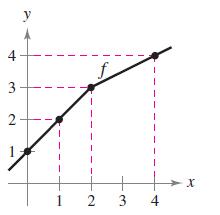
In Exercises use the graph of the function ƒ to make a table of values for thegiven points. Then make a second table that can be used to findƒ-¹, and sketch the graph of ƒ-¹. 4 3 2 1 1 1 3 4
In Exercises a differential equation, a point, and a slope field are given. (a) Sketch two approximate solutions of the differential equation on the slope field, one of which passes through the given point. (b) Use integration to find the particular solution of the differential equation
In Exercises find the particular solution that satisfies the differential equation and the initial equations. 2 ƒ"(x) = ²/3,‚ ƒ′ (1) = 1, ƒ(1) = 1, x > 0
In Exercises find the particular solution that satisfies the differential equation and the initial equations. f"(x) = 4 (x - 1)² 2, f'(2) = 0, f(2)= 3,x > 1
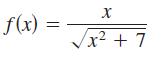
In Exercises(a) Find the inverse function of ƒ(b) Graph ƒ and ƒ-1 on the same set of coordinate axes(c) Describe the relationship between the graphs(d) State the domain and range of ƒ and ƒ-¹ f(x) = X √x² + 7
In Exercises(a) Find the inverse function of ƒ(b) Graph ƒ and ƒ-1 on the same set of coordinate axes(c) Describe the relationship between the graphs(d) State the domain and range of ƒ and ƒ-¹ f(x)=√√√x² - 4₁ x ≥ 2 4,
In Exercises(a) Find the inverse function of ƒ(b) Graph ƒ and ƒ-1 on the same set of coordinate axes(c) Describe the relationship between the graphs(d) State the domain and range of ƒ and ƒ-¹ f(x) = √√√4x², 0≤x≤ 2
In Exercises(a) Find the inverse function of ƒ(b) Graph ƒ and ƒ-1 on the same set of coordinate axes(c) Describe the relationship between the graphs(d) State the domain and range of ƒ and ƒ-¹ 0 = x */zx = (x)ƒ €/ZX
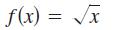
In Exercises(a) Find the inverse function of ƒ(b) Graph ƒ and ƒ-1 on the same set of coordinate axes(c) Describe the relationship between the graphs(d) State the domain and range of ƒ and ƒ-¹ f(x) = √x
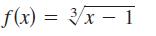
In Exercises(a) Find the inverse function of ƒ(b) Graph ƒ and ƒ-1 on the same set of coordinate axes(c) Describe the relationship between the graphs(d) State the domain and range of ƒ and ƒ-¹ f(x) = √√x - 1
In Exercises(a) Find the inverse function of ƒ(b) Graph ƒ and ƒ-1 on the same set of coordinate axes(c) Describe the relationship between the graphs(d) State the domain and range of ƒ and ƒ-¹ f(x) = x³ - 1
In Exercises(a) Find the inverse function of ƒ(b) Graph ƒ and ƒ-1 on the same set of coordinate axes(c) Describe the relationship between the graphs(d) State the domain and range of ƒ and ƒ-¹ f(x) = x², x ≥ 0
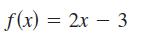
In Exercises(a) Find the inverse function of ƒ(b) Graph ƒ and ƒ-1 on the same set of coordinate axes(c) Describe the relationship between thegraphs(d) State the domain and range of ƒ and ƒ-¹ f(x) = 2x - 3
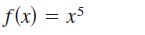
In Exercises(a) Find the inverse function of ƒ(b) Graph ƒ and ƒ-1 on the same set of coordinate axes(c) Describe the relationship between the graphs(d) State the domain and range of ƒ and ƒ-¹ f(x) = x³
In Exercises(a) Find the inverse function of ƒ(b) Graph ƒ and ƒ-1 on the same set of coordinate axes(c) Describe the relationship between the graphs(d) State the domain and range of ƒ and ƒ-¹ f(x) = 7 - 4x
In Exercises show that ƒ and g are inverse functions (a) Analytically (b) Graphically. f(x): 1 1 + x² x ≥ 0, g(x) = 1-x₂ X 0 < x≤ 1
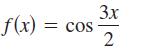
In Exercises use the derivative to determine whether the function is strictly monotonic on its entire domain and therefore has an inverse function. f(x) = COS cos 3x 2
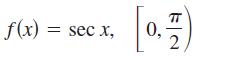
In Exercises show that ƒ is strictly monotonic on the given interval and therefore has an inverse function on that interval. f(x) = sec x, 0, TT 2
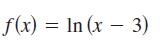
In Exercises use the derivative to determine whether the function is strictly monotonic on its entire domain and therefore has an inverse function. f(x) = In (x − 3)
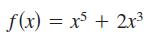
In Exercises use the derivative to determine whether the function is strictly monotonic on its entire domain and therefore has an inverse function. f(x) = x³ + 2x³
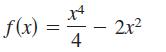
In Exercises use the derivative to determine whether the function is strictly monotonic on its entire domain and therefore has an inverse function. f(x) = 4 4 2x2
In Exercises use the derivative to determine whether the function is strictly monotonic on its entire domain and therefore has an inverse function. f(x) = x³ − 6x² + 12x -
In Exercises use a graphing utility to graph the function. Then use the Horizontal Line Test to determine whether the function is one-to-one on its entire domain and therefore has an inverse function. f(x) = 5x√√√x - 1
In Exercises use the derivative to determine whether the function is strictly monotonic on its entire domain and therefore has an inverse function. f(x) = 2 x - x³
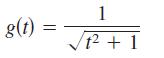
In Exercises use a graphing utility to graph the function. Then use the Horizontal Line Test to determine whether the function is one-to-one on its entire domain and therefore has an inverse function. g(t) = 1 √1² + 1
In Exercises use a graphing utility to graph the function. Then use the Horizontal Line Test to determine whether the function is one-to-one on its entire domain and therefore has an inverse function. h(x) = x + 4|- |x - 4|
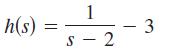
In Exercises use a graphing utility to graph the function. Then use the Horizontal Line Test to determine whether the function is one-to-one on its entire domain and therefore has an inverse function. h(s) = 1 S-2 3
In Exercises use a graphing utility to graph the function. Then use the Horizontal Line Test to determine whether the function is one-to-one on its entire domain and therefore has an inverse function. g(x) = (x + 5)³
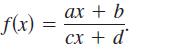
Let(a) Show that ƒ is one-to-one if and only if bc - ad ≠ 0.(b) Given bc - ad ≠ 0, find ƒ-¹.(c) Determine the values of a, b, c, and d such that ƒ = ƒ-¹. P + xɔ ax + b (x)ƒ
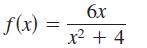
In Exercises use a graphing utility to graph the function. Then use the Horizontal Line Test to determine whether the function is one-to-one on its entire domain and therefore has an inverse function. f(x) 6х x2 + 4
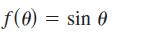
In Exercises use a graphing utility to graph the function. Then use the Horizontal Line Test to determine whether the function is one-to-one on its entire domain and therefore has an inverse function. f(0) = sin 0
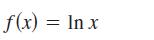
In Exercises use a graphing utility to graph the function. Then use the Horizontal Line Test to determine whether the function is one-to-one on its entire domain and therefore has an inverse function. f(x) = ln x
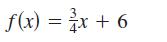
In Exercises use a graphing utility to graph the function. Then use the Horizontal Line Test to determine whether the function is one-to-one on its entire domain and therefore has an inverse function. f(x) = ²x + 6
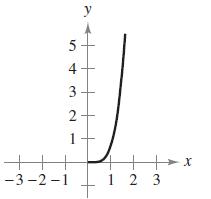
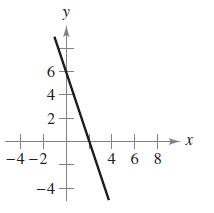
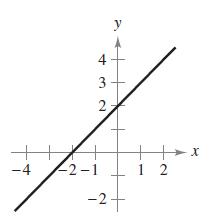
In Exercises match the graph of the function with the graph of its inverse function. [The graphs of the inverse functions are labeled (a), (b), (c), and (d).](a)(b)(c)(d) 5 43 3 2 1 -3-2-1 y 1 2 3 X
In Exercises match the graph of the function with the graph of its inverse function. [The graphs of the inverse functions are labeled (a), (b), (c), and (d).](a)(b)(c)(d) 5 43 3 2 1 -3-2-1 y 1 2 3 X
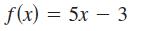
In Exercises use a graphing utility to graph the function. Then use the Horizontal Line Test to determine whether the function is one-to-one on its entire domain and therefore has an inverse function. f(x) = 5x - 3
In Exercises match the graph of the function with the graph of its inverse function. [The graphs of the inverse functions are labeled (a), (b), (c), and (d).](a)(b)(c)(d) 5 43 3 2 1 -3-2-1 y 1 2 3 X
In Exercises show that ƒ and g are inverse functions (a) Analytically (b) Graphically. f(x) = = 1, g(x) = X
In Exercises match the graph of the function with the graph of its inverse function. [The graphs of the inverse functions are labeled (a), (b), (c), and (d).](a)(b)(c)(d) 5 43 3 2 1 -3-2-1 y 1 2 3 X
In Exercises show that ƒ and g are inverse functions (a) Analytically (b) Graphically. f(x)=√x - 4, g(x) = x² + 4, x ≥ 0
In Exercises show that ƒ and g are inverse functions (a) Analytically (b) Graphically. f(x) = 1 - x³, g(x) = 3/1 - x
In Exercises show that ƒ and g are inverse functions (a) Analytically (b) Graphically. x 91 = (x)8 0 = x x 91 = (x)ƒ
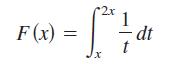
Prove that the function is constant on the interval (0, ∞). F(x) *2x [²1/ x = - dt
Showing 7300 - 7400
of 9867
First
67
68
69
70
71
72
73
74
75
76
77
78
79
80
81
Last
Step by Step Answers

 Get 50% OFF
Claim Now
Get 50% OFF
Claim Now