New Semester
Started
Get
50% OFF
Study Help!
--h --m --s
Claim Now
Question Answers
Textbooks
Find textbooks, questions and answers
Oops, something went wrong!
Change your search query and then try again
S
Books
FREE
Study Help
Expert Questions
Accounting
General Management
Mathematics
Finance
Organizational Behaviour
Law
Physics
Operating System
Management Leadership
Sociology
Programming
Marketing
Database
Computer Network
Economics
Textbooks Solutions
Accounting
Managerial Accounting
Management Leadership
Cost Accounting
Statistics
Business Law
Corporate Finance
Finance
Economics
Auditing
Tutors
Online Tutors
Find a Tutor
Hire a Tutor
Become a Tutor
AI Tutor
AI Study Planner
NEW
Sell Books
Search
Search
Sign In
Register
study help
mathematics
calculus 10th edition
Calculus 10th Edition Ron Larson, Bruce H. Edwards - Solutions
Prove that if a > 0 and n is any positive integer, then the polynomial function p(x) = x2n + 1 + ax + b cannot have two real roots.
In Exercises the function s(t) describes the motion of a particle along a line. For each function(a) Find the velocity function of the particle at anytime t ≥ 0 (b) Identify the time interval(s) in which the particleis moving in a positive direction (c) Identify the time interval(s) in
Prove that if ƒ'(x) = 0 for all x in an interval (a, b), then ƒ is constant on (a, b).
In Exercises the function s(t) describes the motion of a particle along a line. For each function(a) Find the velocity function of the particle at any time t ≥ 0 (b) Identify the time interval(s) in which the particle is moving in a positive direction (c) Identify the time interval(s)
In Exercises the function s(t) describes the motion of a particle along a line. For each function(a) Find the velocity function of the particle at any time t ≥ 0 (b) Identify the time interval(s) in which the particle is moving in a positive direction (c) Identify the time interval(s)
Let p(x) = Ax² + Bx + C. Prove that for any interval [a, b], the value c guaranteed by the Mean Value Theorem is the midpoint of the interval.
Prove that if ƒ is differentiable on (-∞, ∞) andƒ'(x) < 1 for all real numbers, then ƒ has at most one fixedpoint. A fixed point of a function ƒ is a real number c such thatƒ(c) = c.
Use the result of Exercise 81 to show that ƒ(x) = 1/2 cos x has at most one fixed point.Data from in Exercise 81Prove that if ƒ is differentiable on (-∞, ∞) and ƒ'(x) < 1 for all real numbers, then ƒ has at most one fixed point. A fixed point of a function ƒ is a real number c such that
In Exercises the function s(t) describes the motion of a particle along a line. For each function(a) Find the velocity function of the particle at any time t ≥ 0 (b) Identify the time interval(s) in which the particle is moving in a positive direction (c) Identify the time interval(s)
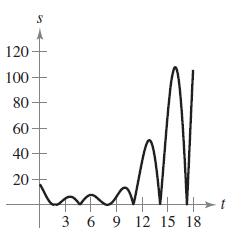
In Exercises the graph shows the position of a particle moving along a line. Describe how the particle’s position changes with respect to time. S 120- 100- 80- 60 40 20 m 3 6 9 12 15 18.
In Exercises find a polynomial functionthat has only the specified extrema. (a) Determine theminimum degree of the function and give the criteria you usedin determining the degree. (b) Using the fact that thecoordinates of the extrema are solution points of the function,and that the
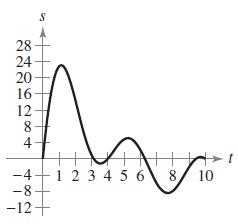
In Exercises the graph shows the position of a particle moving along a line. Describe how the particle’s position changes with respect to time. 28 24 20 16 12 8 4 S IN -4 1 2 3 4 5 6 -8 -12+ 8/ 10 t
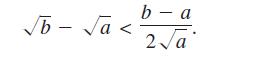
Let 0 < a < b. Use the Mean Value Theorem to show that √b-√a< b - a 2 √a
In Exercises find a polynomial functionthat has only the specified extrema. (a) Determine the minimum degree of the function and give the criteria you used in determining the degree. (b) Using the fact that the coordinates of the extrema are solution points of the function, and that the
Prove that |cos a - cos b|≤ |a - b| for all a and b.
In Exercises find a polynomial functionthat has only the specified extrema. (a) Determine the minimum degree of the function and give the criteria you used in determining the degree. (b) Using the fact that the coordinates of the extrema are solution points of the function, and that the
Prove that |sin a - sin b|≤ |a - b| for all a and b.
In Exercises find a polynomial functionthat has only the specified extrema. (a) Determine the minimum degree of the function and give the criteria you used in determining the degree. (b) Using the fact that the coordinates of the extrema are solution points of the function, and that the
In Exercises determine whether the statement is true or false. If it is false, explain why or give an example that shows it is false.The product of two increasing functions is increasing.
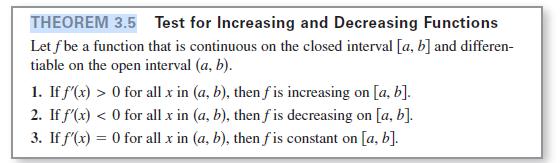
Prove the second case of Theorem 3.5.Data from in Theorem 3.6 THEOREM 3.5 Test for Increasing and Decreasing Functions Let f be a function that is continuous on the closed interval [a, b] and differen- tiable on the open interval (a, b). 1. If f'(x) > 0 for all x in (a, b), then f is increasing on
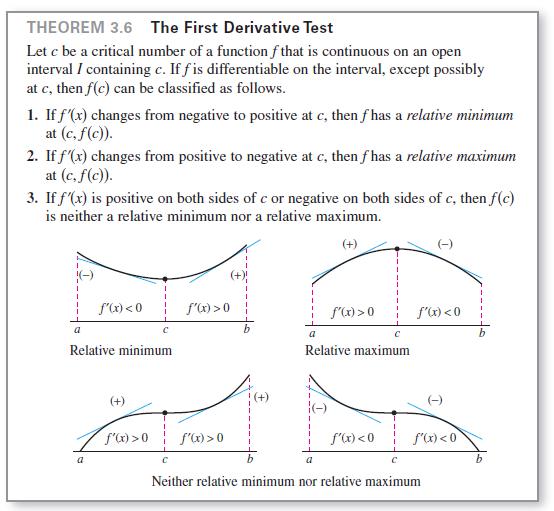
Prove the second case of Theorem 3.6.Data from in Theorem 3.6 THEOREM 3.6 The First Derivative Test Let c be a critical number of a function f that is continuous on an open interval I containing c. If f is differentiable on the interval, except possibly at c, then f(c) can be classified as
Use the definitions of increasing and decreasing functions to prove that ƒ(x) = x³ is increasing on (-∞, ∞).
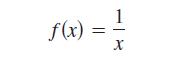
Use the definitions of increasing and decreasing functions to prove thatis decreasing on (0, ∞). f(x) = 1 X
In Exercises use the rules of differentiation to find the derivative of the function.g(a) = 4 cos a + 6
Let E be a function satisfying E(0) = E'(0) = 1. Prove that if E(a + b) = E(a)E(b) for all a and b, then E is differentiable and E'(x) E(x) for all x. Find an example of a function satisfying E(a + b) = E(a)E(b).
In Exercises use the rules of differentiation to find the derivative of the function.ƒ(θ) = 4θ - 5 sin θ
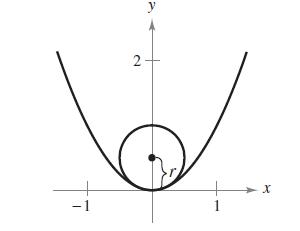
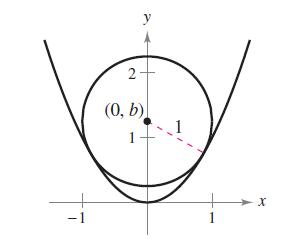
Consider the graph of the parabola y = x².(a) Find the radius r of the largest possible circle centered on the y-axis that is tangent to the parabola at the origin, as shown in the figure. This circle is called the circle of curvature. Find the equation of this circle. Use a graphing utility to
In Exercises find the derivative of the function by the limit process.f(x) = 12
In Exercises find the derivative of the function by the limit process. f(x) = 5x - 4.
Find a third-degree polynomial p(x) that is tangent to the line y = 14x - 13 at the point (1, 1), and tangent to the line y = -2x - 5 at the point (-1, -3).
In Exercises find the derivative of the function by the limit process. f(x) = x² - 4x + 5
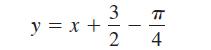
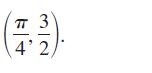
Find a function of the form ƒ(x) = a + b cos cx that is tangent to the line y = 1 at the point(0, 1), and tangent to the lineAt the point y = x + 3 2 ㅠ 4
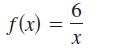
In Exercises, find the derivative of the function by the limit process. f(x) 6 X
(a) Find an equation of the tangent line to the parabola y = x² at the point (2, 4).(b) Find an equation of the normal line to y = x² at the point (2, 4). (The normal line at a point is perpendicular to the tangent line at the point.) Where does this line intersect the parabola a second time?(c)
In Exercises use the alternative form of the derivative to find the derivative at x = c (if it exists).g(x) = 2x² – 3x, c = 2
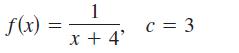
In Exercises, use the alternative form of the derivative to find the derivative at x = c (if it exists). f(x) = 1 x + 4' c = 3
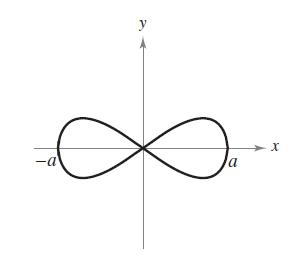
The graph of the eight curveis shown below.(a) Explain how you could use a graphing utility to graph this curve.(b) Use a graphing utility to graph the curve for various values of the constant a. Describe how a affects the shape of the curve.(c) Determine the points on the curve at which the
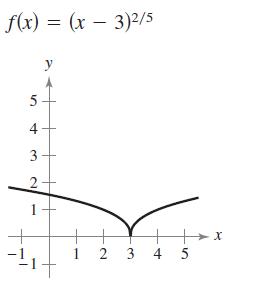
In Exercises describe the x-values at which ƒ is differentiable. f(x) = (x - 3)2/5 5 4 الا نرا 3 2 - y 1 2 3 45 نیا X
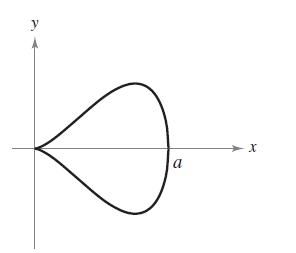
The graph of the pear-shaped quarticis shown above.(a) Explain how you could use a graphing utility to graph this curve.(b) Use a graphing utility to graph the curve for various values of the constants a and b. Describe how a and b affect the shape of the curve.(c) Determine the points on the curve
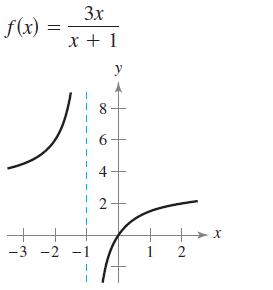
In Exercises describe the x-values at which ƒ is differentiable. f(x) = -3 -2 3x x+1 - ∞ 6 y 4 2- 1 2 - х
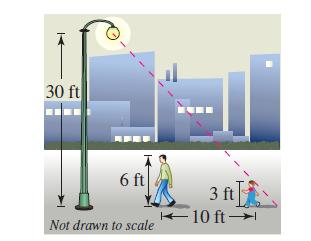
A man 6 feet tall walks at a rate of 5 feet per second toward a streetlight that is 30 feet high (see figure). The man's 3-foot-tall child follows at the same speed, but 10 feet behind the man. At times, the shadow behind the child is caused by the man, and at other times, by the child.(a) Suppose
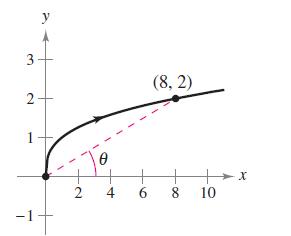
A particle is moving along the graph of y = 3√x (see figure). When x = 8, the y-component of the position of the particle is increasing at the rate of 1 centimeter per second.(a) How fast is the x-component changing at this moment?(b) How fast is the distance from the origin changing at this
In Exercises use the rules of differentiation to find the derivative of the function.y = 25
In Exercises use the rules of differentiation to find the derivative of the function.ƒ(t) = 4t4
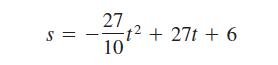
An astronaut standing on the moon throws a rock upward. The height of the rock isWhere s is measured in feet and t is measured in seconds.(a) Find expressions for the velocity and acceleration of the rock.(b) Find the time when the rock is at its highest point by finding the time when the velocity
In Exercises use the rules of differentiation to find the derivative of the function.ƒ(x) = x³ - 11x²
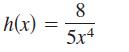
In Exercises, use the rules of differentiation to find the derivative of the function. h(x) | 00⁰ 5x4
In Exercises, use the rules of differentiation to find the derivative of the function. h(x) = 6√√x + 33/x
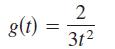
In Exercises, use the rules of differentiation to find the derivative of the function. g(t) = 2 3t2
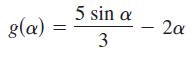
In Exercises, use the rules of differentiation to find the derivative of the function. g(a) – 5 sin a 3 2α
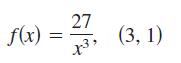
In Exercises, find the slope of the graph of the functions at the given point. f(x) = 27 x3, (3, 1)
In Exercises use the rules of differentiation to find the derivative of the function.g(s) = 3s5 - 2s4
Let L be a differentiable function for all x. Prove that if L(a + b) = L(a) + L(b) for all a and b, then L'(x) = L'(0) for all x. What does the graph of L look like?
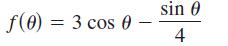
In Exercises, use the rules of differentiation to find the derivative of the function. f(0) = 3 cos 0 sin 0 4
In Exercises use the rules of differentiation to find the derivative of the function.ƒ(x) = x¹/² - x-1/2
In Exercises find the slope of the graph of the functions at the given point.ƒ(x) = 3x² - 4x, (1, -1)
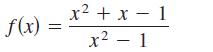
In Exercises, use the Product Rule or the Quotient Rule to find the derivative of the function. f(x) = x² + x1 2-1 x²
In Exercises find the slope of the graph of the functions at the given point.ƒ(x) = 2x4 -8, (0, -8)
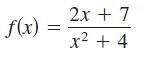
In Exercises, use the Product Rule or the Quotient Rule to find the derivative of the function. f(x) = 2x + 7 x² + 4
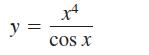
In Exercises, use the Product Rule or the Quotient Rule to find the derivative of the function. y = COS X
In Exercises find the slope of the graph of the functions at the given point.ƒ(θ) = 3 cos θ - 2θ, (0, 3)
In Exercises, use the Product Rule or the Quotient Rule to find the derivative of the function. h(x) = √x sin x
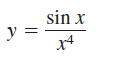
In Exercises, use the Product Rule or the Quotient Rule to find the derivative of the function. y = sin x x4
When a guitar string is plucked, it vibrates with a frequency of F = 200 √T, where F is measuredin vibrations per second and the tension T is measured inpounds. Find the rates of change of F when (a) T = 4(b) T = 9.
The surface area of a cube with sides of length ℓ is given by S = 6ℓ2. Find the rates of change of the surface area with respect to ℓ when (a) ℓ = 3 inches (b) ℓ = 5 inches.
In Exercises use the position function s(t)= -16t² + vot + so for free-falling objects.A ball is thrown straight down from the top of a 600-foot building with an initial velocity of -30 feet per second.(a) Determine the position and velocity functions for the ball.(b) Determine the average
In Exercises use the position function s(t)= -16t² + vot + so for free-falling objects.To estimate the height of a building, a weight is dropped from the top of the building into a pool at ground level. The splash is seen 9.2 seconds after the weight is dropped. What is the height (in feet) of the
In Exercises use the Product Rule or the Quotient Rule to find the derivative of the function.ƒ(x) = (5x² + 8)(x² - 4x − 6)
In Exercises, find an equation of the tangent line to the graph of at the given point. f(x) = (x + 2)(x² + 5), (-1,6)
In Exercises use the Product Rule or the Quotient Rule to find the derivative of the function.g(x) = (2x³ + 5x)(3x - 4)
In Exercises use the Product Rule or the Quotient Rule to find the derivative of the function.ƒ(t) = 2t³ cos t
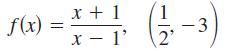
In Exercises, find an equation of the tangent line to the graph of at the given point. f(x) x + 1 x - 1' 2² -3
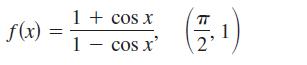
In Exercises, find an equation of the tangent line to the graph of at the given point. f(x): 1 + cos x 1 - cos x' FIN
In Exercises, find an equation of the tangent line to the graph of at the given point. f(x) = (x-4)(x² + 6x - 1), (0,4)
In Exercises use the Product Rule or the Quotient Rule to find the derivative of the function.y = 3x² sec x
In Exercises use the Product Rule or the Quotient Rule to find the derivative of the function.y = x cos x - sin x
In Exercises use the Product Rule or the Quotient Rule to find the derivative of the function.g(x) = 3x sin x + x² cos x
In Exercises find the second derivative of the function.g(t) = -8t³ - 5t + 12
In Exercises find the second derivative of the function.h(x) = 6x-2 + 7x²
In Exercises find the second derivative of the function.ƒ(x) = 15x5/2
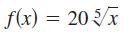
In Exercises, find the second derivative of the function. f(x) = 20 5√x
In Exercises find the second derivative of the function.ƒ(θ) = 3 tan θ
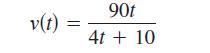
The velocity of an automobile starting fromrest iswhere v is measured in feet per second. Find the acceleration at (a) 1 second (b) 5 seconds(c) 10 seconds v(t) = 90t 4t + 10
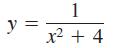
In Exercises, find the derivative of the function. y = 1 x² + 4
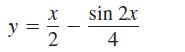
In Exercises, find the derivative of the function. y || X 2 sin 2x 4
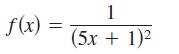
In Exercises, find the derivative of the function. f(x) = 1 (5x + 1)2
In Exercises find the second derivative of the function.h(t) = 10 cos t - 15 sin t
The velocity of an object in meters per second is v(t) = 20 -t², 0 ≤ t ≤ 6. Find the velocity and acceleration of the object when t = 3.
In Exercises find the derivative of the function.y = (7x + 3)4
In Exercises find the derivative of the function.y = (x² - 6)³
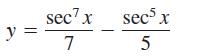
In Exercises, find the derivative of the function. y || sec7 x 7 sec5 x 5
In Exercises find the derivative of the function.y = 5 cos(9x + 1)
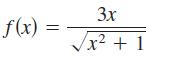
In Exercises, find the derivative of the function. f(x) = 3x Vx2 + 1
In Exercises find the derivative of the function.y = 1- cos 2x + 2 cos²x
In Exercises find the derivative of the function.y = x(6x + 1)5
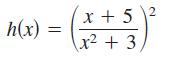
In Exercises, find the derivative of the function. h(x) = x + 5 x² + 3 2
In Exercises find the derivative of the function.ƒ(s) = (s² -1)5/2 (s3 + 5)
In Exercises, find and evaluate the derivative of the function at the given point. f(x)=√1-x³, (-2,3)
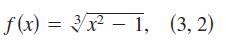
In Exercises, find and evaluate the derivative of the function at the given point. f(x) = 3√/x² - 1, (3,2)
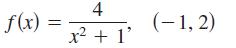
In Exercises, find and evaluate the derivative of the function at the given point. f(x) = 4 x² + 1' (-1,2)
Showing 8800 - 8900
of 9867
First
82
83
84
85
86
87
88
89
90
91
92
93
94
95
96
Last
Step by Step Answers

 Get 50% OFF
Claim Now
Get 50% OFF
Claim Now