New Semester
Started
Get
50% OFF
Study Help!
--h --m --s
Claim Now
Question Answers
Textbooks
Find textbooks, questions and answers
Oops, something went wrong!
Change your search query and then try again
S
Books
FREE
Study Help
Expert Questions
Accounting
General Management
Mathematics
Finance
Organizational Behaviour
Law
Physics
Operating System
Management Leadership
Sociology
Programming
Marketing
Database
Computer Network
Economics
Textbooks Solutions
Accounting
Managerial Accounting
Management Leadership
Cost Accounting
Statistics
Business Law
Corporate Finance
Finance
Economics
Auditing
Tutors
Online Tutors
Find a Tutor
Hire a Tutor
Become a Tutor
AI Tutor
AI Study Planner
NEW
Sell Books
Search
Search
Sign In
Register
study help
mathematics
calculus 10th edition
Calculus 10th Edition Ron Larson, Bruce H. Edwards - Solutions
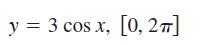
In Exercises, find the absolute extrema of the function on the closed interval. y = 3 cos x, [0, 2π]
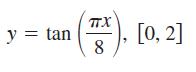
In Exercises, find the absolute extrema of the function on the closed interval. y = tan Π.Χ. 8 [0, 2]
In Exercises find all relative extrema. Use the Second Derivative Test where applicable. f(x) = x² - 4x³ + 2 x4
In Exercises find all relative extrema. Use the Second Derivative Test where applicable. f(x) = x² + 4x³ + 8x²
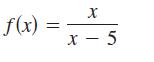
In Exercises (a) Find the critical numbers of ƒ (if any)(b) Find the open interval(s) on which the function is increasing or decreasing(c) Apply the First Derivative Test to identify all relative extrem f(x) = X X-5
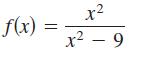
In Exercises (a) Find the critical numbers of ƒ (if any)(b) Find the open interval(s) on which the function is increasing or decreasing(c) Apply the First Derivative Test to identify all relative extrem f(x) = = x² x² - 9
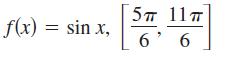
In Exercises, find the absolute extrema of the function on the closed interval. f(x) = sin x, 5π 11π 6' 6
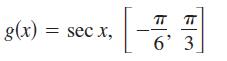
In Exercises, find the absolute extrema of the function on the closed interval. g(x) = sec x, TT 6' 3
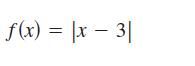
In Exercises explain why the Mean Value Theorem does not apply to the function ƒ on the interval [0, 6]. f(x) = |x - 3|
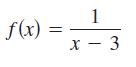
In Exercises explain why the Mean Value Theorem does not apply to the function ƒ on the interval [0, 6]. f(x) = 1 x - 3
In Exercises find all relative extrema. Use the Second Derivative Test where applicable. f(x)= x³ 3x² + 3
In Exercises find all relative extrema. Use the Second Derivative Test where applicable. f(x) = −x³ + 7x² - 15x
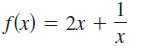
In Exercises (a) Find the critical numbers of ƒ (if any)(b) Find the open interval(s) on which the function is increasing or decreasing(c) Apply the First Derivative Test to identify all relative extrem f(x) = 2x + 1 X
In Exercises, find the absolute extrema of the function on the closed interval. h(x) = [2x], [-2, 2]
In Exercises (a) Find the critical numbers of ƒ (if any)(b) Find the open interval(s) on which the function is increasing or decreasing(c) Apply the First Derivative Test to identify all relative extrem f(x) = |x + 3| − 1
In Exercises, find the absolute extrema of the function on the closed interval. f(x) = [x]], [-2, 2]
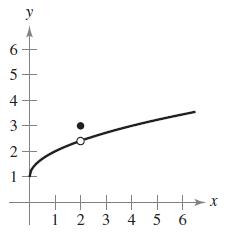
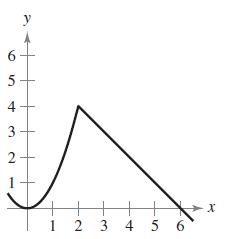
In Exercises explain why the Mean Value Theorem does not apply to the function ƒ on the interval [0, 6]. 65 43 2 - 2 34 5 6 X
In Exercises explain why the Mean Value Theorem does not apply to the function ƒ on the interval [0, 6]. 5 4 3 2 y 12 34 5 6 X
In Exercises find all relative extrema. Use the Second Derivative Test where applicable. f(x) = x² + 3x - 8
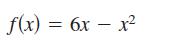
In Exercises find all relative extrema. Use the Second Derivative Test where applicable. f = 6x - x²
In Exercises (a) Find the critical numbers of ƒ (if any)(b) Find the open interval(s) on which the function is increasing or decreasing(c) Apply the First Derivative Test to identify all relative extrem f(x) = 5 = |x - 51
In Exercises (a) Find the critical numbers of ƒ (if any)(b) Find the open interval(s) on which the function is increasing or decreasing(c) Apply the First Derivative Test to identify all relative extrem f(x) = (x 3)1/3
In Exercises (a) Find the critical numbers of ƒ (if any)(b) Find the open interval(s) on which the function is increasing or decreasing(c) Apply the First Derivative Test to identify all relative extrem f(x) = (x + 2)2/3
In Exercises, find the absolute extrema of the function on the closed interval. g(x) = |x + 4], [−7, 1]
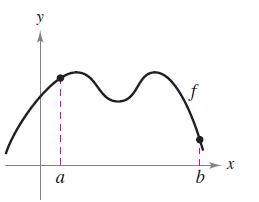
In Exercises copy the graph and sketch the secant line to the graph through the points (a, ƒ(a)) and (b, ƒ(b)). Then sketch any tangent lines to the graph for each value of c guaranteed by the Mean Value Theorem. a b
In Exercises find the points of inflection and discuss the concavity of the graph of the function. f(x) = x + 2 cos x, [0, 2π]
In Exercises find the points of inflection and discuss the concavity of the graph of the function. f(x) = 2 sin x + sin 2x, [0, 27]
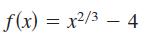
In Exercises (a) Find the critical numbers of ƒ (if any)(b) Find the open interval(s) on which the function is increasing or decreasing(c) Apply the First Derivative Test to identify all relative extrem f(x) = x²/3 - 4
In Exercises, find the absolute extrema of the function on the closed interval. y = 3 - |t — 3], [-1, 5]
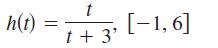
In Exercises, find the absolute extrema of the function on the closed interval. h(t) = t t + 3' [-1,6]
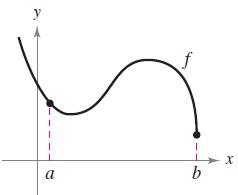
In Exercises copy the graph and sketch the secant line to the graph through the points (a, ƒ(a)) and (b, ƒ(b)). Then sketch any tangent lines tothe graph for each value of c guaranteed by the Mean ValueTheorem. y a b
In Exercises find the points of inflection and discuss the concavity of the graph of the function. f(x) = sin x + cos x, [0, 2π]
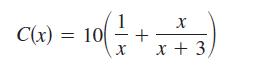
The ordering and transportation cost C for components used in a manufacturing process is approximated bywhere C is measured in thousands of dollars and is the order size in hundreds.(a) Verify that C(3) = C(6)(b) According to Rolle’s Theorem, the rate of change of the cost must be 0 for some
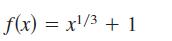
In Exercises (a) Find the critical numbers of ƒ (if any)(b) Find the open interval(s) on which the function is increasing or decreasing(c) Apply the First Derivative Test to identify all relative extrem f(x) = x¹/3 + 1
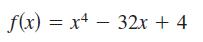
In Exercises (a) Find the critical numbers of ƒ (if any)(b) Find the open interval(s) on which the function is increasing or decreasing(c) Apply the First Derivative Test to identify all relative extrem f(x) = x4 - 32x + 4
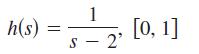
In Exercises, find the absolute extrema of the function on the closed interval. h(s) 1 S2' [0, 1]
In Exercises, find the absolute extrema of the function on the closed interval. f(x) = 2x T [-2,2] x² + 1'
In Exercises find the points of inflection and discuss the concavity of the graph of the function. f(x) = sec X x | 2 (0, 4π)
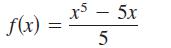
In Exercises (a) Find the critical numbers of ƒ (if any)(b) Find the open interval(s) on which the function is increasing or decreasing(c) Apply the First Derivative Test to identify all relative extrem f(x) || x5 - 5x 5
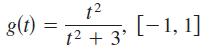
In Exercises, find the absolute extrema of the function on the closed interval. g(t) = 12 t² + 3' [-1,1]
In Exercises use a graphing utility to graph the function on the closed interval [a, b]. Determine whether Rolle's Theorem can be applied to ƒ on the interval and, if so, find all values of c in the open interval (a, b) such that ƒ'(c) = 0. f(x) = 21/12 - 1 sin 6 [-1,0]
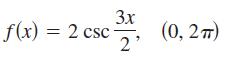
In Exercises find the points of inflection and discuss the concavity of the graph of the function. f(x) = 2 csc 3x 2 (0, 2π) п
The height of a ball t seconds after it is thrown upward from a height of 6 feet and with an initial velocity of 48 feet per second is ƒ(t) = − 16t² + 48t + 6.(a) Verify that ƒ(1) = ƒ(2).(b)According to Rolle's Theorem, what must the velocity beat some time in the interval (1, 2)? Find that
In Exercises (a) Find the critical numbers of ƒ (if any)(b) Find the open interval(s) on which the function is increasing or decreasing(c) Apply the First Derivative Test to identify all relative extrem f(x) = (x + 2)²(x - 1)
In Exercises use a graphing utility to graph the function on the closed interval [a, b]. Determine whether Rolle's Theorem can be applied to ƒ on the interval and, if so, find all values of c in the open interval (a, b) such that ƒ'(c) = 0. f(x) = x tan TX, - [43]
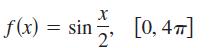
In Exercises find the points of inflection and discuss the concavity of the graph of the function. f(x) = sin, [0, 4m]
In Exercises, find the absolute extrema of the function on the closed interval. g(x)=√x, [-8, 8]
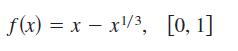
In Exercises use a graphing utility to graph the function on the closed interval [a, b]. Determine whether Rolle's Theorem can be applied to ƒ on the interval and, if so, find all values of c in the open interval (a, b) such that ƒ'(c) = 0. f(x) = x - x¹/3, [0, 1]
In Exercises use a graphing utility to graph the function on the closed interval [a, b]. Determine whether Rolle's Theorem can be applied to ƒ on the interval and, if so, find all values of c in the open interval (a, b) such that ƒ'(c) = 0. f(x)= x1, [−1,1]
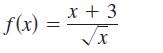
In Exercises find the points of inflection and discuss the concavity of the graph of the function. f(x) = x + 3 Tx
In Exercises (a) Find the critical numbers of ƒ (if any)(b) Find the open interval(s) on which the function is increasing or decreasing(c) Apply the First Derivative Test to identify all relative extrem f(x) = (x - 1)²(x + 3)
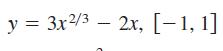
In Exercises, find the absolute extrema of the function on the closed interval. y = 3x2/3 - 2x, [-1, 1]
In Exercises determine whether Rolle's Theorem can be applied to ƒ on the closed interval [a, b]. If Rolle's Theorem can be applied, find all values of c in the open interval (a, b) such that ƒ'(c) = 0. If Rolle's Theorem cannot be applied, explain why not. f(x) = sec x, [T, 2π]
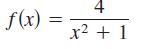
In Exercises find the points of inflection and discuss the concavity of the graph of the function. f(x) 4 x² + 1
In Exercises (a) Find the critical numbers of ƒ (if any)(b) Find the open interval(s) on which the function is increasing or decreasing(c) Apply the First Derivative Test to identify all relative extrem f(x) = x³6x² + 15
In Exercises, find the absolute extrema of the function on the closed interval. f(x) = 2x³6x, [0, 3]
In Exercises (a) Find the critical numbers of ƒ (if any)(b) Find the open interval(s) on which the function is increasing or decreasing(c) Apply the First Derivative Test to identify all relative extrem f(x) = 2x³ + 3x² - 12x
In Exercises find the points of inflection and discuss the concavity of the graph of the function. f(x) = x√9 - x
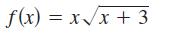
In Exercises find the points of inflection and discuss the concavity of the graph of the function. f(x)=x√x + 3
In Exercises, find the absolute extrema of the function on the closed interval. 3 f(x) J() = x − x? [–1,2]
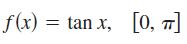
In Exercises determine whether Rolle's Theorem can be applied to ƒ on the closed interval [a, b]. If Rolle's Theorem can be applied, find all values of c in the open interval (a, b) such that ƒ'(c) = 0. If Rolle's Theorem cannot be applied, explain why not. f(x)= tan x, [0, π]
In Exercises (a) Find the critical numbers of ƒ (if any)(b) Find the open interval(s) on which the function is increasing or decreasing(c) Apply the First Derivative Test to identify all relative extrem f(x) = 2x² + 4x + 3
In Exercises, find the absolute extrema of the function on the closed interval. h(x) = 5 – x, [–3, 1] =
In Exercises, find the absolute extrema of the function on the closed interval. g(x) = 2x² 8x, [0, 6]
In Exercises determine whether Rolle's Theorem can be applied to ƒ on the closed interval [a, b]. If Rolle's Theorem can be applied, find all values of c in the open interval (a, b) such that ƒ'(c) = 0. If Rolle's Theorem cannot be applied, explain why not. f(x) = cos 2x, [-π, π]
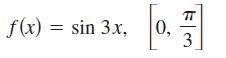
In Exercises determine whether Rolle's Theorem can be applied to ƒ on the closed interval [a, b]. If Rolle's Theorem can be applied, find all values of c in the open interval (a, b) such that ƒ'(c) = 0. If Rolle's Theorem cannot be applied, explain why not. f(x) = sin 3x, 0, Elm 3
In Exercises find the points of inflection and discuss the concavity of the graph of the function. f(x) = (x - 2)³(x - 1)
In Exercises find the points of inflection and discuss the concavity of the graph of the function. f(x) = x(x-4)³
In Exercises (a) Find the critical numbers of ƒ (if any)(b) Find the open interval(s) on which the function is increasing or decreasing(c) Apply the First Derivative Test to identify all relative extrem f(x) = x² + 6x + 10
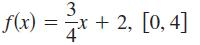
In Exercises, find the absolute extrema of the function on the closed interval. 3 f(x) = ²x + 2, x + 2, [0, 4] 4
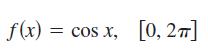
In Exercises determine whether Rolle's Theorem can be applied to ƒ on the closed interval [a, b]. If Rolle's Theorem can be applied, find all values of c in the open interval (a, b) such that ƒ'(c) = 0. If Rolle's Theorem cannot be applied, explain why not. f(x) = cos x, [0, 2π]
In Exercises find the points of inflection and discuss the concavity of the graph of the function. f(x) = 4 - x - 3x4
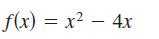
In Exercises (a) Find the critical numbers of ƒ (if any)(b) Find the open interval(s) on which the function is increasing or decreasing(c) Apply the First Derivative Test to identify all relative extrem f(x) = x² - 4x
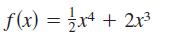
In Exercises find the points of inflection and discuss the concavity of the graph of the function. f(x) = x² + 2x³
In Exercises find the points of inflection and discuss the concavity of the graph of the function. f(x) = x³ + 6x² - 5
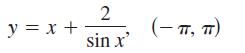
In Exercises determine the open intervals on which the graph is concave upward or concave downward. y = x + 2 sin x' (- TT, TT)
In Exercises find the points of inflection and discuss the concavity of the graph of the function. f(x) = x³ − 6x² + 12x
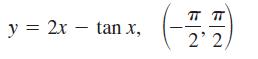
In Exercises determine the open intervals on which the graph is concave upward or concave downward. y = 2x tan x, TT TT 2' 2,
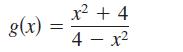
In Exercises determine the open intervals on which the graph is concave upward or concave downward. g(x) = x² + 4 4x²
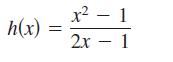
In Exercises determine the open intervals on which the graph is concave upward or concave downward. h(x) || zł x² - 1 2x 1
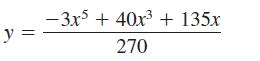
In Exercises determine the open intervals on which the graph is concave upward or concave downward. y -3x5 + 40x³ + 135x 270
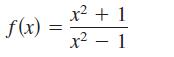
In Exercises determine the open intervals on which the graph is concave upward or concave downward. f = x² + 1 x² - 1
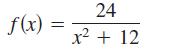
In Exercises determine the open intervals on which the graph is concave upward or concave downward. f(x) 24 x² + 12
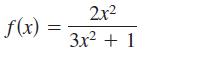
In Exercises determine the open intervals on which the graph is concave upward or concave downward. f(x) 2x² 3x² + 1
In Exercises determine the open intervals on which the graph is concave upward or concave downward. h(x) = x55x + 2
In Exercises determine the open intervals on which the graph is concave upward or concave downward. f(x) = −x³ + 6x² - 9x - 1
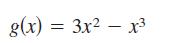
In Exercises determine the open intervals on which the graph is concave upward or concave downward. g(x) = 3x² - x³
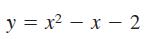
In Exercises determine the open intervals on which the graph is concave upward or concave downward. y = x²x2
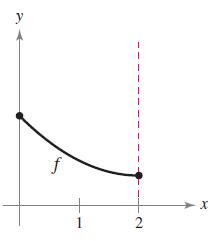
In Exercises the graph of ƒ is shown. State the signs of ƒ' and ƒ" on the interval (0, 2). y f + 1 2 X
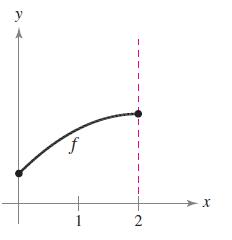
In Exercises the graph of ƒ is shown. State the signs of ƒ' and ƒ" on the interval (0, 2). y f 2
Let ƒ be continuous on [a, b] and differentiable on (a, b). If there exists c in (a, b) such that ƒ'(c) = 0, does it follow that ƒ(a) = ƒ(b)?Explain.
In Exercises (a) Use a computer algebra system to differentiate the function(b) Sketch the graphs of ƒ and ƒ' on the same set of coordinate axes over the given interval(c) Find the critical numbers of ƒ in the open interval, and (d) Find the interval(s) on which ƒ' is positive and the
In Exercises graph a function on the interval [-2, 5] having the given characteristics.Absolute maximum at x = -2Absolute minimum at x = 1Relative maximum at x = 3
Let ƒ be continuous on [a, b] and differentiable on (a, b). Also, suppose that ƒ(a) = ƒ(b) and that c is a real number in the interval such that ƒ'(c) = 0. Find an interval for the function g over which Rolle's Theorem can be applied, and find the corresponding critical number of g (k is a
In Exercises graph a function on the interval [-2, 5] having the given characteristics.Relative minimum at x = −1Critical number (but no extremum) at x = 0Absolute maximum at x = 2Absolute minimum at x = 5
In Exercises (a) Use a computer algebra system to differentiate the function(b) Sketch the graphs of ƒ and ƒ' on the same set of coordinate axes over the given interval(c) Find the critical numbers of ƒ in the open interval, and (d) Find the interval(s) on which ƒ' is positive and the
The functionis differentiable on (0, 1) and satisfies ƒ(0) = ƒ(1).However, its derivative is never zero on (0, 1). Does thiscontradict Rolle's Theorem? Explain. f(x) -1₁-x₂ fo, 1 - x, = x = 0 0 < x≤ 1
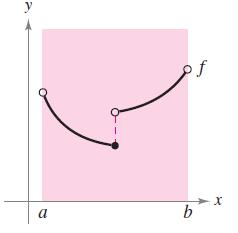
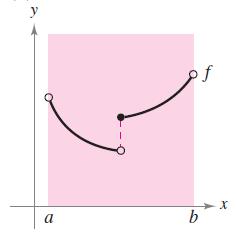
In Exercises determine from the graph whether ƒ has a minimum in the open interval (a, b).(a)(b) y a of b X
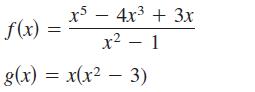
In Exercises use symmetry, extrema, and zeros to sketch the graph of ƒ. How do the functions ƒ and g differ? x54x³ + 3x x² - 1 g(x) = x(x² − 3) f(x) =
Can you find a function ƒ suchthat ƒ(-2) = -2, ƒ(2) = 6, and ƒ'(x) < 1 for all x? Whyor why not?
Showing 8600 - 8700
of 9867
First
80
81
82
83
84
85
86
87
88
89
90
91
92
93
94
Last
Step by Step Answers

 Get 50% OFF
Claim Now
Get 50% OFF
Claim Now