New Semester
Started
Get
50% OFF
Study Help!
--h --m --s
Claim Now
Question Answers
Textbooks
Find textbooks, questions and answers
Oops, something went wrong!
Change your search query and then try again
S
Books
FREE
Study Help
Expert Questions
Accounting
General Management
Mathematics
Finance
Organizational Behaviour
Law
Physics
Operating System
Management Leadership
Sociology
Programming
Marketing
Database
Computer Network
Economics
Textbooks Solutions
Accounting
Managerial Accounting
Management Leadership
Cost Accounting
Statistics
Business Law
Corporate Finance
Finance
Economics
Auditing
Tutors
Online Tutors
Find a Tutor
Hire a Tutor
Become a Tutor
AI Tutor
AI Study Planner
NEW
Sell Books
Search
Search
Sign In
Register
study help
mathematics
college algebra graphs and models
College Algebra 7th Edition Robert F Blitzer - Solutions
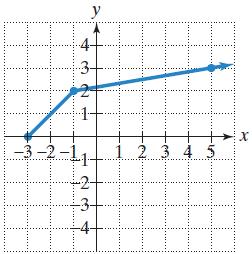
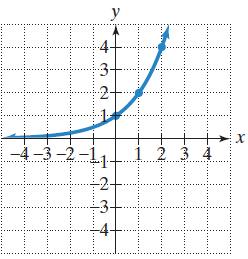
In Exercises 35–38, use the graph of f to draw the graph of its inverse function. y = 60088 7 -3-2 -2- 4 5 || X
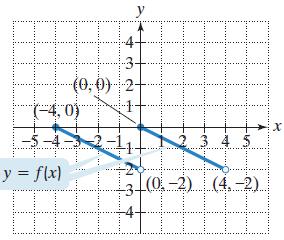
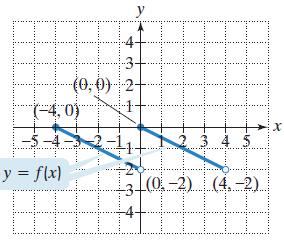
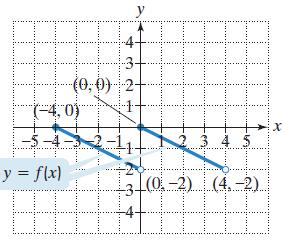
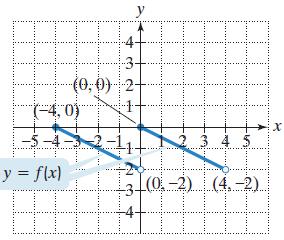
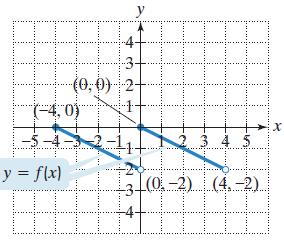
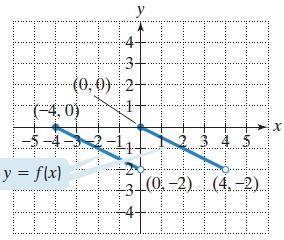
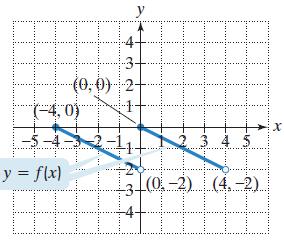
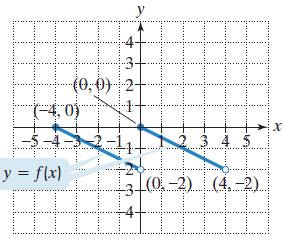
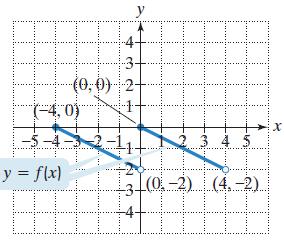
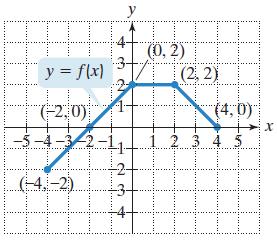
In Exercises 33–44, use the graph of y = f(x) to graph each function g.g(x) = f(x - 2) -4,0) -5-4-3 4-33 y = f(x) y (0,0) 2- 3.4 45 -2) (4-2) X
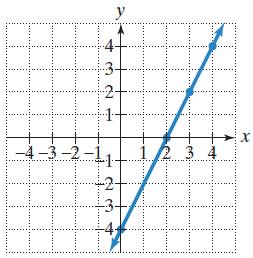
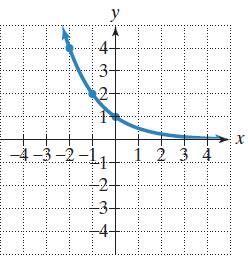
In Exercises 35–38, use the graph of f to draw the graph of its inverse function. У 3- 2- 1- -4-3-2-1- 1 2 3 4 X
In Exercises 33–44, use the graph of y = f(x) to graph each function g.g(x) = f(x + 2) -4,0) -5-4-3 4-33 y = f(x) y (0,0) 2- 3.4 45 -2) (4-2) X
In Exercises 31–50, find f + g, f - g, fg, and f/g. Determine the domain for each function.f(x) = 6x2 - x - 1, g(x) = x - 1
In Exercises 11–38, use the given conditions to write an equation for each line in point-slope form and slope-intercept form.Passing through (1, -3) with x-intercept = -1
In Exercises 37–40, find the slope of the line passing through each pair of points or state that the slope is undefined. Then indicate whether the line through the points rises, falls, is horizontal, or is vertical.(3, 2) and (5, 1)
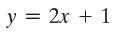
In Exercises 39–48, give the slope and y-intercept of each line whose equation is given. Then graph the linear function. y = 2x + 1
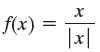
In Exercises 27–38, evaluate each function at the given values of the independent variable and simplify.a.b.c. f(x) = |x|
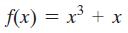
In Exercises 37–48, determine whether each function is even, odd, or neither. Then determine whether the function’s graph is symmetric with respect to the y-axis, the origin, or neither. f(x) = x³ + x
a. Why are the lines whose equations are y = 1/3 x + 1 and y = -3x - 2 perpendicular?b. Use a graphing utility to graph the equations in a [-10, 10, 1] by [-10, 10, 1] viewing rectangle. Do the lines appear to be perpendicular?c. Now use the zoom square feature of your utility. Describe what
In Exercises 31–40, write the standard form of the equation of the circle with the given center and radius.Center (-3, -1), r = √3
In Exercises 27–38, graph each equation in a rectangular coordinate system.5y = 20
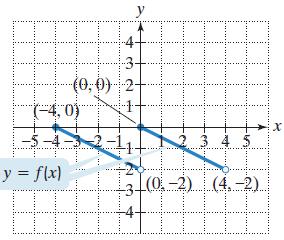
In Exercises 33–44, use the graph of y = f(x) to graph each function g.g(x) = -f(x + 2) -4,0) -5-4-3 4-33 y = f(x) y (0,0) 2- 3.4 45 -2) (4-2) X
In Exercises 39–50, graph the given functions, f and g, in the same rectangular coordinate system. Select integers for x, starting with -2 and ending with 2. Once you have obtained your graphs, describe how the graph of g is related to the graph of f. f(x) = x, g(x) = x - 4
In Exercises 31–50, find f + g, f - g, fg, and f/g. Determine the domain for each function. f(x) = √x, g(x) = x − 5
In Exercises 33–44, use the graph of y = f(x) to graph each function g.g(x) = - 1/2 f(x - 2) -4,0) -5-4-3 4-33 y = f(x) y (0,0) 2- 3.4 45 -2) (4-2) X
In Exercises 39–52,a. Find an equation for f -1(x).b. Graph f and f -1 in the same rectangular coordinate system.c. Use interval notation to give the domain and the range of f and f -1.f(x) = 2x - 3
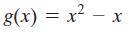
In Exercises 37–48, determine whether each function is even, odd, or neither. Then determine whether the function’s graph is symmetric with respect to the y-axis, the origin, or neither. g(x) = x² - X
In Exercises 31–50, find f + g, f - g, fg, and f/g. Determine the domain for each function. f(x) = √x, g(x) = x - 4
In Exercises 39–50, graph the given functions, f and g, in the same rectangular coordinate system. Select integers for x, starting with -2 and ending with 2. Once you have obtained your graphs, describe how the graph of g is related to the graph of f. f(x) = x, g(x) = x + 3
In Exercises 33–44, use the graph of y = f(x) to graph each function g.g(x) = - 1/2 f(x + 2) -4,0) -5-4-3 4-33 y = f(x) y (0,0) 2- 3.4 45 -2) (4-2) X
In Exercises 39–52,a. Find an equation for f -1(x).b. Graph f and f -1 in the same rectangular coordinate system.c. Use interval notation to give the domain and the range of f and f -1.f(x) = 2x - 1
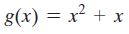
In Exercises 37–48, determine whether each function is even, odd, or neither. Then determine whether the function’s graph is symmetric with respect to the y-axis, the origin, or neither. x + x = (x)8 で
In Exercises 11–38, use the given conditions to write an equation for each line in point-slope form and slope-intercept form. x-intercept 4 and y-intercept -2
In Exercises 31–40, write the standard form of the equation of the circle with the given center and radius.Center (-2, 0), r = 6
In Exercises 33–44, use the graph of y = f(x) to graph each function g.g(x) = -f(x - 2) -4,0) -5-4-3 4-33 y = f(x) y (0,0) 2- 3.4 45 -2) (4-2) X
In Exercises 37–40, find the slope of the line passing through each pair of points or state that the slope is undefined. Then indicate whether the line through the points rises, falls, is horizontal, or is vertical. (-3,1) and (6, 1)
In Exercises 37–40, find the slope of the line passing through each pair of points or state that the slope is undefined. Then indicate whether the line through the points rises, falls, is horizontal, or is vertical.(-2, 5) and (-2, 10)
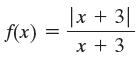
In Exercises 27–38, evaluate each function at the given values of the independent variable and simplify.a.b.c. f(x) |x + 31 x + 3
In Exercises 35–38, use the graph of f to draw the graph of its inverse function. y H -4-3-2-1 1234 X
In Exercises 38–41, determine whether each statement makes sense or does not make sense, and explain your reasoning.The graph of my function is not a straight line, so I cannot use slope to analyze its rates of change.
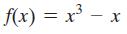
In Exercises 37–48, determine whether each function is even, odd, or neither. Then determine whether the function’s graph is symmetric with respect to the y-axis, the origin, or neither. f(x) = x³ - x
In Exercises 31–40, write the standard form of the equation of the circle with the given center and radius.Center (-4, 0), r = 10
In Exercises 27–38, graph each equation in a rectangular coordinate system. f(x) = - 1 2x + 1 if if x ≤0 x > 0
In Exercises 31–50, find f + g, f - g, fg, and f/g. Determine the domain for each function.f(x) = 5 - x2, g(x) = x2 + 4x - 12
In Exercises 38–41, determine whether each statement makes sense or does not make sense, and explain your reasoning.I have linear functions that model changes for men and women over the same time period. The functions have the same slope, so their graphs are parallel lines, indicating that the
In Exercises 35–38, use the graph of f to draw the graph of its inverse function. -4-3-2-1 THI y 3+ 1- -2- -3- I'I II II 4 TF X
In Exercises 31–40, write the standard form of the equation of the circle with the given center and radius.Center (-5, -3), r = √5
In Exercises 31–50, find f + g, f - g, fg, and f/g. Determine the domain for each function.f(x) = 3 - x2, g(x) = x2 + 2x - 15
In Exercises 37–40, find the slope of the line passing through each pair of points or state that the slope is undefined. Then indicate whether the line through the points rises, falls, is horizontal, or is vertical.(-1, -2) and (-3, -4)
In Exercises 38–41, determine whether each statement makes sense or does not make sense, and explain your reasoning.I computed the slope of one line to be -3/5 and the slope of a second line to be -5/3 , so the lines must be perpendicular.
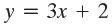
In Exercises 39–48, give the slope and y-intercept of each line whose equation is given. Then graph the linear function. y = 3x + 2
In Exercises 41–44, use the given conditions to write an equation for each line in point-slope form and slope-intercept form.Passing through (-3, 2) with slope -6
In Exercises 39–50, graph the given functions, f and g, in the same rectangular coordinate system. Select integers for x, starting with -2 and ending with 2. Once you have obtained your graphs, describe how the graph of g is related to the graph of f. f(x) = -2x, g(x) = 2x - 1
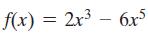
In Exercises 37–48, determine whether each function is even, odd, or neither. Then determine whether the function’s graph is symmetric with respect to the y-axis, the origin, or neither. f(x) = 2x³6x5
In Exercises 41–52, give the center and radius of the circle described by the equation and graph each equation. Use the graph to identify the relation’s domain and range. 91 = ₂ + ₂x
In Exercises 33–44, use the graph of y = f(x) to graph each function g.g(x) = - 1/2 f(x + 2) - 2 -4,0) -5-4-3 4-33 y = f(x) y (0,0) 2- 3.4 45 -2) (4-2) X
In Exercises 39–50, graph the given functions, f and g, in the same rectangular coordinate system. Select integers for x, starting with -2 and ending with 2. Once you have obtained your graphs, describe how the graph of g is related to the graph of f. f(x) = -2x, g(x) = 2x + 3
In Exercises 37–48, determine whether each function is even, odd, or neither. Then determine whether the function’s graph is symmetric with respect to the y-axis, the origin, or neither. +x - zx = (x) y X
In Exercises 39–48, give the slope and y-intercept of each line whose equation is given. Then graph the linear function. f(x) = -2x + 1
In Exercises 41–44, write a function in slope-intercept form whose graph satisfies the given conditions.Slope = -2, passing through (-4, 3)
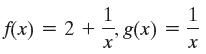
In Exercises 31–50, find f + g, f - g, fg, and f/g. Determine the domain for each function. 1 f(x) = 2 + = g(x) x 1
In Exercises 33–44, use the graph of y = f(x) to graph each function g.g(x) = - 1/2 f(x + 2) + 2 -4,0) -5-4-3 4-33 y = f(x) y (0,0) 2- 3.4 45 -2) (4-2) X
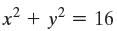
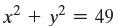
In Exercises 41–52, give the center and radius of the circle described by the equation and graph each equation. Use the graph to identify the relation’s domain and range. x² + y² = 49 X
In Exercises 39–50, graph the given functions, f and g, in the same rectangular coordinate system. Select integers for x, starting with -2 and ending with 2. Once you have obtained your graphs, describe how the graph of g is related to the graph of f. f(x) = x², g(x) = x² + 1
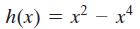
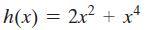
In Exercises 37–48, determine whether each function is even, odd, or neither. Then determine whether the function’s graph is symmetric with respect to the y-axis, the origin, or neither. h(x) = 2x² + x4
In Exercises 41–44, use the given conditions to write an equation for each line in point-slope form and slope-intercept form.Passing through (1, 6) and (-1, 2)
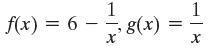
In Exercises 31–50, find f + g, f - g, fg, and f/g. Determine the domain for each function. - 1/² g(x) = x f(x) = 6 - 1 X ^
In Exercises 39–52,a. Find an equation for f -1(x).b. Graph f and f -1 in the same rectangular coordinate system.c. Use interval notation to give the domain and the range of f and f -1.f(x) = x2 - 1, x ≤ 0
In Exercises 39–48, give the slope and y-intercept of each line whose equation is given. Then graph the linear function. f(x) = - 3x + 2
What is the slope of a line that is perpendicular to the line whose equation is Ax + By + C = 0, A ≠ 0 and B ≠ 0?
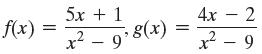
In Exercises 31–50, find f + g, f - g, fg, and f/g. Determine the domain for each function. f(x)= = 5r+1 x² - 9' 2 9.8(x) = 4x - 2 x² - 9
In Exercises 41–44, write a function in slope-intercept form whose graph satisfies the given conditions.Passing through (-1, -5) and (2, 1)
In Exercises 41–52, give the center and radius of the circle described by the equation and graph each equation. Use the graph to identify the relation’s domain and range. (x − 3)² + (y − 1)² = 36 -
In Exercises 33–44, use the graph of y = f(x) to graph each function g.g(x) = 1/2 f(2x) -4,0) -5-4-3 4-33 y = f(x) y (0,0) 2- 3.4 45 -2) (4-2) X
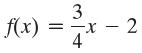
In Exercises 39–48, give the slope and y-intercept of each line whose equation is given. Then graph the linear function. f(x) = 3 4 - 2
In Exercises 39–50, graph the given functions, f and g, in the same rectangular coordinate system. Select integers for x, starting with -2 and ending with 2. Once you have obtained your graphs, describe how the graph of g is related to the graph of f. f(x) = x², g(x) = x² 2
In Exercises 37–48, determine whether each function is even, odd, or neither. Then determine whether the function’s graph is symmetric with respect to the y-axis, the origin, or neither. +1 I + fx − ₂x = (x)f
In Exercises 39–52,a. Find an equation for f -1(x).b. Graph f and f -1 in the same rectangular coordinate system.c. Use interval notation to give the domain and the range of f and f -1.f(x) = (x - 1)2, x ≤ 1
In Exercises 41–44, use the given conditions to write an equation for each line in point-slope form and slope-intercept form.Passing through (4, -7) and parallel to the line whose equation is 3x + y - 9 = 0
Determine the value of A so that the line whose equation is Ax + y - 2 = 0 is perpendicular to the line containing the points (1, -3) and (-2, 4).
In Exercises 33–44, use the graph of y = f(x) to graph each function g.g(x) = 2f(1/2x) -4,0) -5-4-3 4-33 y = f(x) y (0,0) 2- 3.4 45 -2) (4-2) X
In Exercises 41–44, write a function in slope-intercept form whose graph satisfies the given conditions.Passing through (3, -4) and parallel to the line whose equation is 3x - y - 5 = 0
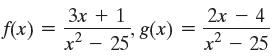
In Exercises 31–50, find f + g, f - g, fg, and f/g. Determine the domain for each function. f(x) = 3x + 1 2 x² - 25' g(x) 2x - 4 x² - 25 2 X
In Exercises 39–50, graph the given functions, f and g, in the same rectangular coordinate system. Select integers for x, starting with -2 and ending with 2. Once you have obtained your graphs, describe how the graph of g is related to the graph of f. f(x) = |x|, g(x) = |x| 2
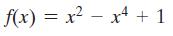
In Exercises 37–48, determine whether each function is even, odd, or neither. Then determine whether the function’s graph is symmetric with respect to the y-axis, the origin, or neither. f(x) = 2x² + x4 + 1
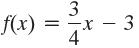
In Exercises 39–48, give the slope and y-intercept of each line whose equation is given. Then graph the linear function. f(x) = 3 -X - 3 4
In Exercises 41–52, give the center and radius of the circle described by the equation and graph each equation. Use the graph to identify the relation’s domain and range. (x - 2)² + (y - 3)² = 16
In Exercises 39–52,a. Find an equation for f -1(x).b. Graph f and f -1 in the same rectangular coordinate system.c. Use interval notation to give the domain and the range of f and f -1.f(x) = (x - 1)2, x ≥ 1
In Exercises 41–44, use the given conditions to write an equation for each line in point-slope form and slope-intercept form.Passing through (-3, 6) and perpendicular to the line whose equation is y = 1/3x + 4
Solve and check: 24 + 3 (x + 2) = 5(x - 12).
In Exercises 41–44, write a function in slope-intercept form whose graph satisfies the given conditions.Passing through (-4, -3) and perpendicular to the line whose equation is 2x - 5y - 10 = 0
Write an equation in general form for the line passing through (-12, -1) and perpendicular to the line whose equation is 6x - y - 4 = 0.
After a 30% price reduction, you purchase a television for $980. What was the television’s price before the reduction?
In Exercises 41–52, give the center and radius of the circle described by the equation and graph each equation. Use the graph to identify the relation’s domain and range. (x + 3)² + (y-2)² = 4
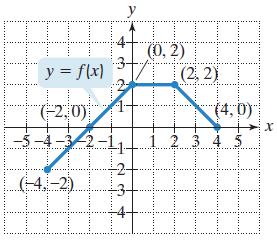
In Exercises 45–52, use the graph of y = f(x) to graph each function g.g(x) = f(x - 1) - 1 y = f(x) (-2,0) -5-4-3-2- y TI (0, 2) (2, 2) (4,0) 2 3 4 5 (-4,-2) |||| [III]?|IIIID X
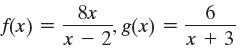
In Exercises 31–50, find f + g, f - g, fg, and f/g. Determine the domain for each function. f(x) = 8x x - 2, 8(x) 2' = 6 x + 3
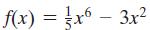
In Exercises 37–48, determine whether each function is even, odd, or neither. Then determine whether the function’s graph is symmetric with respect to the y-axis, the origin, or neither. 1 f(x) = ²x6 - 3x²
In Exercises 39–50, graph the given functions, f and g, in the same rectangular coordinate system. Select integers for x, starting with -2 and ending with 2. Once you have obtained your graphs, describe how the graph of g is related to the graph of f. f(x) = |x|, g(x) = |x| + 1
In Exercises 39–52,a. Find an equation for f -1(x).b. Graph f and f -1 in the same rectangular coordinate system.c. Use interval notation to give the domain and the range of f and f -1.f(x) = x3 - 1
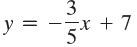
In Exercises 39–48, give the slope and y-intercept of each line whose equation is given. Then graph the linear function. y = 3 5x x + 7
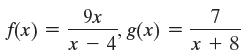
In Exercises 31–50, find f + g, f - g, fg, and f/g. Determine the domain for each function. f(x) = 9x x - 4' 8(x) = 7 x + 8
In Exercises 41–52, give the center and radius of the circle described by the equation and graph each equation. Use the graph to identify the relation’s domain and range. (x + 1)² + (y-4)² = 25
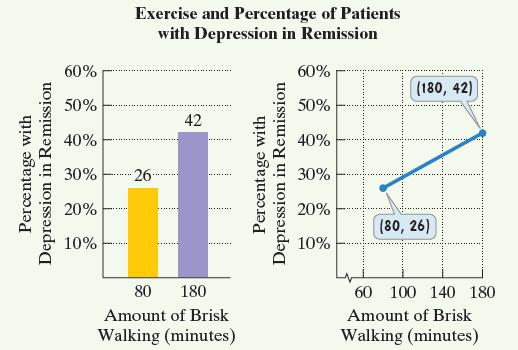
Exercise is useful not only in preventing depression, but also as a treatment. The following graphs show the percentage of patients with depression in remission when exercise (brisk walking) was used as a treatment. (The control group that engaged in no exercise had 11% of the patients in
Determine whether the line through (2, -4) and (7, 0) is parallel to a second line through (-4, 2) and (1, 6).
In Exercises 45–52, use the graph of y = f(x) to graph each function g.g(x) = f(x + 1) + 1 y = f(x) (-2,0) -5-4-3-2- y TI (0, 2) (2, 2) (4,0) 2 3 4 5 (-4,-2) |||| [III]?|IIIID X
In Exercises 39–50, graph the given functions, f and g, in the same rectangular coordinate system. Select integers for x, starting with -2 and ending with 2. Once you have obtained your graphs, describe how the graph of g is related to the graph of f. f(x) = x³, g(x) = x³ + 2
In Exercises 39–52,a. Find an equation for f -1(x).b. Graph f and f -1 in the same rectangular coordinate system.c. Use interval notation to give the domain and the range of f and f -1.f(x) = x3 + 1
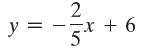
In Exercises 39–48, give the slope and y-intercept of each line whose equation is given. Then graph the linear function. y = T 2 x + 6
Showing 9900 - 10000
of 13634
First
93
94
95
96
97
98
99
100
101
102
103
104
105
106
107
Last
Step by Step Answers

 Get 50% OFF
Claim Now
Get 50% OFF
Claim Now