New Semester
Started
Get
50% OFF
Study Help!
--h --m --s
Claim Now
Question Answers
Textbooks
Find textbooks, questions and answers
Oops, something went wrong!
Change your search query and then try again
S
Books
FREE
Study Help
Expert Questions
Accounting
General Management
Mathematics
Finance
Organizational Behaviour
Law
Physics
Operating System
Management Leadership
Sociology
Programming
Marketing
Database
Computer Network
Economics
Textbooks Solutions
Accounting
Managerial Accounting
Management Leadership
Cost Accounting
Statistics
Business Law
Corporate Finance
Finance
Economics
Auditing
Tutors
Online Tutors
Find a Tutor
Hire a Tutor
Become a Tutor
AI Tutor
AI Study Planner
NEW
Sell Books
Search
Search
Sign In
Register
study help
mathematics
college algebra graphs and models
College Algebra With Modeling And Visualization 6th Edition Gary Rockswold - Solutions
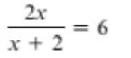
Solve the rational equation (a) Symbolically, (b) Graphically, and (c) Numerically. 2x x + 2 = 6
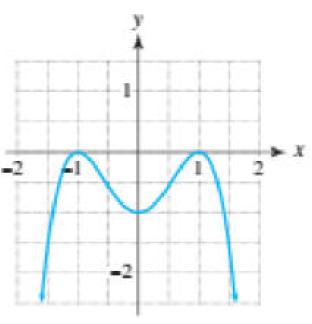
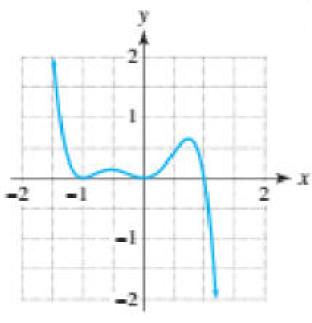
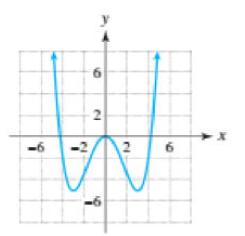
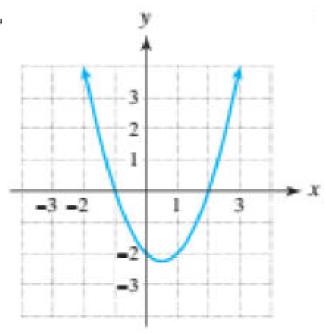
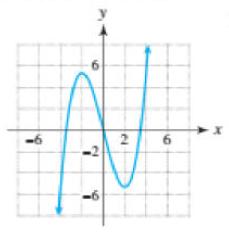
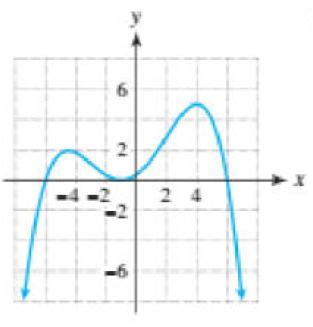
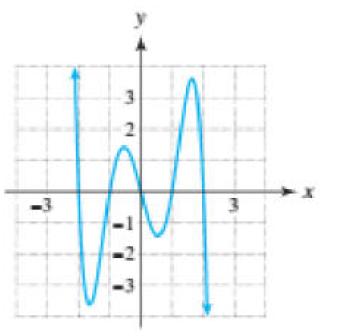
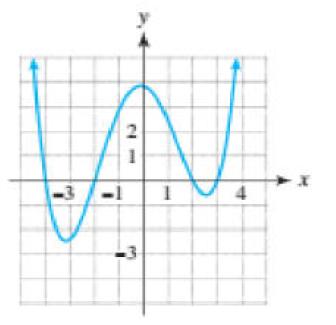
Use the graph of the polynomial function f to complete the following. Let a be the leading coefficient of the polynomial f(x). (a) Determine the number of turning points and estimate any x-intercepts. (b) State whether a > 0 or a (c) Determine the minimum degree of f. T 17
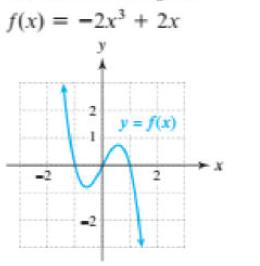
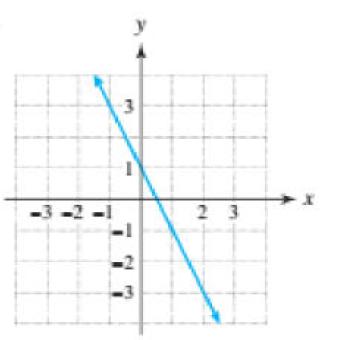
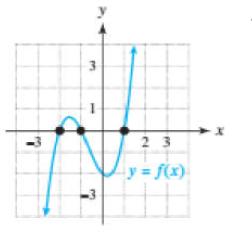
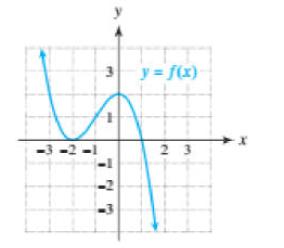
Use the graph to factor f(x). Assume that all zeros are integers. f(x) = -2x² + 2x 2 y = f(x) 2
Divide the first polynomial by the second. State the quotient and remainder. 3x³-7x + 10 x-1
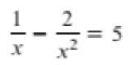
Find all real solutions. Check your results. 1. X 2 X 5
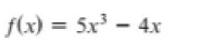
Determine whether f is a rational function and state its domain. f(x) = 5x³ - 4x
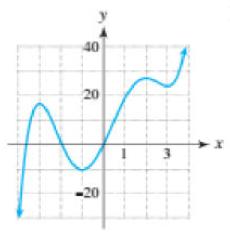
Use the graph off to estimate the (a) Local extrema (b) Absolute extrema. 40 20 -20 -X
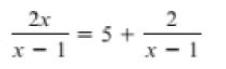
Find all real solutions. Check your results. 2x x-1 = 5+ 2 x-1
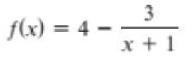
Determine whether f is a rational function and state its domain. f(x)=4- 3 x+1
Let an be the leading coefficient. (a) Find the complete factored form of a polynomial with real coefficients f(x) that satisfy the conditions. (b) Express f(x) in expanded form. Degree 4; a = 3; zeros -2, 4, i, and -i
Use the graph of the polynomial function f to complete the following. Let a be the leading coefficient of the polynomial f(x). (a) Determine the number of turning points and estimate any x-intercepts. (b) State whether a > 0 or a (c) Determine the minimum degree of f. -2 -1 2 X
Divide the first polynomial by the second. State the quotient and remainder. x-x³-4x + 1
Let an be the leading coefficient. (a) Find the complete factored form of a polynomial with real coefficients f(x) that satisfy the conditions. (b) Express f(x) in expanded form. Degree 3; a = -1; zeros -1, 2i, and -2i
Use the graph of the polynomial function f to complete the following. Let a be the leading coefficient of the polynomial f(x). (a) Determine the number of turning points and estimate any x-intercepts. (b) State whether a > 0 or a (c) Determine the minimum degree of f. -3 -2 -1 23
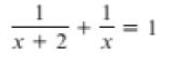
Find all real solutions. Check your results. 1 x + 2 1 X
Divide the first polynomial by the second. State the quotient and remainder. 2x47x³5x² - 19x + 17 x+1
Use the graph off to estimate the (a) Local extrema and (b) Absolute extrema. -6 2 "| 6
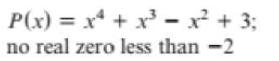
The boundedness theorem shows how the bottom row of a synthetic division is used to place upper and lower bounds on possible real zeros of a polynomial function. Let P(x) define a polynomial function of degree n ≥ 1 with real coefficients and with a positive leading coefficient. If P(x) is
The boundedness theorem shows how the bottom row of a synthetic division is used to place upper and lower bounds on possible real zeros of a polynomial function. Let P(x) define a polynomial function of degree n ≥ 1 with real coefficients and with a positive leading coefficient. If P(x) is
Use the graph of the polynomial function f to complete the following. Let a be the leading coefficient of the polynomial f(x). (a) Determine the number of turning points and estimate any x-intercepts. (b) State whether a > 0 or a (c) Determine the minimum degree of f. 2 3
Use the graph off to estimate the (a) Local extrema and (b) Absolute extrema. 6 9 2 6
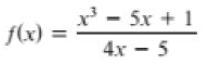
Determine whether f is a rational function and state its domain. f(x) = r* - 5x + 1 4x - 5
Use the given zeros to write the complete factored form of f(x).Let g(x) be a cubic polynomial with leading coef- ficient-4. Suppose that g(-2) = 0, g(1) = 0, and g (4) = 0. Write the complete factored form of g(x).
Use the given zeros to write the complete factored form of f(x).Let f(x) be a quadratic polynomial with leading coefficient 7. Suppose that f(-3) = 0 and f(2)= 0. Write the complete factored form of f(x).
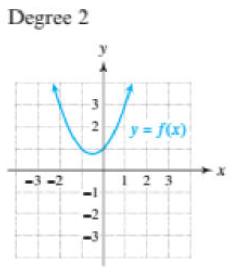
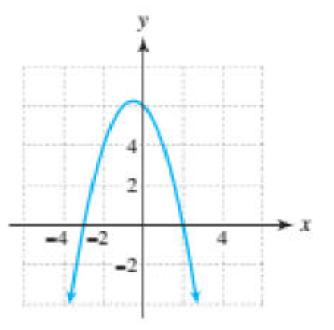
The graph and degree of a polynomial with real coefficients f(x) are given. Determine the number of real zeros and the number of nonreal complex zeros. Assume that all zeros of f(x) are distinct. Degree 2 3 32 777 y = f(x) 123
Find a quadratic polynomial f(x) with zeros ±4i and leading coefficient 3. Write f(x) in complete factored form and expanded form.
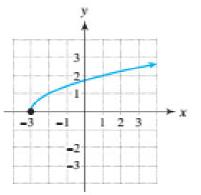
Write the equation of the graph. (The given graph is a translation of the graph of one of the following equations: y = x2, y = √x, or y = |x|.) -3 -1 3 I 123
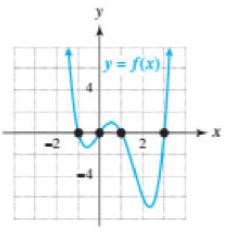
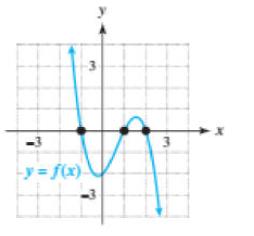
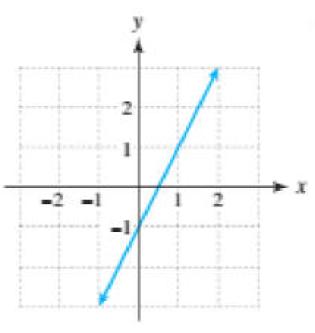
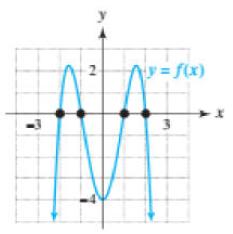
Use the graph and the factor theorem to list the factors of f(x). Assume that all zeros are integers. y = f(x)] 2 X
Use the given zeros to write the complete factored form of f(x). f(x) = 2x² - 25x + 77; zeros: and 7
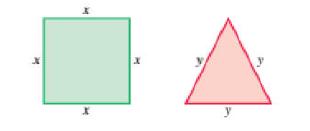
A piece of wire 20 inches long is cut into two pieces. One piece is bent into a square and the other is bent into an equilateral triangle, as illustrated.(a) Write a formula that gives the area 4 of the two shapes in terms of x. (b) Find the length of wire (to the nearest tenth of an inch) that
Find the average rate of change of f from x1 = 1 to x2 = 3. Then find the difference quotient of f. X (x)f
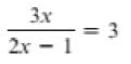
Solve the rational equation (a) Symbolically, (b) Graphically, and (c) Numerically. 3x 2r - 1 || 3
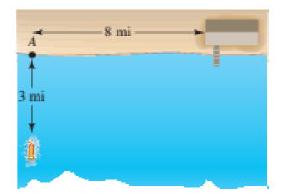
A person is in a rowboat 3 miles from the closest point on a straight shoreline, as illustrated in the figure. The person would like to reach a cabin that is 8 miles down the shoreline. The person can row at 4 miles per hour and jog at 7 miles per hour.(a) How long will it take to reach the cabin
Use the graph and the factor theorem to list the factors of f(x). Assume that all zeros are integers. 3 23 y = f(x) X
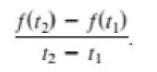
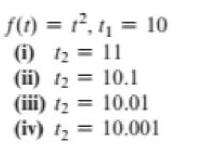
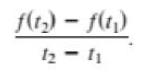
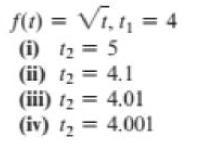
Suppose that a person is riding a bicycle on a straight road and that f(t) computes the total distance in feet that the rider has traveled after t seconds. To calculate the person's average velocity between time t1 and time t2, we can evaluate the difference quotient(a) For the given f(t) and the
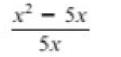
Divide the expression. 5x 5x xç - zx
The boundedness theorem shows how the bottom row of a synthetic division is used to place upper and lower bounds on possible real zeros of a polynomial function. Let P(x) define a polynomial function of degree n ≥ 1 with real coefficients and with a positive leading coefficient. If P(x) is
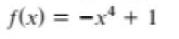
Determine if the function is a polynomial function. If it is, state its degree and leading coefficient a. f(x) = -x + 1
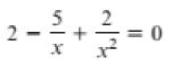
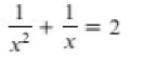
Solve the rational equation (a) Symbolically, (b) Graphically, and (c) Numerically. 2 | 5 2 름= + 0
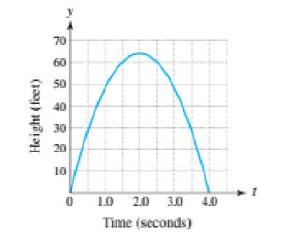
A stone is thrown into the air. Its height y in feet after 1 seconds is shown in the graph. Use the graph to complete the following. (a) Estimate the turning points. (b) Interpret this point. Height (feet) 70 60 50 40 30 20 10 0 1.0 2.0 3.0 4.0 Time (seconds)
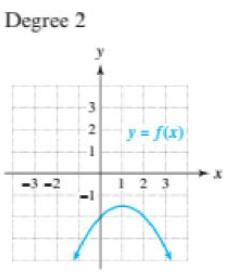
The graph and degree of a polynomial with real coefficients f(x) are given. Determine the number of real zeros and the number of nonreal complex zeros. Assume that all zeros of f(x) are distinct. Degree 2 -3-2 32 2 -1 7 y = f(x) 123
Use the graph and the factor theorem to list the factors of f(x). Assume that all zeros are integers. y = f(x) 3 3
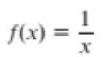
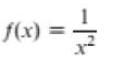
Find the average rate of change of f from x1 = 1 to x2 = 3. Then find the difference quotient of f. f(x) = 1
The boundedness theorem shows how the bottom row of a synthetic division is used to place upper and lower bounds on possible real zeros of a polynomial function. Let P(x) define a polynomial function of degree n ≥ 1 with real coefficients and with a positive leading coefficient. If P(x) is
Suppose that a person is riding a bicycle on a straight road and that f(t) computes the total distance in feet that the rider has traveled after t seconds. To calculate the person's average velocity between time t1 and time t2, we can evaluate the difference quotient(a) For the given f(t) and the
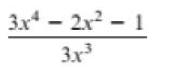
Divide the expression. 3x² - 2x² - 1 3x3
Determine if the function is a polynomial function. If it is, state its degree and leading coefficient a. x^ = (x)f
Sketch a graph of a quartic function (degree 4) with a negative leading coefficient, two real zeros, and two imaginary zeros.
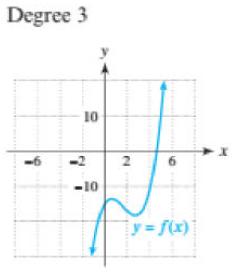
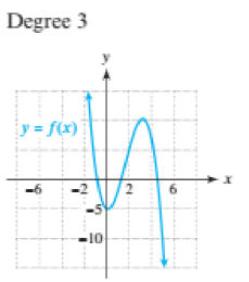
The graph and degree of a polynomial with real coefficients f(x) are given. Determine the number of real zeros and the number of nonreal complex zeros. Assume that all zeros of f(x) are distinct. Degree 3 10 -10 2 y = f(x)] X
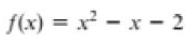
Determine whether f is a rational function and state its domain. f(x)=x²-x-2
If possible, sketch a graph of a cubic polynomial with a negative leading coefficient that satisfies each of the following conditions. (a) Zero x-intercepts (b) One x-intercept (c) Two x-intercepts (d) Four x-intercepts
Use the graph of the cubic polynomial f(x) in the next column to determine its complete factored form. State the multiplicity of each zero. Assume that all zeros are integers and that the leading coefficient is not ±1. 3 17 y = f(x) 23
Solve the rational equation (a) Symbolically, (b) Graphically, and (c) Numerically. 1 + 2
Use the graph of the polynomial function f to complete the following. Let a be the leading coefficient of the polynomial f(x). (a) Determine the number of turning points and estimate any x-intercepts. (b) State whether a > 0 or a (c) Determine the minimum degree of f. -2 -1
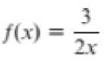
Find the average rate of change of f from x1 = 1 to x2 = 3. Then find the difference quotient of f. f(x): 3 2x
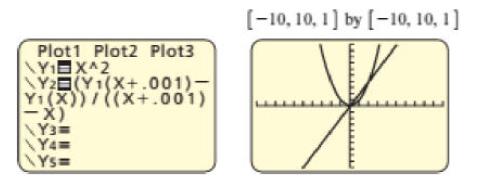
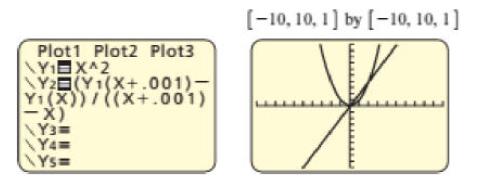
These exercises investigate the relationship between polynomial functions and their average rates of change. For example, the average rate of change of f(x) = x2 from x to x + 0.001 for any x can be calculated and graphed as shown in the figures. The graph of f is a parabola, and the graph of its
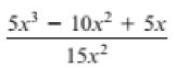
Divide the expression. 5x³10x² + 5x 15x²
Write x3 = x2 + 4x - 4 in complete factored form.
Use the graph and the factor theorem to list the factors of f(x). Assume that all zeros are integers. 2 Ay = f(x) X
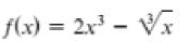
Determine if the function is a polynomial function. If it is, state its degree and leading coefficient a. f(x) = 2x³-√√x
Plot the data in the table.(a) What is the minimum degree of the polynomial function of that would be needed to model these data? Explain. (b) Should function f be odd, even, or neither? Explain. (c) Should the leading coefficient of f be positive or negative? Explain. -3.2 y
Solve x3 - 2x2 - 15x = 0.
The graph and degree of a polynomial with real coefficients f(x) are given. Determine the number of real zeros and the number of nonreal complex zeros. Assume that all zeros of f(x) are distinct. Degree 3 y = f(x) S -10 2 6
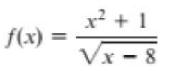
Determine whether f is a rational function and state its domain. f(x) x² + 1 Vx-8
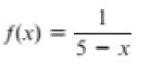
Find the average rate of change of f from x1 = 1 to x2 = 3. Then find the difference quotient of f. f(x) 1 5-x
Use the graph of the polynomial function f to complete the following. Let a be the leading coefficient of the polynomial f(x). (a) Determine the number of turning points and estimate any x-intercepts. (b) State whether a > 0 or a (c) Determine the minimum degree of f. -2
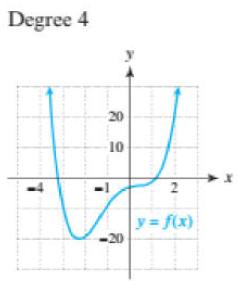
The graph and degree of a polynomial with real coefficients f(x) are given. Determine the number of real zeros and the number of nonreal complex zeros. Assume that all zeros of f(x) are distinct. Degree 4 20 10 -20 2 y = f(x) X
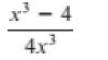
Divide the expression. X -4 4x³
Determine if the function is a polynomial function. If it is, state its degree and leading coefficient a. f(x)= 1- 4x - 5x²
Determine graphically the zeros ofWrite f(x) in complete factored form. f(x)=x²-x³-18x² + 16x + 32.
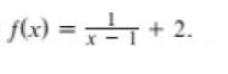
Let(a) Find the domain of f. Use interval notation.(b) Identify any vertical or horizontal asymptotes. (c) Sketch a graph of f that includes all asymptotes. f(x) = x + 2.
Use the graph of the polynomial function f to complete the following. Let a be the leading coefficient of the polynomial f(x). (a) Determine the number of turning points and estimate any x-intercepts. (b) State whether a > 0 or a (c) Determine the minimum degree of f. 6 2 -2 24 X
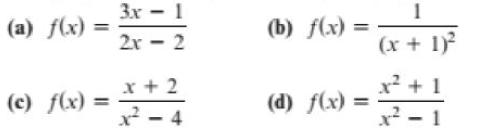
Sketch a graph of each rational function f. Include all asymptotes and any "holes" in your graph. (a) f(x) : (c) f(x) = = 3x - 1 2x - 2 x+ 2 - - 4 (b) f(x) = (d) f(x) = (x + 1² x² + 1 x²-1
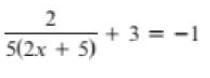
Find all real solutions. Check your results. 2 5(2x + 5) +3=-1
Let an be the leading coefficient. (a) Find the complete factored form of a polynomial with real coefficients f(x) that satisfy the conditions. (b) Express f(x) in expanded form. Degree 3; an = 5; zeros 2, i, and -i
Let an be the leading coefficient. (a) Find the complete factored form of a polynomial with real coefficients f(x) that satisfy the conditions. (b) Express f(x) in expanded form. Degree 2; a = 1; zeros 6i and -61
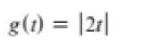
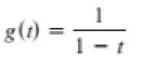
Determine if the function is a polynomial function. If it is, state its degree and leading coefficient a. g(t) = |2t|
Use the graph of the polynomial function f to complete the following. Let a be the leading coefficient of the polynomial f(x). (a) Determine the number of turning points and estimate any x-intercepts. (b) State whether a > 0 or a (c) Determine the minimum degree of f.
Divide the first polynomial by the second. State the quotient and remainder. 3x³ - 10x² - 27x + 10 х+2
Use the given zeros to write the complete factored form of f(x). f(x)= 3x48x²³67x² + 112x + 240; zeros: -4,-3, and 5
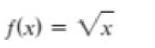
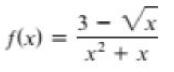
Determine whether f is a rational function and state its domain. f(x) = 3-√x x² + x
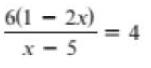
Find all real solutions. Check your results. 6(1-2x) x-5 :4
Divide the first polynomial by the second. State the quotient and remainder. x³2x²5x + 6 x-3
Use the given zeros to write the complete factored form of f(x). f(x) = -2x³ + 3x² + 59x - 30; zeros: -5.1, and 6
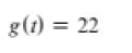
Determine if the function is a polynomial function. If it is, state its degree and leading coefficient a. g(t) = 22
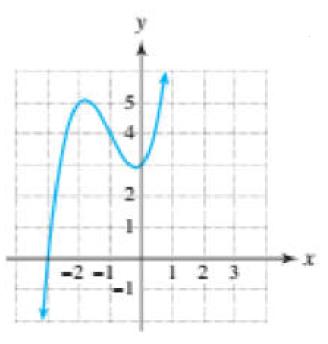
Use the graph of the polynomial function f to complete the following. Let a be the leading coefficient of the polynomial f(x). (a) Determine the number of turning points and estimate any x-intercepts. (b) State whether a > 0 or a (c) Determine the minimum degree of f. .ܐ 5 . . 1 2 3 .
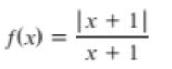
Determine whether f is a rational function and state its domain. f(x) = |x + 1| x + 1
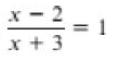
Find all real solutions. Check your results. x-2 x +3
These exercises investigate the relationship between polynomial functions and their average rates of change. For example, the average rate of change of f(x) = x2 from x to x + 0.001 for any x can be calculated and graphed as shown in the figures. The graph of f is a parabola, and the graph of its
Use the graph of the polynomial function f to complete the following. Let a be the leading coefficient of the polynomial f(x). (a) Determine the number of turning points and estimate any x-intercepts.(b) State whether a > 0 or a (c) Determine the minimum degree of f. 2 +
Determine if the function is a polynomial function. If it is, state its degree and leading coefficient a. 1 1-1
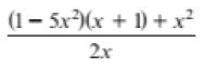
Divide the expression. 2x ₂x + (1+x)(₂x - 1)
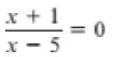
Find all real solutions. Check your results. +1 x + 1 = 0 x-5
Use the given zeros to write the complete factored form of f(x). f(x) = x³ + 6x² + 11x + 6; zeros: -3, -2, and -1
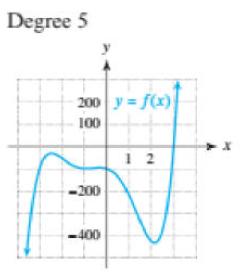
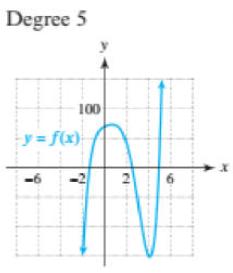
The graph and degree of a polynomial with real coefficients f(x) are given. Determine the number of real zeros and the number of nonreal complex zeros. Assume that all zeros of f(x) are distinct. Degree 5 200 y=f(x) 100
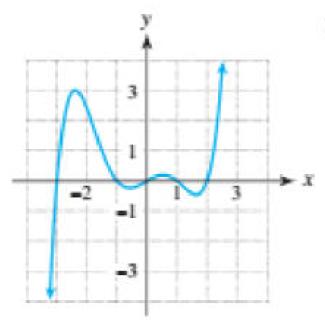
Use the graph of the polynomial function f to complete the following. Let a be the leading coefficient of the polynomial f(x). (a) Determine the number of turning points and estimate any x-intercepts. (b) State whether a > 0 or a (c) Determine the minimum degree of f. E £
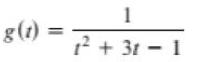
Determine if the function is a polynomial function. If it is, state its degree and leading coefficient a. g(t) 1 1² +31 - 1
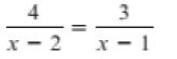
Solve the rational equation (a) Symbolically, (b) Graphically, and (c) Numerically. 4 x-2 3 x-1
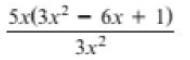
Divide the expression. 5x(3x² - 6x + 1) 3x²
The graph and degree of a polynomial with real coefficients f(x) are given. Determine the number of real zeros and the number of nonreal complex zeros. Assume that all zeros of f(x) are distinct. Degree 5 100 y = f(x) -2 2 X
Showing 9200 - 9300
of 13634
First
86
87
88
89
90
91
92
93
94
95
96
97
98
99
100
Last
Step by Step Answers

 Get 50% OFF
Claim Now
Get 50% OFF
Claim Now