New Semester
Started
Get
50% OFF
Study Help!
--h --m --s
Claim Now
Question Answers
Textbooks
Find textbooks, questions and answers
Oops, something went wrong!
Change your search query and then try again
S
Books
FREE
Study Help
Expert Questions
Accounting
General Management
Mathematics
Finance
Organizational Behaviour
Law
Physics
Operating System
Management Leadership
Sociology
Programming
Marketing
Database
Computer Network
Economics
Textbooks Solutions
Accounting
Managerial Accounting
Management Leadership
Cost Accounting
Statistics
Business Law
Corporate Finance
Finance
Economics
Auditing
Tutors
Online Tutors
Find a Tutor
Hire a Tutor
Become a Tutor
AI Tutor
AI Study Planner
NEW
Sell Books
Search
Search
Sign In
Register
study help
mathematics
college algebra graphs and models
College Algebra 7th Edition Robert F Blitzer - Solutions
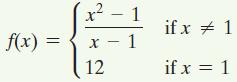
In Exercises 7–10, evaluate each function at the given values of the independent variable and simplify.a. f(-2)b. f(1)c. f(2) f(x) = x² - 1 x = 1 12 if x # 1 if x = 1
In Exercises 6–10, solve each equation or inequality.(x + 3)(x - 4) = 8
In Exercises 4–15, graph each equation in a rectangular coordinate system. If two functions are indicated, graph both in the same system. Then use your graphs to identify each relation’s domain and range. (x + 2) + (y - 1) = 9
In Exercises 7–10, evaluate each function at the given values of the independent variable and simplify.g(x) = 3x2 - 5x + 2a. g(0)b. g(-2)c. g(x - 1)d. g(-x)
In Exercises 4–6, determine whether each equation defines y as a function of x.2x + y2 = 6
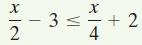
In Exercises 6–10, solve each equation or inequality. 3 XI VI 4 +2
In Exercises 4–15, graph each equation in a rectangular coordinate system. If two functions are indicated, graph both in the same system. Then use your graphs to identify each relation’s domain and range.f(x) = 4
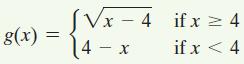
In Exercises 7–10, evaluate each function at the given values of the independent variable and simplify.a. g(13)b. g(0)c. g(-3) g(x) = = [√x-4 if x ≥ 4 4 X if x < 4
In Exercises 6–10, solve each equation or inequality.3(4x - 1) = 4 - 6(x - 3)
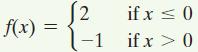
In Exercises 4–15, graph each equation in a rectangular coordinate system. If two functions are indicated, graph both in the same system. Then use your graphs to identify each relation’s domain and range. f(x) = [2 -1 -1 if x ≤ 0 if x > 0
In Exercises 7–10, evaluate each function at the given values of the independent variable and simplify.f(x) = 5 - 7xa. f(4)b. f(x + 3)c. f(-x)
In Exercises 4–15, graph each equation in a rectangular coordinate system. If two functions are indicated, graph both in the same system. Then use your graphs to identify each relation’s domain and range. f(x) = |x and g(x) = |x + 1| = 2
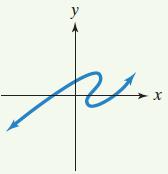
In Exercises 11–16, use the vertical line test to identify graphs in which y is a function of x. y x
In Exercises 4–15, graph each equation in a rectangular coordinate system. If two functions are indicated, graph both in the same system. Then use your graphs to identify each relation’s domain and range.x2 + y2 + 4x - 6y - 3 = 0
In Exercises 11–14, graph each equation in a rectangular coordinate system. If two functions are indicated, graph both in the same system. Then use your graphs to identify each relation’s domain and range.(x - 2)2 + (y + 1)2 = 4
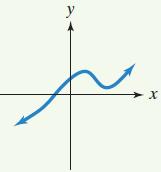
In Exercises 11–16, use the vertical line test to identify graphs in which y is a function of x. y -x
In Exercises 4–15, graph each equation in a rectangular coordinate system. If two functions are indicated, graph both in the same system. Then use your graphs to identify each relation’s domain and range. f(x) = x² and g(x) = −(x − 1)² + 4
In Exercises 11–14, graph each equation in a rectangular coordinate system. If two functions are indicated, graph both in the same system. Then use your graphs to identify each relation’s domain and range. f(x)=√x and g(x) = x - 3+ 4
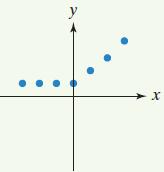
In Exercises 11–16, use the vertical line test to identify graphs in which y is a function of x. у X
In Exercises 4–15, graph each equation in a rectangular coordinate system. If two functions are indicated, graph both in the same system. Then use your graphs to identify each relation’s domain and range. f(x) = 2x - 4 and f-1
In Exercises 11–14, graph each equation in a rectangular coordinate system. If two functions are indicated, graph both in the same system. Then use your graphs to identify each relation’s domain and range. f(x)=√x 3 + 2 and f¹ -
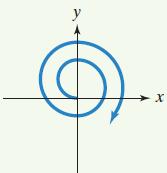
In Exercises 11–16, use the vertical line test to identify graphs in which y is a function of x. y x
In Exercises 4–15, graph each equation in a rectangular coordinate system. If two functions are indicated, graph both in the same system. Then use your graphs to identify each relation’s domain and range. f(x) = x³ - 1 and f-1
In Exercises 15–16, let f(x) = 4 - x2 and g(x) = x + 5. Find f(x +h)-f(x) h and simplify.
In Exercises 11–16, use the vertical line test to identify graphs in which y is a function of x. X
In Exercises 4–15, graph each equation in a rectangular coordinate system. If two functions are indicated, graph both in the same system. Then use your graphs to identify each relation’s domain and range. f(x)=x²-1, x ≥ 0, and f-¹ -1
In Exercises 15–16, let f(x) = 4 - x2 and g(x) = x + 5.Find all values of x satisfying (f ° g)(x) = 0.
In Exercises 11–16, use the vertical line test to identify graphs in which y is a function of x. У X
In Exercises 16–23, let f(x) = x2 - x - 4 and g(x) = 2x - 6.Find f(x - 1).
Write equations in point-slope form, slope-intercept form, and general form for the line passing through (-2, 5) and perpendicular to the line whose equation is y = - 1/4x + 1/3.
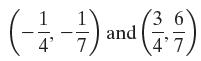
In Exercises 1–18, find the distance between each pair of points. If necessary, express answers in simplified radical form and then round to two decimals places. 1 4' 36 ;) and (੩੬)
You invested $6000 in two accounts paying 7% and 9% annual interest. At the end of the year, the total interest from these investments was $510. How much was invested at each rate?
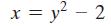
In Exercises 17–32, determine whether the graph of each equation is symmetric with respect to the y-axis, the x-axis, the origin, more than one of these, or none of these. x = y² - 2
In Exercises 19–30, find the midpoint of each line segment with the given endpoints.(10, 4) and (2, 6)
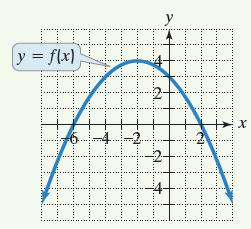
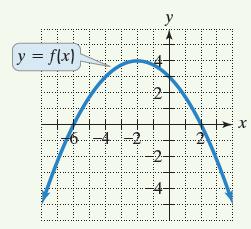
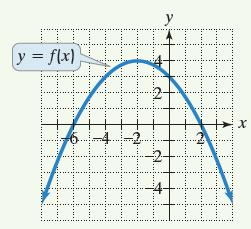
Use the graph of f to solve Exercises 9–24. Where applicable, use interval notation.For what value or values of x is f(x) = 0? y = f(x) # [TD y X
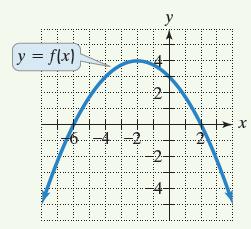
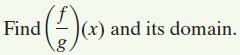
In Exercises 16–23, let f(x) = x2 - x - 4 and g(x) = 2x - 6. ¹ (²1)(x) (x) and its domain. Find
In Exercises 19–24, write an equation in slope-intercept form of a linear function f whose graph satisfies the given conditions.The graph of f passes through (-2, 6) and is perpendicular to the line whose equation is x = -4.
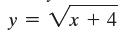
In Exercises 11–26, determine whether each equation defines y as a function of x. y = √x + 4
In Exercises 11–38, use the given conditions to write an equation for each line in point-slope form and slope-intercept form. Slope = -1, passing through (-2,-2)
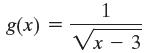
In Exercises 1–30, find the domain of each function. g(x) 1 Vx - 3
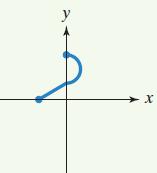
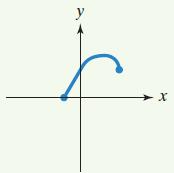
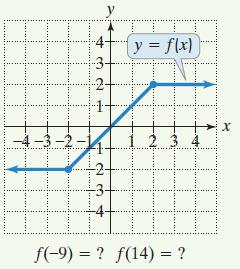
In Exercises 17–19, use the graph to determinea. The function’s domain;b. The function’s range;c. The x-intercepts, if any;d. The y-intercept, if there is one;e. Intervals on which the function is increasing, decreasing, or constant;f. The missing function values, indicated by question marks,
For a summer sales job, you are choosing between two pay arrangements: a weekly salary of $200 plus 5% commission on sales, or a straight 15% commission. For how many dollars of sales will the earnings be the same regardless of the pay arrangement?
In Exercises 17–19, use the graph to determinea. The function’s domain;b. The function’s range;c. The x-intercepts, if any;d. The y-intercept, if there is one;e. Intervals on which the function is increasing, decreasing, or constant;f. The missing function values, indicated by question marks,
In Exercises 19–30, find the midpoint of each line segment with the given endpoints.(6, 8) and (2, 4)
In Exercises 16–23, let f(x) = x2 - x - 4 and g(x) = 2x - 6.Find (g - f)(x).
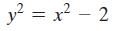
In Exercises 17–32, determine whether the graph of each equation is symmetric with respect to the y-axis, the x-axis, the origin, more than one of these, or none of these. y² = x² - 2
The functions in Exercises 11–28 are all one-to-one. For each function,a. Find an equation for f -1(x), the inverse function.b. Verify that your equation is correct by showing that f( f -1(x)) = x and f -1( f(x)) = x. f(x) 2 X
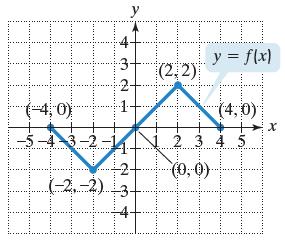
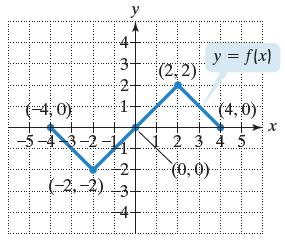
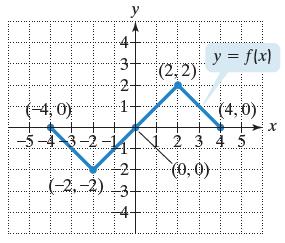
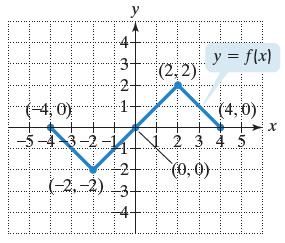
In Exercises 17–32, use the graph of y = f(x) to graph each function g.g(x) = f(x + 1) - 2 T 321 4,0) 5-4-3-2-1 3- y IIII] y = f(x) 8:00:07 11 (2,2) 2 (0, 0) (4,0) 2 3 4 5 (-2,-2) 3- [IIIII|IIIII X
In Exercises 11–26, determine whether each equation defines y as a function of x. 8 = c + x A
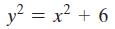
In Exercises 17–32, determine whether the graph of each equation is symmetric with respect to the y-axis, the x-axis, the origin, more than one of these, or none of these. 2 y² = x² + 6
The functions in Exercises 11–28 are all one-to-one. For each function,a. Find an equation for f -1(x), the inverse function.b. Verify that your equation is correct by showing that f( f -1(x)) = x and f -1( f(x)) = x. f(x) 1 X
Use the graph of f to solve Exercises 9–24. Where applicable, use interval notation.Is f(100) positive or negative? y = f(x) # [TD y X
In Exercises 11–38, use the given conditions to write an equation for each line in point-slope form and slope-intercept form. Slope = 1, passing through the origin
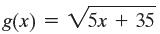
In Exercises 1–30, find the domain of each function. g(x) = V5x + 35
In Exercises 19–24, write an equation in slope-intercept form of a linear function f whose graph satisfies the given conditions.The graph of f passes through (-5, 6) and is perpendicular to the line that has an x-intercept of 3 and a y-intercept of -9.
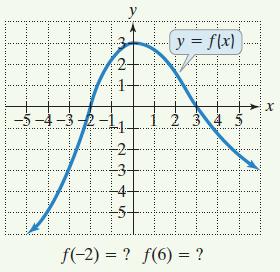
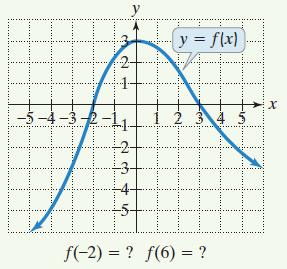
In Exercises 20–21, find each of the following:a. The numbers, if any, at which f has a relative maximum. What are these relative maxima?b. The numbers, if any, at which f has a relative minimum. What are these relative minima? -5-4-3-2- 1 y (y = f(x) X 2 3 4 5 4 DATI PTIT TII f(-2) = ? f(6) = ? X
In Exercises 19–30, find the midpoint of each line segment with the given endpoints.(-4, -7) and (-1, -3)
Use the graph of f to solve Exercises 9–24. Where applicable, use interval notation.For what values of x is f(x) > 0? y = f(x) # [TD y X
In Exercises 11–26, determine whether each equation defines y as a function of x. y = -√x + 4
In Exercises 16–23, let f(x) = x2 - x - 4 and g(x) = 2x - 6.Find (g ° f)(x).
In Exercises 11–38, use the given conditions to write an equation for each line in point-slope form and slope-intercept form. Slope = -1, passing through (-4,-1)
In Exercises 19–24, write an equation in slope-intercept form of a linear function f whose graph satisfies the given conditions.The graph of f passes through (-6, 4) and is perpendicular to the line that has an x-intercept of 2 and a y-intercept of -4.
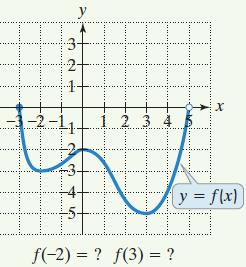
In Exercises 20–21, find each of the following:a. The numbers, if any, at which f has a relative maximum. What are these relative maxima?b. The numbers, if any, at which f has a relative minimum. What are these relative minima? 32 y 1 2 3 4 f(-2) = ? f(3) = ? y = f(x)
In Exercises 19–30, find the midpoint of each line segment with the given endpoints.(-2, -8) and (-6, -2)
In Exercises 16–23, let f(x) = x2 - x - 4 and g(x) = 2x - 6.Find (f ° g)(x).
In Exercises 17–32, use the graph of y = f(x) to graph each function g.g(x) = f(x + 1) T 321 4,0) 5-4-3-2-1 3- y IIII] y = f(x) 8:00:07 11 (2,2) 2 (0, 0) (4,0) 2 3 4 5 (-2,-2) 3- [IIIII|IIIII X
The length of a rectangular garden is 2 feet more than twice its width. If 22 feet of fencing is needed to enclose the garden, what are its dimensions?
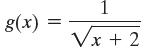
In Exercises 1–30, find the domain of each function. g(x) = 1 √x + 2
The functions in Exercises 11–28 are all one-to-one. For each function,a. Find an equation for f -1(x), the inverse function.b. Verify that your equation is correct by showing that f( f -1(x)) = x and f -1( f(x)) = x.f(x) = (x - 1)3
In Exercises 1–30, find the domain of each function. g(x) = √7x - 70
In Exercises 22–24, determine whether the graph of each equation is symmetric with respect to the y-axis, the x-axis, the origin, more than one of these, or none of these.x2 + y2 = 17
Use the graph of f to solve Exercises 9–24. Where applicable, use interval notation.Find the average rate of change of f from x1 = -4 to x2 = 4. y = f(x) # [TD y X
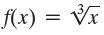
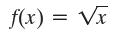
The functions in Exercises 11–28 are all one-to-one. For each function,a. Find an equation for f -1(x), the inverse function.b. Verify that your equation is correct by showing that f( f -1(x)) = x and f -1( f(x)) = x. f(x) = √x Vx
In Exercises 19–30, find the midpoint of each line segment with the given endpoints.(-2, -1) and (-8, 6)
In Exercises 11–38, use the given conditions to write an equation for each line in point-slope form and slope-intercept form. Slope I 3 , passing through (10,-4)
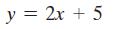
In Exercises 17–32, determine whether the graph of each equation is symmetric with respect to the y-axis, the x-axis, the origin, more than one of these, or none of these. y = 2x + 5
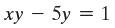
In Exercises 11–26, determine whether each equation defines y as a function of x. ху - 5у = 1 1
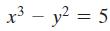
In Exercises 22–24, determine whether the graph of each equation is symmetric with respect to the y-axis, the x-axis, the origin, more than one of these, or none of these.x3 - y2 = 5
In Exercises 17–32, use the graph of y = f(x) to graph each function g.g(x) = f(-x) T 321 4,0) 5-4-3-2-1 3- y IIII] y = f(x) 8:00:07 11 (2,2) 2 (0, 0) (4,0) 2 3 4 5 (-2,-2) 3- [IIIII|IIIII X
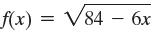
In Exercises 1–30, find the domain of each function. f(x) = V84 - 6x
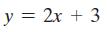
In Exercises 17–32, determine whether the graph of each equation is symmetric with respect to the y-axis, the x-axis, the origin, more than one of these, or none of these. y = 2x + 3
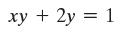
In Exercises 11–26, determine whether each equation defines y as a function of x. xy + 2y = 1
The functions in Exercises 11–28 are all one-to-one. For each function,a. Find an equation for f -1(x), the inverse function.b. Verify that your equation is correct by showing that f( f -1(x)) = x and f -1( f(x)) = x. f(x) = √x Vx
In Exercises 11–38, use the given conditions to write an equation for each line in point-slope form and slope-intercept form. Slope, passing through (6, -2)
In Exercises 1–30, find the domain of each function. f(x) = √24 - 2x
In Exercises 17–32, use the graph of y = f(x) to graph each function g.g(x) = -f(x) T 321 4,0) 5-4-3-2-1 3- y IIII] y = f(x) 8:00:07 11 (2,2) 2 (0, 0) (4,0) 2 3 4 5 (-2,-2) 3- [IIIII|IIIII X
In Exercises 19–24, write an equation in slope-intercept form of a linear function f whose graph satisfies the given conditions.The graph of f is perpendicular to the line whose equation is 4x - y - 6 = 0 and has the same y-intercept as this line.
Determine if the graph of x2 + y3 = 7 is symmetric with respect to the y-axis, the x-axis, the origin, or none of these.
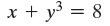
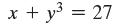
In Exercises 11–26, determine whether each equation defines y as a function of x. x + y³ = 27
In Exercises 16–23, let f(x) = x2 - x - 4 and g(x) = 2x - 6.Find f(-x). Is f even, odd, or neither?
In Exercises 19–30, find the midpoint of each line segment with the given endpoints.(-3, -4) and (6, -8)
In Exercises 19–24, write an equation in slope-intercept form of a linear function f whose graph satisfies the given conditions.The graph of f is perpendicular to the line whose equation is 3x - 2y - 4 = 0 and has the same y-intercept as this line.
In Exercises 16–23, let f(x) = x2 - x - 4 and g(x) = 2x - 6.Find g(f(-1)).
In Exercises 25–26, use the given conditions to write an equation for each line in point-slope form and slope-intercept form.Passing through (2, 1) and (-1, -8)
The bar graph shows that as costs changed over the decades, Americans devoted less of their budget to groceries and more to health care.In Exercises 25–26, find a linear function in slope-intercept form that models the given description. Each function should model the percentage of total
The bar graph shows that as costs changed over the decades, Americans devoted less of their budget to groceries and more to health care.In Exercises 25–26, find a linear function in slope-intercept form that models the given description. Each function should model the percentage of total
In Exercises 17–32, determine whether the graph of each equation is symmetric with respect to the y-axis, the x-axis, the origin, more than one of these, or none of these. x³y² = 5
In Exercises 25–26, determine whether the graph of each equation is symmetric with respect to the y-axis, the x-axis, the origin, more than one of these, or none of these.y = x3 - 1
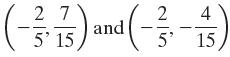
In Exercises 19–30, find the midpoint of each line segment with the given endpoints. 27 5' 15 and alin 2 4 5' 15
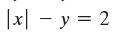
In Exercises 11–26, determine whether each equation defines y as a function of x. |x| - y = 2
Showing 10300 - 10400
of 13634
First
97
98
99
100
101
102
103
104
105
106
107
108
109
110
111
Last
Step by Step Answers

 Get 50% OFF
Claim Now
Get 50% OFF
Claim Now