New Semester
Started
Get
50% OFF
Study Help!
--h --m --s
Claim Now
Question Answers
Textbooks
Find textbooks, questions and answers
Oops, something went wrong!
Change your search query and then try again
S
Books
FREE
Study Help
Expert Questions
Accounting
General Management
Mathematics
Finance
Organizational Behaviour
Law
Physics
Operating System
Management Leadership
Sociology
Programming
Marketing
Database
Computer Network
Economics
Textbooks Solutions
Accounting
Managerial Accounting
Management Leadership
Cost Accounting
Statistics
Business Law
Corporate Finance
Finance
Economics
Auditing
Tutors
Online Tutors
Find a Tutor
Hire a Tutor
Become a Tutor
AI Tutor
AI Study Planner
NEW
Sell Books
Search
Search
Sign In
Register
study help
mathematics
college algebra graphs and models
College Algebra 7th Edition Robert F Blitzer - Solutions
In Exercises 98–101, determine whether each statement is true or false. If the statement is false, make the necessary change(s) to produce a true statement.The solution set of x² 25 is (5, 00).
In Exercises 97–98, write the equation of each parabola in standard form.Vertex: (-3, -4); The graph passes through the point (1, 4).
In Exercises 94–97, determine whether each statement makes sense or does not make sense, and explain your reasoning.I began the solution of the rational inequality x + 1/x + 3 ≥ 2 by setting both x + 1 and x + 3 equal to zero.
In Exercises 94–97, use a graphing utility with a viewing rectangle large enough to show end behavior to graph each polynomial function.f(x) = -x5 + 5x4 - 6x3 + 2x + 20
Explain why a polynomial function of degree 20 cannot cross the x-axis exactly once.
In Exercises 97–98, write the equation of each parabola in standard form.Vertex: (-3, -1); The graph passes through the point (-2, -3).
In Exercises 98–99, use a graphing utility to graph f and g in the same viewing rectangle. Then use the Zoom out feature to show that f and g have identical end behavior.f(x) = -x4 + 2x3 - 6x, g(x) = -x4
In Exercises 98–101, determine whether each statement is true or false. If the statement is false, make the necessary change(s) to produce a true statement.The inequalitycan be solved by multiplying both sides by x + 3, resulting in the equivalent inequality x - 2 x - 2 x + 3
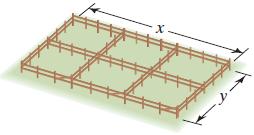
A rancher has 1000 feet of fencing to construct six corrals, as shown in the figure. Find the dimensions that maximize the enclosed area. What is the maximum area?
A company is planning to manufacture mountain bikes. The fixed monthly cost will be $100,000 and it will cost $100 to produce each bicycle.a. Write the cost function, C, of producing x mountain bikes.b. Write the average cost function, C̅, of producing x mountain bikes.c.d. What is the horizontal
A company that manufactures running shoes has a fixed monthly cost of $300,000. It costs $30 to produce each pair of shoes.a. Write the cost function, C, of producing x pairs of shoes.b. Write the average cost function, C̅ of producing x pairs of shoes. c.d. What is the horizontal asymptote
In Exercises 100–103, determine whether each statement makes sense or does not make sense, and explain your reasoning.When I’m trying to determine end behavior, it’s the coefficient of the leading term of a polynomial function that I should inspect.
Write an equation in point-slope form and general form of the line passing through (-5, 3) and perpendicular to the line whose equation is x + 5y - 7 = 0.
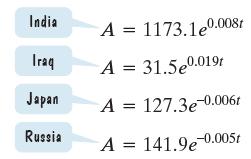
The exponential models describe the population of the indicated country, A, in millions, t years after 2010. Use these models to solve Exercises 1–6.What was the population of Japan in 2010? India Iraq Japan Russia A = 1173.1e0.008t A = 31.5e0.019r A = 127.3e-0.006t A = 141.9e0.00: -0.005t
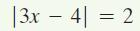
In Exercises 1–8, solve each equation or inequality. |3x - 4| = 2
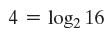
In Exercises 1–8, write each equation in its equivalent exponential form. 4 = log₂ 16
Solve each exponential equation in Exercises 1–22 by expressing each side as a power of the same base and then equating exponents.2x = 64
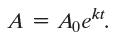
Fill in each blank so that the resulting statement is true.Consider the model for exponential growth or decay given by If k_________ , the function models the amount, or size, of a growing entity. If k_______ , the function models the amount, or size, of a decaying entity. A = Apekt
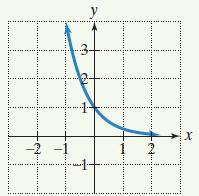
In Exercises 1–4, the graph of an exponential function is given. Select the function for each graph from the following options:f(x) = 4x, g(x) = 4-x,h(x) = -4-x, r(x) = -4-x + 3. -1 y 3- X
In Exercises 1–40, use properties of logarithms to expand each logarithmic expression as much as possible. Where possible, evaluate logarithmic expressions without using a calculator. log5 (7.3)
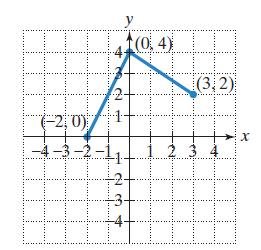
Use the graph of y = f(x) to graph y = f(-x) + 3. (-2, 0) -4-3- 1 3 00:0 (3,2) (0,4) X
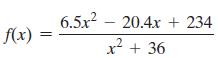
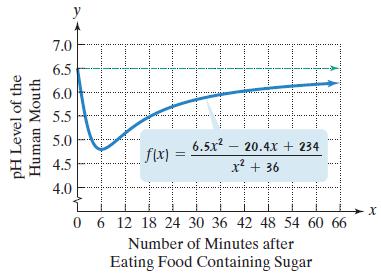
The functionmodels the pH level, f(x), of the human mouth x minutes after a person eats food containing sugar. The graph of this function is shown in the figure.a. Use the graph to obtain a reasonable estimate, to the nearest tenth, of the pH level of the human mouth 42 minutes after a person eats
In Exercises 1–10, approximate each number using a calculator. Round your answer to three decimal places.23.4
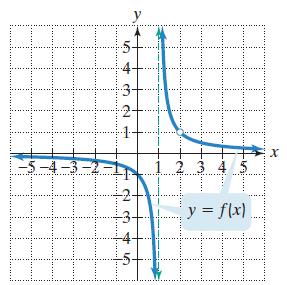
Exercises 101–103 will help you prepare for the material covered in the next section. Use the graph of function f to solve each exercise.Write the equation of the vertical asymptote, or the vertical line that the graph of f approaches but does not touch. CA -5-4-3 T ان نن ن ن Ist 800 I 3 4
Fill in each blank so that the resulting statement is true.y = logb x is equivalent to the exponential form________ , x > 0, b > 0, b ≠ 1.
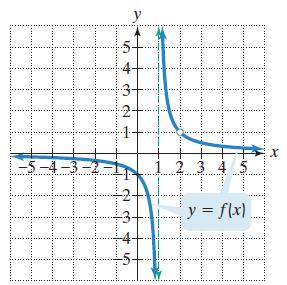
Exercises 101–103 will help you prepare for the material covered in the next section. Use the graph of function f to solve each exercise.For what values of x is the function undefined? CA -5-4-3 T ان نن ن ن Ist 800 I 3 4 5 y = f(x) 2008 X
Fill in each blank so that the resulting statement is true.The product rule for logarithms states that logb(MN) =________ . The logarithm of a product is the_________ of the logarithms.
Does the equation 3x + y2 = 10 define y as a function of x?
Fill in each blank so that the resulting statement is true.If bM = bN, then______ .
Write a polynomial inequality whose solution set is [-3, 5].
In Exercises 100–103, determine whether each statement makes sense or does not make sense, and explain your reasoning.I’m graphing a fourth-degree polynomial function with four turning points.
The annual yield per lemon tree is fairly constant at 320 pounds when the number of trees per acre is 50 or fewer. For each additional tree over 50, the annual yield per tree for all trees on the acre decreases by 4 pounds due to overcrowding. Find the number of trees that should be planted on an
Each group member should consult an almanac, newspaper, magazine, or the Internet to find data that initially increase and then decrease, or vice versa, and therefore can be modeled by a quadratic function. Group members should select the two sets of data that are most interesting and relevant. For
In Exercises 98–101, determine whether each statement is true or false. If the statement is false, make the necessary change(s) to produce a true statement.The inequality x - 2/x + 3 < 2 can be solved by multiplying both sides by (x + 3)2, x ≠ -3, resulting in the equivalent inequality (x -
In Exercises 100–103, determine whether each statement makes sense or does not make sense, and explain your reasoning.I graphed f(x) = (x + 2)3(x - 4)2, and the graph touched the x-axis and turned around at -2.
In Exercises 98–101, determine whether each statement is true or false. If the statement is false, make the necessary change(s) to produce a true statement.(x + 3)(x - 1) ≥ 0 and x + 3/x - 1 ≥ 0 have the same solution set.
In Exercises 17–32, divide using synthetic division. (x³ + 4x43x² + 2x + 3) = (x − 3) ÷
In Exercises 19–24,a. Use the Leading Coefficient Test to determine the graph’s end behavior.b. Determine whether the graph has y-axis symmetry, origin symmetry, or neither.c. Graph the function.f(x) = 3x4 - 15x3
Solve each polynomial inequality in Exercises 1–42 and graph the solution set on a real number line. Express each solution set in interval notation. -x² + 2x ≥ 0
In Exercises 17–24,a. List all possible rational roots.b. Use synthetic division to test the possible rational roots and find an actual root.c. Use the quotient from part (b) to find the remaining roots and solve the equation. x42x²16x - 15 = 0
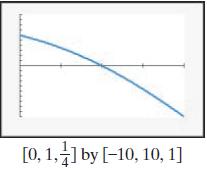
Exercises 53–60 show incomplete graphs of given polynomial functions.a. Find all the zeros of each function.b. Without using a graphing utility, draw a complete graph of the function.f(x) = 2x4 - 3x3 - 7x2 - 8x + 6 [0, 1,] by [-10, 10, 1]
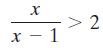
Solve each rational inequality in Exercises 43–60 and graph the solution set on a real number line. Express each solution set in interval notation. x x - 1 > 2
Galileo’s telescope brought about revolutionary changes in astronomy. A comparable leap in our ability to observe the universe took place as a result of the Hubble Space Telescope. The space telescope was able to see stars and galaxies whose brightness is 1/50 of the
In Exercises 39–52, find all zeros of the polynomial function or solve the given polynomial equation. Use the Rational Zero Theorem, Descartes’s Rule of Signs, and possibly the graph of the polynomial function shown by a graphing utility as an aid in obtaining the first zero or the first root.
In Exercises 41–64,a. Use the Leading Coefficient Test to determine the graph’s end behavior.b. Find the x-intercepts. State whether the graph crosses the x-axis, or touches the x-axis and turns around, at each intercept.c. Find the y-intercept.d. Determine whether the graph has y-axis
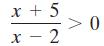
Solve each rational inequality in Exercises 43–60 and graph the solution set on a real number line. Express each solution set in interval notation. x + 5 x - 2 > 0 V
In Exercises 25–32, find an nth-degree polynomial function with real coefficients satisfying the given conditions. If you are using a graphing utility, use it to graph the function and verify the real zeros and the given function value. = 3; 4 and 2i are zeros; f(-1) = -50
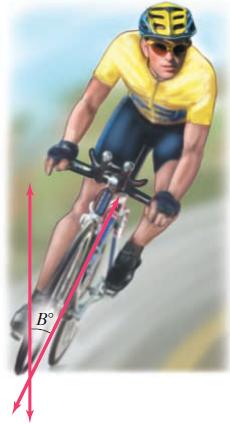
The figure shows that a bicyclist tips the cycle when making a turn. The angle B, formed by the vertical direction and the bicycle, is called the banking angle. The banking angle varies inversely as the cycle’s turning radius. When the turning radius is 4 feet, the banking angle is 28°. What is
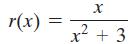
In Exercises 21–36, find the vertical asymptotes, if any, and the values of x corresponding to holes, if any, of the graph of each rational function. r(x) X 2 x² + 3
In Exercises 17–38, use the vertex and intercepts to sketch the graph of each quadratic function. Give the equation of the parabola’s axis of symmetry. Use the graph to determine the function’s domain and range.f(x) = x2 - 2x - 15
In Exercises 25–32, find the zeros for each polynomial function and give the multiplicity for each zero. State whether the graph crosses the x-axis, or touches the x-axis and turns around, at each zero. f(x) = -3(x + 1)(x-4)³
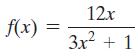
In Exercises 37–44, find the horizontal asymptote, if there is one, of the graph of each rational function. f(x) = 12x 3x² + 1
In Exercises 35–36, use the Rational Zero Theorem to list all possible rational zeros for each given function.f(x) = 3x5 - 2x4 - 15x3 + 10x2 + 12x - 8
In Exercises 17–38, use the vertex and intercepts to sketch the graph of each quadratic function. Give the equation of the parabola’s axis of symmetry. Use the graph to determine the function’s domain and range.f(x) = 2x - x2 - 2
Solve each polynomial inequality in Exercises 1–42 and graph the solution set on a real number line. Express each solution set in interval notation. x3 - 3x² - 9x + 27 < 0 +
In Exercises 33–40, use the Intermediate Value Theorem to show that each polynomial has a real zero between the given integersf(x) = x3 + x2 - 2x + 1; between -3 and -2
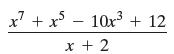
In Exercises 17–32, divide using synthetic division. x² + x³ - 10x³ + 12 X x + 2
In Exercises 27–29, divide using long division.(10x3 - 26x2 + 17x - 13) , (5x - 3)
In Exercises 33–40, use the Intermediate Value Theorem to show that each polynomial has a real zero between the given integersf(x) = x3 - x - 1; between 1 and 2
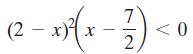
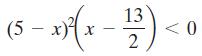
Solve each polynomial inequality in Exercises 1–42 and graph the solution set on a real number line. Express each solution set in interval notation. (2- 2 - x)²(x - 72 ) < ₁ 0
In Exercises 33–40, use synthetic division and the Remainder Theorem to find the indicated function value. f(x) = 2x³ - 11x² + 7x - 5; (4)
The heat loss of a glass window varies jointly as the window’s area and the difference between the outside and inside temperatures. A window 3 feet wide by 6 feet long loses 1200 Btu per hour when the temperature outside is 20° colder than the temperature inside. Find the heat loss through a
In Exercises 33–38, use Descartes’s Rule of Signs to determine the possible number of positive and negative real zeros for each given function. f(x) = x³ + 2x² + 5x + 4
Use synthetic division to divide f(x) = 2x3 + x2 - 13x + 6 by x - 2. Use the result to find all zeros of f.
In Exercises 17–38, use the vertex and intercepts to sketch the graph of each quadratic function. Give the equation of the parabola’s axis of symmetry. Use the graph to determine the function’s domain and range.f(x) = x2 + 4x - 1
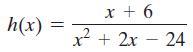
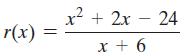
In Exercises 21–36, find the vertical asymptotes, if any, and the values of x corresponding to holes, if any, of the graph of each rational function. h(x) x + 6 x² + 2x - 24
Solve each polynomial inequality in Exercises 1–42 and graph the solution set on a real number line. Express each solution set in interval notation. (5 - x)²(x - 12)
In Exercises 33–40, use synthetic division and the Remainder Theorem to find the indicated function value. f(x) = x² - 7x² + 5x - 6; f(3)
In Exercises 33–40, use the Intermediate Value Theorem to show that each polynomial has a real zero between the given integersf(x) = x3 - 4x2 + 2; between 0 and 1
Kinetic energy varies jointly as the mass and the square of the velocity. A mass of 8 grams and velocity of 3 centimeters per second has a kinetic energy of 36 ergs. Find the kinetic energy for a mass of 4 grams and velocity of 6 centimeters per second.
In Exercises 33–40, use synthetic division and the Remainder Theorem to find the indicated function value. f(x) = = 4x³ + 5x² - 6x-4; f(-2)
Solve each polynomial inequality in Exercises 1–42 and graph the solution set on a real number line. Express each solution set in interval notation. x² + 2x² - 4x - 8 ≥ 0
In Exercises 21–36, find the vertical asymptotes, if any, and the values of x corresponding to holes, if any, of the graph of each rational function. r(x) zł + 2x - 24 x+6
In Exercises 33–40, use the Intermediate Value Theorem to show that each polynomial has a real zero between the given integersf(x) = x4 + 6x3 - 18x2; between 2 and 3
In Exercises 17–38, use the vertex and intercepts to sketch the graph of each quadratic function. Give the equation of the parabola’s axis of symmetry. Use the graph to determine the function’s domain and range.f(x) = 3x2 - 2x - 4
In Exercises 33–38, use Descartes’s Rule of Signs to determine the possible number of positive and negative real zeros for each given function. f(x) = 5x3 - 3x² + 3x - 1
In Exercises 35–36, use the Rational Zero Theorem to list all possible rational zeros for each given function.f(x) = x4 - 6x3 + 14x2 - 14x + 5
Sound intensity varies inversely as the square of the distance from the sound source. If you are in a movie theater and you change your seat to one that is twice as far from the speakers, how does the new sound intensity compare to that of your original seat?
In Exercises 33–40, use synthetic division and the Remainder Theorem to find the indicated function value. f(x) = 3x³7x² - 2x + 5; f(-3)
In Exercises 33–38, use Descartes’s Rule of Signs to determine the possible number of positive and negative real zeros for each given function. f(x) = x³ + 7x² + x + 7
Solve each polynomial inequality in Exercises 1–42 and graph the solution set on a real number line. Express each solution set in interval notation. x³ + 2x²x2 ≥ 0
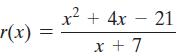
In Exercises 21–36, find the vertical asymptotes, if any, and the values of x corresponding to holes, if any, of the graph of each rational function. r(x) = x² + 4x - 21 x + 7
In Exercises 17–38, use the vertex and intercepts to sketch the graph of each quadratic function. Give the equation of the parabola’s axis of symmetry. Use the graph to determine the function’s domain and range.f(x) = 2x2 + 4x - 3
Solve the equation x3 - 17x + 4 = 0 given that 4 is a root.
In Exercises 33–40, use the Intermediate Value Theorem to show that each polynomial has a real zero between the given integersf(x) = 2x4 - 4x2 + 1; between -1 and 0
In Exercises 25–32, find an nth-degree polynomial function with real coefficients satisfying the given conditions. If you are using a graphing utility, use it to graph the function and verify the real zeros and the given function value. n = 3; -5 and 4 + 3i are zeros; f(2)= 91
Solve each polynomial inequality in Exercises 1–42 and graph the solution set on a real number line. Express each solution set in interval notation. 9x2 - 6x + 1 < 0
In Exercises 27–29, divide using long division.(4x3 - 3x2 - 2x + 1) , (x + 1)
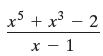
In Exercises 17–32, divide using synthetic division. x² + x³ - 2 5 3 X x - 1
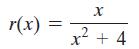
In Exercises 21–36, find the vertical asymptotes, if any, and the values of x corresponding to holes, if any, of the graph of each rational function. r(x): x 2 x² + 4
In Exercises 25–32, find the zeros for each polynomial function and give the multiplicity for each zero. State whether the graph crosses the x-axis, or touches the x-axis and turns around, at each zero.f(x) = 4(x - 3)(x + 6)3
In Exercises 17–38, use the vertex and intercepts to sketch the graph of each quadratic function. Give the equation of the parabola’s axis of symmetry. Use the graph to determine the function’s domain and range.f(x) = x2 - 2x - 3
The number of houses that can be served by a water pipe varies directly as the square of the diameter of the pipe. A water pipe that has a 10-centimeter diameter can supply 50 houses.a. How many houses can be served by a water pipe that has a 30-centimeter diameter?b. What size water pipe is needed
Does f(x) = x3 - x - 5 have a real zero between 1 and 2?
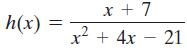
In Exercises 21–36, find the vertical asymptotes, if any, and the values of x corresponding to holes, if any, of the graph of each rational function. h(x) = x + 7 2 x² + 4x - 21
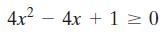
Solve each polynomial inequality in Exercises 1–42 and graph the solution set on a real number line. Express each solution set in interval notation. 4x² - 4x + 10
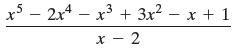
In Exercises 17–32, divide using synthetic division. · 2x²x³ + 3x² = x + 1 x - 2
In Exercises 25–32, find an nth-degree polynomial function with real coefficients satisfying the given conditions. If you are using a graphing utility, use it to graph the function and verify the real zeros and the given function value. n = 4; 4, 3, and 2 + 3i are zeros; f(1) = 100
One’s intelligence quotient, or IQ, varies directly as a person’s mental age and inversely as that person’s chronological age. A person with a mental age of 25 and a chronological age of 20 has an IQ of 125. What is the chronological age of a person with a mental age of 40 and an IQ of 80?
In Exercises 17–38, use the vertex and intercepts to sketch the graph of each quadratic function. Give the equation of the parabola’s axis of symmetry. Use the graph to determine the function’s domain and range.f(x) = x2 + 6x + 3
Showing 7200 - 7300
of 13634
First
66
67
68
69
70
71
72
73
74
75
76
77
78
79
80
Last
Step by Step Answers

 Get 50% OFF
Claim Now
Get 50% OFF
Claim Now