New Semester
Started
Get
50% OFF
Study Help!
--h --m --s
Claim Now
Question Answers
Textbooks
Find textbooks, questions and answers
Oops, something went wrong!
Change your search query and then try again
S
Books
FREE
Study Help
Expert Questions
Accounting
General Management
Mathematics
Finance
Organizational Behaviour
Law
Physics
Operating System
Management Leadership
Sociology
Programming
Marketing
Database
Computer Network
Economics
Textbooks Solutions
Accounting
Managerial Accounting
Management Leadership
Cost Accounting
Statistics
Business Law
Corporate Finance
Finance
Economics
Auditing
Tutors
Online Tutors
Find a Tutor
Hire a Tutor
Become a Tutor
AI Tutor
AI Study Planner
NEW
Sell Books
Search
Search
Sign In
Register
study help
mathematics
linear algebra and its applications
Linear Algebra And Its Applications 6th Global Edition David Lay, Steven Lay, Judi McDonald - Solutions
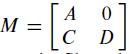
Generalize the idea of Exercise 23(a) [not 23(b)] by constructing a 5 × 5 matrixsuch that M2 = I.Make C a nonzero 2 × 3 matrix. Show that your construction works.Data from in Exercise 23a. Verify that A2 = I when M = A C 0 D
Let S be the triangle with vertices (9, 3, -5), (12, 8, 2), (1.8, 2.7, 1). Find the image of S under the perspective projection with center of projection at (0, 0, 10).
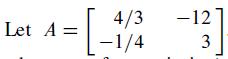
With A as in the Practice Problem, find a 5 x 3 matrix B and a 3 x 4 matrix C such that A = BC. Generalize this idea to the case where A is m x n, A = LU, and U has only three nonzero rows.
Suppose A = BC, where B is invertible. Show that any sequence of row operations that reduces B to I also reduces A to C. The converse is not true, since the zero matrix may be factored as 0 = B(0).
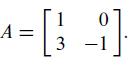
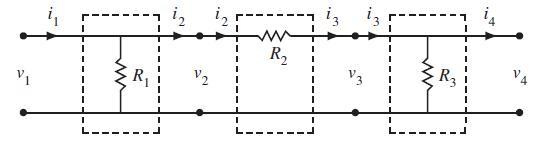
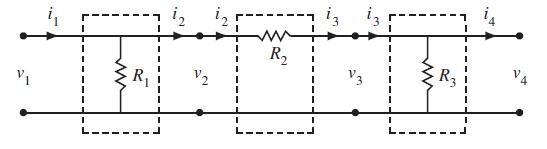
a. Compute the transfer matrix of the network in the figure.b.Design a ladder network whose transfer matrix is A by finding a suitable matrix factorization of A. I R₂ iz R₂ V4
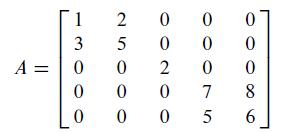
Without using row reduction, find the inverse of A = 1 3 0 0 Lo 00 2 5 0 0 0 0 2 0 0 0 0 7 8 0 0 5 6
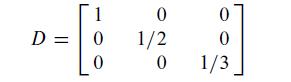
Suppose a 3 x 3 matrix A admits a factorization as A = PDP-¹, where P is some invertible 3 x 3 matrix and D is the diagonal matrixShow that this factorization is useful when computing high powers of A. Find fairly simple formulas for A², A³, and Ak (k a positive integer), using P and the entries
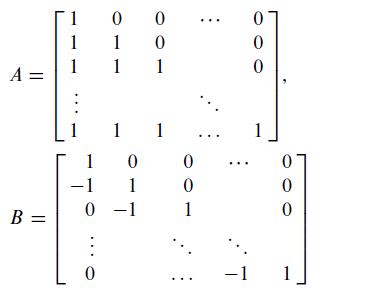
Use partitioned matrices to prove by induction that for n = 2, 3,...., the n × n matrix A shown below is invertible and B is its inverse.For the induction step, assume A and B are (k + 1) × (k + 1) matrices, and partition A and B in a formsimilar to that displayed in Exercise 25.Data from in
Design two different ladder networks that each output 9 volts and 4 amps when the input is 12 volts and 6 amps.
Show that if three shunt circuits (with resistances R1,R2, R3) are connected in series, the resulting network has the same transfer matrix as a single shunt circuit. Find a formula for the resistance in that circuit.
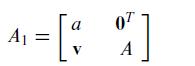
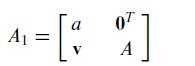
Use partitioned matrices to prove by induction that the product of two lower triangular matrices is also lower triangular. 07 A a A₁ = [²
Suppose A = UDVT, where U and V are n x n matrices with the property that UTU = I and VTV = I, and where D is a diagonal matrix with positive numbers σ₁,..., σn on the diagonal. Show that A is invertible, and find a formula for A-¹.
Suppose A = QR, where Q and R are n x n, R is invertible and upper triangular, and Q has the property that QT Q = I. Show that for each b in Rn, the equation Ax = b has a unique solution. What computations with Q and R will produce the solution?
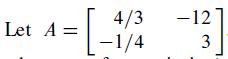
Find a different factorization of the A in Exercise 29, and thereby design a different ladder network whose transfer matrix is A.Data from in Exercise 29Compute the transfer matrix of the network in the figure.Design a ladder network whose transfer matrix is A by finding a suitable matrix
Suppose memory or size restrictions prevent your matrix program from working with matrices having more than 32 rows and 32 columns, and suppose some project involves 50 × 50 matrices A and B. Describe the commands or operations of your matrix program that accomplish the following tasks.a. Compute
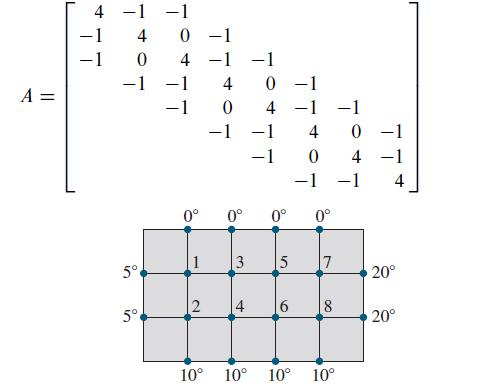
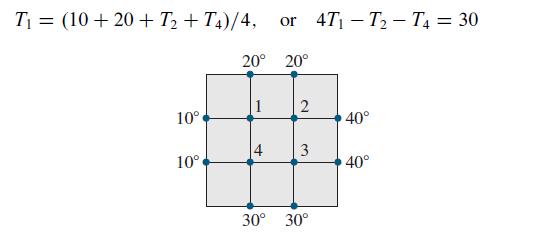
The solution to the steady-state heat flow problem for the plate in the figure is approximated by the solution to the equation Ax = b, where b = (5, 15, 0, 10, 0, 10, 20, 30) andThe missing entries in A are zeros. The nonzero entries of A lie within a band along the main diagonal. Such band
Solve the system of equations from Exercise 43. T₁ (10+20+ T₂ + T4)/4, = 10° 10° 20° 20° 1 or 4T1-T₂-T4 = 30 4 2 3 30° 30° 40° 40°
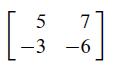
Unless otherwise specified, assume that all matrices in these exercises are n × n. Determine which of the matrices are invertible. Use as few calculations as possible. Justify your answers. 5 7 -3 -6
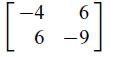
Unless otherwise specified, assume that all matrices in these exercises are n × n. Determine which of the matrices are invertible. Use as few calculations as possible. Justify your answers. 6 6-9 -4
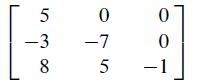
Unless otherwise specified, assume that all matrices in these exercises are n × n. Determine which of the matrices are invertible. Use as few calculations as possible. Justify your answers. 5 -3 8 0 -7 5 0 0 -1
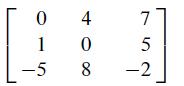
Unless otherwise specified, assume that all matrices in these exercises are n × n. Determine which of the matrices are invertible. Use as few calculations as possible. Justify your answers. 0 1 -5 4 0 8 7 52 -2
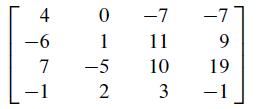
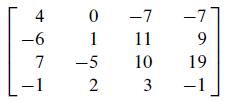
Unless otherwise specified, assume that all matrices in these exercises are n × n. Determine which of the matrices are invertible. Use as few calculations as possible. Justify your answers. 4 -6 7 -1 0 1 -5 2 -7 11 10 3 -7 9 19 -1
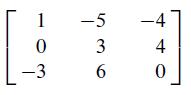
Unless otherwise specified, assume that all matrices in these exercises are n × n. Determine which of the matrices are invertible. Use as few calculations as possible. Justify your answers. 1 0 -3 -5 ԱՄ 3 6 -4 4 0
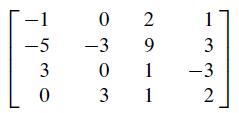
Unless otherwise specified, assume that all matrices in these exercises are n × n. Determine which of the matrices are invertible. Use as few calculations as possible. Justify your answers. -1 -5 3 0 02 9 0 1 3 1 -3 1 332 -3
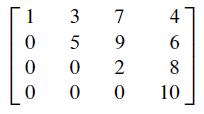
Unless otherwise specified, assume that all matrices in these exercises are n × n. Determine which of the matrices are invertible. Use as few calculations as possible. Justify your answers. 1 3 7 0 5 9 0 0 2 0 0 0 4 6 8 10
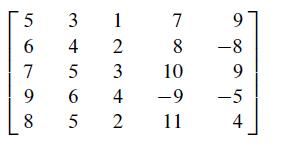
Unless otherwise specified, assume that all matrices in these exercises are n × n. Determine which of the matrices are invertible. Use as few calculations as possible. Justify your answers. 5 3 6 7 9 8 1 4 2 5 3 4 5 2 Դ ՈՒԺ Ո 6 7 8 10 -9 11 -8 9 -5 4
The matrices are all n × n. Each part of the exercises is an implication of the form “If ‘statement 1’, then ‘statement 2’.”Mark an implication as True if the truth of “statement 2” always follows whenever “statement 1” happens to be true. An implication is False if there is an
The matrices are all n×n. Each part of the exercises is an implication of the form “If ‘statement 1’, then ‘statement 2’.”Mark an implication as True if the truth of “statement 2” always follows whenever “statement 1” happens to be true. An implication is False if there is an
The matrices are all n×n. Each part of the exercises is an implication of the form “If ‘statement 1’, then ‘statement 2’.” Mark an implication as True if the truth of “statement 2” always follows whenever “statement 1” happens to be true. An implication is False if there is an
The matrices are all n×n. Each part of the exercises is an implication of the form “If ‘statement 1’, then ‘statement 2’.” Mark an implication as True if the truth of “statement 2” always follows whenever “statement 1” happens to be true. An implication is False if there is an
The matrices are all n × n. Each part of the exercises is an implication of the form “If ‘statement 1’, then ‘statement 2’.” Mark an implication as True if the truth of “statement 2” always follows whenever “statement 1” happens to be true. An implication is False if there is
If L is n x n and the equation Lx = 0 has the trivial solution, do the columns of L span Rn? Why?
If an n x n matrix K cannot be row reduced to In, what canyou say about the columns of K? Why?
The matrices are all n×n. Each part of the exercises is an implication of the form “If ‘statement 1’, then ‘statement 2’.” Mark an implication as True if the truth of “statement 2” always follows whenever “statement 1” happens to be true. An implication is False if there is an
The matrices are all n×n. Each part of the exercises is an implication of the form “If ‘statement 1’, then ‘statement 2’.” Mark an implication as True if the truth of “statement 2” always follows whenever “statement 1” happens to be true. An implication is False if there is an
The matrices are all n×n. Each part of the exercises is an implication of the form “If ‘statement 1’, then ‘statement 2’.” Mark an implication as True if the truth of “statement 2” always follows whenever “statement 1” happens to be true. An implication is False if there is an
The matrices are all n×n. Each part of the exercises is an implication of the form “If ‘statement 1’, then ‘statement 2’.” Mark an implication as True if the truth of “statement 2” always follows whenever “statement 1” happens to be true. An implication is False if there is an
The matrices are all n×n. Each part of the exercises is an implication of the form “If ‘statement 1’, then ‘statement 2’.” Mark an implication as True if the truth of “statement 2” always follows whenever “statement 1” happens to be true. An implication is False if there is an
An m × n upper triangular matrix is one whose entries below the main diagonal are 0's. When is a square upper triangular matrix invertible? Justify your answer.
An m x n lower triangular matrix is one whose entries above the main diagonal are 0's. When is a square lower triangular matrix invertible? Justify your answer.
Can a square matrix with two identical columns be invertible? Why or why not?
Is it possible for a 5 x 5 matrix to be invertible when its columns do not span R5? Why or why not?
If A is invertible, then the columns of A-1 are linearly independent. Explain why.
If C is 6 x 6 and the equation Cx = v is consistent for every v in R6, is it possible that for some v, the equation Cx= v has more than one solution? Why or why not?
If the columns of a 7 x 7 matrix D are linearly independent, what can you say about solutions of Dx = b? Why?
If the equation Gx = y has more than one solution for some y in Rn, can the columns of G span Rn? Why or why not?
If the equation H x = c is inconsistent for some c in Rn, whatcan you say about the equation H x = 0? Why?
If n x n matrices E and F have the property that EF = l, then E and F commute. Explain why.
Show how to use the condition number of a matrix A to estimate the accuracy of a computed solution of Ax = b. If the entries of A and b are accurate to about r significant digits and if the condition number of A is approximately 10k (with k a positive integer), then the computed solution of Ax = b
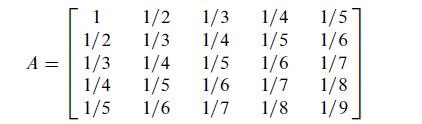
Some matrix programs, such as MATLAB, have a command to create Hilbert matrices of various sizes. If possible, use an inverse command to compute the inverse of a twelfth-order or larger Hilbert matrix, A. Compute AA-1: Report what you find.
Show how to use the condition number of a matrix A to estimate the accuracy of a computed solution of Ax = b. If the entries of A and b are accurate to about r significant digits and if the condition number of A is approximately 10k (with k a positive integer), then the computed solution of Ax = b
Let T: Rn → Rn be an invertible linear transformation, and let S and U be functions from Rn into Rn such that S (T(x)) = x and U (T(x)) = x for all x in R". Show that U(v) = S(v) for all v in R". This will show that I has a unique inverse, as asserted in Theorem 9.Data from in Theorem 9 If A is a
Suppose T and S satisfy the invertibility equations (1) and (2), where I is a linear transformation. Show directly that S is a linear transformation.
Suppose a linear transformation T: Rn → Rn has the prop- erty that T(u) = T(v) for some pair of distinct vectors u and v in Rn. Can T map Rn onto Rn? Why or why not?
Suppose T and U are linear transformations from Rn to Rn such that T (Ux) = x for all x in Rn. Is it true that U(Tx) = x for all x in Rn? Why or why not?
T is a linear transformation from R² into R². Show that T is invertible and find a formula for T-1. T(x₁, x₂) = (6x₁ - 8x2, -5x₁ +7x2)
Let T be a linear transformation that maps Rn onto Rn. Showthat T-¹ exists and maps Rn onto Rn. Is T-¹ also one-to-one?
Suppose A is an n x n matrix with the property that the equation Ax = b has at least one solution for each b in Rn.Without using Theorems 5 or 8, explain why each equationAx = b has in fact exactly one solution.Data from in Theorem 5Data from in Theorem 8 If A is an invertible n × n matrix, then
T is a linear transformation from R² into R². Show that T is invertible and find a formula for T-1. T(x₁, x₂) = (-9x₁ +7x2, 4x₁ - 3x2)
Give a formula for (ABX)T, where x is a vector and A and Bare matrices of appropriate sizes.
Let T: Rn → Rn be an invertible linear transformation. Explain why I is both one-to-one and onto R". Use equations (1) and (2). Then give a second explanation using one or more theorems.
If A is an n x n matrix and the transformation x → Ax is one-to-one, what else can you say about this transformation? Justify your answer.
Suppose A is an n x n matrix with the property that the equation Ax = 0 has only the trivial solution. Without using the Invertible Matrix Theorem, explain directly why the equation Ax = b must have a solution for each b in Rn.
If A is an n x n matrix and the equation Ax = b has more than one solution for some b, then the transformation x → Ax is not one-to-one. What else can you say about this transformation? Justify your answer.
Let A And B Be N x n Matrices. Show that if AB is invertible, so is B.
Show that if AB is invertible, so is A. you cannot assume that A and B are invertible.
Explain why the columns of A² span Rn whenever the columns of A are linearly independent.
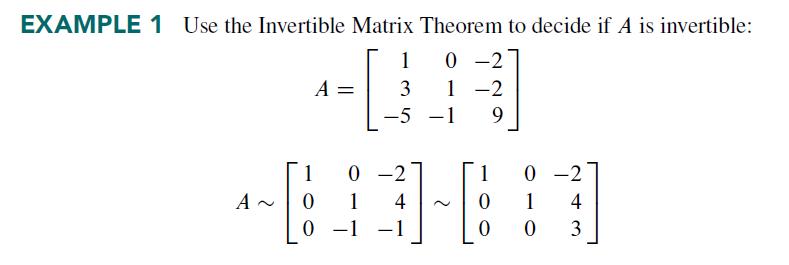
Verify the boxed statement preceding Example 1.Data from in Example 1 EXAMPLE 1 Use the Invertible Matrix Theorem to decide if A is invertible: 1 0-2 -DA A = 3 1 -2 -5 -1 9 A 1 0 0 -1 0-2 1 4 1 0 -2 ⠀⠀⠀ 0 1 4 0 0 3
LetCompute AD and DA. Explain how the columns or rows of A change when A is multiplied by D on the right or on the left. Find a 3 × 3 matrix B, not the identity matrix or the zero matrix, such that AB = BA: 124 A 1 2 1 1 35 4 5 and D = 2 0 0 0 3 0 005
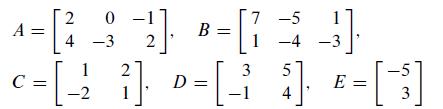
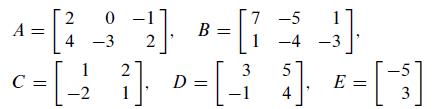
Compute each matrix sum or product if it is defined. If an expression is undefined, explain why. Let-2A, B - 2A, AC, CD A = C 1] B =[7 2 2 0-1 -3 4 1 2 =[-22 1] D= ·[₁ 7 -5 -1 -4 -3 3 5 4 E = -5 3
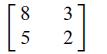
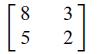
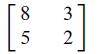
Find the inverses of the matrices, 8 5 3 2
Compute each matrix sum or product if it is defined. If an expression is undefined, explain why. LetA + 2B, 3C - E, CB, EB A = C 1] B =[7 2 2 0-1 -3 4 1 2 =[-22 1] D= ·[₁ 7 -5 -1 -4 -3 3 5 4 E = -5 3
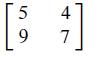
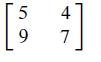
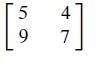
Find the inverses of the matrices, 5 9 4 7
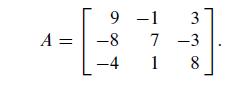
In the rest of this exercise set and in those to follow, you should assume that each matrix expression is defined. That is, the sizes of the matrices (and vectors) involved “match” appropriately. Compute A - 5/3 and (5/3) A, when A = 9-1 3 7 -3 18 -8 -4
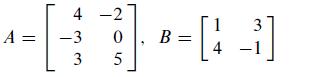
Compute the product AB in two ways: (a) By the definition, where Ab1 and Ab2 are computed separately(b) By the row–column rule for computing AB A = 4-2 0 3 5 433 -3 B = 1 [4 3
Find the inverses of the matrices, 3 7 -2 -4
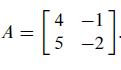
In the rest of this exercise set and in those to follow, you should assume that each matrix expression is defined. That is, the sizes of the matrices (and vectors) involved “match” appropriately.LetCompute 3/2 - A and (3/2)A. - [₁ A = 4 -1 5-2
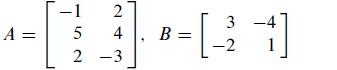
Compute the product AB in two ways: (a) By the definition, where Ab1 and Ab2 are computed separately(b) By the row–column rule for computing AB A = -1 2 5 4 2-3 3 B =[221] -2
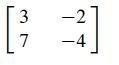
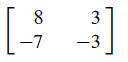
Find the inverses of the matrices, 8 -7 3 -3
Verify that the inverse you found in Exercise 1 is correct.Data from in Exercise 1Find the inverses of the matrices, 8 5 3 2
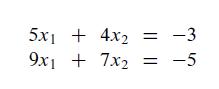
Use the inverse found in Exercise 2 to solve the systemData from in Exercise 2Find the inverses of the matrices, 5x1 + 4x2 9x1 + 7x2 = -3 -5
Verify that the inverse you found in Exercise 2 is correct.Data from in Exercise 2Find the inverses of the matrices, 5 9 4 7
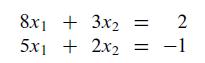
Use the inverse found in Exercise 1 to solve the systemData from in Exercise 1Find the inverses of the matrices, 8x1 + 3x2 = 2 5x1 + 2x2 = -1
LetVerify that AB = AC and yet B ≠ C: 3-6 8 6 A = =[ -4 -8] B =[$ ;] C = [$ 3]. 5 7 4
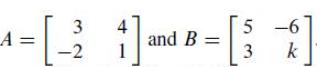
LetWhat value(s) of k, if any, will make AB = BA? A = 3 -2 4 1 and B = 5-6 3 k
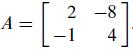
LetConstruct a 2 × 2 matrix B such that AB is the zero matrix. Use two different nonzero columns for B. A = 2-8 4 −1
If a matrix A is 5 × 3 and the product AB is 5 × 7, what is the size of B?
How many rows does B have if BC is a 3 × 4 matrix?
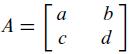
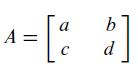
Mark each statement True or False (T/F). Justify each answer.(T/F) If and ab - cd ≠ 0, then A is invertible. A = a C b d
Use matrix algebra to show that if A is invertible and D satisfies AD = I, then D = A-¹.
Mark each statement True or False (T/F). Justify each answer.(T/F) Ifand ad = bc, then A is not invertible. 1=[ª A = a b C d
Mark each statement True or False (T/F). Justify each answer.(T/F) In order for a matrix B to be the inverse of A, both equations AB = I and BA = I must be true.
Mark each statement True or False (T/F). Justify each answer.(T/F) A product of invertible n × n matrices is invertible, and the inverse of the product is the product of their inverses in the same order.
Let r₁,..., rp be vectors in Rn, and let Q be an m x n matrix.Write the matrix [ Qr1....Qrp ] as a product of two matrices (neither of which is an identity matrix).
Mark each statement True or False (T/F). Justify each answer.(T/F) If A and B are n x n and invertible, then A-1B-¹ isthe inverse of AB.
Mark each statement True or False (T/F). Justify each answer.(T/F) If A is invertible, then the inverse of A-¹ is A itself.
Concern arbitrary matrices A, B, and C for which the indicated sums and products are defined. Mark each statement True or False (T/F). Justify each answer. (T/F) AB + AC = A(B+C)
Concern arbitrary matrices A, B, and C for which the indicated sums and products are defined. Mark each statement True or False (T/F). Justify each answer. (T/F) (AB)C = (AC)B
Let A be an invertible n × n matrix, and let B be an n × p matrix. Explain why A-1B can be computed by row reduction:If A is larger than 2 x 2, then row reduction of [A B] is much faster than computing both A-1 and A-1 B. If [A B]~~ [IX], then X = A¹B.
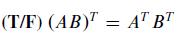
Concern arbitrary matrices A, B, and C for which the indicated sums and products are defined. Mark each statement True or False (T/F). Justify each answer. (T/F) (AB)T = AT BT
Showing 1800 - 1900
of 2241
First
9
10
11
12
13
14
15
16
17
18
19
20
21
22
23
Step by Step Answers

 Get 50% OFF
Claim Now
Get 50% OFF
Claim Now