New Semester
Started
Get
50% OFF
Study Help!
--h --m --s
Claim Now
Question Answers
Textbooks
Find textbooks, questions and answers
Oops, something went wrong!
Change your search query and then try again
S
Books
FREE
Study Help
Expert Questions
Accounting
General Management
Mathematics
Finance
Organizational Behaviour
Law
Physics
Operating System
Management Leadership
Sociology
Programming
Marketing
Database
Computer Network
Economics
Textbooks Solutions
Accounting
Managerial Accounting
Management Leadership
Cost Accounting
Statistics
Business Law
Corporate Finance
Finance
Economics
Auditing
Tutors
Online Tutors
Find a Tutor
Hire a Tutor
Become a Tutor
AI Tutor
AI Study Planner
NEW
Sell Books
Search
Search
Sign In
Register
study help
mathematics
precalculus
Precalculus Concepts Through Functions A Unit Circle Approach To Trigonometry 5th Edition Michael Sullivan - Solutions
In Problems 21 – 26, opposite vertices of a rectangular box whose edges are parallel to the coordinate axes are given. List the coordinates of the other six vertices of the box.(−2, −3, 0); (−6, 7, 1)
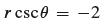
In Problems 15 – 30, transform each polar equation to an equation in rectangular coordinates. Then identify and graph the equation. rcsco -2
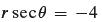
In Problems 15 – 30, transform each polar equation to an equation in rectangular coordinates. Then identify and graph the equation. r sece = -4
Find a vector of magnitude 15 that is parallel to 4i − 3j.
In Problems 21 – 34, plot each point given in polar coordinates. (-1, 7 3
In Problems 25 – 36, write each complex number in rectangular form. Tein
In Problems 21 – 34, plot each point given in polar coordinates. (-3, Зп 4
Find a vector of magnitude 5 that is parallel to −12i + 9j.
In Problems 25 – 36, write each complex number in rectangular form. 3ei ж/2
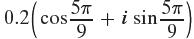
In Problems 25 – 36, write each complex number in rectangular form. 0.2 0.2 5T cos: + i sin- 5TT 9 TC
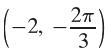
In Problems 21 – 34, plot each point given in polar coordinates. (-2,- π)
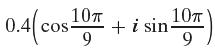
In Problems 25 – 36, write each complex number in rectangular form. 10п 9 0.4(cos- + i sin 10T 9
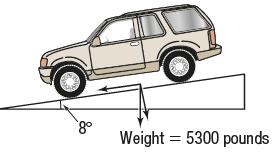
A Ford Explorer with a gross weight of 5300 pounds is parked on a street with an 8° grade. See the figure. Find the magnitude of the force required to keep the Explorer from rolling down the hill. What is the magnitude of the force perpendicular to the hill? 8⁰ Weight = 5300 pounds
In Problems 23 – 44, use the given vectors u, v, and w to find each expression.u = 2i − 3j + k v = −3i + 3j + 2k w = i + j + 3kv × (4w)
In Problems 21 – 34, plot each point given in polar coordinates. (-3, π 2
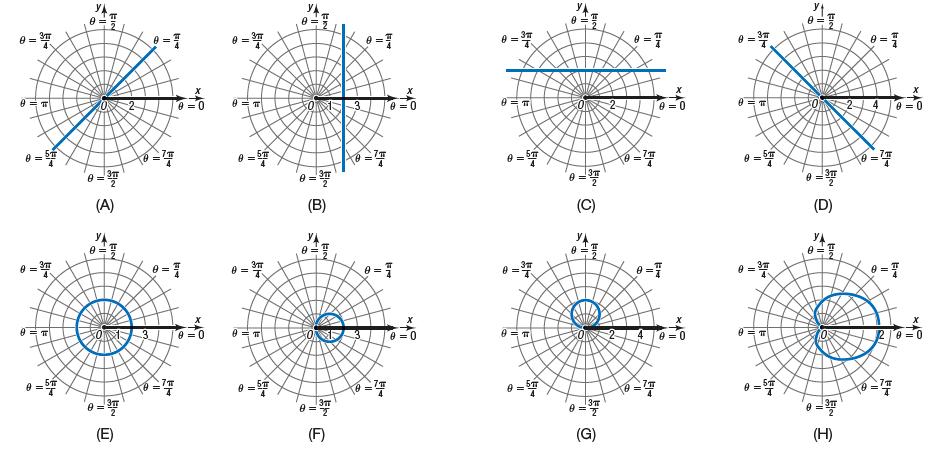
In Problems 31–38, match each of the graphs (A) through (H) to one of the following polar equations. =6 TIIV 0₁ TE = f T = 5m + 9 = T 5T = 1/ TV VIN !! FIN 0 0 (A) I FIN AWO 0=37 (E) 3 0=0 0=1 7T 0=0 = 0 -37 0 T 9= 0 la =57 = 3/TT E 11. 5m = 0 EN (B) EIN (F) = 0 -1 0 0. F4 0 =0 1=0 517 L=0 =
In Problems 25 – 36, write each complex number in rectangular form. 2e-/18
In Problems 35–42, plot each point given in polar coordinates, and find other polar coordinates (r,θ) of the point for which: (a) r> 0, -2π ≤ 0 < 0 (b) r < 0, 0≤ 0 < 2π (c) r> 0, 2π ≤ 0 < 4T
In Problems 27 – 32, the vector v has initial point P and terminal point Q. Write v in the form a i + bj + ck; that is, find its position vector.P = (−1, 4, −2); Q = (6, 2, 2)
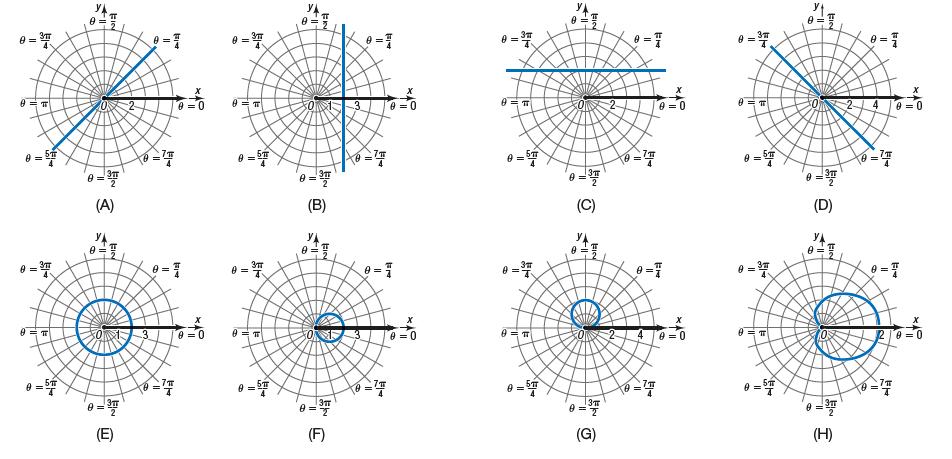
In Problems 31–38, match each of the graphs (A) through (H) to one of the following polar equations. =6 TIIV 0₁ TE = f T = 5m + 9 = T 5T = 1/ TV VIN !! FIN 0 0 (A) I FIN AWO 0=37 (E) 3 0=0 0=1 7T 0=0 = 0 -37 0 T 9= 0 la =57 = 3/TT E 11. 5m = 0 EN (B) EIN (F) = 0 -1 0 0. F4 0 =0 1=0 517 L=0 =
In Problems 31–35, use the vectors v = −2i + j and w = 4i − 3j to find:∣∣v∣∣
In Problems 35–42, plot each point given in polar coordinates, and find other polar coordinates (r,θ) of the point for which: (a) r> 0, -2π ≤ 0 < 0 (b) r < 0, 0≤ 0 < 2π (c) r> 0, 2π ≤ 0 < 4T
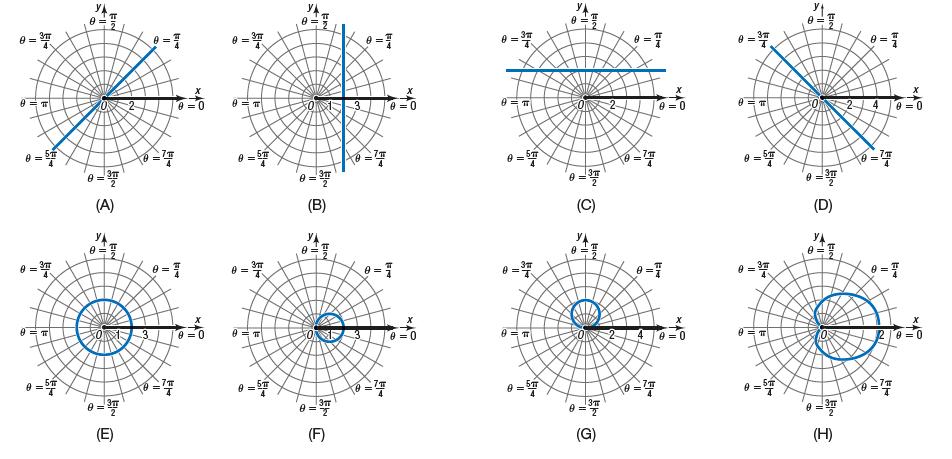
In Problems 31–38, match each of the graphs (A) through (H) to one of the following polar equations. =6 TIIV 0₁ TE = f T = 5m + 9 = T 5T = 1/ TV VIN !! FIN 0 0 (A) I FIN AWO 0=37 (E) 3 0=0 0=1 7T 0=0 = 0 -37 0 T 9= 0 la =57 = 3/TT E 11. 5m = 0 EN (B) EIN (F) = 0 -1 0 0. F4 0 =0 1=0 517 L=0 =
A Chevrolet Silverado with a gross weight of 4500 pounds is parked on a street with a 10° grade. Find the magnitude of the force required to keep the Silverado from rolling down the hill. What is the magnitude of the force perpendicular to the hill?
In Problems 27–34, the vector v has initial point P and terminal point Q. Find its position vector. That is, express v in the form ai + bj.P = (1, 1); Q = (2, 2)
In Problems 25 – 36, write each complex number in rectangular form. Зеi л/10
In Problems 31–35, use the vectors v = −2i + j and w = 4i − 3j to find:A unit vector in the same direction as v.
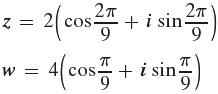
In Problems 37–44, find zw and z/w. Write each answer in polar form and in exponential form. = 2 M W = 2(cos+ i sin²) 4(cos+ i sin (u
In Problems 33 – 38, find ∣∣v∣∣. v = i − j + k
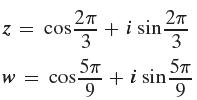
In Problems 37–44, find zw and z/w. Write each answer in polar form and in exponential form. z = cos + i sin- 2п 3 2πT 3 5T w cos- = 5+ i sin ²
In Problems 33 – 38, find ∣∣v∣∣. v = −i − j + k
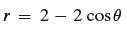
In Problems 39–62, identify and graph each polar equation. r 2 + 2 cos0 =
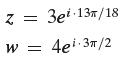
In Problems 37–44, find zw and z/w. Write each answer in polar form and in exponential form. z = 3e²-13/18 W 4e¹-3π/2
In Problems 35–42, find ∣∣v∣∣. v = i − j
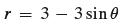
In Problems 39–62, identify and graph each polar equation. r = 33 sin 0
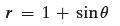
In Problems 39–62, identify and graph each polar equation. r = 1+ sin 0
Find the distance from P1 = (1, 3, −2) to P2 = (4, −2, 1).
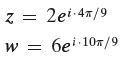
In Problems 37–44, find zw and z/w. Write each answer in polar form and in exponential form. z = 2ei 4/9 W = 6e¹-10x/9 N
In Problems 35–42, plot each point given in polar coordinates, and find other polar coordinates (r, θ) of the point for which: (a) r> 0, -2π ≤ 0 < 0 (b) r < 0, 0≤ 0 < 2π (c) r> 0, 2π ≤ 0 < 4T
In Problems 35–42, find ∣∣v∣∣. v = −i − j
In Problems 33 – 38, find ∣∣v∣∣.v = 6i + 2j − 2k
In Problems 39–62, identify and graph each polar equation. r = 22 cos 0
Prove property (5): 0 · v = 0
In Problems 35–42, find ∣∣v∣∣.v = −2i + 3j
In Problems 35–42, find ∣∣v∣∣.v = 6i + 2j
In Problems 23 – 44, use the given vectors u, v, and w to find each expression. u = 2i − 3j + k v = −3i + 3j + 2k w = i + j + 3kFind a vector orthogonal to both u and v.
In Problems 35–42, find ∣∣v∣∣.v = cosθi + sinθj
In Problems 23 – 44, use the given vectors u, v, and w to find each expression. u = 2i − 3j + k v = −3i + 3j + 2k w = i + j + 3kFind a vector orthogonal to both u and w.
In Problems 35–42, find ∣∣v∣∣.v = i + cotθj
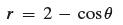
In Problems 39–62, identify and graph each polar equation. r = 2 - 3 cos 0
In Problems 43–58, polar coordinates of a point are given. Find the rectangular coordinates of each point. (-2.2품)
Problems 52 – 61 are based on previously learned material. The purpose of these problems is to keep the material fresh in your mind so that you are better prepared for later sections, a final exam, or subsequent courses such as calculus.Find the exact value of 5 cos 60° + 2 tanπ/4. Do not use a
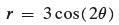
In Problems 39–62, identify and graph each polar equation. r = 3 cos (20)
In Problems 49–52, find the area of the parallelogram with vertices P1, P2, P3, and P4.P1 = (1, 2, −1), P2 = (4, 2, −3), P3 = (6, −5, 2), P4 = (9, −5, 0)
In Problems 49–52, find the area of the parallelogram with vertices P1, P2, P3, and P4.P1 = (1, 1, 2), P2 = (1, 2, 3), P3 = (−2, 3, 0), P4 = (−2, 4, 1)
In Problems 23 – 44, use the given vectors u, v, and w to find each expression. u = 2i − 3j + k v = −3i + 3j + 2k w = i + j + 3kFind a vector orthogonal to both u and j + k.
Given vectors u = i + 5j and v = 4i + yj, find y so that the angle between the vectors is 60°.
In Problems 39–62, identify and graph each polar equation. r = 42 cos 0
In Problems 40–45, use the vectors v = 3i + j − 2k and w = −3i + 2j − k to find each expression.Find a unit vector orthogonal to both v and w.
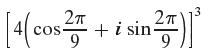
In Problems 45–56, write each expression in rectangular form x + yi and in exponential form reiθ. [4(cos+ i sin 3 2π 9
In Problems 39–62, identify and graph each polar equation. r = 4 + 2 sin 0
In Problems 39–62, identify and graph each polar equation. r = 1 + 2 sin 0
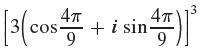
In Problems 45–56, write each expression in rectangular form x + yi and in exponential form reiθ. 4π [3(cos + i sin- 147) 4π 9 9
In Problems 43–58, polar coordinates of a point are given. Find the rectangular coordinates of each point. (6, 5п 6
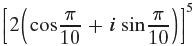
In Problems 45–56, write each expression in rectangular form x + yi and in exponential form reiθ. 5 ¹² ㅠ 10. [2(cos+ + i sin- 10
In Problems 39–62, identify and graph each polar equation. r 1-2 sin 0 =
In Problems 43–58, polar coordinates of a point are given. Find the rectangular coordinates of each point. (5, π 3
In Problems 43–58, polar coordinates of a point are given. Find the rectangular coordinates of each point. Зп -2, El 4
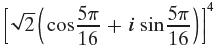
In Problems 45–56, write each expression in rectangular form x + yi and in exponential form reiθ. 5T COS + i sin 16 √(cos 5T 16
In Problems 39–62, identify and graph each polar equation. r = 2 + 4 cos 0
Given vectors u = xi + 2j and v = 7i − 3j, find x so that the angle between the vectors is 30°.
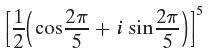
In Problems 45–56, write each expression in rectangular form x + yi and in exponential form reiθ. 12/ 2π COS |in + i sin 2π 5
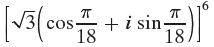
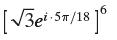
In Problems 45–56, write each expression in rectangular form x + yi and in exponential form reiθ. π [√3 (cos + i sin- 18 6 [)] π 18.
Given vectors u = 2xi + 3j and v = xi − 8j, find x so that u and v are orthogonal.
In Problems 43–58, polar coordinates of a point are given. Find the rectangular coordinates of each point. (-5, 비 6/
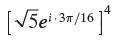
In Problems 45–56, write each expression in rectangular form x + yi and in exponential form reiθ. √5ei 3/16 /16 4
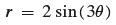
In Problems 39–62, identify and graph each polar equation. r = 2 sin (30)
In Problems 43–58, polar coordinates of a point are given. Find the rectangular coordinates of each point. (-6, 75 4
In Problems 49–52, find the area of the parallelogram with vertices P1, P2, P3, and P4.P1 = (2, 1, 1), P2 = (2, 3, 1), P3 = (−2, 4, 1), P4 = (−2, 6, 1)
In Problems 45–56, write each expression in rectangular form x + yi and in exponential form reiθ. [√3ei-Sm/1816
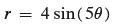
In Problems 39–62, identify and graph each polar equation. r = 4 sin(50)
In Problems 43–58, polar coordinates of a point are given. Find the rectangular coordinates of each point. (-2,-π)
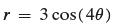
In Problems 39–62, identify and graph each polar equation. r = 3 cos (40)
Problems 52 – 61 are based on previously learned material. The purpose of these problems is to keep the material fresh in your mind so that you are better prepared for later sections, a final exam, or subsequent courses such as calculus.Find the average rate of change of f (x) = x3 − 5x2 + 27
In Problems 49–52, find the area of the parallelogram with vertices P1, P2, P3, and P4.P1 = (−1, 1, 1), P2 = (−1, 2, 2), P3 = (−3, 4, −5), P4 = (−3, 5, −4)
In Problems 50–52, determine whether v and w are parallel, orthogonal, or neither.v = 3i − 2j; w = 4i + 6j
In Problems 45–56, write each expression in rectangular form x + yi and in exponential form reiθ.(1 − i)5
In Problems 49–54, find the unit vector in the same direction as v.v = 2i − j
In Problems 39–62, identify and graph each polar equation. r 2 cos =
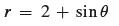
In Problems 39–62, identify and graph each polar equation. r = 2 + sin 0
In Problems 23 – 44, use the given vectors u, v, and w to find each expression. u = 2i − 3j + k v = −3i + 3j + 2k w = i + j + 3kFind a vector orthogonal to both u and i + j.
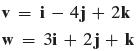
In Problems 15 – 22, find(a) v × w,(b) w × v,(c) w × w,(d) v × v. v = i - 4j + 2k w = 3i+2j+ k W
In Problems 14–18,Write the vector v in terms of its vertical and horizontal components. P₁ = (3√2, 7√2) and P₂ = (8√2, 2√2).
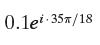
In Problems 16–18, write each complex number in rectangular form, and plot each in the complex plane. 0.1e-35m/18
Draw the angle 5π/6 in standard position.
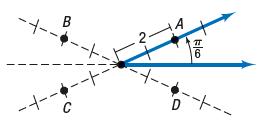
In Problems 13 – 20, match each point in polar coordinates with either A, B, C, or D on the graph. -4- B -+----+ C D 1/60 -+-
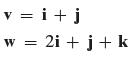
In Problems 15 – 22, find(a) v × w,(b) w × v,(c) w × w,(d) v × v. V v = i + j W w = 2i+j+ k
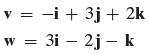
In Problems 15 – 22 , find(a) v × w,(b) w × v,(c) w × w,(d) v × v. -i + 3j + 2k w = 3i - 2j - k =
In Problems 14–18,Find the direction angle of v. P₁ = (3√2, 7√2) and P₂ = (8√2, 2√2).
In Problems 14–18,Find the unit vector in the direction of v. P₁ = (3√2, 7√2) and P₂ = (8√2, 2√2).
Showing 2200 - 2300
of 29454
First
16
17
18
19
20
21
22
23
24
25
26
27
28
29
30
Last
Step by Step Answers

 Get 50% OFF
Claim Now
Get 50% OFF
Claim Now