New Semester
Started
Get
50% OFF
Study Help!
--h --m --s
Claim Now
Question Answers
Textbooks
Find textbooks, questions and answers
Oops, something went wrong!
Change your search query and then try again
S
Books
FREE
Study Help
Expert Questions
Accounting
General Management
Mathematics
Finance
Organizational Behaviour
Law
Physics
Operating System
Management Leadership
Sociology
Programming
Marketing
Database
Computer Network
Economics
Textbooks Solutions
Accounting
Managerial Accounting
Management Leadership
Cost Accounting
Statistics
Business Law
Corporate Finance
Finance
Economics
Auditing
Tutors
Online Tutors
Find a Tutor
Hire a Tutor
Become a Tutor
AI Tutor
AI Study Planner
NEW
Sell Books
Search
Search
Sign In
Register
study help
mathematics
precalculus
Precalculus Concepts Through Functions A Unit Circle Approach To Trigonometry 5th Edition Michael Sullivan - Solutions
In Problems 34–50, establish each identity. sin (20) + sin(40) cos (20)+cos (40) tan (30)
In Problems 51–72, establish each identity. cos40 sin 40 = sin 40 = cos(20)
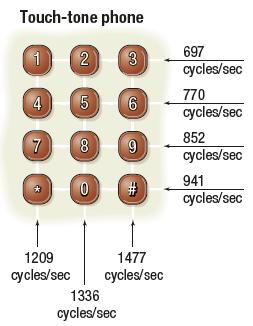
See Problem 51.(a) Write, as a product of sines and/or cosines, the sound emitted when the # key is touched.(b) Determine the maximum value of y.(c) Graph the sound emitted when the # key is touched.Data from problem 51Please listen carefully; our menu has changed. On your touch-tone phone, press 1
In Problems 47–50, solve each equation on the interval 0 ≤ θ < 2π. cos(40) cos(60) = 0
In Problems 34–50, establish each identity. cos(20) cos(40) cos(20) cos(40) tantan (30) = 0
In Problems 47–50, solve each equation on the interval 0 ≤ θ < 2π. sin (40) sin(60) = 0
In Problems 49–74, establish each identity. sin (70) = sin
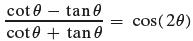
In Problems 51–72, establish each identity. cot cot - tan + tan 0 cos (20)
In Problems 49–74, establish each identity. cos(π 0) = -cose -
Find an expression for sin(5θ) as a fifth-degree polynomial in the variable sinθ.
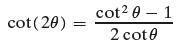
In Problems 51–72, establish each identity. cot (20) cot²01 2 cot0
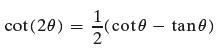
In Problems 51–72, establish each identity. cot (20) = (cote- tane)
In Problems 49–74, establish each identity. sin ( + 0) = -sin
In Problems 51–58, find the exact value of each expression. 5. cos: 12
In Problems 51–58, find the exact value of each expression.sin165°
In Problems 51–58, find the exact value of each expression.tan105°
In Problems 51–58, find the exact value of each expression. sin(- 5/4 12
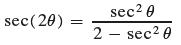
In Problems 51–72, establish each identity. sec (20) = sec²0 2 sec²0
In Problems 49–74, establish each identity. tan (π - 0) 0) = -tan0
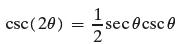
In Problems 51–72, establish each identity. csc (20) = 1 - sec 0csc0 2
In Problems 49–74, establish each identity. tan(2π - 0) - tan
In Problems 51–72, establish each identity. cos² (2u)- sin² (2u) = cos(4u)
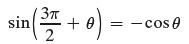
In Problems 49–74, establish each identity. sin (37 + 0) = 2 = -cos
In Problems 51–58, find the exact value of each expression. π tan- 8
In Problems 51–72, establish each identity. (4 sinu cosu)(1- 2 sin² u) = sin(4u)
In Problems 51–58, find the exact value of each expression. 5п sin- 8
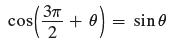
In Problems 49–74, establish each identity. (37 + 0) = 2 cos sin 0
In Problems 51–58, find the exact value of each expression.cos80°cos20° + sin80°sin20°
In Problems 51–58, find the exact value of each expression.sin70°cos40° − cos 70°sin40°
In Problems 15–22, the displacement d (in meters) of an object at time t (in seconds) is given.(a) Describe the motion of the object.(b) What is the maximum displacement from its rest position?(c) What is the time required for one oscillation?(d) What is the frequency? d(t) = 3 + 7 cos(3πt)
In Problems 19–28, find the exact value of each expression. Do not use a calculator. cos 10° sin 80°
In Problems 17–32, solve each triangle.b = 2, c = 4, A = 75°
In Problems 19–28, find the exact value of each expression. Do not use a calculator. cos 40° sin 50⁰
In Problems 19–26, solve each triangle.A = 55°, B = 25°, a = 4
In Problems 17–28, find the area of each triangle. Round answers to two decimal places.b = 1, c = 8, A = 75°
In Problems 19–28, find the exact value of each expression. Do not use a calculator.tan12° − cot 78°
In Problems 15–22, the displacement d (in meters) of an object at time t (in seconds) is given.(a) Describe the motion of the object.(b) What is the maximum displacement from its rest position?(c) What is the time required for one oscillation?(d) What is the frequency? d(t) = 4 + 3 sin(at)
In Problems 21–25, find the area of each triangle.a = 2, b = 3, C = 40°
In Problems 17–32, solve each triangle.a = 5, c = 3, B = 105°
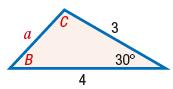
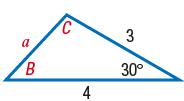
In Problems 9–16, find the area of each triangle. Round answers to two decimal places. a B C 4 3 30°
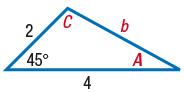
In Problems 9–16, solve each triangle. 2 45° C 4 b A
In Problems 19–26, solve each triangle.B = 64°, C = 47°, b = 6
In Problems 17 – 28, find the area of each triangle. Round answers to two decimal places.a = 3, c = 2, B = 115°
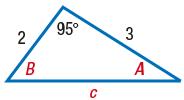
In Problems 9–16, solve each triangle. 2 B 95⁰ C 3 تا A
In Problems 9–16, solve each triangle. а B C 4 3 30°
In Problems 21–25, find the area of each triangle.b = 4, c = 10, A = 70°
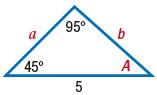
In Problems 11–18, solve each triangle. a 45° 95⁰ 5 b A
In Problems 21–25, find the area of each triangle.a = 4, b = 3, c = 5
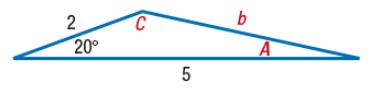
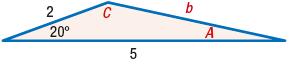
In Problems 9–16, solve each triangle. 2 20° C 5 b A
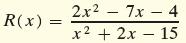
Graph the rational function R(x) = 2x²7x4 x2 x² + 2x 15 -
In Problems 17–32, solve each triangle.a = 2, b = 3, C = 70°
The motion of an object is given by d(t) = 4 cos(6t). Such motion is described as_____ ______ . The number 4 is called the _______.
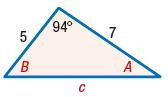
In Problems 9–16, find the area of each triangle. Round answers to two decimal places. 5 В сл 94° C 7 A
The area K of a triangle with sides a , b , and c is K = ______, where s = _______.
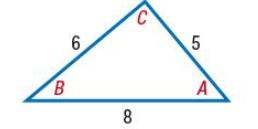
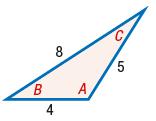
In Problems 9–16, solve each triangle. B 6 C 8 5 A
In Problems 7–10, an object attached to a coiled spring is pulled down a distance a from its rest position and then released. Assuming that the motion is simple harmonic with period T, find a function that relates the displacement d of the object from its rest position after t seconds. Assume
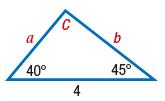
In Problems 11–18, solve each triangle. a 40° 4 b 45°
Solve the triangle for which side a is 20, side c is 15, and angle C is 40°.
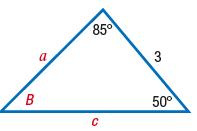
In Problems 11–18, solve each triangle. B a 85⁰ C 3 50°
In Problems 9–16, find the area of each triangle. Round answers to two decimal places. 2 20⁰ C 5 b A
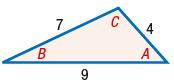
In Problems 9–16, find the area of each triangle. Round answers to two decimal places. B 7 9 C 4 A
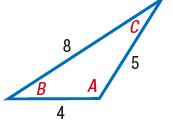
In Problems 9–16, solve each triangle. B 8 4 A C 5 сл
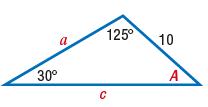
In Problems 11–18, solve each triangle.12.In Problems 11 – 18 , solve each triangle. 30° a 125° C 10 A
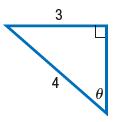
In Problems 9–18, find the exact value of the six trigonometric functions of the angle θ in each figure. 3 4 01
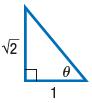
In Problems 9–18, find the exact value of the six trigonometric functions of the angle θ in each figure. 2 1 อ
In Problems 9–16, find the area of each triangle. Round answers to two decimal places. B 8 4 A C 5 сл
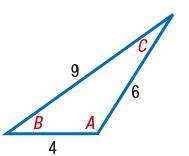
In Problems 9–16, solve each triangle. B 4 9 A C 6
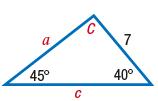
In Problems 11–18, solve each triangle. a 45° C C 7 40°
In Problems 11–18, solve each triangle. 5° a 5 b -10°
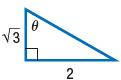
In Problems 9–18, find the exact value of the six trigonometric functions of the angle θ in each figure. √3 0 2
Solve: log3 (x + 8) + log3 x = 2
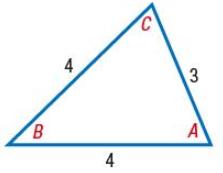
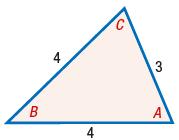
In Problems 9–16, solve each triangle. B 4 4 C 3 A
In Problems 9–16, find the area of each triangle. Round answers to two decimal places. B 4 4 C 3 A
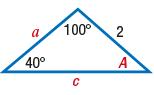
In Problems 11–18, solve each triangle. a 40° 100° C 2 A
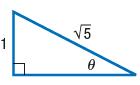
In Problems 9–18, find the exact value of the six trigonometric functions of the angle θ in each figure. √5 0
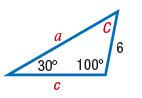
In Problems 11–18, solve each triangle. a 30° C C 100° 6
In Problems 8–20, find the remaining angle(s) and side(s) of each triangle, if it (they) exists. If no triangle exists, say “No triangle.”a = 1, b = 1/2, c = 4/3
In Problems 15–22, the displacement d (in meters) of an object at time t (in seconds) is given.(a) Describe the motion of the object.(b) What is the maximum displacement from its rest position?(c) What is the time required for one oscillation?(d) What is the frequency?d(t) = 8 cos(2πt)
In Problems 17–28, find the area of each triangle. Round answers to two decimal places.a = 3, b = 4, C = 50°
In Problems 9–18, find the exact value of the six trigonometric functions of the angle θ in each figure. 2 6 √5
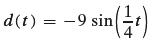
In Problems 15–22, the displacement d (in meters) of an object at time t (in seconds) is given.(a) Describe the motion of the object.(b) What is the maximum displacement from its rest position?(c) What is the time required for one oscillation?(d) What is the frequency? d(t) = -9 sin(t)
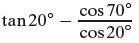
In Problems 19–28, find the exact value of each expression. Do not use a calculator. tan 20° cos 70° cos 20°
In Problems 21–25, find the area of each triangle.A = 50°, B = 30°, a = 1
In Problems 17–32, solve each triangle.a = 20, b = 29, c = 21
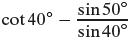
In Problems 19–28, find the exact value of each expression. Do not use a calculator. cot 40° sin 50° sin 40°
In Problems 19–26, solve each triangle.A = 40°, B = 40°, c = 2
In Problems 17–28, find the area of each triangle. Round answers to two decimal places.a = 4, b = 4, c = 4
In Problems 17–32, solve each triangle.a = 4, b = 5, c = 3
In Problems 17–28, find the area of each triangle. Round answers to two decimal places.a = 3, b = 3, c = 2
In Problems 17–32, solve each triangle.a = 2, b = 2, c = 2
In Problems 27–34, graph each function by adding y-coordinates.f (x) = x + cos x
In Problems 17–28, find the area of each triangle. Round answers to two decimal places.a = 11, b = 14, c = 20
In Problems 17–32, solve each triangle.a = 3, b = 3, c = 2
In Problems 27–34, graph each function by adding y-coordinates.f (x) = x + cos(2x)
In Problems 17–32, solve each triangle.a = 6, b = 11, c = 12
In Problems 27–34, graph each function by adding y-coordinates.f (x) = x − sin x
In Problems 27–38, two sides and an angle are given. Determine whether the given information results in one triangle, two triangles, or no triangle at all. Solve any resulting triangle(s).b = 9, c = 4, B = 115°
In Problems 27–34, graph each function by adding y-coordinates.f (x) = x − cos x
In Problems 17–32, solve each triangle.a = 15, b = 13, c = 3
In Problems 27–34, graph each function by adding y-coordinates.f (x) = sin x + cos x
Showing 2600 - 2700
of 29454
First
20
21
22
23
24
25
26
27
28
29
30
31
32
33
34
Last
Step by Step Answers

 Get 50% OFF
Claim Now
Get 50% OFF
Claim Now