New Semester
Started
Get
50% OFF
Study Help!
--h --m --s
Claim Now
Question Answers
Textbooks
Find textbooks, questions and answers
Oops, something went wrong!
Change your search query and then try again
S
Books
FREE
Study Help
Expert Questions
Accounting
General Management
Mathematics
Finance
Organizational Behaviour
Law
Physics
Operating System
Management Leadership
Sociology
Programming
Marketing
Database
Computer Network
Economics
Textbooks Solutions
Accounting
Managerial Accounting
Management Leadership
Cost Accounting
Statistics
Business Law
Corporate Finance
Finance
Economics
Auditing
Tutors
Online Tutors
Find a Tutor
Hire a Tutor
Become a Tutor
AI Tutor
AI Study Planner
NEW
Sell Books
Search
Search
Sign In
Register
study help
mathematics
precalculus
Precalculus Concepts Through Functions A Unit Circle Approach To Trigonometry 5th Edition Michael Sullivan - Solutions
(a) Use the drop-down menu to select the absolute value (|x|) function. The basic function f (x) = |x| is drawn in a dashed-blue line with three key points labeled. Now, use the slider labeled h to slowly increase the value of h from 0 to 4. As you do this, notice the form of the function g(x) = f
The function f (x) = x2 is decreasing on the interval ____________.
To rationalize the denominator of 3/√5 - 2, multiply the numerator and denominator by __________.
The intercepts of the graph of y = x2 − 9 are _____________.
Determine if the function f (x) = −x2 − 7 is even, odd, or neither.
The expression f (x + h) − f (x)/h is called the __________ of f __________.
Answers are given at the end of these exercises.Factor the expression 6x2 + x − 2.
The domain of the logarithmic function f (x) = loga x is ______.
In Problems 12 and 13, for each function f:(a) Find the domain of f.(b) Graph f.(c) From the graph of f, find the range and any asymptotes.(d) Find f −1, the inverse of f.(e) Find the domain and the range of f −1.(f) Graph f −1. f(x) = 4x+12
In Problems 14–19, solve each equation. Express irrational solutions in exact form. log₂ (x4) + log₂ (x + 4) = 3
Problems 119–128. The purpose of these problems is to keep the material fresh in your mind so that you are better prepared for later sections, a final exam, or subsequent courses such as calculus. Find the domain of f(x) = 2√√3 - 5x - 4.
log3 81 equals(a) 9(b) 4(c) 2(d) 3
In Problems 13–28, use properties of logarithms to find the exact value of each expression. Do not use a calculator.log8 2 + log8 4
In Problems 41–52, find the domain of each function.f (x) = ln(x − 3)
If f (x) = loga x, show that f (xα) = αf (x).
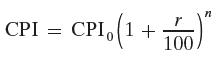
Problems 69–72 require the following discussion. The consumer price index (CPI) indicates the relative change in price over time for a fixed basket of goods and services. It is a cost-of-living index that helps measure the effect of inflation on the cost of goods and services. The CPI uses the
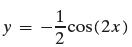
In Problems 35–58, graph each function using transformations or the method of key points. Be sure to label key points and show at least two cycles. Use the graph to determine the domain and the range of each function. y = 1 -cos(2x) 2
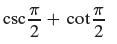
In Problems 31 – 46, find the exact value of each expression. Do not use a calculator. π 75 csc + cot. 2 2
A wooden roller coaster at Six Flags contains a run in the shape of a sinusoidal curve, with a series of hills. The crest of each hill is 106 feet above the ground. If it takes a car 1.8 seconds to go from the top of a hill to the bottom (4 feet off the ground), find a sinusoidal function of the
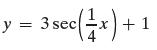
In Problems 17–40, graph each function. Be sure to label key points and show at least two cycles. Use the graph to determine the domain and the range of each function. y = 3 sec (1x) + 1
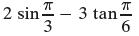
In Problems 31 – 46, find the exact value of each expression. Do not use a calculator. π 3 2 sin- 3 tan 프6
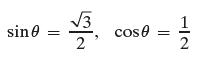
In Problems 35–42, sinθ and cosθ are given. Find the exact value of each of the four remaining trigonometric functions sin = ۱۵ به ن cose =
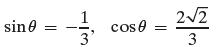
In Problems 35–42, sinθ and cosθ are given. Find the exact value of each of the four remaining trigonometric functions sin 0 سایت cos0 الا انت 272 3
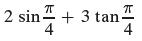
In Problems 31 – 46, find the exact value of each expression. Do not use a calculator. 2 sin+3 4 π tan- 4
Find an application in your major field that leads to a sinusoidal graph. Write an account of your findings.
Problems 42–51. The purpose of these problems is to keep the material fresh in your mind so that you are better prepared for later sections, a final exam, or subsequent courses such as calculus. Given f(x): = 4x + 9 2 find f- (x).
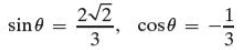
In Problems 35–42, sinθ and cosθ are given. Find the exact value of each of the four remaining trigonometric functions sin 2√2 3 cose 3
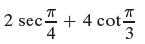
In Problems 31 – 46, find the exact value of each expression. Do not use a calculator. πT 4 π 2 sec +4 cot- 3
In Problems 41–44, find the average rate of change of f from 0 to π/6.f (x) = sec x
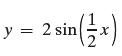
In Problems 35–58, graph each function using transformations or the method of key points. Be sure to label key points and show at least two cycles. Use the graph to determine the domain and the range of each function. y = 2 sin in (17x)
In Problems 43–58, find the exact value of each of the remaining trigonometric functions of θ. sin 0 12 13 0 in quadrant II
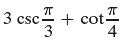
In Problems 31 – 46, find the exact value of each expression. Do not use a calculator. π П 3 csc + cot. 3 4
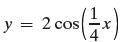
In Problems 35–58, graph each function using transformations or the method of key points. Be sure to label key points and show at least two cycles. Use the graph to determine the domain and the range of each function. y = 2 cos(x
Problems 42–51 are based on previously learned material. The purpose of these problems is to keep the material fresh in your mind so that you are better prepared for later sections, a final exam, or subsequent courses such as calculus.Solve: 0.25(0.4x + 0.8) = 3.7 − 1.4x
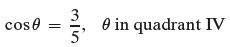
In Problems 43–58, find the exact value of each of the remaining trigonometric functions of θ. cos 3 nlin 5 0 in quadrant IV
In Problems 33 and 34, determine the amplitude and period of each function without graphing. y = -2 cos(3πx)
Problems 42–51. The purpose of these problems is to keep the material fresh in your mind so that you are better prepared for later sections, a final exam, or subsequent courses such as calculus.Multiply: (8x + 15y)2
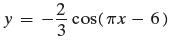
In Problems 35–38, find the amplitude, period, and phase shift of each function. Graph each function. Show at least two periods. y = cos(TX - 6)
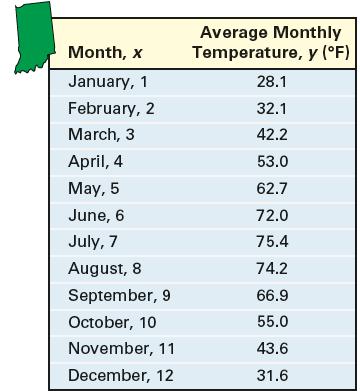
The following data represent the average monthly temperatures for Indianapolis, Indiana.(a) Draw a scatter plot of the data for one period.(b) Find a sinusoidal function of the formthat models the data.(c) Draw the sinusoidal function found in part (b) on the scatter plot.(d) Use a graphing utility
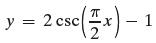
In Problems 17–40, graph each function. Be sure to label key points and show at least two cycles. Use the graph to determine the domain and the range of each function. = 2 csc (1x) - 1 y =
In Problems 31 – 46, find the exact value of each expression. Do not use a calculator.4 sin90° − 3 tan180°
In Problems 31 – 46, find the exact value of each expression. Do not use a calculator.sin45° cos45°
According to the Old Farmer’s Almanac, in Miami, Florida, the number of hours of sunlight on the summer solstice of 2022 was 13.75, and the number of hours of sunlight on the winter solstice was 10.52.(a) Find a sinusoidal function of the formthat models the data.(b) Use the function found in
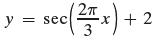
In Problems 17–40, graph each function. Be sure to label key points and show at least two cycles. Use the graph to determine the domain and the range of each function. sec(2x) +2 3 y sec
In Problems 35–38, find the amplitude, period, and phase shift of each function. Graph each function. Show at least two periods.y = 4 sin(3x)
In Problems 31 – 46, find the exact value of each expression. Do not use a calculator.tan45° cos30°
According to the Old Farmer’s Almanac, in Detroit, Michigan, the number of hours of sunlight on the summer solstice of 2022 was 15.27, and the number of hours of sunlight on the winter solstice was 9.07.(a) Find a sinusoidal function of the formthat models the data.(b) Use the function found in
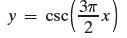
In Problems 17–40, graph each function. Be sure to label key points and show at least two cycles. Use the graph to determine the domain and the range of each function. y = csc 3πT 2 X
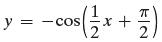
In Problems 35–38, find the amplitude, period, and phase shift of each function. Graph each function. Show at least two periods. = −cos (1/2 x ₁ + y = FIN π
According to the Old Farmer’s Almanac, in Anchorage, Alaska, the number of hours of sunlight on the summer solstice of 2022 was 19.37, and the number of hours of sunlight on the winter solstice was 5.45.(a) Find a sinusoidal function of the formthat models the data.(b) Use the function found in
In Problems 31 – 46, find the exact value of each expression. Do not use a calculator.csc 45° tan60°
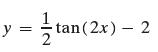
In Problems 17–40, graph each function. Be sure to label key points and show at least two cycles. Use the graph to determine the domain and the range of each function. y =tan(2x) - 2
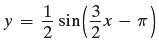
In Problems 35–38, find the amplitude, period, and phase shift of each function. Graph each function. Show at least two periods. 3 y = 1/2 sin ( ²2 x - 7)
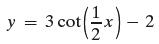
In Problems 17–40, graph each function. Be sure to label key points and show at least two cycles. Use the graph to determine the domain and the range of each function. y = 3 cot (1x) - 2
According to the Old Farmer’s Almanac, in Honolulu, Hawaii, the number of hours of sunlight on the summer solstice of 2022 was 13.42, and the number of hours of sunlight on the winter solstice was 10.83.(a) Find a sinusoidal function of the formthat models the data.(b) Use the function found in
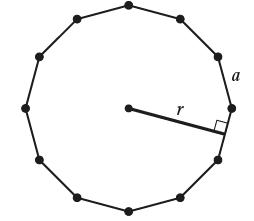
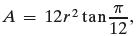
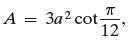
Area of a Dodecagon Part I A regular dodecagon is a polygon with 12 sides of equal length. See the figure.(a) The area A of a regular dodecagon is given by the formulawhere r is the apothem, which is a line segment from the center of the polygon that is perpendicular to a side. Find the exact area
Show that tan−1 v + cot−1 v =π/2.
Problems 143–152. The purpose of these problems is to keep the material fresh in your mind so that you are better prepared for later sections, a final exam, or subsequent courses such as calculus.Graph f (x) = −2x2 + 12x − 13 using transformations. Find the vertex and the axis of symmetry.
In Problems 87–92, write each trigonometric expression as an algebraic expression containing u and v. Give the restrictions required on u and v. cos (tan-¹ u + tan-¹v)
In Problems 87–92, write each trigonometric expression as an algebraic expression containing u and v. Give the restrictions required on u and v. tan (sin-¹ucos-¹v)
In Problems 87–92, write each trigonometric expression as an algebraic expression containing u and v. Give the restrictions required on u and v. sin (tan-¹u-sin-¹ v)
In Problems 87–92, write each trigonometric expression as an algebraic expression containing u and v. Give the restrictions required on u and v. sec(tan-¹u + cos-¹v)
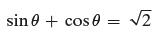
In Problems 93–98, solve each equation on the interval 0 ≤ θ < 2π. sin + cos √2
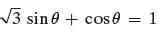
In Problems 93–98, solve each equation on the interval 0 ≤ θ < 2π. √3 sin0+ cose = 1
Problems 93–102. The purpose of these problems is to keep the material fresh in your mind so that you are better prepared for later sections, a final exam, or subsequent courses such as calculus. π Find the average rate of change of f(x) = tanx from 6 to 4.
In Problems 93–98, solve each equation on the interval 0 ≤ θ < 2π. cot + csc0 = -√3
Problems 93–102. The purpose of these problems is to keep the material fresh in your mind so that you are better prepared for later sections, a final exam, or subsequent courses such as calculus. If sin > 0 and cot 0 < 0, name the quadrant in which the angle 0 lies.
In Problems 93–98, solve each equation on the interval 0 ≤ θ < 2π. sin cose: -√2
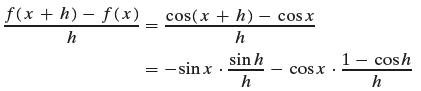
Calculus Show that the difference quotient for f (x) = cos x is given by f(x +h)-f(x) h cos(x + h) cos x h —sinx . sin h h COS X 1 - cosh h
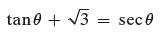
In Problems 93–98, solve each equation on the interval 0 ≤ θ < 2π. tane + √3 sec 0
Discuss the following derivation:Can you justify each step? tan -) 0 + 2 = tantan. NENE - 2 1 tantan- 2 = tan 0 π tan 1 tan ㅠ 2 +1 tan 0 = 0 0 +1 tan = 1 -tan0 = - cot
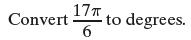
Problems 116 – 125. The purpose of these problems is to keep the material fresh in your mind so that you are better prepared for later sections, a final exam, or subsequent courses such as calculus. Convert 17п 6 to degrees.
Show that sin(sin−1 v + cos−1 v) = 1.
Show that cos(sin−1 v + cos−1 v) = 0.
Problems 116 – 125. The purpose of these problems is to keep the material fresh in your mind so that you are better prepared for later sections, a final exam, or subsequent courses such as calculus. Solve: √3x - 2-√√2x - 3 = 1
Show that cot−1 ev = tan−1 e−v.
Problems 116 – 125. The purpose of these problems is to keep the material fresh in your mind so that you are better prepared for later sections, a final exam, or subsequent courses such as calculus.Writeas a single quotient with only positive exponents. 6х (x + 3)14 + 8(x + 3) ³/4, x > −3,
Show that sin−1 v + cos−1 v = π/2.
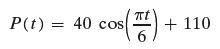
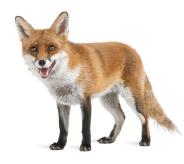
In predator–prey relationships, the populations of the predator and prey are often cyclical. In a conservation area, rangers monitor the red fox population and have determined that the population can be modeled by the functionwhere t is the number of months from the time monitoring began. Use the
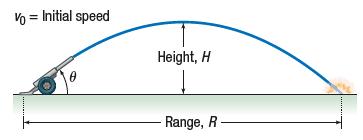
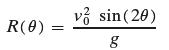
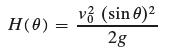
The path of a projectile fired at an inclination θ to the horizontal with initial speed v0 is a parabola (see the figure).The range R of the projectile, that is, the horizontal distance that the projectile travels, is found by using the functionwhere g ≈ 32.2 feet per second per second ≈ 9.8
Show that tan−1 (1/v)= π/2 − tan−1 v, if v > 0.
If α + β + ϒ= 180° and cot θ = cotα + cotβ + cotϒ 0 < θ < 90° show that sin3 θ = sin(α − θ) sin(β − θ) sin(ϒ − θ).
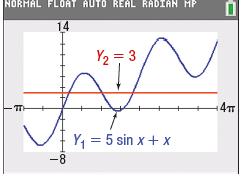
Explain why no further points of intersection (and therefore no further solutions) exist in Figure 25 for x 4. NORMAL FLOAT AUTO REAL RADIAN MP 14 -8 Y₂ = 3 Y₁ = 5 sin x + x 0 4T
In Problems 113–118, use the periodic and even-odd properties.If f (θ) = cosθ and f (a) = 1/4, find the exact value of: (a) f(-a) (b) f(a) + f(a + 2π) + f(a - 2π)
Problems 116 – 125. The purpose of these problems is to keep the material fresh in your mind so that you are better prepared for later sections, a final exam, or subsequent courses such as calculus.Determine the points of intersection of the graphs of f (x) = x2 + 5x + 1 and g(x) = −2x2 − 11x
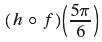
In Problems 107–116, f (x) = sin x, g(x) = cos x, h (x) = 2x, and p (x) = x/2. Find the value of each of the following: (hof) T 6
Normal resting lung volume V, in mL, for adult men varies over the breathing cycle and can be approximated by the modelwhere t is the number of seconds after breathing begins. Use the model to estimate the volume of air in a man’s lungs after 2.5 seconds, 10 seconds, and 17 seconds. V(t): = 250
Problems 116 – 125. The purpose of these problems is to keep the material fresh in your mind so that you are better prepared for later sections, a final exam, or subsequent courses such as calculus.Find the area of the sector of a circle of radius 6 meters formed by an angle of 45°. Give both
Problems 107–116. The purpose of these problems is to keep the material fresh in your mind so that you are better prepared for later sections, a final exam, or subsequent courses such as calculus. Write the set {xx < -2 or x > using interval notation.
Problems 116 – 125. The purpose of these problems is to keep the material fresh in your mind so that you are better prepared for later sections, a final exam, or subsequent courses such as calculus.Given tanθ = −2, 270° < θ < 360°, find the exact value of the remaining five
Problems 116 – 125. The purpose of these problems is to keep the material fresh in your mind so that you are better prepared for later sections, a final exam, or subsequent courses such as calculus.Write f (x) = 1/4x2 + x −2 in vertex form.
Problems 116 – 125. The purpose of these problems is to keep the material fresh in your mind so that you are better prepared for later sections, a final exam, or subsequent courses such as calculus.Solve: 8x−4 = 42x−9
Problems 116 – 125. The purpose of these problems is to keep the material fresh in your mind so that you are better prepared for later sections, a final exam, or subsequent courses such as calculus.Write as a single logarithm: 3 log7 x + 2 log 7 y − 5 log 7 z
Problems 116 – 125. The purpose of these problems is to keep the material fresh in your mind so that you are better prepared for later sections, a final exam, or subsequent courses such as calculus.Simplify: (2x2y3)4 (3x5y)2
Problems 107–116. The purpose of these problems is to keep the material fresh in your mind so that you are better prepared for later sections, a final exam, or subsequent courses such as calculus.Determine the interval on which f (x) = −6x2 − 19x + 7 is decreasing.
An object is fired at an angle θ to the horizontal with an initial speed of v0 feet per second. Ignoring air resistance, the length of the projectile’s path is given bywhere 0 (a) Find the length of the object’s path for angles θ = π/6, π/4 and π/3 if the initial velocity is 128 feet per
Establish the identity: (sin cosp)² + (sino sino)2 + cos² 0 = 1
Problems 107–116. The purpose of these problems is to keep the material fresh in your mind so that you are better prepared for later sections, a final exam, or subsequent courses such as calculus.Solve: log(x − 3) − log(x + 3) = log(x − 4)
Show that the range of the tangent function is the set of all real numbers.
Show that the range of the cotangent function is the set of all real numbers.
Showing 3200 - 3300
of 29454
First
26
27
28
29
30
31
32
33
34
35
36
37
38
39
40
Last
Step by Step Answers

 Get 50% OFF
Claim Now
Get 50% OFF
Claim Now